Five Kids’ Magazines We Enjoy

Here are five children’s magazines we particularly enjoy reading to our two-year-old and five-year-old:

High Five

5. High Five

“My First Hidden Pictures” and “That’s Silly!” are two favorite features of the magazine. It says it’s for ages 2 to 6, but it’s hard to imagine any two-year-old tracking with it. Better for slightly older kids.

Ranger Rick Jr

4. Ranger Rick, Jr.

It comes from the National Wildlife Federation. Given our five-year-old’s penchant for all things animal kingdom, this one is a hit. Today we learned from the April 2013 issue that giant tortoises can live to be 150 years old. Whoa.

ladybug

3. Ladybug

From the Cricket Magazine Group, Ladybug is the next age level up from Babybug (see below). Max and Kate are a fun ongoing storyline each month. Our five-year-old transitioned to this a year or more ago when he was getting too old for Babybug.

click magazine

2. Click

The awesomeness of this magazine caught us all unaware–I’d never heard of it before a grandparent-sponsored subscription began arriving in the mail. The March 2013 issue theme is “The deep blue sea.” Our five-year-old did the “make a fish” project on his own right away, with some scissors and glue. The magazine’s “Ocean Zones” section this month introduced us to the sunlight zone, the twilight zone, and the midnight zone, each of which support interesting and diverse kinds of life.

I just found out that Click is part of the same family as Ladybug and as…

babybug

1. Babybug

Babybug is really sweet. It is “for babies who love to be read to and for the adults who love to read to them.” (It’s good for toddlers, too.) Kim and Carrots is a favorite each month, and always seems to be appropriately themed for the time of year. Simple yet engaging illustrations go with memorable and fun-to-read poetry. No part of the magazine is more than three pages, so not a long attention span is required. It’s not uncommon for us to ask our two-year-old to pick some books to read, and for him to come to us with three Babybugs.

(It’s also not uncommon for me to walk in to the living room from the back of the house and see my five-year-old curled up on the couch with a New Yorker.)

How about any of you who regularly read to children? What magazines do you recommend?

A Perfect Song

“North American Field Song,” by the Innocence Mission:

Lyrics:

Raincoats, Finlandia,
Raincoats and lakes.
The best words, I take along
in my field bag.
Across the morning, the beautiful air,
I will be aware.
I’ll speak if I dare,
and

Stay calm,
stay calm, stay calm,
stay calm in the meantime,

Stay calm,
stay calm, stay calm,
through the red and the green light,
stay calm.

No one can be so embarrassed as me,
I say to these trees,
where I walk with my head down.
Across the morning, the beautiful air,
I will be aware
my Father is there
and stay calm….

Who is the New Pope? Bergoglio (now Francis I) of Argentina

Pope Francis
Peter Macdiarmid/Getty Images, via NY Times

The cardinals today selected a new pope. From the New York Times:

With a puff of white smoke from the chimney of the Sistine Chapel and to the cheers of thousands of rain-soaked faithful, a gathering of Catholic cardinals picked a new pope from among their midst on Wednesday — choosing the cardinal from Argentina, the first South American to ever lead the church.

The new pope, 76, Jorge Mario Bergoglio (pronounced Ber-GOAL-io) will be called Francis, the 266th pontiff of the Roman Catholic Church. He is also the first non-European leader of the church in more than 1,000 years.

Read more here.

There is a New Pope

White Smoke
Gregorio Borgia/Associated Press, via NY Times

From the New York Times:

With a puff of white smoke from the chimney of the Sistine Chapel and to the cheers of thousands of rain-soaked faithful, a gathering of Catholic cardinals picked a new pope from among their midst on Wednesday. The name of the new pope, the 266th pontiff of the Roman Catholic Church, by tradition would not be revealed until he appeared on a balcony on the front of St. Peter’s Basilica.

No name yet, but that will come soon. More here for now.

Need of Jesus (a Puritan prayer)

Valley of Vision

Here is a prayer from The Valley of Vision, titled “Need of Jesus.” (More on this collection of Puritan prayers is here.)

Lord Jesus,

I am blind, be thou my light,
 ignorant, be thou my wisdom,
 self-willed, be thou my mind.
Open my ear to grasp quickly thy Spirit’s voice,
 and delightfully run after his beckoning hand;

Melt my conscience that no hardness remain,
 make it alive to evil’s slightest touch;
When Satan approaches may I flee to thy wounds,
 and there cease to tremble at all alarms.
Be my good shepherd to lead me into
  the green pastures of thy Word,
 and cause me to lie down beside the rivers
  of its comforts.
Fill me with peace, that no disquieting worldly gales
 may ruffle the calm surface of my soul.
Thy cross was upraised to be my refuge,
Thy blood streamed forth to wash me clean,
Thy death occurred to give me a surety,
Thy name is my property to save me,
By thee all heaven is poured into my heart,
 but it is too narrow to comprehend thy love.
I was a stranger, an outcast, a slave, a rebel,
 but thy cross has brought me near,
  has softened my heart,
  has made me thy Father’s child,
  has admitted me to thy family,
  has made me joint-heir with thyself.
O that I may love thee as thou lovest me,
 that I may walk worthy of thee, my Lord,
 that I may reflect the image of heaven’s first-born.
May I always see thy beauty with the clear eye
  of faith,
 and feel the power of thy Spirit in my heart,
 for unless he move mightily in me
 no inward fire will be kindled.

Greek Isaiah in a Year, Week 15=Isaiah 19:1-25

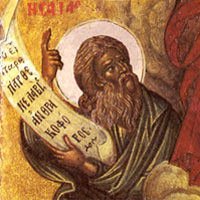
Isaiah prophet

This week in Greek Isaiah in a Year covers Isaiah 19 in its entirety.

Here is the schedule and text for Monday through Friday, using again the text from R.R. Ottley’s Book of Isaiah According to the Septuagint. Ottley is also here in Logos (reviewed here) and here as a free, downloadable pdf in the public domain. The full reading plan for our group is here (pdf).

Monday, March 11Isa 19:1-4

19 Ἰδοὺ Κύριος κάθηται ἐπὶ νεφέλης κούφης καὶ ἥξει εἰς Αἴγυπτον, καὶ σεισθήσεται τὰ χειροποίητα Αἰγύπτου ἀπὸ προσώπου αὐτοῦ, καὶ αἱ καρδίαι αὐτῶν ἡττηθήσονται ἐν αὐτοῖς. καὶ ἐπεγερθήσονται Αἰγύπτιοι ἐπʼ Αἰγυπτίους, καὶ πολεμήσει ἄνθρωπος τὸν ἀδελφὸν αὐτοῦ καὶ ἄνθρωπος τὸν πλησίον αὐτοῦ, ἐπεγερθήσεται πόλις ἐπὶ πόλιν καὶ νομὸς ἐπὶ νομόν. καὶ ταραχθήσεται τὸ πνεῦμα τῶν Αἰγυπτίων ἐν αὐτοῖς, καὶ τὴν βουλὴν αὐτῶν διασκεδάσω, καὶ ἐπερωτήσουσιν τοὺς θεοὺς αὐτῶν καὶ τὰ ἀγάλματα αὐτῶν καὶ τοὺς ἐκ τῆς γῆς φωνοῦντας καὶ τοὺς ἐνγαστριμύθους καὶ τοὺς γνώστας. καὶ παραδώσω Αἴγυπτον εἰς χεῖρας ἀνθρώπων κυρίων σκληρῶν, καὶ βασιλεῖς σκληροὶ κυριεύσουσιν αὐτῶν. τάδε λέγει Κύριος σαβαώθ.

Tuesday, March 12Isa 19:5-9

καὶ πίονται οἱ Αἰγύπτιοι ὕδωρ τὸ παρὰ θάλασσαν, ὁ δὲ ποταμὸς ἐκλείψει καὶ ξηρανθήσεται· καὶ ἐκλείψουσιν οἱ ποταμοὶ καὶ αἱ διώρυγες τοῦ ποταμοῦ, καὶ ξηρανθήσεται πᾶσα συναγωγὴ ὕδατος καὶ ἐν παντὶ ἕλει καλάμου καὶ παπύρου, καὶ τὸ ἄχι τὸ χλωρὸν πᾶν τὸ κύκλῳ τοῦ ποταμοῦ καὶ πᾶν τὸ σπειρόμενον διὰ τοῦ ποταμοῦ ξηρανθήσεται ἀνεμόφθορον. καὶ στενάξουσιν οἱ ἁλεεῖς, καὶ στενάξουσιν πάντες οἱ βάλλοντες ἄγκιστρον εἰς τὸν ποταμόν, καὶ οἱ βάλλοντες σαγήνας καὶ οἱ ἀμφιβολεῖς πενθήσουσιν. καὶ αἰσχύνη λήμψεται τοὺς ἐργαζομένους τὸ λίνον τὸ σχιστὸν καὶ τοὺς ἐργαζομένους τὴν βύσσον,

Wednesday, March 13Isa 19:10-15

10 καὶ ἔσονται οἱ διαζόμενοι αὐτὰ ἐν ὀδύνῃ, καὶ πάντες οἱ τὸν ζῦθον ποιοῦντες λυπηθήσονται καὶ τὰς ψυχὰς πονέσουσιν. 11 καὶ μωροὶ ἔσονται οἱ ἄρχοντες Τάνεως· οἱ σοφοὶ σύμβουλοι τοῦ βασιλέως, ἡ βουλὴ αὐτῶν μωρανθήσεται. πῶς ἐρεῖτε τῷ βασιλεῖ Υἱοὶ συνετῶν ἡμεῖς, υἱοὶ βασιλέων τῶν ἐξ ἀρχῆς; 12 ποῦ εἰσιν νῦν οἱ σοφοί σου; καὶ ἀναγγειλάτωσάν σοι καὶ εἰπάτωσαν τί βεβούλευται Κύριος σαβαὼθ ἐπʼ Αἴγυπτον. 13 ἐξέλιπον οἱ ἄρχοντες Τάνεως, καὶ ὑψώθησαν οἱ ἄρχοντες Μέμφεως, καὶ πλανήσουσιν Αἴγυπτον κατὰ φυλάς. 14 Κύριος γὰρ ἐκέρασεν αὐτοῖς πνεῦμα πλανήσεως, καὶ ἐπλάνησαν Αἴγυπτον ἐν πᾶσιν τοῖς ἔργοις αὐτῶν, ὡς πλανᾶται ὁ μεθύων και ὁ ἐμῶν ἅμα. 15 καὶ οὐκ ἔσται τοῖς Αἰγυπτίοις ἔργον ὃ ποιήσει κεφαλὴν καὶ οὐράν, ἀρχὴν καὶ τέλος.

Thursday, March 14Isa 19:16-20

16 Τῇ δὲ ἡμέρᾳ ἐκείνῃ ἔσονται οἱ Αἰγύπτιοι ὡς γυναῖκες ἐν φόβῳ καὶ ἐν τρόμῳ ἀπὸ προσώπου τῆς χειρὸς Κυρίου σαβαὼθ ἣν αὐτὸς ἐπιβαλεῖ αὐτοῖς. 17 καὶ ἔσται ἡ χώρα τῶν Ἰουδαίων τοῖς Αἰγυπτίοις εἰς φόβητρον· πᾶς ὃς ἂν ὀνομάσῃ αὐτὴν αὐτοῖς, φοβηθήσονται διὰ τὴν βουλὴν Κυρίου σαβαώθ, ἣν βεβούλευται Κύριος ἐπʼ αὐτήν. 18 Τῇ ἡμέρᾳ ἐκείνῃ ἔσονται πέντε πόλεις ἐν Αἰγύπτῳ λαλοῦσαι τῇ γλώσσῃ τῇ Χανανίτιδι καὶ ὀμνύουσαι τῷ ὀνόματι Κυρίου· πόλις ἁσεδὲκ κληθήσεται ἡ μία πόλις. 19 Τῇ ἡμέρᾳ ἐκείνῃ ἔσται τὸ θυσιαστήριον τῷ κυρίῳ ἐν χώρᾳ Αἰγυπτίων, καὶ στήλη πρὸς τὸ ὅριον αὐτῆς τῷ κυρίῳ, 20 καὶ ἔσται εἰς σημεῖον εἰς τὸν αἰῶνα Κυρίῳ ἐν χώρᾳ Αἰγύπτου· ὅτι κεκράξονται πρὸς Κύριον διὰ τοὺς θλίβοντας αὐτούς, καὶ ἀποστελεῖ αὐτοῖς Κύριος ἄνθρωπον ὃς σώσει αὐτούς, κρίνων σώσει αὐτούς.

Friday, March 15: Isa 19:21-25

21 καὶ γνωστὸς ἔσται Κύριος τοῖς Αἰγυπτίοις· καὶ γνώσονται οἱ Αἰγύπτιοι τὸν κύριον ἑν τῇ ἡμέρᾳ ἐκείνῃ, καὶ ποιήσουσιν θυσίας, καὶ εὔξονται εὐχὰς τῷ κυρίῳ καὶ ἀποδώσουσιν. 22 καὶ πατάξει Κύριος τοὺς Αἰγυπτίους πληγῇ μεγάλῃ, καὶ ἰάσεται αὐτοὺς ἰάσει, καὶ ἐπιστραφήσονται πρὸς Κύριον, καὶ ἐπακούσεται αὐτῶν καὶ ἰάσεται αὐτούς. 23 Τῇ ἡμέρᾳ ἐκείνῃ ἔσται ὁδὸς Αἰγύπτου πρὸς Ἀσσυρίους, καὶ εἰσελεύσονται Ἀσσύριοι εἰς Αἴγυπτον, καὶ Αἰγύπτιοι πορεύσονται πρὸς Ἀσσυρίους, καὶ δουλεύσουσιν οἱ Αἰγύπτιοι τοῖς Ἀσσυρίοις. 24 Τῇ ἡμέρᾳ ἐκείνῃ ἔσται Ἰσραὴλ τρίτος ἐν τοῖς Ἀσσυρίοις καὶ ἐν τοῖς Αἰγυπτίοις, εὐλογημένος ἐν τῇ γῇ 25 ᾗ εὐλόγησεν Κύριος σαβαὼθ λέγων Εὐλογημένος ὁ λαός μου ὁ ἐν Αἰγύπτῳ καὶ ὁ ἐν Ἀσσυρίοις, καὶ ἡ κληρονομία μου Ἰσραήλ.

See here for more resources and links to texts for Greek Isaiah.

And here are the Week 15 readings above, but in pdf form.

What is Translation? (Karen Jobes)

Professor Jobes (now at Wheaton) writes:

Bible translators stand at the intersection of the biblical world and their own, with the task of communicating an ancient text in a contemporary language. The Greek translator of Isaiah provides interesting examples of the issues and problems this task presents. For instance, he sometimes substituted the more familiar names of local Greek deities in place of the long-forgotten names of pagan Semitic deities being denounced. Is it “right” to substitute contemporary terms that would clearly communicate the message to the readers in place of ancient terms and idioms that would be accurate but meaningless? Where do accuracy and clarity meet in “getting it right”?

The whole article is here and worth reading.

Leviticus! the Video Game

LeviticusSharpen your knife and your priestly reflexes: are you ready for the Ultimate Rule Book? Leviticus! 

Play the role of a busy priest working to keep God happy by sacrificing choice offerings of sheep, goats, and bulls with frantic speed and slicing precision. Combo your actions and the rewards get BIBLICAL! 

Three sacrificial services a day, seven days a week. Can YOU make it to Shabbat? Download Leviticus! and start swiping to find out!

That’s the real description of this real iPhone and iPad app: Leviticus! It sounds like Fruit Ninja meets the Hebrew Bible.

I don’t think Leviticus can be wholly reduced to a rule book (it is also all about covenant), and I don’t think sacrifices are best described as just an attempt to “keep God happy,” but there is a lot of detail in Leviticus that most of us struggle through when (if) we read it.

Here’s a screen shot. Not for the weak of stomach, though neither is Leviticus the book:

Leviticus 2

From Tablet  (via the agade email list):

Titled Leviticus!, the game, as its title suggests, is both irreverent and deeply faithful to the source text—all that business about doves and cows and purity is right there in the book. But whereas Leviticus is too thick with rules to make for a very compelling read, it’s perfect when played.

As irreverent as this game first seemed to me, it may actually help one better understand the book. At least, that’s one of its purposes, according to the creator:

And education is at the heart of [Sarah] Lefton’s efforts. The game, she hopes, will do more than just amuse. “We brought something to very visual life that’s normally left on the page,” she said, “and that a lot of people just never study.” Believing that Jewish literacy and digital literacy make for excellent bedfellows—learning how to code and create applications that, in turn, are designed to enhance Jewish education and engagement—she now has future plans that involve not only the production of more games like Leviticus!, but also workshops teaching students and educators how to create their own Jewish-themed software.

The app is free, and found here. I don’t have an iPhone or iPad, so if anyone reading this downloads and tries it, I’d love to hear more about what you think. And it’s not April 1, so, as far as I know, the app is real.

Tough Guise: Violence and Masculinity in the Media

Tough GuiseThis last week I was part of a panel for Gordon’s Faculty Film Series for the film Tough Guise: Violence, Media, and the Crisis in Masculinity. Narrator and anti-violence educator Jackson Katz talks about the construction of masculinity through the media, particularly a masculinity where men are defined as tough, not “soft,” aggressive, etc. Here’s the summary of the film (from the study guide referenced below):

The idea that manhood or masculinity represents a fixed, inevitable, natural state of being is a myth. What a culture embraces as “masculine” can be better understood as an ideal or a standard – a projection, a pose, or a guise that boys and men often adopt to shield their vulnerability and adapt to the local values and expectations of their immediate and more abstract social environments. This projection or pose can take myriad forms, but one that’s crucial to examine is the “tough guise”: a persona based on an extreme notion of masculinity that links the credibility of males to toughness, physical strength, and the threat or use of violence.

There is a substantial study guide that goes with the film, which notes:

The central argument of Tough Guise is that violence in America is overwhelmingly a gendered phenomenon, and that any attempt to understand violence therefore requires that we understand its relationship to cultural codes and ideals of masculinity and manhood. Central to the video’s argument are the following:

» Masculinity is made, not given – as opposed to one’s biological sex;

» Media are the primary narrative and pedagogical forces of our time;

» Media images of manhood therefore play a pivotal role in making, shaping and privileging certain
cultural and personal attitudes about manhood;

» A critical examination of privileged media images of manhood reveals a widespread and disturbing equation of masculinity with pathological control and violence;

» Looking critically at constructed ideals of manhood – at how, why and in whose interests they are  constructed differently in different historical, social and cultural contexts – denaturalizes and diminishes the potential of these imagined ideals to shape our perceptions of ourselves, our world and each other.

The film was difficult to watch, not just because I have young boys, but because how masculinity is so often constructed in this society (have to be in control, must be physically overpowering, can’t cry or show emotion, etc.) causes damage to both men and women.

There’s quite a bit to digest in the study guide, which could be beneficial even without the movie. You can watch the whole film here. More about it is here.

BIOSCS journals (Septuagint), volumes 1-33, as free PDFs

This is a great resource for students of the Septuagint. Lots of free journals! From the International Organization for Septuagint and Cognate Studies (IOSCS):

IOSCS logo

Volumes 1 through 33 of the Bulletin of the International Organization for Septuagint and Cognate Studies (BIOSCS) are available in Adobe Acrobat (PDF) format. IOSCS itself printed these first 33 volumes. They are made available here with the kind assent of Eisenbrauns, which now publishes our Journal.

IOSCS is thankful that Eisenbrauns took over professional publication of the Bulletin and now the Journal, beginning with volume 34. Printed back issues of many volumes of BIOSCS are in stock and available from Eisenbrauns.

Beginning with volume 44, the Journal is known as the Journal of Septuagint and Cognate Studies (JSCS).

Find volumes 1-33 here. Table of Contents are here.