Read Matthew and Mark in Six Languages at Once

Matthew and Mark Polyglot


Much as I am grateful to be able to see the text of the Bible in multiple languages at one time on a computer, sometimes you just want to curl up with a good, printed edition of a 6-language polyglot.

Fredrick J. Long and T. Michael W. Halcomb have begun such a series, with the recent publishing of Matthew and Mark in Hebrew, Latin, Greek, English, German, and French. It’s obvious that an English-speaking Bible reader would want access to biblical texts in Greek and Hebrew and Latin. German and French, as major research languages for biblical and theological studies, complete the languages of this almost-500-page polyglot.

It’s a pretty sweet work, and an awesome way to practice multiple languages at once. Here’s what it looks like:


GlossaHouse Polyglot Matthew


The layout of the polyglot is clean and easy to follow. It would not be all that difficult to read through all of Matthew and/or Mark in a single language, if one so desired. The fonts are quite legible, although the Hebrew font for Mark differs from the Hebrew font for Matthew. (Also, the vowels are not properly centered under the Hebrew consonants in Mark. This doesn’t make reading it impossible, but I found it distracting.)

There is no critical apparatus, but this is no problem–Long and Halcomb intend simply to provide multiple texts for reading. (Text-critical notes on six languages would make this volume unwieldy, indeed!) The versions used are largely ones in the public domain. The Greek text, for example, is the Robinson-Pierpont Byzantine edition. I have a Greek reader’s Bible I used to use with this same edition. At first I worried that I wasn’t using the academic version of the NA28, but after using that reader’s Bible for a few weeks, I realized it really didn’t matter, if the goal was just to get better at reading Greek. So, too, here: not having the NA28 text included is no loss.

The English translation in Matthew is an authors’ revision of the 1901 American Standard Version (ASV). In Mark the authors use their own translation. They aim to be “fairly literal” in translating the Greek, I’ve never really agreed with such translations’ taking the Greek’s historical present, for example, and keeping it in the present tense in English.

For example, Mark 10:35 begins, “And they come near to him…,” which follows a Greek present participle, but then the two verses later in English has “they said to them” (my emphasis). Though this translates a Greek aorist in the expected way, I would have smoothed out the tenses for the purposes of readability in English translation–even while seeking to be close to the Greek text. Even somewhat literal translations of Greek ought to put its historical present into English past tense, in my opinion. But this perhaps just amounts to a difference in translation philosophy. And a benefit of the authors’ translating Mark this way is you can easily tell, if your Greek parsing is rusty, which Greek verbs are present and which are aorist, since Greek historical present is rendered as present in English.

Those concerns aside, this modern-day “Hexapla” is hard to beat as a way of learning (and keeping active) multiple languages at once. A resource like this would be essential for someone preparing for a Ph.D. program in biblical studies or theology. Pastors, such as yours truly, who want to keep their Greek and Hebrew alive can do so with just this single book.

GlossaHouse offers a wide selection of creative resources for language learning and retention. Check out their site here to see the Hexapla and more.


Thanks to the good folks at GlossaHouse for the review copy! Find it here on Amazon.

How to Use Accordance to Write Sermons

Accordance Live Online Training


Accordance Bible Software has just posted the video recording of a recent webinar I taught, Sermon Preparation in Action with Accordance. Here‘s the one-page handout so you can see what I cover in the just-over one hour presentation. Live webinars are coming up, and include a Q and A time not shown in the video below. (The next one is May 21–sign up or learn more here.)

Here’s the video, with Accordance’s description below. (If you’re reading this blog post via email, you may need to go to the original post to watch the video.)


In this previously recorded webinar, pastor Abram Kielsmeier-Jones demonstrates how he uses Accordance for sermon preparation. Anyone who preaches or teaches the Bible regularly will benefit from watching Abram’s presentation. Originally recorded on April 27, 2015.


Accordance has quite a few other online trainings coming up. Check them all out.

Book Review: Jesus, the Temple and the Coming Son of Man

Mark 13 is one of the most difficult chapters of the Bible to interpret and understand. From the “abomination of desolation” to the claim of Jesus that “this generation will not pass away until all these things have taken place,” the chapter is full of statements that could refer either to the near (historical) or far (apocalyptic) future.

Robert H. Stein’s goal in writing Jesus, the Temple and the Coming Son of Man: A Commentary on Mark 13 is to finish the sentence, “I, Mark (the author), have written Mark 13:1-37, because…”. Stein, author of the Baker Exegetical Commentary on the New Testament volume on Mark, is one of the best commentators one could hope to read on such a challenging and important chapter.

Here is Stein’s outline of Mark 13, in his words (p. 49):


  • 13:1-4: Jesus’ prediction of the destruction of the temple (and Jerusalem) (chapter 3 of this book)
  • 13:5-23: The coming destruction of the temple (and Jerusalem) and the sign preceding it (ch. 4)
  • 13:24-27: The coming of the Son of Man (ch. 5)
  • 13:28-31: The parable of the fig tree and the coming destruction of the temple (and Jerusalem) (ch. 6)
  • 13:32-37: The parable of the watchman and the exhortation to be alert for the coming of the Son of Man (ch. 7)


The majority of the book (chapters 3-7) is taken up with Stein’s exposition of each verse in Mark 13. Chapter 1 defines the goal of the book: “to understand what the author of the Gospel we call Mark meant and sought to convey by the present text of Mark 13” (39). Stein focuses especially on what Mark meant to “teach his readers by the Jesus traditions that he chose to include in this chapter, his arrangement of these traditions and his editorial work in the recording of this material” (45). Chapter 2 is “Key Issues Involved in Interpreting Mark 13.”

Chapter 8 is a really nice add-on, which consists of Stein’s “interpretive translation” of Mark 13. What a great idea! You can read the chapter in one sitting and see right away how Stein interprets it. This could be a really good starting point for the reader, as could the excellent and detailed “Outline” starting on p. 9 (basically an annotated table of contents).

Stein offers at the outset a nice tour of the so-called quests for the historical Jesus, and how that relates to reading Mark. But Stein doesn’t seem to think the authorship (Mark) or genre (historical narrative) of Mark matters much to the purpose of this short commentary. I find his views here less than compelling, but that didn’t keep me from being convinced by the rest of the book.

Two key points the book makes will give a sense of Stein’s approach:

  1. Stein differentiates between three settings we need to keep in mind: “the first involving the teaching of the historical Jesus to his disciples, the second involving the situation of the early church between the death and resurrection of Jesus and the writing of the Gospels, and the third involving the situation in which and for which the Evangelist Mark wrote his Gospel” (47).
  2. Because of the above point, Stein can tease out different settings and time-frames that different portions of Mark 13 refer to. He says, for example, “Mark does not see the coming of the Son of Man [AKJ: the apocalyptic imagery in 13:24-27] as part of Jesus’ answer (13:5-23) to the disciples’ twofold question (13:4) concerning the destruction of the temple” (72).

Throughout the book Stein keeps in view the distinction between the soon-to-come, 1st century future (destruction of the temple) and the distant, unknown day of the coming of the Son of Man. Stein acknowledges that it is “easy to intermix these two horizons [two settings in time] of the text, and the result is confusion and lack of clarity in understanding either setting in time” (100). Much of the chapter, Stein argues (but not all), anticipates the destruction of the Jerusalem temple in A.D. 70.

You don’t need to know Greek to make good use of this text, but Stein does keep (transliterated) Greek in front of him so he can analyze the text at the word and phrase level. He is really good, too, at using a broader biblical context to help explain specific parts of Mark 13.

I read the book cover-to-cover in a few sittings—it was that intriguing! As detailed and in-depth as Stein’s reasoning is, it reads really nicely: his tone is conversational, which makes it easy to try to sort through some tough hermeneutical issues. Stein’s is certainly not the only possible interpretation of Mark 13, but it’s a persuasive one.


Thanks to the fine folks at IVP Academic for the review copy. Find the book here at IVP’s site, or here on Amazon.

BibleWorks 10, Just Released


BibleWorks 10 just came out today. From the press release:

After four years of intensive development, BibleWorks 10 is now available – with a substantial list of valuable additions that will enhance your ability to study God’s Word. Please click HERE to watch our introductory video.

In BibleWorks 10 you will find an impressive array of new search capabilities, along with some important exegetical resources, that significantly enhance its already substantial toolbox:

• High-resolution tagged images of the Leningrad Codex
• Two new NT manuscript transcriptions
• Nestle-Aland GNT 28th Edition
• New English Translation of the Septuagint
• Danker’s Concise Greek-English Lexicon of the NT
• Instant lemma form usage info for Greek and Hebrew
• 1,200+ high resolution photos of the Holy Land
• EPUB reader & library manager
• Complete audio Greek NT
• Customizable window colors
• Dynamically adjustable program text size
• Mac and PC versions.

We have a series of videos
HERE that give you more info on each of these!

I hope to write more soon. Check out www.bibleworks.com in the meantime. 

Free Online Accordance Webinar I’m Teaching Thursday

Accordance Live Online Training


On Thursday I’ll be presenting an online training Webinar for Accordance Bible SoftwareSetting Up Workspaces.

The webinar is free, and you can register here. It begins at 2:00 p.m. EST and goes until 3:00.

Here is what I’ll cover:

1. Terminology: Panes, Tabs, Zones, Workspaces


2. Setting Up a Simple Workspace: Bible, Commentary, User Notes


3. Setting Up a More Robust Workspace: Multiple Bible Texts, Multiple Commentaries, and Tools


4. Creating Different Workspaces for Different Tasks


5. Multiplying the Power of Workspaces: Sessions


6. Additional Q and A

Accordance has quite a few other free online trainings coming up, too. Check them all out.

Dietrich Bonhoeffer Works for <$100 in Olive Tree

Bonhoeffer in Olive Tree


Right now you can find the Dietrich Bonhoeffer Works, English Edition (DBWE, 16 volumes) for just $99.99 in Olive Tree Bible software. A few more Bonhoeffer items are also listed at their sale here.

Olive Tree’s iOS and desktop apps are free, so if you like Bonhoeffer and have the cash, this is probably the best price for his complete works in English that one will ever find. (It does not yet include the just-released-in-print Volume 17.)

Bonhoeffer died 70 years ago today.

Two New Greek-Related Books Coming from Baker Academic

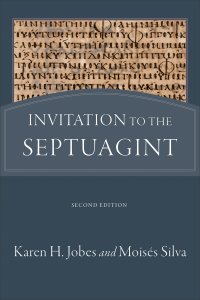
Invitation to the Septuagint 2nd EdDecember 1 is a long way away. But it’s the release date for two Baker Academic books I’m looking forward to checking out. (HT: Cliff Kvidahl.)


1. Going Deeper with Biblical Greek: Reading the New Testament with Fluency and Devotion, by Rodney A. Whitacre

From what I can tell, Whitacre explains lectio divina… using the Greek text. I had never even considered the possibility, but it sounds amazing.


2. Invitation to the Septuagint (Second Edition), by Karen H. Jobes and Moisés Silva

Jobes and Silva update and revise their classic work in Septuagint studies.

I’ll do what I can to report more on each of these books when they arrive. They are both volumes to eagerly await.


The Best Bible Atlas Ever, Cheaper Than It’s Ever Been

Front Cover


The best Bible atlas ever, Carta’s Sacred Bridge, is now cheaper than it’s ever been, thanks to a new distribution partnership between Carta Jerusalem and Hendrickson Publishers.

You can find it, for under $90, here at Hendrickson’s site. The accompanying younger sibling volume, Carta’s New Century Handbook and Atlas of the Bible, is $37.

HT: Brian Davidson.

Sermon Preparation in Action: Online Webinar by Abram K-J

Accordance Live Online Training


I’ll be presenting an online training webinar–Sermon Preparation in Action–twice for Accordance Bible Software in the coming weeks.

The webinar is free, and you can register here. The one-page outline of what I’ll cover is here.

The first session is this coming Monday, March 9, at 2:00 p.m. EST. Those registrations are almost full, so you can also register for the second session (the content is the same) on Monday, March 23 at the same link.

Accordance has quite a few other online trainings coming up. Check them all out.

Book Notice: The T&T Clark Companion to the Septuagint


I8 months ago I learned about the T & T Clark Companion to the Septuagint. It has now been released as an ebook in pdf form, available here, with the hard copy to be published very soon. You can pre-order through Bloomsbury here or through Amazon here.

The Companion is unique in Septuagint studies in that it offers a “handy summary of features for each of the Septuagint books” of the Bible. Here’s part of the publisher’s description of the book:

This Companion provides a cutting-edge survey of scholarly opinion on the Septuagint text of each biblical book. It covers the characteristics of each Septuagint book, its translation features, origins, text-critical problems and history. As such it provides a comprehensive companion to the Septuagint, featuring contributions from experts in the field.

And here’s a snippet from Genesis, via the Google Book preview:


LXX Companion Genesis

I’m looking forward to checking it out–it looks like it will be a welcome contribution for those of us who want to learn more about the Septuagint.