Who is the author of Honest Toddler? Identity revealed…

HT book cover

Her name is Bunmi Laditan. As recently as a week ago, the author of the forthcoming Honest Toddler: A Child’s Guide to Parenting was “anonymous.” But now the book cover (above, from Amazon) shows that HT is “written under the supervision of Bunmi Laditan.” Awesome. I’ve been curious about this since reading HT, as have hundreds of thousands of others. Here is her bio from the HT Google Books page:

BUNMI LADITAN started her first media company at age eighteen. Soon after, she launched and sold a social networking site geared toward moms and began a social media agency, working with Fortune 500 companies. She is a regular contributor to The Huffington Post, Mothering and iVillage.com, where her satirical pieces on parenting and politics have often gone viral. In May 2012, she created The Honest Toddler, a character based on her youngest child. She lives with her family near Montreal.

Love it. It looks like she’s just started her own blog, too, which I plan to read regularly. See, too, if you notice another difference in the cover above compared to what was on Amazon when I posted here.

I’ll be reviewing the book as soon as it comes out. Read much more about it (including the table of contents) here at HT’s blog.

Bunmi, thank you. Thank you for HT and for the laughter that little toddler has brought. You live far away, but if you ever want to bring HT over for a play-date, our 2-year-old will be happy to lead an expedition to the beach… or to the fridge.

UPDATE 5/6/13: Go here for a chance to win a free copy of Honest Toddler.

UPDATE 2: I review Honest Toddler here.

The Honest Toddler, available for pre-order

The Honest Toddler book

Yes, that image is the book cover of the upcoming Honest Toddler book, which you can now pre-order on Amazon. So excited to read it.

By the way, if you click on the image or link above, Amazon gives Words on the Word a small commission, so feel free to use that link if you’re going to get it anyway. Speaking of WotW, this blog’s url has dropped the wordpress.com ending and is now just abramkj.com. (Old posts automatically re-direct.)

Who is Honest Toddler? In the bio on the book’s Amazon page, we finally learn a few things about the writer behind HT:

The author was raised in the Bay Area. She started her first media company at age eighteen while attending Long Beach State University. Soon after, she launched and sold a social networking site geared toward moms and began a social media agency, working with Fortune 500 companies. She is a regular contributor to The Huffington Post, Mothering, and iVillage.com, where her satirical pieces on parenting and politics have often gone viral. In May 2012, she created Honest Toddler, a character based on her youngest child. She lives with her family outside of Montreal.

But it’s still by “Anonymous.”

Looking forward to more sage counsel from the most stress-relieving writer on parenting I’ve read.

Psalms of Lament (for “Scalding Tears”)

Psalms of Lament

Psalms of Lament is a heartbreakingly beautiful collection of poetry. Weems alarmingly yet assuringly gets right down to business in her Preface:

This book is not for everyone. It is for those who weep and for those who weep with those who weep. It is for those whose souls struggle with the dailiness of faithkeeping in the midst of life’s assaults and obscenities. This book is for those who are living with scalding tears running down their cheeks.

Her Psalms are for those whose experiences are “painful, too painful for any of us to try fitting our souls into ten correct steps of grieving.” They come from experience: Weems unexpectedly lost her son (“the stars fell from my sky”) just after his 21st birthday.

Drawing on the great biblical lament tradition, Weems writes lament psalms of her own. David’s familiar structure of

“How can you leave me like this, God?”–>”Yet I will trust you”

is on display throughout the collection. As personal as Weems’s psalms are, like David’s and Jeremiah’s laments, they are universal and could be prayed by anyone who is lamenting.

If you read with an open heart, Weems’s laments can evoke tears at nearly every line. And it’s a profound Godward lament in which she engages: “Anger and alleluias careen around within me, sometimes colliding.” There’s no bitterness here, but neither is there a naïve attempt to placate reality (as if we could!) with boring pseudo-truths like, “Everything happens for a reason,” or, “God took her away because he needed her for his heavenly choir.” Here is Lament Psalm Twelve, one of the starker and more personal psalms, in its entirety:

O God, what am I going to do?
He’s gone–and I’m left
with an empty pit in my life.
I can’t think.
I can’t work.
I can’t eat.
I can’t talk.
I can’t see anyone.
I can’t leave my house.
Nothing makes any sense.
Nothing seems worth doing.

How could you have allowed this to happen?
I thought you protected your own!
You are the power:
Why didn’t you use it?
You are the glory,
but there was no glory in his death.
You are justice and mercy,
yet there was no justice, no mercy for him.
In his death there is no justice for me.

O God, what am I going to do?
I’m begging you to help me.
At least you could be merciful.
O God, I don’t remember a time
when you were not my God.
Turn back to me;
you promised.
Be merciful to me;
you promised.
Heal me;
you promised.
My heart is broken.
My mind is broken.
My body is broken.
Nothing works anymore.
Unless you help me
nothing will ever work again.

O Holy One, I am confident
that you will save me.
You are the one
who heals the brokenhearted
and binds their wounds.
You are the power
and the glory;
you are the justice
and mercy.
You are my God forever.

The six “I can’t” statements (“I can’t think. I can’t work. I can’t eat. I can’t talk. I can’t see anyone. I can’t leave my house.) evoke the monotony and hopelessness that the grieving one feels. Yet three times: you promised… you promised… you promised. Given the way the poem begins, the last stanza seems almost out of place. But it’s a move David made (forced himself to make) in his Psalms.

I only wonder if those who grieve will be ready to pray along to the end of each psalm with Weems, as her laments so often end with an affirmation of God’s promises. For those whose grief is acute, fresh, and numbing, such prayers may at the moment be impossible.

Yet Weems gives us language for when we need it most, for when words of any kind are impossible. A person in the throes of grief not yet be able to say, “Alleluias spin in my heart!” But she or he may want to be able to make such affirmations, if not now, then eventually. Weems offers wording for the griever to attempt that journey. In so doing she provides a pattern for lament that is true to the biblical tradition, true to life.

Psalms of Lament 2Psalms of Lament is a gift to the Church and to those who grieve. Pastors, campus ministers, youth ministers, and worship leaders would all do well to have copies on hand. While Weems seems to have composed her laments with the individual in view, I’m intrigued by the possibility of reading and praying these psalms in corporate worship settings. A funeral or a Sunday after a tragedy would be particularly appropriate times. Yet if we consider, as Weems notes, the possibility of weeping with those who weep, those who pray would do well not to wait until a tragedy to employ these psalms.

Weems’s prayers floored me. I had turned to her before. As I read her again I never made it very far without choking back tears. (In my better moments, I gave up on trying to choke them back.) The tears Weems evokes, though, are not just tears of sadness, but tears of hope in the God who “will put the stars back in the sky.”

Thanks to Westminster John Knox Press for the review copy. I am confident I’ll want to pick up additional copies of Psalms of Lament for others. You can preview a good deal of the book at Google Books here.

More Books For Sale

I’ve got a few more books to offer for sale–largely an effort to make a bit more space on the shelf.

Here are some books and reference works (including a little bit of Bible software) that I’m offering for sale at a discounted rate. All prices include free shipping to U.S. addresses. Interested in anything? Contact me using this form, and we’ll talk.

IVP Bible Background

IVP Bible Background Commentary: New Testament
Like New
ISBN: 978-0830814053
Used just a few times. No markings. In great shape.
$22 (SOLD)

bdag

Greek-English Lexicon of the New Testament (BDAG)
for BibleWorks Software
Compatible with BibleWorks 5, 6, 7, 8, and 9. I’ve been in touch with BibleWorks to confirm that on completion of sale, one user license transfers to the buyer with no fee, so that you can use BDAG in your BibleWorks. (Must have purchased and own BibleWorks to be able to use this.)
Significant discount from buying new (where it’s $150).
$99 (SOLD)

Paradigms and Principal Parts

Paradigms and Principal Parts of the New Testament
Very Good
Inside clean, no marking. Sticker on back and ink/scuff mark on the front, other slight markings on cover, but nothing that obscures text
$22 SOLD

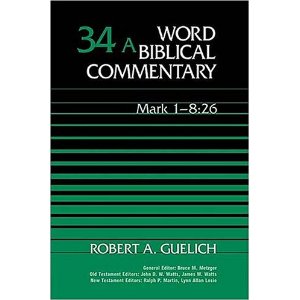
WBC Mark vol 1

Word Biblical Commetary: Mark 1-8:26 (Guelich)
Very Good
Clean inside. Strong binding. Barely used. Some wear to dust cover (small tear, small fold).
$20 SOLD

Ezra Nehemiah BHQ

Ezra and Nehemiah: Biblia Hebraica Quinta (BHQ)
Like New
Taken out of shrink wrap and used just once or twice.
Excellent condition.

$45 (SOLD)

Greek Grammar Wallace

Greek Grammar Beyond the Basics
Very Good/Like New
Just some edge and cover wear. Light blue cover as pictured, but same contents as dark blue cover.
$22

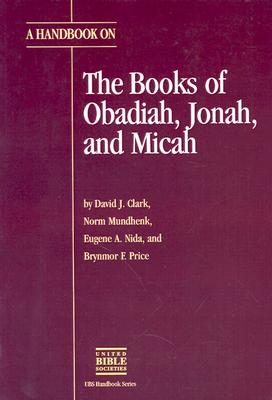
UBS Handbook

A Handbook on the Books of Obadiah, Jonah, and Micah
(UBS Handbook)
Like New condition
Barely used at all. Pulled off shelf just a couple of times.
$29 SOLD

HALOT

The Hebrew and Aramaic Lexicon of the Old Testament,
2 volume set (HALOT)
Very Good condition
ISBN: 978-9004124455
In great shape. Just some wear and tear (rubbing on page edges, e.g.).
No internal markings. 2 volume study edition (same full contents as 5 vol. edition).

$179 SOLD
Note: I also have HALOT in BibleWorks (see BDAG note above). Would possibly consider an offer.

Readers Hebrew English Lexicon

A Reader’s Hebrew-English Lexicon of the Old Testament
Very Good condition
ISBN: 978-0310369806
Former owner’s name on inside, no other markings. Small rip on top left corner of dustjacket, which has some other wear. Small crease on back cover of book, but does not affect integrity of book. Book itself in great shape. 720 pages.
All words that occur less than 50x in OT are listed in canonical order, verse-by-verse.
$39 SOLD

Free shipping on all orders. If you’re interested in buying–or just have questions–you can reach me using this form, and we’ll go from there.

3 Great Off-the-Beaten Path Books about Romans

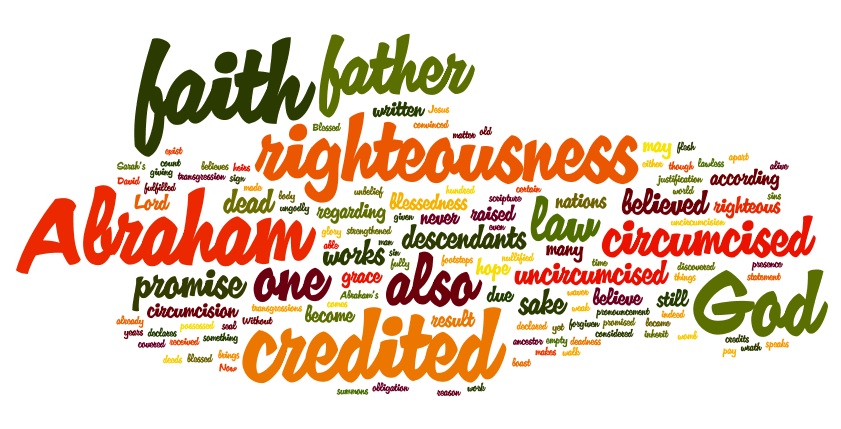
Abraham by WordleOver the past couple of months I’ve spent a good deal of time in Romans 4. The more I study Paul’s magnum opus, the more amazed I am by all that he packed in and the way he did it.

In my reading and writing on Romans, I’ve come across some great monographs. Here are three, with a sample quote from each. I’ll do three more tomorrow.

Pablo T. Gadenz, Called from the Jews and from the Gentiles: Pauline Ecclesiology in Romans 9-11. (Tübingen: Mohr Siebeck, 2009.)

In sum, Christians in the Church, stemming from Jewish and Gentile origins, can rejoice together in the salvation available by faith in Christ to all without distinction. “Rejoice, O nations, with his people!” (Rom 15:10). With humility, they can marvel at God’s plan for Israel, of which the Gentile-Christians in particular are beneficiaries. “O the depth of the riches and wisdom and knowledge of God! How inscrutable are his judgments and how unsearchable his ways!” (Rom 11:33) (p. 328)

Israel Kamudzandu, ‪Abraham As Spiritual Ancestor: ‪A Postcolonial Zimbabwean Reading of Romans 4. (Leiden: Brill, 2010.)

In Romans 4, Paul elevates Abraham as an ancestor of a new Israel, which includes Jews and Gentiles. …In this new situation, Paul gives a new meaning to the Torah as an integrator of all nations of the world. (p. 98)

Philip Francis EslerConflict and Identity in Romans(Minneapolis: Fortress, 2009.) I love this assessment. Before reading Esler, this is just how I had begun to understood Paul’s use of Abraham in Romans 4. Though he expresses it more eloquently than I could:

Above all, [the account of Abraham in Romans 4] carries forward Paul’s aim of recategorizing Judean and non-Judean Christ-followers in Rome into the new ingroup identity and does so by mobilizing collective memories to explain how both subgroups claim ancestry from Abraham in the same way—righteousness credited to them through faith. Abraham thus becomes the prototype of the new identity, portrayed by Paul in a manner peculiar to the needs of this communication and in the face of many rival construals of this patriarch that were possible in the ongoing processing of the past to serve the needs of the present. (p. 194)

Three more recommendations tomorrow.

Romans: Not Really about Justification by Faith?

Final AccountRomans…is not a theological tractate on justification by faith. It is not a pastoral letter dealing with the specific problems in Rome, as the Corinthian correspondence is with respect to Corinth. …Romans is Paul’s account of how his mission to the Gentiles was grounded not only in his call to be Apostle to the Gentiles but also in Scripture, the only Scripture the first Christians had, that is, the Old Testament.

–Krister Stendahl, Final Account: Paul’s Letter to the Romans

I didn’t need much convincing of the first sentence above. To be sure, Romans is a “theological tractate on justification by faith,” but it is not merely that. To read Romans as only about justification is to miss much of what Paul was about. But perhaps more on my own views about that later. For now, I offer here a review of Krister Stendahl’s Final Account: Paul’s Letter to the Romans (Fortress Press, 1995).

Final Account is a collection of Stendahl’s “notes and musings rescued from tapes.” That the five chapters contained here are based on lectures makes for engaging reading. Stendahl goes through Romans in more or less chapter order. Conspicuous is the absence of any treatment of Romans 16. At one point Stendahl speaks of “Romans 1-15” as a “think-piece epistle,” suggesting perhaps that he–along with other scholars–thinks chapter 16 does not really belong in the book.

The “final account” in Stendahl’s title is “Paul’s account of how his mission to the Gentiles fit into God’s total mission to the world, the tikkun, the mending of the creation…and hence particularly the redemption of Israel.” This account ends up being “final,” because Stendahl understands Paul’s execution at Rome as happening before he could write any more letters. Stendahl adds:

Consequently, Romans is central to our understanding of Paul, not because of its doctrine of justification, but because the doctrine of justification is here in its original and authentic setting: as an argument for the status of Paul’s Gentile converts on the model of Abraham (Romans 4).

In chapter 1, “Paul and Israel,” Stendahl notes Israel and its response to the Messiah as a primary concern of Paul: “How could it be that, while his mission to the Gentiles on the specific orders of Messiah grew spectacularly, Israel itself did not respond?” Chapter 2, “A Particular Letter and Sin Universal” covers Romans 1:1-3:20 and 15. Here Stendahl pushes harder against Lutherans who see only justification by faith in Romans, and against Calvinists who see it as just the breeding grounds for “the proper doctrine of predestination.” Instead, he contends, Romans addresses how Gentiles and Jews in that community are to relate to one another. Abraham is a key figure in the issue of Jew-Gentile relations, and “Paul’s Exegetical Find” of Stendahl’s chapter 3 is that Abraham was an uncircumcised Gentile in Genesis 15 when God “reckoned [his faith] to him as righteousness.”

Chapter 4 of Final Account addresses “Missiological Reflections by a Former Zealot,” covering the key section of Romans 9-11. Paul “thinks and feels and worries with his mind” about “his fellow Jews.” He wants them to “come toward salvation.” Stendahl highlights that Paul both identifies with Gentiles in Rome, including them in the salvation story, yet also warns them to not become arrogant–they are, after all, grafted in. Imperialism in missions today, by extension, should be avoided. Chapter 5 covers Romans 12-14: “Intellectual Worship and Respect for Conviction.” Here Stendahl looks at the “ethical admonitions” that Paul gives, which follow on the heels of the “great theological thought” Paul had had about justification.

Final Account by Krister StendahlStendahl is to be lauded for situating justification by faith in a larger context. He compellingly provides evidence that Paul was concerned about the salvation of Israel, the place of the Gentiles, and his mission–and concerned about justification by faith as just a subset of those larger concerns.

On the other hand, Stendahl occasionally goes too far with his thesis:

In any case, Paul is moving West. He has plans to go to Spain, and on the way he hopes to visit Rome. That is clearly the reason for his writing.

It’s a reason for his writing, perhaps even the occasion. But to say that Paul wrote Romans with the sole purpose of explicating his Gentile mission goes too far, in my view. It’s all of the above.

Stendahl quotes Scripture rather loosely at times. He acknowledges as much: “Most of the references to the text are my rather free translations and paraphrases.” And the short book comes with the entirety of Romans 1-16 in the RSV, printed at back. Being able to look up verses handily is a great feature here. But the reader quickly finds that she or he will want to double-check such “free translations” against a relatively literal translation like the RSV.

One can easily, then, seek to corroborate Stendahl’s notion that in chapter 15, “[Paul] stressed with words upon words that he had no interest in telling the Romans anything–how to live, or how to think or what to do.” The “urge” or “appeal” (RSV) of Romans 12:1 and the “I have written to you very boldly” (RSV) of 15:15 are just two of a number of places that make the reader wonder how Stendahl came up with that read of the text. He rightly notes that Rome was not a church planted by Paul, and that he wrote to give a “final account” of his mission to the Gentiles. But this does not preclude Paul’s telling the Romans at times “how to live, or how to think or what to do.”

The reader of Final Account will have to read it with caution. But Stendahl offers a refreshing read of Romans, that at least intends to stay close to the biblical text (even if it doesn’t always). His exploration of Paul’s mission to the Gentiles and concern for Israel’s salvation help the student of Paul to more fully appreciate Romans. And his insistence on setting the doctrine of justification by faith in a larger context will be a good challenge to many who so appreciate Paul’s magnum opus.

My thanks to the folks at Fortress Press for the review copy. Find Final Account at Amazon here, or at its product page on the Fortress Press site here.

Books I have for sale

Having seen a blogging friend sell some used books through his blog, I thought I’d try the same.

So here are some books and reference works (including a little bit of Bible software) that I’m offering for sale at a discounted rate. I have them listed online elsewhere, but the lowest rate I offer is here. It’s also generally the lowest rate online for a used copy. All prices include free shipping to U.S. addresses. Interested in anything? Contact me using this form, and we’ll talk.

bdag

Greek-English Lexicon of the New Testament (BDAG)
for BibleWorks Software
Compatible with BibleWorks 5, 6, 7, 8, and 9. I’ve been in touch with BibleWorks to confirm that on completion of sale, one user license transfers to the buyer with no fee, so that you can use BDAG in your BibleWorks. (Must have purchased and own BibleWorks to be able to use this.)
Significant discount from buying new (where it’s $150).
$119 (SOLD)

Biblia Hebraica Stuttgartensia

BHS (Biblia Hebraica Stuttgartensia), compact edition
Very Good condition
ISBN: 978-1598561630
No markings inside. Binding is a bit loose from front cover, but barely noticeable, and book is still in great shape.
$34 (SOLD)

UBS Handbook

A Handbook on the Books of Obadiah, Jonah, and Micah
(UBS Handbook)
Like New condition
ISBN: 978-0826701329
Barely used at all. Pulled off shelf just a couple of times.
$29 (SOLD)

HALOT

The Hebrew and Aramaic Lexicon of the Old Testament,
2 volume set (HALOT)
Very Good condition
ISBN: 978-9004124455
In great shape. Just some wear and tear. No internal markings. 2 volume study edition (same full contents as 5 vol. edition).
$179 (SOLD)
Note: I also have HALOT in BibleWorks (see BDAG note above). Would possibly consider an offer.

IVP Dictionary

IVP Dictionary of the Old Testament: Historical Books
Very Good condition (2 available 1 available)
ISBN: 978-0830817825
No marking inside. Barely used. One has rubbing on page edges.
$33 (SOLD)

Readers Hebrew English Lexicon

A Reader’s Hebrew-English Lexicon of the Old Testament
Very Good condition
ISBN: 978-0310369806
Former owner’s name on inside, no other markings. Small rip on top left corner of dustjacket, which has some other wear. Small crease on back cover of book, but does not affect integrity of book. Book itself in great shape. 720 pages.
All words that occur less than 50x in OT are listed in canonical order, verse-by-verse.
$39 (SOLD)

luke by bock

Luke (Baker Exegetical Commentary on the New Testament)
(2 Volumes)
, by Bock
Very Good condition
ISBN: 978-0801010514
Hardly used. Only flaws: name inscribed on inside of one book, tiniest of rips on part of dust cover, small smudge mark on outside of pages. Inside clean.
$60 (SOLD)

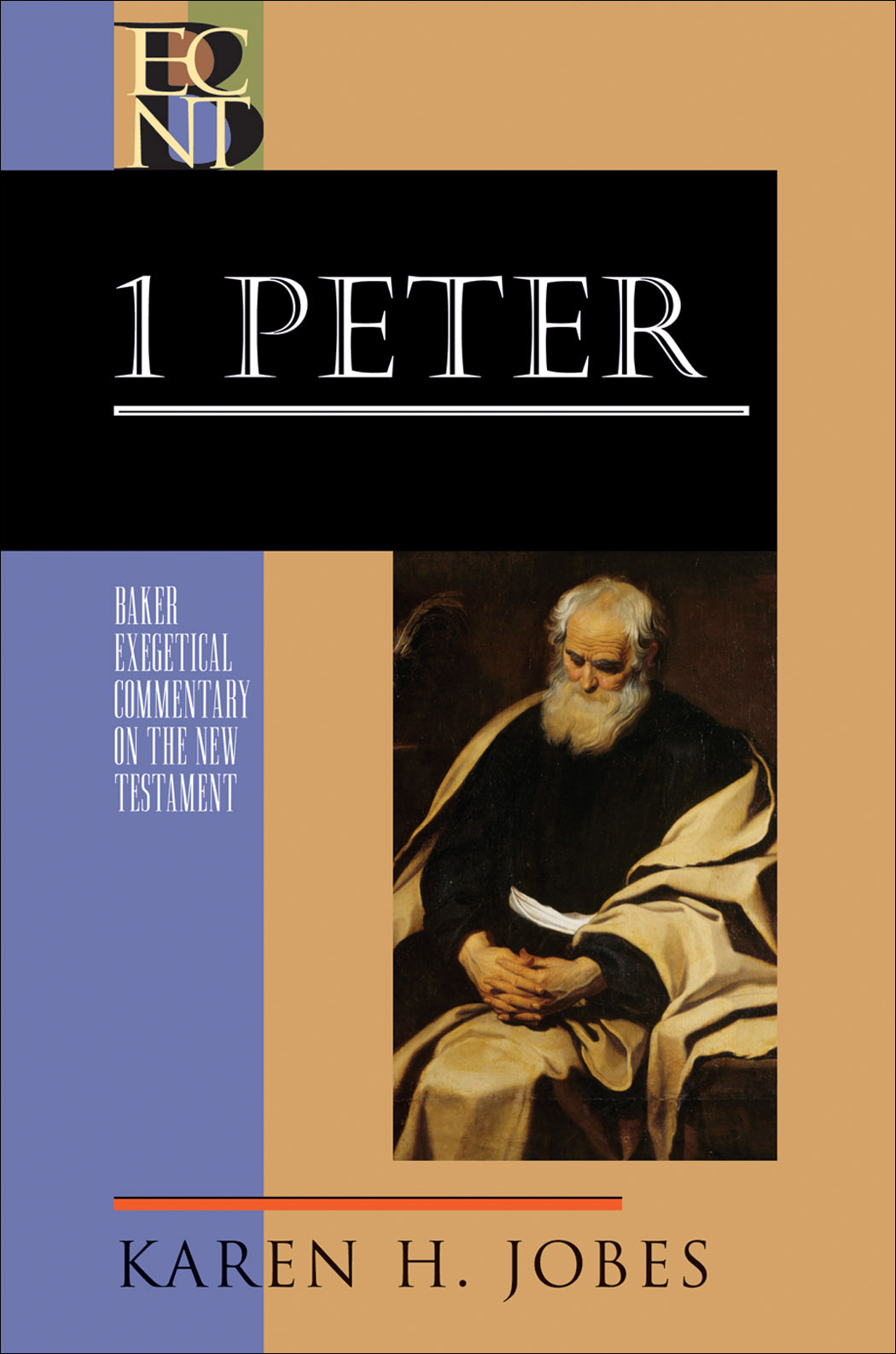
1 Peter by Jobes

1 Peter (Baker Exegetical Commentary on the NT), by Jobes
Very Good condition
Barely used: remainder mark, small dings on spine and corners of cover.
$22 (SOLD)

Free shipping on all orders. If you’re interested in buying–or just have questions–you can reach me using this form, and we’ll go from there.

Review of Beale’s Handbook at The Blog of the Twelve

I’ve just recently learned about The Blog of the Twelve. Based on what I’ve seen so far, it’s recommended reading, especially for folks with an interest in the Minor Prophets.

There is a good book review from that blog of G.K. Beale’s Handbook on the New Testament Use of the Old Testament. (That book was a text for one of my classes this semester.) An excerpt:

The usefulness of this book can hardly be stated for those seeking to rightly handle the Scripture, whether student, pastor, or laity. Beale’s clear writing style, in addition to the uncharacteristic conciseness of the book, makes the method accessible to a wide audience. Furthermore, Beale, while emphasizing the indispensable value of learning the biblical languages, formats the book in such a way that those not familiar with Hebrew and Greek are able to profit just as well from the work.

Read the whole thing here.

New NA28 Greek New Testament text is free online

na28The full text of the new NA28 Greek New Testament is available online for free. No critical apparatus (that will probably be for-pay only), but it’s nice to be able to easily access the text now. You can go here to do that.

More about the Nestle-Aland edition is here.

Amazon “cracking down” on reviewers… but not really

five stars

From the Sunday New York Times:

After several well-publicized cases involving writers buying or manipulating their reviews, Amazon is cracking down. Writers say thousands of reviews have been deleted from the shopping site in recent months.

Amazon has not said how many reviews it has killed, nor has it offered any public explanation. So its sweeping but hazy purge has generated an uproar about what it means to review in an era when everyone is an author and everyone is a reviewer.

The world of reviewing is certainly open to abuse and violations of ethics. (Not long ago I read a story about a British mystery writer who, under a fake name, wrote torching reviews of his competitor’s works, praising instead his own.)

So I understand the desire to regulate here. But what’s odd to me is this quote from an Amazon spokesman:

We do not require people to have experienced the product in order to review.

It would be difficult to prove “experience” of the product one way or the other, but I certainly don’t put any stock in reviews that say, “I haven’t read this yet, but….”

As one commenter on this article noted, what I often find most helpful in shopping on Amazon–whether for books or other products–is the negative reviews.

That doesn’t mean that 5-star reviews, however, are not all to be trusted. There’s a bit of self-selection that goes on here. To wit, I tend to only request review copies of books that I think will be worth my time, so my ratings are most often four and five stars. But honesty comes first, so three stars and lower is not out of the question, and has happened before. And I am not always right that I book I want to review ends up being as good as I might have thought.

It’s a no-brainer to me that someone ought “to have experienced the product” before reviewing it. But what are some other principles of reviewing that should constitute a good ethic for product reviews?