Now you can get 15% off any base package in Logos 6 through Words on the Word. If you order a base package through this Logos landing page, Logos feeds a percentage back to me, which I’d use for resources supporting the work of Words on the Word. (Current project I’m excited about: Greek Psalms in a Year.)
Check it out here, or just use the promo code ABRAMKJ6 when you checkout with a base package in your Logos cart. My review of Logos 6 is here.
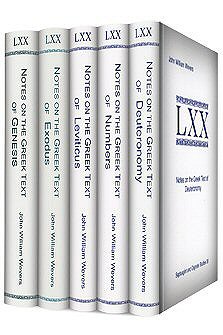
The best (only?) complete set of books on the Greek Pentateuch is now up on Pre-Pub through Logos Bible Software: John William Wevers’s Notes on the Greek Text.
The Society of Biblical Literature’s book page has a helpful write-up of the Deuteronomy volume, which gives a sense of what this series is about:
Wevers [spent] most of his adult life studying the Septuagint, the last thirty years being devoted to the Pentateuch. The author considers the Greek text to be the first commentary on the Pentateuch ever written (in the third century B.C.E.) and not merely a collection for emendations of the Hebrew text. The work focuses on how the translator accomplished his task and on the vocabulary and syntax of the resulting text, rather than on either scholarly opinions on the text or how interpreters subsequently used the text. The Notes are intended for students who would like to use the Greek intelligently but are not specialists in Hellenistic Greek or LXX studies.
You can find the 5-volume set on pre-pub at Logos here. Wevers also wrote valuable LXX-Pentateuch text histories, which are available free online in .pdf form, detailed here.
There are a lot of upgrade options. The upgrade process has not been as clear as it could be. But I think I’ve figured it out–and I was a beta tester! So if it hasn’t been clear to me, my hunch is that’s true for others, too.
In case it’s helpful to anyone else, here’s a short post on how to get Logos 6.
1. Free, Bare Bones, Later
On February 3, 2015, Faithlife (umbrella company for Logos) will make its Logos 6 engine free. It won’t have the datasets (mentioned below), nor the Interactives (see here), but I believe it will have basic improvements like the Search Everything and notes upgrades.
2. Crossgrade: Keep Your Current Library, Get Some (or All) of the New Features
Check out Logos 6’s new features here. I mentioned in my review of Logos 6 that the Interactives are, I think, the best part.
There are three crossgrade levels, and they’re pricier than you’d expect. They’re all noted and compared here. Crossgrades don’t give you new books, but they get you the Logos 6 engine (i.e., software), as well as its new features, interactive resources, media, and datasets. (I’m especially impressed at the moment by the Propositional Flow Outline.) As one of Logos’s pages puts it: “The crossgrade packages allow you to power your existing library with the new Logos 6 features.”
3. Base Package: Buy a Bigger Library, Get Some (or All) of the New Features
This is where it gets confusing. You can buy a Base Package–and previous purchases count toward your customized dynamic pricing–that gives you new texts, books, etc. and that gives you some or all (depending on the Base Package level) of the datasets, media, and interactive resources.
So if you bought Logos 5 Gold, Logos 6 Gold will cost you money, but not nearly as much as if you’re buying for the first time. Logos 6 Gold supplies you with all the new datasets and features, as well as some new books and commentaries.
For Base Packages you can choose from Starter, Bronze, Silver, Gold, all the way up through the Collector’s Edition. If you buy Bronze, for example, you get new books and some of the new datasets and interactive resources in Logos 6, but not all.
Making your decision more potentially difficult is that Logos offers denomination-based base packages at various levels.
UPDATE: Get 15% off base packages here, or use the promo code ABRAMKJ6 when you checkout with a base package in your Logos cart.
Logos 5 had what was acknowledged by the company to be an unclear rollout and upgrade process. The Logos 6 rollout has been better, but still could have been clearer (and should be simpler, perhaps with less options?).
The best single, succinct summary Logos has published on upgrading can be found here.
Logos 6 sports a number of new features. Here are my favorite ones so far. Click on any image or open in a new tab to see it larger.
1. Interactives
This is the most impressive part of Logos 6, in my view.
I would have loved to have the interactive “Psalms Form and Structure” when preaching through the Psalms this past summer. You can click on any of the Psalm bubbles above to get a structural outline and more information. As you can see in the left sidebar, you can sort the Psalms visually by genre (really helpful), attribution (author), and more. Out of all the Interactives, this one is my favorite: visually appealing and really practical. There’s also an Interactive for the Proverbs.
Searching your Logos library for “type:Interactive” pulls up all the Interactive resources in Logos 6. Here are a few more worth highlighting:
Bible Outline Browser: for any given Bible passage, it shows you any Bible text outlines in your library, so you can compare various ways of dividing the text.
Morphology Charts: if you’re looking at a Hebrew or Greek Bible text, you can click to see all the biblical uses of a given lemma in its various forms, and with frequency. A great feature for language learning.
Text Converter: it takes any Greek or Hebrew you put in and automatically translates it for you. As much as I try to use Greek and Hebrew, I’m still not very good at writing or reading them in their transliterated forms. This is a really handy resource. P.S. Handy tip of the day: You can already transliterate online, via Logos, free.
Hebrew Cantillation Structural Diagrams (!): uses the cantillation marks in the Hebrew Bible “as a clue to the structure” to turn the passage into a “hierarchical flow diagram.”
Here’s Logos’s video of the Psalms Form and Structure:
2. Factbook
It’s not the CIA, and it’s not Facebook, although it does sort of function like an amalgamation of the two (in a good way).
Factbook looks and feels like one of the Guides (Exegetical or Passage) Logos has, and updates what in Logos 5 was called Bible Facts.
Basically any noun (people, places, things, Bible books, events, etc.) pulls up a corresponding Factbook panel. If I’m researching Isaac, for example, typing “Isaac” into Factbook will pull up multiple collapsible hyperlinked sections where I can learn more about him: events in which he’s involved, resources in my library in which he appears (that I can click on for more), even a nifty “Referred to as” sub-section, so I can find all his mentions as “my son,” which is important for understanding Genesis 22, for example.
3. Search Everything
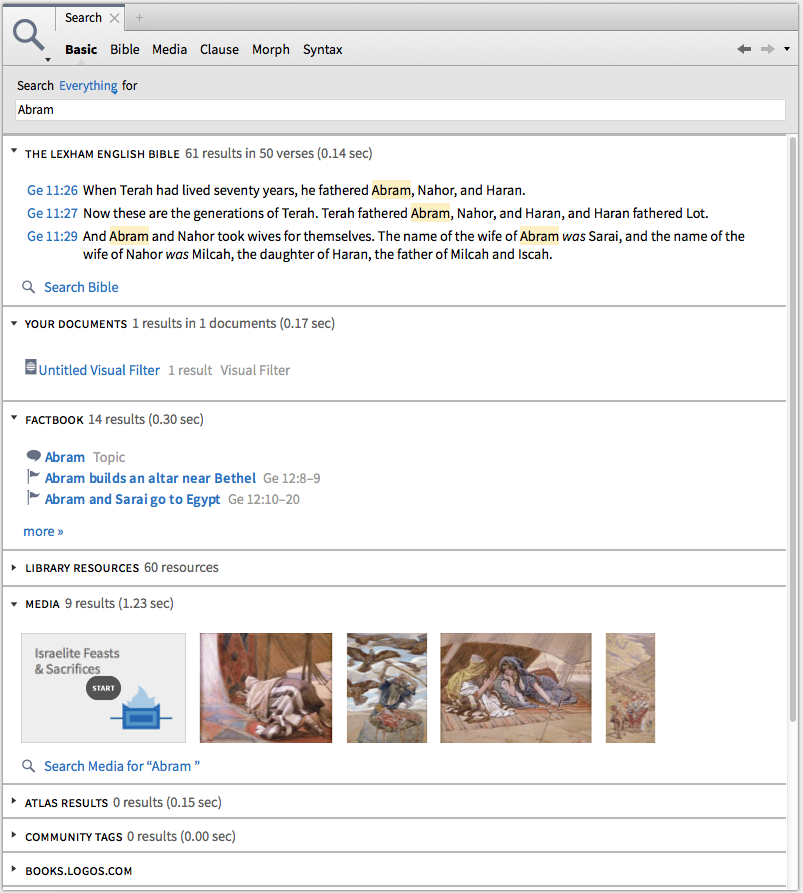
You can search across Bibles and commentaries and resources. Here are hit results, all of which are hyperlinked and can be explored for more, when I search everything for Abram:
The new Inline Search feature (watch it in action here) is pretty cool, too.
4. Ancient Literature / Cultural Concepts
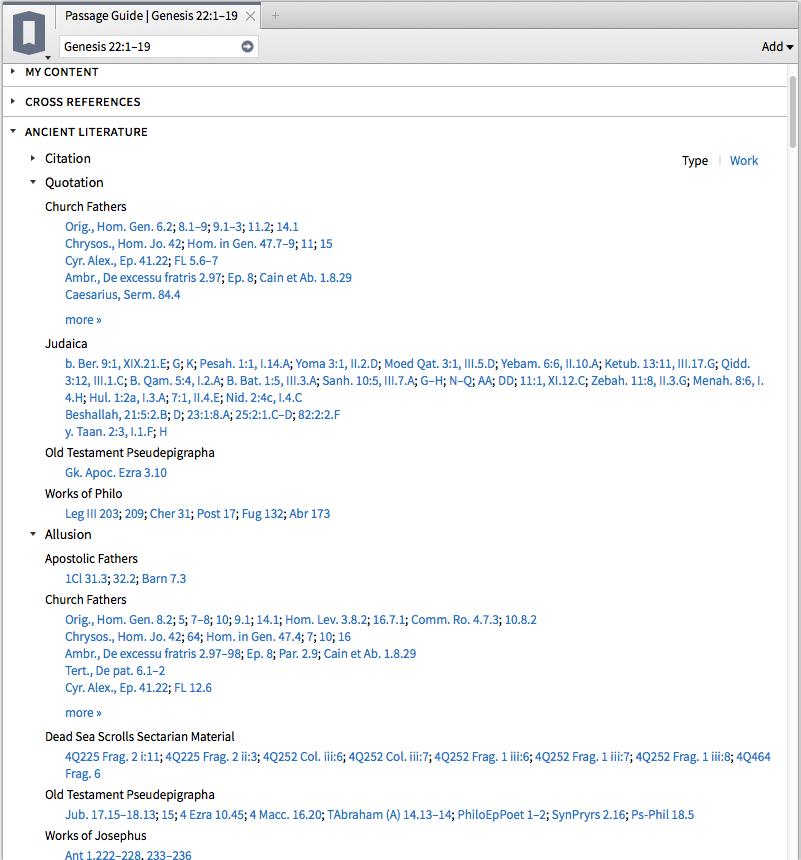
These are two new sections that can be accessed in the Guides (Passage Guide, Exegetical Guide, and Sermon Starter Guide is how I’ve gotten them). Have a look, and note that Ancient Literature is even sub-divided into Quotations, Allusions, and more:
and:
Need for Speed
I run Logos 6 on an early 2008 iMac, but with a hard drive that’s been replaced in the last year. As a point of comparison, Accordance runs well on the same machine and returns search results quickly.
Logos’s lack of comparative speed on a Mac (even newer ones) improved between Logos 4 and 5. And you can see that the search times in the Search Everything query above are quite fast and impressive. However, it’s not uncommon even in Logos 6 for what I would consider a simple search to take 3 to 5 seconds (or more) to return results. The frequent Indexing and “Preparing Your Library” messages on startup are a pain that I really hope Logos pays attention to improving (or eliminating), especially for Mac users.
I do understand from the Logos forums that PC users and those with Solid State Drives see faster performance, but I would use Logos more often if it had consistently faster overall performance.
Interactives for Sermon Preparation
All that said, the Interactives alone (which are not sluggish) make Logos 6 worth the price of the upgrade. Sure, you can Google “Israelite Feasts and Sacrifices” and hope for the best. Or you can open the Interactive in Logos and see (and sort) this:
And this:
How to Get Logos 6
Check out Logos 6 here, and use the promo code ABRAMKJ6 when you checkout with for 15% off base packages.
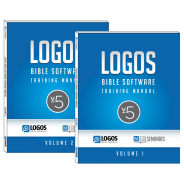
As often as I use Logos Bible Software for personal study, preaching, and teaching preparation, I’ve found the easily digestible guides by Morris Proctor to speed up my learning process in ways that even regular weekly use can’t. When Logos 5 first released, I read and reviewed Proctor’s “What’s New?” guide. And in my review of Logos 5 Gold, I found that guide and his two-volume Logos Bible Software Training Manual to be immensely helpful, especially in explaining the newly released (at that time) Bible Sense Lexicon.
That two-volume set is now on sale for 50% off. The product page describes it:
Volume 1 covers the necessary features you need to know to jumpstart your mastery of this incredible Bible study tool. Includes 33 chapters and 220 pages.
Volume 2 picks up where Volume 1 leaves off. The additional sections (242 pages) continue to help you unleash the power of Logos Bible Software 5.
It’s kind of ironic that the best one-stop shop of a training manual for Logos in 2014 would be a print edition (which is not available in Logos itself), but I actually have appreciated having that format. (And it’s cheaper and easier to get to than seminars, though I’m sure those are useful, too.) Having the manual in print makes it easier to keep focused on the software as I’m trying out the things the guide suggests.
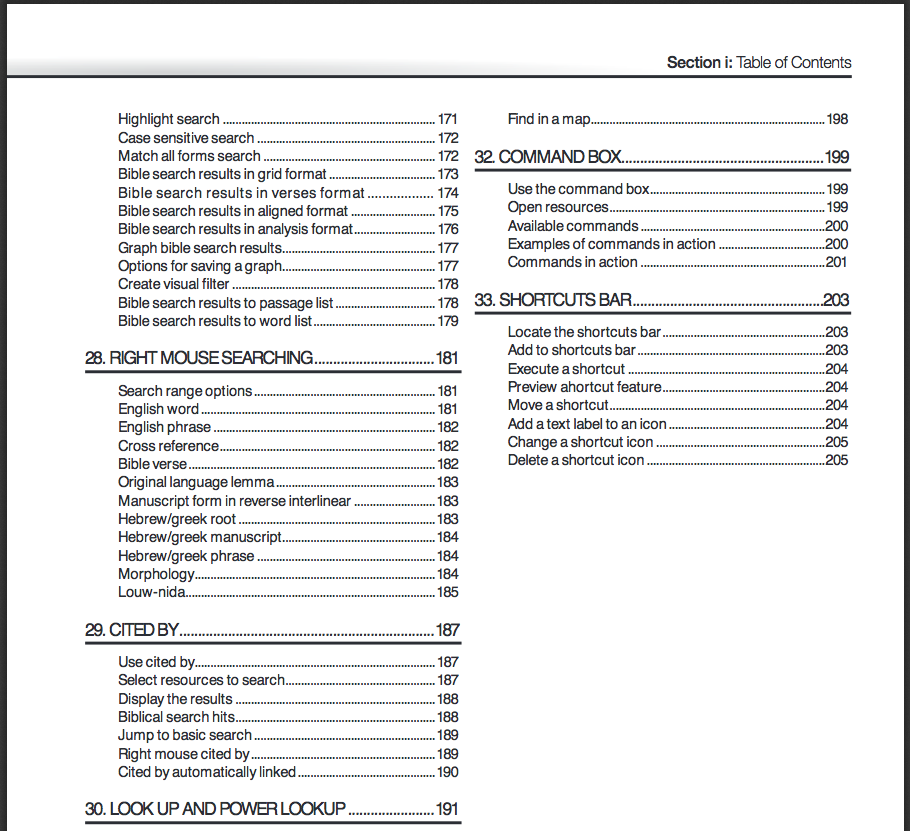
Just to give you an idea of the level of detail, here’s a snapshot of the Table of Contents for volume 1:
I felt at times when using the manual that the author was selling the product to the reader (“And there’s even more,” he notes on “Bible Searching,” and, “Those days are long gone,” he says about parallel printed editions of Bibles). I just chalked this up to his enthusiasm for the software, which is, indeed, an asset. (Though I still use plenty of books in print.)
Proctor’s explanations are clear, simple, and accompanied by screenshots that are well-labeled and easy to follow. The guides offer excellent attention to detail, including the suggestion of keystroke shortcuts to perform different tasks. Follow this link to see some of Proctor’s blog posts at Logos, which are similar in content and style to what’s in the manual. Having a spiral-bound binding is nice, too, because it means the books lay flat when set next to the computer you’re using.
You can check out a multi-page sample of the manual here, and find the product at MP Seminars’ site. Definitely recommended if you want to learn Logos 5.
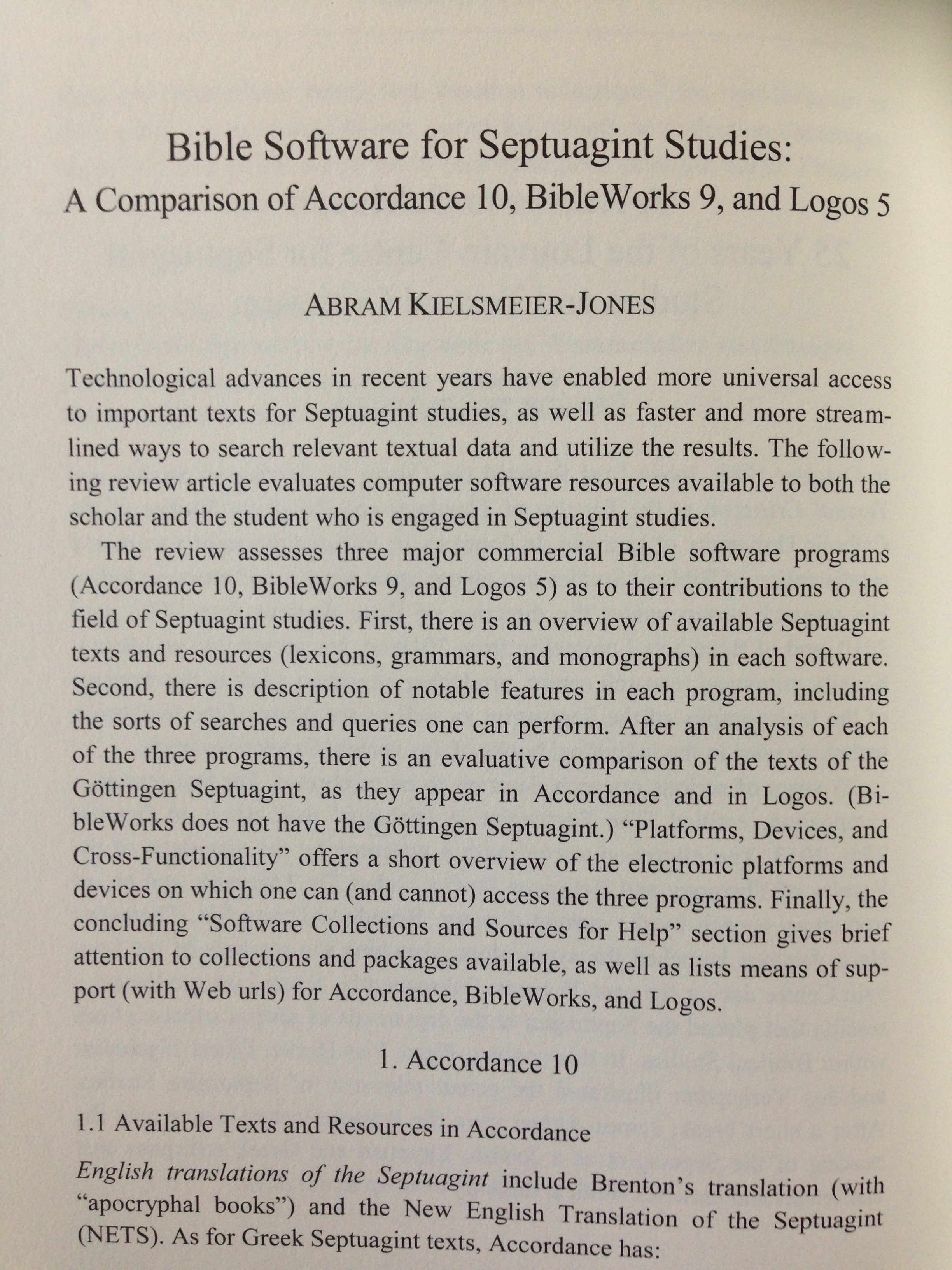
I’ve just come home to the new Journal of Septuagint and Cognate Studies (JSCS) in my mailbox. This volume (vol. 47, 2014) publishes an extensive comparative review I wrote of Bible software programs for Septuagint studies. In the review I consider and evaluate Accordance 10, BibleWorks 9, and Logos 5.
I’m excited to see it in press! Here are the journal cover, the contents, and the first page of the review. You can subscribe to JSCS at this link.
Especially since Eerdmans has a large number of resources in production right now at Logos Bible Software, I’ve started paying more attention to Logos’s Pre-Publication program.
Logos puts titles into “Pre-Pub” to help gauge user interest in various resources. When users pre-order a resource, that helps to cover the cost of production. If/when enough users pre-order, the title goes into development and the user gets it at the discounted pre-pub price when it “ships” (i.e., when it is completed).
Here is a short description from Logos’s Pre-Pub About page:
Prices start low and increase over time so the sooner you pre-order, the less you pay. We don’t charge you until your pre-order is ready, and we’ll send you a reminder email a few weeks before. If you decide you don’t want the resource anymore, you can cancel your pre-order at any time.
Here is a compilation of the newest Pre-Pub titles. (This one from Oxford University Press is pricey but looks good; here is When God Spoke Greek, which had enough pre-pub orders that it’s already under development and will probably ship within a month.)
Here is the Pre-Pub list sorted by Progress or “ship date,” so you can see which ones are almost ready to go–with the pre-order discount still applying, at least for now. There’s a bunch of Eerdmans stuff that will go out on August 6, including this collection that looks especially useful to pastors, including the book that is pictured above.
Here’s a short overview video of how Pre-Pub in Logos works:
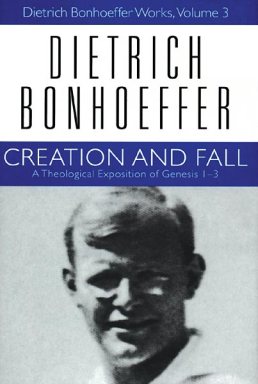
You may have read Bonhoeffer on the Sermon on the Mount, but did you know that he has a compelling and inspiring set of published lectures of Genesis 1-3, too?
for whom the terms “God spoke” and “it became so” are identical.
In Creation and Fall this idea reaches fuller expression:
That God creates by speaking means that in God the thought, the name, and the work are in their created reality one. What we must understand, therefore, is that the word does not have ‘effects’; instead, God’s word is already the work. What in us breaks hopelessly asunder–the word of command and what takes place–is for God indissolubly one. With God the imperative is the indicative.
This month Logos Bible Software offers Creation and Fall for free. I haven’t read the whole thing, but what I have read has helped even familiar chapters of Scripture come alive in new ways. Highly recommended.
You can find Creation and Fall for Logos here. As part of the same promotion, Logos is also offering Bonhoeffer’s Fiction from Tegel Prisonfor $0.99.
If you’re not already set up with Logos, feel free to message me here, and I’ll tell you how to do it.
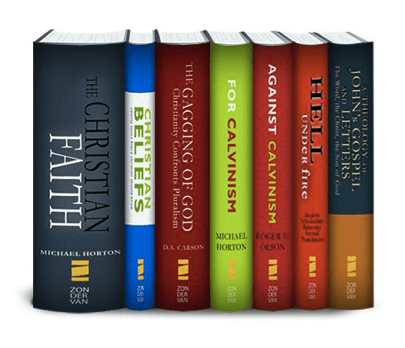
Want to enter for a chance to get some free theology books? These ones won’t even take up shelf space. I’m joining with a few other bloggers and Logos Bible Software for a giveaway of Logos’s Zondervan Theology Collection.
What’s Up for Grabs
The collection can be found here. It includes these books:
(It probably goes without saying that by posting about this collection, I don’t necessarily endorse or agree with the theologies of each of these authors.)
How to Enter the Giveaway
Logos will choose the winner at random on August 1, with the collection sent to that person’s Logos account. If you don’t have a Logos account, you can register for free here. An iOS app for Logos (and other mobile apps can be found here, also free.
To enter, log in below using either your email address or Facebook account, and the Punchtab widget walks you through the rest. You can choose which methods of entry to use. Each prompted action is its own entry.
Logos has this disclaimer: By entering this giveaway you consent to being signed up to Logos’ “Product Reviews” email list. (This just means you’d get emails with Logos-related content written by bloggers such as yours truly.)
UPDATE: WordPress doesn’t want to show the Punchtab widget for some reason. For now you can enter here.
I was checking to see what Fortress Press books Logos was offering, when I saw–to my very pleasant surprise–that they are offering Walter Brueggemann’s Spirituality of the Psalms for free. You can get it by clicking the image above.
I’ll be preaching through some Psalms this summer, so will be glad to have this short volume at hand. I’ll also be reviewing it from a print edition from Fortress, so keep an eye out for that in the coming months, too.













 Words on the Word