Review: How to Invest Your Time Like Money

How to Invest Your Time Like MoneyEven if you got only one thing out of Elizabeth Grace Saunders’s How to Invest Your Time Like Money, her idea of a Why are you awake? alarm makes the 75-page ebook well worth the purchase.

But there’s a lot more sage advice packed into the highly readable offering by HBR Press.

Saunders’s basic premise is a simple but compelling one: “You need to learn the skills to invest your time like money.” She elaborates:

When you invest your time as if it were money, you look at the reality of how much time you have available and the truth of activities’ time cost. You then make decisions that allow you to get out of time debt. And with this balanced budget in hand, you can then set up the structure to consistently invest your time in what’s most important.

Five chapters and an inspiring epilogue help the reader to consider how to best use her or his time in the service of identified values and priorities:

1. Take Control of Your Time and Your Life
2. Identify Your Time Debt
3. Create a Base Schedule
4. Set Up Automatic Time Investment
5. Maximize Your Time ROI
Epilogue: Remember What You’re Working For

I’ve read enough time management books to nearly expect the kind of introductory statement in the first chapter: “Most time management methodologies fail….” However, Saunders really does offer a unique angle on time management, writing, “Time, like money, must be invested to work for you now and support your ideal future.” This is what sets Saunders’s book apart from other task management writing. She boldly begins: “What will need to change is you.”

She helps the reader address psychological “barriers to success,” such as accepting the role of victim of other people’s expectations, playing the rescuer (and therefore taking on other people’s tasks), or even somehow thinking “a sane and sustainable schedule with (gasp!) free time” is an undeserved luxury.

I can imagine a hurried executive reading, “Accept the past and forgive yourself” and balking at an emotions-based approach, but I think Saunders is right on the money. We can’t fix how we manage our time without taking a careful, hard look at what’s behind our time-spending (and time-wasting habits).

So only after a full chapter devoted to examining the ways we undermine our effectiveness–and suggesting practical ways to combat this–does Saunders write:

Now you’re mentally and emotionally primed to authentically evaluate your time investment. So, it’s time to take a serious look at whether you’re in time debt and, if so, how you can move toward a balanced budget.

For the rest of the book, Saunders serves as the temporal equivalent of a financial advisor. What turned me on to the book in the first place is an excerpt HBR posted, where Saunders suggests a “formula to stop you from overcommitting your time.”

Chapters 2 through 5 then walk the reader through setting both a daily and weekly “time budget” and schedule. Saunders suggests how to help the actual match the envisioned. (One juicy nugget, via Arianna Huffington: “You can complete a project by dropping it.”) There is a difference, Saunders notes, between, “Do I have to do this?” and, “Do I have to do this now?

Even as the author deftly guides the reader through the nuts and bolts of scheduling, she continues to keep an eye on some of the deep-down causes that prevent us from spending time well:

[Y]ou need to uncover what’s at the bottom of your emotional resistance so that you can let go of it and make time investment decisions that serve your greatest and highest good.

Each chapter ends with a really helpful summary checklist, making it easy to translate ideas into actionable progress.

One thing that seems to be missing in this book is more specific advice on how to tally how much time various tasks will take. After all, part of the issue is that we often underestimate how long it will take to complete a task. Saunders does give advice here (a section called, “Improve Your Estimation of Time Costs”), though it is largely of the just estimate via trial-and-error variety.

That said, there may simply not be much else to do but to follow her sound advice to track one’s time to be able to “look back at the totals for similar past projects for data on realistic estimates.”

Even in book form Saunders is interpersonally and psychologically sensitive and insightful. And she so often calls the reader back–in an inspiring way–to the big picture:

In the end, getting the best return on your investment is not about whether you got the most tasks done but about whether you put time and effort into what’s most important to you.

By all means, go download this book right now. Schedule five 20-minute blocks to read it (this is what I did, and it worked great). And then schedule some more time to sit down with your calendar and put into practice all that Saunders recommends.


Thanks to HBR Press for the review copy of this awesome, succinct ebook. Find it here on Amazon, here at HBR’s site, and learn more about the book here at Elizabeth Grace Saunders’s site.


The JPS Bible Commentary on Exodus: Sarna Does it Again

JPS Torah ExodusI’ve come to Nahum Sarna’s JPS Torah Commentary on Exodus with high expectations. His Genesis volume in that series is one of the best commentaries I’ve read (on any book of the Bible).

So far, after spending long periods of my last Sabbath with the book, it’s lived up to expectations.

While I work on a review of the full volume, here are a couple compelling sections of Sarna’s commentary on the 10 plagues:

The present narrative is a sophisticated and symmetric literary structure with a pattern of three groups each comprising three plagues. The climactic tenth plague possesses a character all its own. The first two afflictions in each triad are forewarned; the last always strikes suddenly, unannounced. Furthermore, in the case of the first, fourth, and seventh plagues Pharaoh is informed in the morning and Moses is told to “station” himself before the king, whereas in the second of each series Moses is told to “come in before Pharaoh,” that is, to confront him in the palace. Finally, in the first triad of plagues it is always Aaron who is the effective agent; in the third, it is always Moses.

Having this literary outline in mind made me really appreciate the narrative artistry of Exodus in a way I might have otherwise missed.

Not only does Sarna offer expert literary analysis, his writing itself is lucid and reads more like a compelling novel than what you might expect from a technical commentary. That Chaim Potok is the literary editor of the JPS Torah Commentary does not hurt, either! It shows.

Sarna strikes an interesting balance between (a) reading the plagues as God’s using natural events and (b) reading the plagues as purely supernatural. Regardless of how the reader understands the text in this regard, Sarna highlights the theological import of the plagues:

The controlling purpose behind this literary architecture is to emphasize the idea that the nine plagues are not random vicissitudes of nature; although they are natural disasters, they are the deliberate and purposeful acts of divine will–their intent being retributive, coercive, and educative. As God’s judgments on Egypt for the enslavement of the Israelites, they are meant to crush Pharaoh’s resistance to their liberation. They are to demonstrate to Egypt the impotence of its gods and, by contrast, the incomparability of YHVH, God of Israel, as the one supreme sovereign God of Creation, who uses the phenomena of the natural order for His own purposes.

Plague by plague Sarna returns to this theme and draws it out.

I’m 12 chapters in (out of 40) and am appreciating Sarna’s wisdom on Exodus as much as his excellent work on Genesis. More to follow.


Many thanks to the folks at University of Nebraska Press/Jewish Publication Society for sending me the copy of the Exodus commentary for review. The book’s JPS product page is here; you can order it through Nebraska Press here. Find it on Amazon here.

Prefer an electronic edition? Accordance has the JPS Torah Commentary here.

Debate: The Lifeblood of Judaism, a “Holy Act”

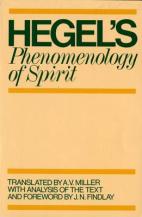
Phenomenology of SpiritEver since reading Hegel’s Phenomenology of Spirit in my undergrad days, I’ve often considered the world through the lens of Hegel’s dialectic. Plus, I always thought (and still think, if my sermon yesterday is an indication) it sounded really cool to talk about the “Hegelian dialectic” at work in the world. Yes, a little pretentious, too.

Dialecticophile that I am, I resonate with Rabbi Barry L. Schwartz’s idea that in Judaism, debate (thesis/antithesis) is “more than a valued intellectual exercise…. it is a holy act.”

What a refreshing outlook for anyone who grew up in religious settings that discouraged asking questions!

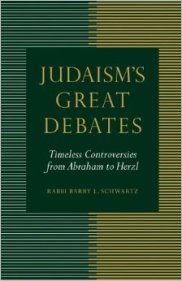
Schwartz’s Judaism’s Great Debates: Timeless Controversies from Abraham to Herzl (Jewish Publication Society, 2012) considers 10 debates in Judaism. He splits the book into three sections: Biblical Judaism, Rabbinic Judaism, and Modern Judaism. The 10 debates he considers are far-ranging: theological, ethical, legal, spiritual, and sociopolitical.

Here’s the publisher’s description of the book:

Ever since Abraham’s famous argument with God, Judaism has been full of debate. Moses and Korah, David and Nathan, Hillel and Shammai, the Vilna Gaon and the Ba’al Shem Tov, Spinoza and the Amsterdam Rabbis . . . the list goes on. Jews debate justice, authority, inclusion, spirituality, resistance, evolution, Zionism, and more. No wonder that Judaism cherishes the expression machloket l’shem shamayim, “an argument for the sake of heaven.”

Judaism's Great DebatesEach of the 10 debates comes to a head with a question that Schwartz considers. For example, the conflict between David and Nathan in chapter 4 considers the question, “Does Might Make Right? The Debate over Accountability and Morality.”

Schwartz helps the debates come alive by blending direct quotes from the Hebrew Bible or other primary source (in italics) with his own “added dialogue” (in regular print). As reluctant as a Bible-lover like myself might be to see words added to a biblical story, Schwartz does this with great reverence and care, in a way that really draws out the characters.

David, in Schwartz’s rendition of Nathan’s calling him out in 2 Samuel 11-12, for example, says, “What are you talking about? I am the king!”

That same chapter refers to prophets as those who “speak truth to power.” Schwartz puts it well:

The prophets were equal-opportunity gadflies; they clashed with kings and countrymen alike.

Issues for modern-day Judaism are included here, too–whether full inclusion of women (as in the Reform movement) or whether holiness is individually ascribed or somehow taken on by osmosis as member of a community. Each debate includes coverage of its original context (“the basic historical backdrop”), content (with emphasis on primary sources), and continuity (“how they echo throughout Jewish history”).

Judaism’s Great Debates would be great for a class or small group setting. Its reflection and discussion questions on p. 99 and following are thought-provoking and much better-written than most discussion questions at the back of a short book like this. (Any Palestinian Jews or Christians reading this book will probably be put off by what come across as pointed questions like, “Are civilians who aid terrorists innocent and deserving of noncombatant immunity?” and, “Should Israel negotiate with sworn terrorist organizations?”)

One other drawback (and the drawbacks are few) is the appearance of typos and some errant punctuation marks every few pages or so. This does not detract, though, from the overall high quality of the writing.

Anyone who wants to know more about Judaism–or anyone with a religious background of any type–will appreciate Schwartz’s boldness, even if it’s alarming:

Abraham’s bold challenge of God for the sake of justice was the first Jewish debate. Generations would look back at the founder of the Jewish people and follow his example. If Abraham argued, so should we. If Abraham had the courage to challenge God, so should we. If Abraham stood up for justice, so should we.

I would love to hear Rabbi Schwartz treat how we hold that reality in tension with the story of Job, whom God does not seem to appreciate being challenged by. That would be an interesting debate to have!

Here‘s an excerpt from the book. I found myself making a lot of pencil notes in the margins, which is a good sign of a book’s ability to engage its readers! It’s a book well worth reading and thinking through.

Thanks to the Jewish Publication Society for the review copy of the book! You can find Judaism’s Great Debates here at the publisher’s page or here at Amazon. See also my book note on the JPS Torah Commentary volume on Genesis, and my review of the JPS Commentary on Jonah.

F.F. Bruce’s Atlas for Young Readers

Bruce Bible History AtlasLast week we received a kindness in the mail from a new friend in Israel–F.F. Bruce’s Bible History Atlas.

My 7-year-old son, who had been looking forward to receiving it, came home from school and smiled widely when I had him open it.

He ran outside to share the good news with his younger siblings, who were running around with sticks and dressed up as a spaceman and ladybug, respectively. He was excited.

His first excited question to me when he came back into the house was, “Where is the battle page?” We have again been reading about the Maccabees recently in The Sacred Bridge (though, of course, I had to for now edit out the forced circumcision portion of that narrative!), so he was eager to find the Maccabees and Hasmonean era in Bruce’s atlas, which we were easily and quickly able to locate.

The atlas covers all of biblical history–both Testaments and everything in between.

The kind folks at Carta publish the Bruce atlas, as well as The Sacred Bridge. Their product page for Bible History Atlas (one of many fine atlases they offer) is here.

Two More Greek Gems from †Rod Decker

Rod Decker on Mark
Long awaited


Before Prof. Rodney Decker passed, he finished writing his Koine Greek Grammar, with which I’m already impressed–having just begun working through the Appendixes!

One other last (and sure-to-be lasting) contribution to the world of Greek readers is his two-volume commentary on the Greek text of Mark, from Baylor University Press. It is part of the Baylor Handbook on the Greek Text, which I’ve reviewed (Luke) here.

The two-volume set came in the mail today, courtesy of Baylor. Decker’s Koine Greek Reader is the best resource of its kind. His scholarship was always careful and engaging. These Baylor books–about which I will post again in the future–look like about the first thing you’d want to have by your side when reading through Mark.

You can find the books here.

The LEGO Movie: The Essential Guide

LEGO Movie Essential Guide


We are big fans around here of The LEGO Movie. My then-six-year-old offered a review of The Official Movie Handbook and the Junior Novel. My favorite two parts of that interaction were: “Emmet…falls out of a tower that, like, goes past heaven,” and his description of Bad Cop as “a bad police.” (No, I’m the only one who watches The Wire around here.)

DK’s Essential Guide does a great job of covering the movie. It has colorful two-page spreads of the main characters (Emmet, Wyldstyle, Benny, and more), as well as sections like “Emmet’s Big Idea” and “Everything is Awesome,” so you can learn all the lyrics to the movie’s catchy tune. “To the Kraglizer” shows both Benny’s Spaceship and Emmet’s Construction Mech–you get to see not just scenes of the movie, but the sets as they are currently packaged and offered by LEGO now.

A two-page “Behind the Scenes” section closes the book with Q and A, including such questions as “How much of The LEGO Movie set was developed as real LEGO models?”

The book is a bedtime (and daytime) favorite with my four-year-old and seven-year-old. They keep coming back to it. It’s great for bedtime reading, because, although we can’t read all 64 pages before bed, I can tell the kids we’ll read three characters, which can easily keep us engaged for 10 minutes. There’s a lot to pore over here. (MetalBeard’s short “Guide to Pirate Speak” on page 47 was fun.)

Here’s a look inside The Essential Guide, from the publisher’s UK page:


DK LEGO_Awesome


DK LEGO_Wyldstyle


DK LEGO_Master Builders


Lots of entertainment is waiting to be had here–our DK Essential Guide to the Cars movie is a well-loved household item, now missing its fold-out insert (from so much love). The LEGO Movie: The Essential Guide is already similarly appreciated around here, though all the pages are so far still in tact!


Thanks to DK Publishing for the review copy, given with no expectation as to the content of the review. Find The Lego Movie: The Essential Guide here at Amazon (affiliate link) or here at DK’s site.

A First-Year Textbook that Gets You Reading Hebrew A.S.A.P.

First Hebrew Primer“But when do we get to start reading Hebrew?”

The question was a near-refrain in my first semester of Hebrew class at seminary. After months of memorizing verbal paradigm charts and individual vocabulary words, I wondered he same thing.

I don’t mind a memorization-based or paradigm-based model for second language acquisition. I did fairly well in first learning Hebrew from the Pratico and Van Pelt Basics of Biblical Hebrew (see here and here).

But as I noted in my Pratico/Van Pelt reviews:

Some people disagree that paradigm memorization outside the context of a text or conversation is ideal pedagogy for language learning. … Even dead or ancient languages should be taught as “living languages,” proponents say. So some Hebrew textbooks encourage instead a text-based inductive approach.


Getting to Read Hebrew A.S.A.P.


The First Hebrew Primer (Third Edition, EKS Publishing) takes more of a reading-based inductive approach:

The goal of the Primer is to teach students to read and understand Biblical Hebrew as quickly as possible; therefore, the lessons emphasize recognition and translation – not memorization.

It succeeds well in this aim. Indeed, as soon as chapter 10 (out of 30), the student will be excited to begin her or his guided reading of Ruth:

Congratulations! You have learned enough Hebrew to begin reading the Bible—revised for your reading level. We have chosen Ruth because it is short, simple, and beautiful. In the beginning, the Hebrew text will be simplified, but as we progress, the text will approach the original. Before we finish the Book of Ruth, you will be reading the actual biblical text.

As soon as the Primer teaches the alphabet, it offers a host of a exercises for out-loud reading practice. The “Tall Tales” (folk tales) readings give students yet another chance to put into a reading context what they have learned. All the expected charts for nouns and verbs, vocabulary lists (with occurrence of 200x or more in the Hebrew Bible), and exercise sets are present throughout the book. But I especially appreciated its emphasis on reading early.


Updates to the Third Edition


What’s different in the Third Edition? Primarily, there is more grammatical detail offered.

This revised third edition introduces several new terms and clarifies grammatical points, but will look the same to long-time Primer readers. The key change we have made is the inclusion of new explanatory endnotes. Many readers have expressed a desire to deepen their knowledge of Biblical Hebrew, but have unanimously endorsed the clear, uncomplicated tone of the Primer. We have responded by adding these optional supplementary notes. Students may read the notes to enrich their understanding of Hebrew grammar or concentrate solely on the main text. Either way, the Primer provides a sound foundation for more advanced studies in the Hebrew Bible.

One gets the feeling that in the absence of those clarifying notes, some of the grammatical concepts are oversimplified. So the additional nuances expressed in the endnotes are imperative for laying a good foundation for later Hebrew learning. EKS Publishing uses its own name for some grammatical terms (“Word Pair” instead of “construct chain” and “regular infinitive” instead of “infinitive construct”).

I can see this being something a student would need to re-learn if she or her goes further in learning Hebrew grammar; I’m not sure the level of simplification here is always helpful or necessary. (And the lack of an index makes it difficult to trace discussion throughout the book of a given concept.) All the same, page 368 provides a “Guide to Grammatical Terms” with a table of “Our Name” and the “Traditional Name” for key concepts.


The Primer for Kids?


Hebrew Learning


Though the book is for “adult beginners,” my six-year-old son, whose Hebrew-learning adventures I have chronicled here, took an interest in The First Hebrew Primer once he saw it on the shelf. Chapter 3 (“The Sheva, Odd Vowels, and the Dagesh”) was particularly helpful, as the sheva had been giving him trouble. The Primer explains how to pronounce the sheva depending on where in a word it is:

  • Sheva at the beginning of a word: “always pronounced with a short, slurred sound”
  • Sheva at the end of a word: “always a silent vowel, and it is not pronounced at all”
  • Sheva in the middle of a word: “When a sheva appears alone in the middle of a word, it usually falls at the end of a syllable and is not pronounced.” (An endnote at this point offers additional illuminating detail.)

My son did astutely ask, “How do I correct myself if I get something wrong?” So I’ve gone through the Primer with him, rather than letting him use the Primer much on his own (even though he can read just fine). There is a companion audio CD available, which has to be purchased separately; self-guided learners will need it to be able to take full advantage of the oral exercises in the Primer.


Concluding Evaluation


The Hebrew font in The First Hebrew Primer is clear and easy to read. The exercises strike a nice balance between appropriateness for each lesson and being challenging. For example, in chapter 7 (“The Perfect Tense”), there is this:

EKS First Hebrew Primer

If you prefer an interactive, digital edition, Accordance Bible Software has a Primer package available for purchase here. The Accordance edition includes the primer, the answer key (otherwise a separate purchase), and more than an hour’s worth of accompanying audio. In other words, Accordance puts everything needed in one integrated and easy-to-use place.

Would I use The First Hebrew Primer as a textbook for a first-year Hebrew student? Definitely–despite the occasional lack of nuance in the grammatical explanations, its emphasis on oral practice, its engaging exercises, its inclusions of basic paradigms, and especially its introduction of reading early on make it a solid option for a first-year Hebrew text. As an added bonus, there are plenty of English to Hebrew exercises (and even an English-Hebrew Glossary), which will go a long way to help the student solidify Hebrew comprehension.


Thanks to EKS Publishing for the review copy of the Primer and answer key, offered for the purposes of this review, but with no expectation as to my review’s content. The publisher’s book page is here (answer key here). It’s also on Amazon (affiliate link) here (answer key here).

What I’m Reading to Keep My Greek and Hebrew Fresh

To keep my Greek and Hebrew active, right now I’m alternating between two books (and enjoying them both):


Prepositions and Theology


Murray J. Harris’s Prepositions and Theology in the Greek New Testament (Zondervan, 2012).

Without accepting a so-called “theology of prepositions,” Harris’s guide is readable and illuminating. I found his exegetical guide to Colossians and Philemon quite helpful. Here is a sample of Prepositions and Theology.


Jonah Handbook on Hebrew Text


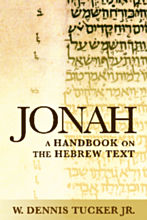
W. Dennis Tucker Jr.’s Jonah: A Handbook on the Hebrew Text (Baylor University Press, 2006).

I like this series already. I’m halfway through Jonah and finding Tucker’s handbook a welcome companion.

I’ll post a review of each when I finish.

Bonhoeffer’s Life Together for $2.99, Chance to Win 17 Bonhoeffer Works

DBWE Life Together


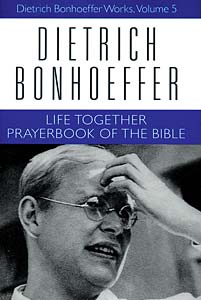
For $2.99, Fortress Press is selling Bonhoeffer’s Life Together, the purchase of which also gives you chance to win all 17 volumes of Dietrich Bonhoeffer Works (English Edition). This includes the new, forthcoming Volume 17: Index and Supplementary Materials.

Life Together is a powerful and heart-transforming book. I just finished reading it at the end of the summer, and reflected:

Bonhoeffer’s Life Together is substantial evidence that this servant of God saw himself as belonging to the church. The short, powerful book is both a gift and a challenge to any Christian who will take the time to study it.

My full review of the book is here.

Go here to check out Life Together for $2.99, as well as to have a chance to win the whole DBWE hardcover set.

Scot McKnight’s Sermon on the Mount Commentary, Reviewed

SGBC SMount


My mild obsession with the writings of Dietrich Bonhoeffer can be traced back to a question I asked myself and the congregation with whom I worship in early March: How can Ukraine love its Russian occupiers? And what would Bonhoeffer suggest?

The questions came from my wrestling through Matthew 5:38-48, which I find the be the most difficult passage in the Sermon on the Mount. I concluded, in part,

What seems a fairly straightforward statement, “Love your enemy,” is difficult. What does it mean to love enemies? In what spheres must that take place, and how should it happen, especially in the presence of an inordinately powerful evil? How categorical is Jesus in his forbidding of force? Was he speaking to disciples, or to disciples and states?

You can see how I landed (at least in a sense) at the end of this post.


Enter Scot McKnight


Scot McKnight’s Sermon on the Mount (The Story of God Bible Commentary, Zondervan, 2013) helped me wrestle through the difficult question of just what it means to “turn the other cheek.” While some interpreters (such as Luther) have sought to distinguish between private (interpersonal) and public (political) applications of this text, McKnight responds: “Utter nonsense.” Instead:

One of the main thrusts of the ethic of Jesus is the radicalization of an ethic so that we live consistently, from the so-called “private” to the “public” spheres. There is for Jesus no distinction between a secular life and spiritual life: we are always to follow him. His ethic is an Ethic from Beyond. But others, in words not so wrongheaded as Luther’s, have continued Luther’s personal vs. public or spiritual vs. secular distinction when it comes to ethics.

Jesus, McKnight persuasively argues, was not distinguishing between how the disciples should live in their private lives (whatever that would have meant) as opposed to in public. “The question every reader of the Sermon must ask,” McKnight goes on, is:

Does that world begin now, or does it begin now in private but not in public, or does it begin now for his followers in both private and to the degree possible in the public realm as well?


A New Commentary Series: SGBC


The Story of God Bible Commentary is a new series, with McKnight’s volume and Lynn Cohick’s Philippians volume being the first two published. As the name implies, the series is concerned to interpret and apply Scripture with an eye to how each passage relates to the larger biblical story:

We want to explain each passage of the Bible in light of the Bible’s grand Story. The Bible’s grand Story, of course, connects this series to the classic expression regula fidei, the “rule of faith,” which was the Bible’s story coming to fulfillment in Jesus as the Messiah, Lord, and Savior of all.

There are three primary sections in each passage:

1. Listen to the Story. With the assumption that “the most important posture of the Christian before the Bible is to listen,” the SGBC series begins with the full text of the passage under consideration (using the 2011 New International Version). The section also includes an introduction to the passage.

2. Explain the Story. From historical background to cultural context, from theological explanation to individual word studies, here is where SGBC unpacks “a sound and living reading of the text in light of the Story of God in the Bible.”

3. Live the Story. This is the “digging deeper” into “our world” section. The commentary series is not geared for an academic audience, which allows authors to spend more time imagining 21st century applications of a passage to life. This is especially helpful for preachers and anyone wanting to know how to live out a passage they are studying.


“Better People” or “Better Liars”?


McKnight wastes no time in convicting the reader, much as the Sermon on the Mount itself does. Just before the introduction he quotes Bonhoeffer, who says of the Sermon:

Its validity depends on its being obeyed.

And here’s Dean Smith, via McKnight:

The Sermon on the Mount has a strange way of making us better people or better liars.

(Ouch! But so true.)

McKnight agrees that the incongruence “between Jesus’ vision and our life bothers many of us.” Various interpretive attempts, he suggest, have made Jesus say what he did not really say. By contrast:

There is something vital—and this is a central theme in this commentary—in letting the demand of Jesus, expressed over and over in the Sermon as imperatives or commands, stand in its rhetorical ruggedness.

Jesus intended the Sermon on the Mount as “the claim of Jesus upon our whole being.”

So you can’t just read this commentary in a detached way or use it for dry or “objective” research (as if there were such a thing!). Throughout the commentary McKnight helps the reader hear Jesus’ demanding (yet life-giving) message in resounding terms.


McKnight on Jesus and Ethics


The commentary’s introduction has a substantive (and surprisingly helpful) section called, “The Sermon and Moral Theory,” where McKnight compares “Jesus’ moral vision” to other moral theories, whether Aristotle’s virtue ethics, Kant’s categorical imperative (deontology), or Bentham and Mill’s utilitarianism.

McKnight presents Jesus’ ethics through the conjoining lenses of:

  • “Ethics from Above”—Jesus speaks as God
  • “Ethics from Beyond”—”kingdom ethics” that seek to bring “God’s future to bear on the present”
  • “Ethics from Below”—based on human “inductive observation”
  • An ethical theory that is “messianic, ecclesial, pneumatic”—in Jesus’ “messianic vocation,” he believes that “an ethic can only be lived out in community (the kingdom manifestation in the church) and through the power of the Spirit now at work.”

The introduction offers no structural outline of the Sermon on the Mount. There is just a paragraph about its structure, saying that the matter is “incapable of any kind of firm resolution.” So the omission of an outline seems deliberate, but at least something preliminary would have helped–even a Table of Contents that shows the pericope divisions/commentary chapters at a glance, which this volume lacks.


The Commentary Proper


McKnight breaks the Sermon into 23 chapters in his commentary proper (chapter 1 treats both the very first and very last verses of the Sermon on the Mount together). Each chapter prints the full biblical text (it’s nice to have everything in one place), then proceeds with the sections noted above: Listen to the Story, Explain the Story, Live the Story. His experience in teaching and ministry is obvious throughout the book, which is a refreshing balance of deep exegesis, lucid prose, and convicting application.

To look briefly at just one passage, Matthew 7:12 says:

So in everything, do to others what you would have them do to you, for this sums up the Law and the Prophets.

McKnight writes:

Of the many ways to describe or articulate the Torah, two are pertinent in our text: one can either multiply laws so as to cover all possible situations, or one can reduce the law to its essence.

The verse, which he sets in biblical and rabbinical context, “summarizes the essence of the Sermon” (emphasis in original). And it has much to say to how we ought to live now:

But the Golden Rule is of direct value in relationships in churches. It takes but a moment’s thought to think it through: How do I want to treat others? How would I want to be treated?

*****

This is a fantastic commentary. It’s smart, well-researched, deep, engaging, challenging, and–perhaps best of all–like the Sermon it addresses, issues a clear call to righteous living according to God’s will.


Thanks to Zondervan Academic for the review copy, offered for the purposes of an unbiased review. Find it at Zondervan here or Amazon here.