Review of IVP’s Dictionary of the Old Testament: Pentateuch (Logos edition)

IVP OT Dictionary Pentateuch

Over the next few weeks I’ll be reviewing IVP’s Dictionary of the Old Testament: Pentateuch in Logos Bible Software. I’ll look at a few dictionary articles in each post, commenting on the content of each, as well as on the dictionary’s presentation in Logos.

I’ve reviewed Logos 4 and 5, looking at several packages and additional resources. Find those reviews collected here.

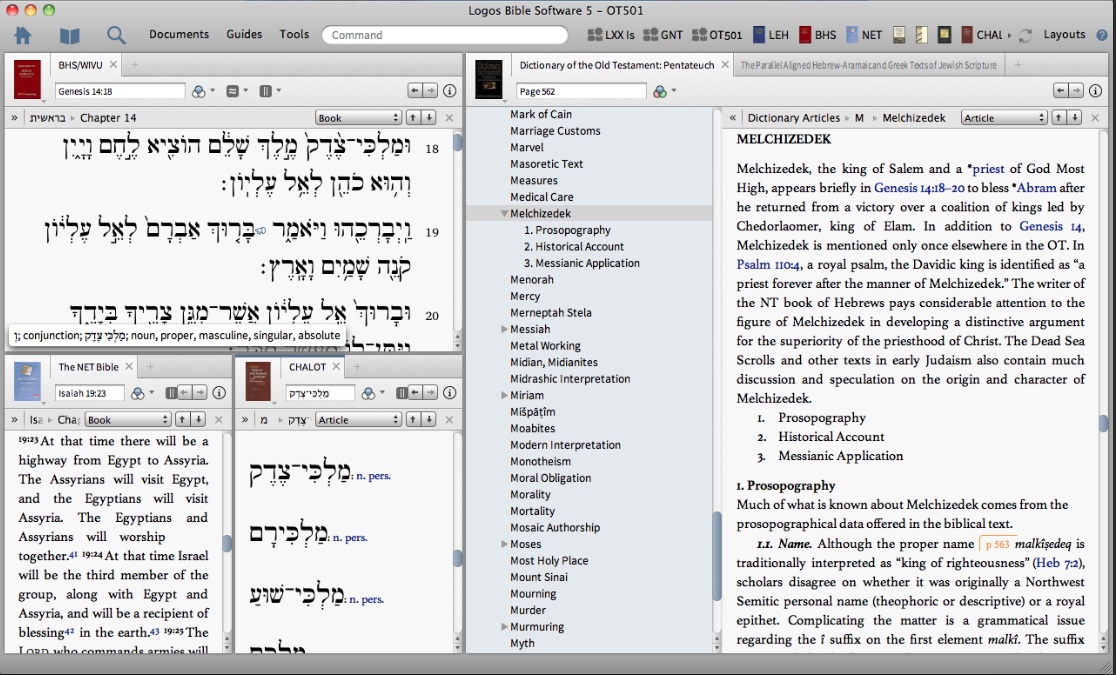
The dictionary is easy to lay out in Logos with other accompanying resources. Here I have it next to the Hebrew text with English translation and a Hebrew lexicon (click to enlarge):
IVP OT Dictionary Logos

As with all of Logos’s resources, you can hover over hyperlinked words (see “Heb 7:2” above) to see the Scripture without leaving that tab.

One solid feature so far (true of Logos resources in general): being able to use the shortcut command (Mac) or control (PC) + F to quickly find words in the entries.

One thing to critique so far: the items in the Table of Contents don’t expand to all the subpoints. In the shot above, for example, you can see that “1. Prosopography” under Melchizedek has “1.1. Name” in the entry, but not in the left sidebar Table of Contents. This makes navigating through multiple layers of detail a bit more cumbersome. (By contrast, the Accordance version of this module looks like it has the triangle that continues to expand, here.)

What about content of the dictionary itself? In this installment, I summarize and review three articles: “Sarah,” “Melchizedek,” and “Language of the Pentateuch.”

Sarah

R.G. Branch notes that Sarah and other “matriarchs of God’s people” are “equally significant” compared to the “widely recognized Israelite patriarchs” (733). Chief among these is Sarah. Even if there is not the amount of biblical material about Sarah that there is about Abraham, she remains a “pivotal character” in Genesis (733).

Branch divides the “Sarah” entry into two parts: “Sarah in the Ancestral Narratives” and “Sarah in the Later Tradition.”

In the first part Branch notes that Sarah, about 10 years younger than Abraham, is “the first matriarch of the biblical text” (733). Her childlessness in Genesis 11:30 is a key characteristic. Her first mention in that passage describes her barrenness, which “sets the tone for the stories about them that follow” (733). Sarai and Sarah (her name after God changed it in Genesis 17) both mean “princess” or “chieftainess.” Genesis records several threats to the possibility of Abraham and Sarah bearing offspring, not the least of which is two stories (in Genesis 12 and 20, which Branch understands as two separate incidents) of “marital deception,” where Abraham claims Sarah as his sister (734).

“In both cases,” Branch notes, “Abram feared for his life because of his wife’s great beauty” (734). It is this beauty that is the focus of the second part of the article, “Sarah in Later Tradition.” Branch cites various Jewish sources that extol Sarah for her immense beauty. She is also said to have been “surrounded” by miracles (735).

Branch gives a good, basic summary of biblical and Jewish rabbinic material about Sarah (as well as her importance for understanding Elizabeth in the New Testament), with citations that the reader can follow up for more.

Key statement from this article is: “Many of the issues in the stories about the couple can be understood as their struggle to come to terms with God’s promises of land, offspring, greatness and blessings” (734).

Melchizedek

Scripture contains very few references to the mysterious figure of Melchizedek. S.J. Andrews recounts Abram’s encounter with Melchizedek in Genesis 14:18-20, which Psalm 110 (noted as a “royal Psalm”) cites. Andrews also does well in noting the book of Hebrews’ understanding and interpretation of Melchizedek.

In “Prosopography” Andrews notes the complications that arise in trying to understand the name malkîṣedeq. Hebrews reads it as “king of righteousness,” but Andrews notes scholarly disagreement on “whether it was originally a Northwest Semitic personal name (theophoric or descriptive) or a royal epithet” (563). Therefore, “The name could mean either ‘(my) Malk/Melek is just’ or ‘Ṣedeq is my king’” (563). Either way, Genesis calls him “king of Salem,” which could be Jerusalem, or just mean, “king of peace,” as in Hebrews 7:2.

The “Historical Account” section of the article delves more into the story of Abram’s victory of kings and subsequent exchange with Melchizedek, where the latter gives the former bread and wine and a blessing, and the former appears to tithe to the latter.

In the final section, “Messianic Application,” Andrews explores various possibilities for the appearance of Melchizedek, what it meant, possible connection to a Messiah, and so on.

Andrews says, “The Qumran text 11QMelch portrays Melchizedek as an archangelic figure like Michael” (564), but he could have perhaps gone into more depth about the Qumran understanding of Melchizedek. However, his basic overview serves as a solid starting point for understanding the Melchizedek figure in biblical tradition.

Language of the Pentateuch

R.S. Hess’s “Language of the Pentateuch” article consist of three sections: “A discussion of the history of languages in and around Palestine during the third and second millennia b.c., a consideration of the grammar and style of the Pentateuch’s language in comparison with Classical Hebrew, and a study of those linguistic elements within the Pentateuch that might relate it to the period in which the narratives and events recorded in Genesis through Deuteronomy claim to have taken place” (491).

He offers a survey of Pentateuchal chronology, marking the date of the exodus as “sometime between the fifteenth century b.c and the end of the thirteenth century b.c.” (492), part of the Late Bronze Age. The Hebrew language is part of a family of West or Northwest Semitic dialects. There are not immense differences between the language of the Pentateuch and the language of (presumably) later Old Testament texts, but Hess does point out research around some “distinctive elements found in the Pentateuch that might set it apart from the grammar of the remainder of biblical Hebrew” (493), though these are few. Hess holds to an “early date” for at least the initial writing of the Pentateuch.

This particular article was a bit dry at times, but the level of detail is still to be appreciated.

So far my overall impression of the dictionary is positive. I will write more about it later. UPDATE: Part 2 is here.

The Dictionary is on Amazon here (in print) and at Logos here. My thanks to Logos for the review copy.

Five Kids’ Magazines We Enjoy

Here are five children’s magazines we particularly enjoy reading to our two-year-old and five-year-old:

High Five

5. High Five

“My First Hidden Pictures” and “That’s Silly!” are two favorite features of the magazine. It says it’s for ages 2 to 6, but it’s hard to imagine any two-year-old tracking with it. Better for slightly older kids.

Ranger Rick Jr

4. Ranger Rick, Jr.

It comes from the National Wildlife Federation. Given our five-year-old’s penchant for all things animal kingdom, this one is a hit. Today we learned from the April 2013 issue that giant tortoises can live to be 150 years old. Whoa.

ladybug

3. Ladybug

From the Cricket Magazine Group, Ladybug is the next age level up from Babybug (see below). Max and Kate are a fun ongoing storyline each month. Our five-year-old transitioned to this a year or more ago when he was getting too old for Babybug.

click magazine

2. Click

The awesomeness of this magazine caught us all unaware–I’d never heard of it before a grandparent-sponsored subscription began arriving in the mail. The March 2013 issue theme is “The deep blue sea.” Our five-year-old did the “make a fish” project on his own right away, with some scissors and glue. The magazine’s “Ocean Zones” section this month introduced us to the sunlight zone, the twilight zone, and the midnight zone, each of which support interesting and diverse kinds of life.

I just found out that Click is part of the same family as Ladybug and as…

babybug

1. Babybug

Babybug is really sweet. It is “for babies who love to be read to and for the adults who love to read to them.” (It’s good for toddlers, too.) Kim and Carrots is a favorite each month, and always seems to be appropriately themed for the time of year. Simple yet engaging illustrations go with memorable and fun-to-read poetry. No part of the magazine is more than three pages, so not a long attention span is required. It’s not uncommon for us to ask our two-year-old to pick some books to read, and for him to come to us with three Babybugs.

(It’s also not uncommon for me to walk in to the living room from the back of the house and see my five-year-old curled up on the couch with a New Yorker.)

How about any of you who regularly read to children? What magazines do you recommend?

Review of Morris Proctor’s “What’s New?” Manual for Logos 5

L5 What's NewLogos 5 does not operate in ways that are drastically different from Logos 4, but there are enough new features and modifications that a “What’s New?” guide for Logos 5 is useful.

Morris Proctor is president of MP Seminars, “the authorized trainer” for Logos Bible Software. With the release of Logos 5 in November, MP Seminars produced a “What’s New?” manual for Logos 5. It is not intended to be a stand-alone guide to Logos 5; those are here, and I’ll review them in a future post. Proctor assumes a general working knowledge of Logos 4 for this guide, though even as someone new to Logos in the last six months or so, I found it easy to follow his explanations.

The chief virtue in this manual is its attention to detail–down to offering various “keystroke” shortcuts for tasks in Logos 5. “What’s New?” covers Logos 5 for both Mac and Windows. There are screenshots throughout with clear labels and instructions. For example:

MP example

The instructions are clear and easy to follow. The consistent use of illustrations like the above make “What’s New?” a reference guide to keep near the computer. (The plastic spiral-bound construction of the book means it easily lays flat.) The screenshots are printed in black and white, but that does not detract from their clarity.

Even having spent significant time with Logos 5, I found details through this manual that I never would have thought to look for. For example, MP notes a new item in the “Information” panel called “Translated,” which displays various Bible translations of a given word in one place. The sections on the Bible Sense Lexicon (ch. 14) and Clause Searching (ch. 5) are especially good at explaining new features from the ground up, in a way that someone using Logos 5 for the first time could easily understand. MP has probably the best short explanation of the new Bible Sense Lexicon that I’ve seen–he calls it an “orchard with trees bearing branches,” a phrase he then unpacks in helpful detail.

I did find myself wanting a bit more from the section on the new “Sermon Starter Guide.” MP describes the basic headings found in that guide, but there is not a lot of information about how to work within the guide’s results. For example, it is clear from the manual how to generate the report and understand the headings it provides, but there is not mention of the fact that from a passage-based report, you can click on a theme to open an new theme-based report, or that you can click on “x” next to a heading to close that section altogether. Perhaps MP goes into this level of detail in the full Logos 5 manuals.

There is often mention of what Logos “can do for you,” or the assertion that “Logos is here to help,” and so on. This made me feel a few times like I was being sold to, which is unnecessary since anyone using this manual will already have Logos 5. This is a small distraction, through.

Here’s the Table of Contents, detailing what the 68-page manual covers:

1. Appearance and Tabs
2. Home Page
3. Library
4. Searching
5. Clause Searching
6. Documents Menu
7. Bibliography
8. Word List
9. Guides
10. Sermon Starter Guide
11. Topic Guide
12. Tools Menu
13. Bible Facts
14. Bible Sense Lexicon
15. Timeline
16. Visual Filters
17. Root Words

Even with Logos 5 under my belt for a few months, the “What’s New?” manual from MP Seminars has really deepened my understanding of the new features in that program. It’s a good guide for the transition from Logos 4 to 5.

Thanks to MP Seminars for the copy of the Logos 5 – What’s New? manual to review. You can find it available for purchase here.

Review of Basics of Biblical Hebrew: Video Lectures

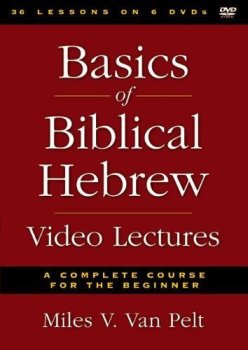
Miles Van Pelt keeps turning out the hits. Through Zondervan he has published resources that fill a gap in original language learning in biblical studies. I’ve reviewed (with approval) his Biblical Hebrew: A Compact Guide, his Basics of Biblical Aramaic, and have been grateful in my Göttingen Septuagint primer to link to a short two-page abbreviations sheet he produced for that critical edition of the Septuagint.

This fall Zondervan released Basics of Biblical Hebrew: Video Lectures.

The DVDs work “chapter by chapter, section by section” through Pratico and Van Pelt’s Basics of Biblical Hebrew grammar textbook. The videos are “the basic content in lecture form for the grammar.” Here’s how Van Pelt recommends using the DVDs:

  1. Read the chapter of Basics for Biblical Hebrew “for simple content overview.”
  2. Watch the lectures.
  3. Go back to the printed chapter and memorize the relevant information (vocabulary, paradigms, charts, grammar).
  4. Complete the workbook exercises.
  5. Check your answers.

Each DVD chapter corresponds to a chapter in the textbook. The DVDs come with a pdf file that includes summary charts. Throughout the lectures Van Pelt refers to these charts and the screen moves to them as he is speaking.

There is nothing particularly novel or revolutionary in the videos that is not already covered to some degree in the textbook. But especially for a student who is making her or his way through the book alone, the video lectures serve to reinforce the material in a new medium. Even a student taking a course with a live lecturer could benefit from watching these alongside the class.

Van Pelt is a solid lecturer. If not overly exciting, he communicates concepts clearly. For just about anyone making their way through the grammar, it will be easy to follow these lectures.

He offers good study tips in the introduction, and continues to encourage learners throughout the 36 lectures. My favorite tip: “Begin reading your Hebrew Bible as soon as possible,” and, “Take that Bible with you everywhere.” I remember that often in my first year of Hebrew (I used the Van Pelt and Pratico text), I wanted to just be able to read the Hebrew Bible. There are examples throughout the grammar from the Bible, but learning charts and paradigms first can be tedious. This is perhaps a necessary tedium.

Or is it? Some people disagree that paradigm memorization outside the context of a text or conversation is ideal pedagogy for language learning. (Look at how babies acquire language, after all, the argument goes–by hearing, talking, etc., not by memorizing grammatical rules.) Even dead or ancient languages should be taught as “living languages,” proponents say. So some Hebrew textbooks encourage instead a text-based inductive approach.

Van Pelt at one point in the lectures says, “Languages are meant to be accessed and decoded in your mind,” though “decoding” is something a language learner ought to try to move away from as quickly as possible, as she or he seeks fluency. And an early strong verb paradigm has Van Pelt saying, “You must memorize this paradigm, like a ROBOT!”

Hebrew and other languages have been taught this way for a long time, and some language learners may not mind it. I, for example, find paradigm memorization tedious, but not overly difficult. If I have an end goal firmly in mind–reading the Hebrew Bible–I have motivation to repeatedly go over verb conjugations.

But I don’t think this approach will work for everyone, and the potential viewer of these videos should understand that Van Pelt takes a paradigm-memorizing approach to learning Hebrew, with not much inductive learning or interaction with the biblical text. (I think of my high school Spanish teacher, who would not answer classroom questions asked in English, but would simply say, “¡En Español, por favor!”)

Van Pelt and Pratico’s materials use verbal diagnostics. Paradigm charts show in red what the unique prefixes and suffixes and vowels are for each verbal stem, so that it is not just rote memorization of multiple verbs. The diagnostics are a time-saving feature in this sense. As here:

Diagnostics

For those interested in verbal theory, Van Pelt uses perfect (“completed action”) and imperfect (“incomplete action”) nomenclature to describe verbs.

The lectures are well-produced and alternate between views of charts like the one above, real-time writing (like a dry-erase board), and Van Pelt speaking. The clarity of the lectures is a strong point, as they reinforce the material in the textbook well.

If a student is already assigned the Pratico and Van Pelt text, he or she should seriously consider using the lectures as an additional study aid, if one is needed. If a student or professor has a choice as to which text to use for learning Hebrew, though, it is worth considering (either in addition or instead) other “living language”/inductive approaches. Randall Buth’s Living Biblical Hebrew or John H. Dobson’s Learn Biblical Hebrew are two possible texts.

Chapter 1 of the lectures is here, if you want to get a flavor of the lectures (it’s just over an hour):

Thanks to Zondervan for the review copy. You can find the Basics of Biblical Hebrew Video Lectures here at Amazon. The Zondervan product page is here.

New Phoenix Single (STREAM): Entertainment

phoenix bankrupt

It’s been a long time since the last Phoenix record, but today they premiered their new single, Entertainment:

This follows on a tantalizing one minute clip from the new album:

I love the one minute clip; still making my mind up about the single. But I can’t wait for this record to come out in April.

Psalms of Lament (for “Scalding Tears”)

Psalms of Lament

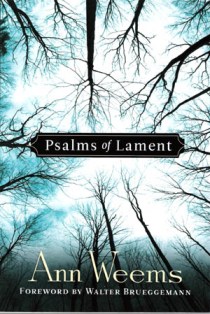
Psalms of Lament is a heartbreakingly beautiful collection of poetry. Weems alarmingly yet assuringly gets right down to business in her Preface:

This book is not for everyone. It is for those who weep and for those who weep with those who weep. It is for those whose souls struggle with the dailiness of faithkeeping in the midst of life’s assaults and obscenities. This book is for those who are living with scalding tears running down their cheeks.

Her Psalms are for those whose experiences are “painful, too painful for any of us to try fitting our souls into ten correct steps of grieving.” They come from experience: Weems unexpectedly lost her son (“the stars fell from my sky”) just after his 21st birthday.

Drawing on the great biblical lament tradition, Weems writes lament psalms of her own. David’s familiar structure of

“How can you leave me like this, God?”–>”Yet I will trust you”

is on display throughout the collection. As personal as Weems’s psalms are, like David’s and Jeremiah’s laments, they are universal and could be prayed by anyone who is lamenting.

If you read with an open heart, Weems’s laments can evoke tears at nearly every line. And it’s a profound Godward lament in which she engages: “Anger and alleluias careen around within me, sometimes colliding.” There’s no bitterness here, but neither is there a naïve attempt to placate reality (as if we could!) with boring pseudo-truths like, “Everything happens for a reason,” or, “God took her away because he needed her for his heavenly choir.” Here is Lament Psalm Twelve, one of the starker and more personal psalms, in its entirety:

O God, what am I going to do?
He’s gone–and I’m left
with an empty pit in my life.
I can’t think.
I can’t work.
I can’t eat.
I can’t talk.
I can’t see anyone.
I can’t leave my house.
Nothing makes any sense.
Nothing seems worth doing.

How could you have allowed this to happen?
I thought you protected your own!
You are the power:
Why didn’t you use it?
You are the glory,
but there was no glory in his death.
You are justice and mercy,
yet there was no justice, no mercy for him.
In his death there is no justice for me.

O God, what am I going to do?
I’m begging you to help me.
At least you could be merciful.
O God, I don’t remember a time
when you were not my God.
Turn back to me;
you promised.
Be merciful to me;
you promised.
Heal me;
you promised.
My heart is broken.
My mind is broken.
My body is broken.
Nothing works anymore.
Unless you help me
nothing will ever work again.

O Holy One, I am confident
that you will save me.
You are the one
who heals the brokenhearted
and binds their wounds.
You are the power
and the glory;
you are the justice
and mercy.
You are my God forever.

The six “I can’t” statements (“I can’t think. I can’t work. I can’t eat. I can’t talk. I can’t see anyone. I can’t leave my house.) evoke the monotony and hopelessness that the grieving one feels. Yet three times: you promised… you promised… you promised. Given the way the poem begins, the last stanza seems almost out of place. But it’s a move David made (forced himself to make) in his Psalms.

I only wonder if those who grieve will be ready to pray along to the end of each psalm with Weems, as her laments so often end with an affirmation of God’s promises. For those whose grief is acute, fresh, and numbing, such prayers may at the moment be impossible.

Yet Weems gives us language for when we need it most, for when words of any kind are impossible. A person in the throes of grief not yet be able to say, “Alleluias spin in my heart!” But she or he may want to be able to make such affirmations, if not now, then eventually. Weems offers wording for the griever to attempt that journey. In so doing she provides a pattern for lament that is true to the biblical tradition, true to life.

Psalms of Lament 2Psalms of Lament is a gift to the Church and to those who grieve. Pastors, campus ministers, youth ministers, and worship leaders would all do well to have copies on hand. While Weems seems to have composed her laments with the individual in view, I’m intrigued by the possibility of reading and praying these psalms in corporate worship settings. A funeral or a Sunday after a tragedy would be particularly appropriate times. Yet if we consider, as Weems notes, the possibility of weeping with those who weep, those who pray would do well not to wait until a tragedy to employ these psalms.

Weems’s prayers floored me. I had turned to her before. As I read her again I never made it very far without choking back tears. (In my better moments, I gave up on trying to choke them back.) The tears Weems evokes, though, are not just tears of sadness, but tears of hope in the God who “will put the stars back in the sky.”

Thanks to Westminster John Knox Press for the review copy. I am confident I’ll want to pick up additional copies of Psalms of Lament for others. You can preview a good deal of the book at Google Books here.

Göttingen in Logos is On Sale Friday

Photo by Logos
Photo by Logos

$369.95 for the Göttingen Septuagint in Logos Bible Software. It’s on sale for International Septuagint Day, all day Friday (midnight to midnight). If you click here, it adds to your cart, and you can purchase from there–whether you already have the academic discount or not. Marked down from $700.

I reviewed the Göttingen Septuagint in Logos here. Its product page is here.

The Göttingen Septuagint in Logos Bible software

Photo by Logos
Photo by Logos

Göttingen. Not just a city in Germany, but a word that instills awe and fear in the hearts of every student of the Septuagint who must eventually consult the set of Old Greek editions by that name.

Okay, that’s maybe a bit dramatic. I do suspect, however, that if one finds it challenging to learn how to read the leading critical edition of the Hebrew Bible–the Biblia Hebraica Stuttgartensia or BHS–the Göttingen Septuagint will prove even more difficult to decipher.

Not impossible, though.

In celebration of International Septuagint Day Friday, here I review the Göttingen Septuagint in Logos Bible Software. The full name is Septuaginta: Vetus Testamentum Graecum Auctoritate Academiae Scientiarum Gottingensis editum. It’s published by Vandenhoeck & Ruprecht in Göttingen, Germany. The Göttingen Septuagint has published over 20 volumes covering some 40 biblical books (counting the minor prophets as 12). Publication of additional volumes, while slow-going, is in progress.

The typical contents of a volume include:

  1. The introduction (“Einleitung”)
  2. The reconstructed Greek critical text (“Der kritische Text”)
  3. The Source List (“Kopfleiste”) (not every Göttingen volume has this)
  4. The First Critical Apparatus (“Apparat I”)
  5. The Second Critical Apparatus (“Apparat II”)

In two previous posts I wrote a primer on how to read and understand the Göttingen Septuagint. In part 1 I wrote about the reconstructed Greek critical text and the source list (full post is here). In part 2 I explained how to understand the first critical apparatus, here. Each of those posts contains additional explication of Göttingen, so the one who is new to it may want to pause here to read more there. Having written at length about numbers 2-4 above, a future post will cover 1 (the introduction) and 5 (the second critical apparatus).

Logos is the only Bible software that has available all of the published volumes of the Göttingen Septuagint. Though Logos offers the set in 67 volumes, that corresponds to the 24 existing print volumes. This includes the 2004 Supplementum, which offers a “list of Greek manuscripts of the Old Testament,” sorted by date, region, writing material, and more, and which also cross-references various editors’ classifications of manuscripts against each other, so that differing systems can easily be compared.

There is, of course, the question of which Bible software to use in general. I’ve written about issues like layout, functionality, cost, and so on here, which includes both praises and critiques of Logos, Accordance, and BibleWorks. So what about Göttingen in Logos?

From what I’ve seen, the text of Göttingen in Logos is the most accurate digital text available. I am aware of others who have found typos in Göttingen for Logos, but based on a verse-by-verse read of Isaiah 1-11, I found just one error in Logos compared to the print text. The Accordance text of Göttingen for Isaiah, by contrast, had 14 spelling mistakes, misplaced words, or wrong inflections in that same span. This was a surprise to me, since Accordance aims to produce “research-grade” texts, a goal which sometimes means their texts take longer to complete than other software companies. (Accordance currently has some, but not all, of the Göttingen volumes that exist in print.) As of right now, as far as the actual critical text of Göttingen, Logos seems to be the best bet for consistent correspondence to the print text.

It’s easy to set up the critical text and both apparatuses in three separate areas in Logos, syncing them to scroll together. One can also easily add a tab with an English translation, Hebrew Masoretic text, and more, so as to use Göttingen in conjunction with other resources. Here’s how I use Göttingen in Logos (click for larger):

Göttingen Isaiah layout

Assuming you have other versions of the Septuagint available in Logos (Rahlfs, Swete, etc.) you can use the Text Comparison feature (top right in the shot above) to see where the critical text of Göttingen differs from another Septuagint text. I’ve found this to be a useful and time-saving feature. (One can do the same with the Compare tool in Accordance, though there’s an unresolved issue with that tool that impacts use of Göttingen. [UPDATE: It’s now resolved.] Accordance’s comparison tool is, however, a bit more versatile with its “List Text Differences” feature.)

You can use the critical text as any other text in Logos–double-click on a word to look it up in a lexicon (I have LEH open at bottom center above), right-click to do a variety of other searches, word study, etc. It doesn’t take long to see how many times the Göttingen text uses a given word.

As to the critical apparatuses, you can mouse over blue hyperlinked abbreviations to find out what they stand for. Or you can have an Information window open, as here (click to enlarge):

Abbreviations spelled out

The apparatus abbreviates Latin and German, which is what the Information tab shows. (The Göttingen introductions are in German.) Miles Van Pelt’s short chart (in English) is helpful with the Latin (pdf here). And there is an English translation of the Pentateuch introductions available here (with Exodus being the most complete one). But there is no mechanism in Logos to translate the German or to decipher the apparatus. Accordance is the same here, and neither Logos nor Accordance offer a German-English dictionary, so one couldn’t even link to that. The general academic assumption, of course, is that by the time someone is using Göttingen in their study of the Septuagint, they are already learning (or have learned) German. (Ah, but academic assumptions….) I’m not sure it’s fair to fault Logos (or Accordance) for this lack, but a German-English dictionary as a future module would help a lot of users.

Speaking of the introduction, the introductions to each volume are nicely laid out with plenty of hyperlinks for easy reference:

Introduction to Isaiah

You’ll have to know German to get very far in the introduction, but note the link above to English translations for some of the introductions. Also, though one ought not to rely too much on it, Google Translate takes the user surprisingly far if she or he simply copies from Logos and pastes here.

One thing lacking in the Logos Göttingen is the Kopfleiste (Source List). Not every print volume has it, but the five Pentateuch volumes, Ruth, Esther, and others do. Accordance, by contrast, includes this feature for the Göttingen volumes that have it. The Kopfleiste makes the most sense in a print edition (since it is a list of manuscripts cited on a given page), but someone doing serious textual research using Göttingen in Logos would still feel its lack. No word yet from Logos on if/when that will come available.

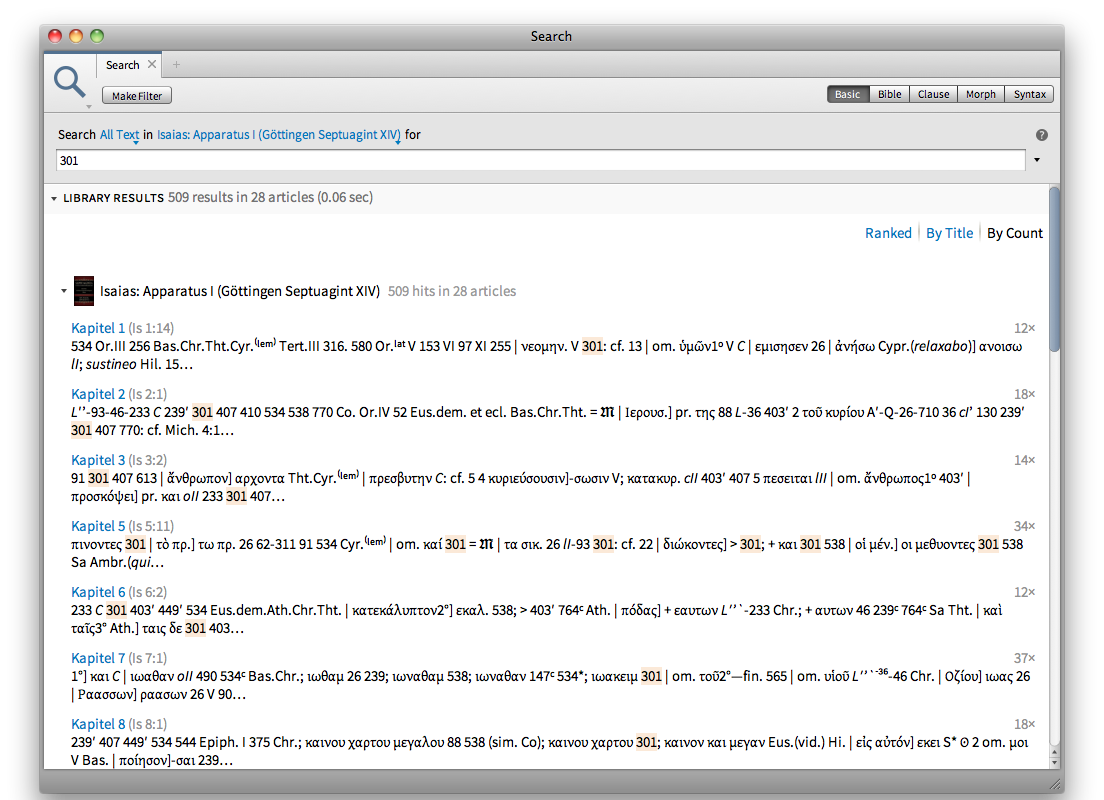
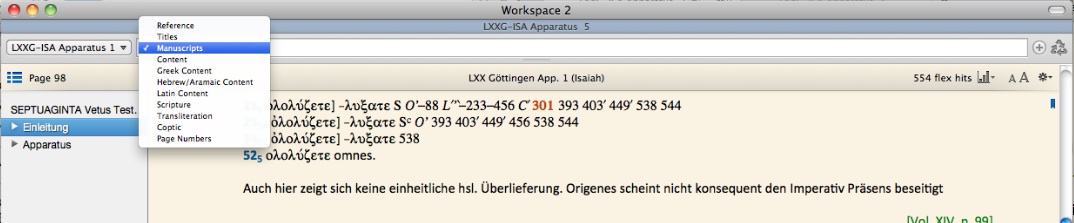
What about searching the apparatuses? Less than ideal here, though not unmanageable. If I want to see every time the First Critical Apparatus in Isaiah cites the Minuscule manuscript 301, I right click to “Search this resource,” but the results are grouped as follows (click to enlarge):

MS301

To my knowledge it is not possible to expand these results in this screen (pane) to see every use of MS 301, which is what I really want to be able to do. (If I am mistaken and find a way, I’ll post here again.) The shortcut command+F (in Mac) or control+F (in Windows) is an alternate way to search a text in Logos. The apparatuses are searchable using this keyboard shortcut; in this case all the instances of MS 301 are highlighted as you scroll through the apparatus, so you can still see all its occurrences.

Accordance, by contrast, offers multiple ways of searching an apparatus: by references, titles, manuscripts (most helpful), Hebrew, Greek, or Latin content, and more. This makes Accordance’s apparatuses really usable and easy to navigate in multiple ways.

accordance search fields

The price for the Logos Göttingen is a bargain. I mean, $700 is not cheap, but considering that the same sum would get you just a few volumes of the print edition, it’s a great deal. The academic program gives you a significant discount in this case, too.

By the way, a tip for using Göttingen efficiently in Logos: Brian Davidson of LXXI has a neat way to set up a Logos layout to include multiple Göttingen books. (They list in the Logos library all as separate volumes, not as one Septuagint.) His suggestion (here) is a good way to go.

All in all, the Logos Göttingen is a worthwhile investment, especially if you primarily want Göttingen for the critical text itself, and for the chance to compare it with other Septuagint editions. The lack of a Kopfleiste is not an immense loss, but the inability to search apparatuses by multiple search fields (and with expandable results) is a drawback. So the potential purchaser will just have to consider what his or her needs are. Accordance nails it in apparatus searching, but their critical text in Isaiah had more mistakes than one who needs an accurate text would like.

Logos has a fully digitized Göttingen Septuagint, so if you need access to everything that exists in print, know that this is the only Bible software where you can get it. Accordance continues production on their volumes and, as far as I know, will see the project through to completion. (Though see here and here, a project of Computer Assisted Tools for Septuagint Studies.)

In Logos it’s convenient to be able to scroll through all of the Göttingen Septuagint with additional resources open and a click away. The electronic availability (and affordability) of Göttingen is a significant step forward in text criticism and Septuagint studies.

Many thanks to Logos Bible Software for the review copy of the Göttingen Septuagint, given to me for the purposes of review, but with no expectation as to the content of my review. Accordance provided me with their Göttingen Isaiah for purposes of comparison.

New Mark Kozelek track (Sun Kil Moon+Album Leaf)

SKM Album Leaf

Like the rest of the entire human race, I have trouble waiting for things I want. I especially have trouble waiting for new music I know has been recorded but not yet released to said human race. This morning I checked the Caldo Verde Records site in hopes of hearing some new Mark Kozelek. I was not disappointed.

If you click on the image above you can listen to a new track from the Koz’s collaboration with The Album Leaf. (Language warning for last portion of song: much as I love the man’s music and most of his words, there are the occasional, less-than-edifying lyrics.)

I reacted here to the idea of a Sun Kil Moon collaboration with The Album Leaf. I like this track better than the first (to which I linked in my earlier post). Still not much by way of guitar, but that will come with Koz’s February release of a covers album.

This new track had me going until the end (see comment on lyrics above). I’ll try to post a cute baby picture later as recompense.

Review of Zondervan’s Theologian Trading Cards

They’re a real thing, and they’re the best conversation starter I’ve brought into my office in a long time.

Creator Norman Jeune III came up with the idea of Theologian Trading Cards in seminary. It’s a good one. I remember, as a kid, memorizing and quoting statistics and quizzing friends with the back of baseball cards. I could tell you how many home runs and runs batted in Andrew Dawson of the Chicago Cubs had had for the last five years. It’s a good size for a learning tool.

The product description from Zondervan reads:

Patterned after the all-American baseball card, Theologian Trading Cards provide essential information about the major teachers, leaders, and trouble-makers throughout the history of the Church. At a glance you will have access to information regarding 288 important figures in church history, including when and where they lived, their contribution to the church, and enduring significance.

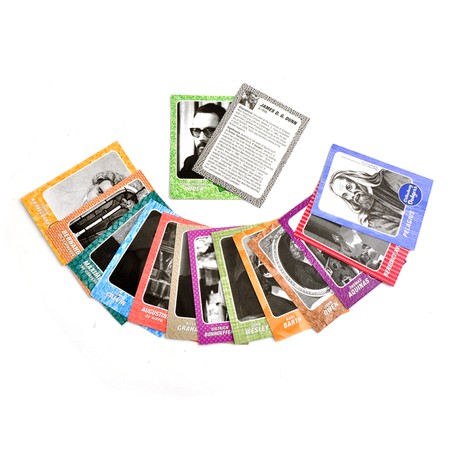
Jeune has organized the cards into 15 teams, each grouped by chronological or historical or theological commonality. The “Orthodoxy Dodgers” (great name) are the church’s heretics. Marcion (85-160), for example, “created his own canon [of Scripture], exlcuding the Old Testament and introducing numerous edits, compilations, and omissions to the New Testament.” The “St. James Padres” team consists of early church fathers: Ambrose, Augustine, Cyril, Justin, and so on.

The cards aren’t really “trading cards,” since there’s no trading to be done–you can only buy it as a complete set. But they’re just as fun as the baseball cards I collected as a kid… well, if you think theology is fun. (Which, of course, it is!) Jeune introduces a creative medium in a field that can be challenging for students. There are a lot of facts, figures, and beliefs to keep straight in a basic church history course.

Image from patheos.com

The front of the card consists of a photo (except where none is available; see below), the name of the figure, and his or her team. The back of each card has dates and two sections: biographical and significance. Of course it would be impossible to cover everything (even all the significant things) in each figure’s life on just the back of a card. But Jeune does a good job of hitting the main points.

And the cards are fun. I don’t think I’ve ever had anything on my office coffee table picked up as much as these cards. Folks want to leaf through and see who’s there, what is written about them, etc. I’d imagine that they aid exam preparation, too. The handy size makes them easy to stuff in backpack, or put a small stack in a purse for on-the-go quizzing.

Of course a set like this is prone to criticism–which figures Jeune includes, which ones he doesn’t, how much detail he includes, what detail he leaves out. There is somewhat decent representation of more than just white males–users of this set will find cards for Amy Carmichael, Elisabeth Schüssler Fiorenza, Rosemary Radford Ruether, Teresa of Avila… though still one wants for more. There is James Cone, but no MLK? Julian of Norwich, but no Perpetua? This must be impossible to get right in a set like this, but those omissions are noticeable. I’m holding out for a “booster pack” to add to the set.

Another quibble I have is that while each of the 15 teams has a checklist, there is no comprehensive checklist for the set. Even if spread out over a few cards, it would be useful to be able to quickly see all the persons that Jeune includes in the set. (Perhaps he will upload a list online in the future? If so, I’ll post here.)

Facebook silhouetteA distraction in the set is the number of cards that have a blank silhouette with a question mark on it. For these the publisher was not able to procure an image. There is a good reason for this, and it’s worth reading Jeune’s explanation here. All the same, an original sketch, however basic, would have been preferred. (Remember those Facebook friends who joined but didn’t add a profile pic for months? It looks like that, only with the super-imposed question mark.)

The idea of Theologian Trading Cards is a great one, though. The cards aim to be “a fun way to learn church history and theology.” They are that, but I hope future editions or additional sets/booster packs will be more thorough in covering all the areas and players in church history and theology. Until then, this is still a set worth having. Jeune’s layout makes it easy to fill in the gaps in one’s knowledge of church history and theologians.

Thanks to Zondervan for the opportunity to review the cards gratis. Find the cards here at Amazon or at their Zondervan product page. See here for a few sample cards.