Time for some tech talk. At Words on the Word I’ve reviewed software, as well as aspects of iOS and its apps. I’ve done gear reviews, too. This post is my review of Bear Motion’s Full Housing Case for iPhone 5c.
Here’s what it looks like:
Back of the caseFront of the caseEmpty case
Here are the pros and cons of this case:
Pros
Though it looks a little cheap (and the cost is, indeed, low), it seems to be, in fact, fairly well-made
The holes (to access camera, headphone jack, home button, etc.) are cut out just right
I may or may not have dropped my phone a couple times in this case, and it was well-protected
It protects the screen; it protects the body; it protects the whole phone (and the case is all one piece)
It’s not very bulky; doesn’t add much to the phone
The fit is secure and snug, but it’s still easy to get the phone in and out
I’ve taken it on a bunch of runs–it has performed well in this setting, both gripping to my hand without sliding out and keeping my phone from getting sweaty
Cons
The screen cover has a speckled or slightly filmy look to it, which is fine in regular light, but in the sunlight it makes the screen noticeably darker than it would be without the cover and, therefore, almost impossible to read
It isn’t the most stylish iPhone case I’ve ever seen, but that’s not a huge deal
On rare occasion the thick plastic screen compromises the touch sensitivity of the device
Though I don’t exactly have a plethora of cases from which to choose, this is the case that is currently housing my phone, and has been since I got it. That’s its own testimonial, I think. Especially for the price, Bear Motion’s case is a quite solid option.
Thanks to Bear Motion for the review sample. They make plenty of other cases for various devices, too. The case reviewed above can be found at Amazon here (affiliate link). Bear Motion’s brand page at Amazon is here.
One of many cool things about Carta’s Sacred Bridge atlas is its use of original/source languages.
For example, when The Sacred Bridge (TSB) cites Eusebius’s Onomasticon (a 4th century list of Bible place names), it does so both in its original Greek and in English translation.
This, of course, got me to wondering about Eusebius in Greek. Using The Sacred Bridge in Accordance, I can easily pull up all the times TSB cites Eusebius (more on this later).
Then I wanted to know where to find more Onomasticon in Greek.
After a short hunt, I found this digital edition of the Onomasticon in Greek. I thought I would pass it on in case anyone else using the atlas in English wanted to be able to access the Greek.
Eusebius’s Onomasticon (in English translation, and with English translation of Jerome’s Latin translation/expansion of Eusebius) is here in Accordance, here on Carta’s site, and here at Eisenbrauns, Carta’s North American distributor.
Many Greek Septuagint manuscripts do not contain them, but the Odes are a fascinating collection of texts appended to the end of the Greek Psalter in Codex Alexandrinus and a few other manuscripts.
The Odes compile some beautiful prayers from Scripture. A few of them are in the Book of Common Prayer’s Morning Prayer canticles.
Good information on the Odes is hard to come by, though. In part this is because they are generally not accorded the same status as, say, the Psalms. The NETS introduction to the Psalms, for instance, has:
One “book” not included in NETS, however, is Odes since it has dubious integrity as a literary unit, and, in any case, almost all of the individual Septuagint odes have already been included in their native setting in other books. The sole exception is Ode 12 in Rahlfs’ edition, the Prayer of Manasses, which for that reason has been separately appended to the Psalter.
I’ve just discovered, however, that David Lincicum has a nice rundown of the Odes, their numbering, and their contents. He also includes a bibliography for further reading. Check it out here.
*HT to a member of the Yahoo! LXX email group for the idea of the Odes as a sort of “little hymnal.”
Tim Keller’s For You series now includes contributions from other authors. I reviewed Keller’s Romans 1-7 For Youhere. In this post I review Tim Chester’s Titus For You.
But allow me to allow Chester to introduce the book. Here he is:
The books in the For You series claim to not be commentaries. Instead, the Titus For You product page describes what kind of book it is:
Written for people of every age and stage, from new believers to pastors and teachers, this flexible resource is for you to:
• READ: As a guide to this wonderful letter, exciting and equipping you to live out the truth in your life.
• FEED: As a daily devotional to help you grow in Christ as you read and meditate on this portion of God’s word.
• LEAD: As notes to aid you in explaining, illustrating and applying Titus as you preach or lead a Bible study.
The book is short and its tone conversational. Chester begins with a short introduction to the book, then divides Titus into seven units (each of them split again into two parts) for comment. Reflection questions throughout help the reader digest the book, and could also be used in small group settings. At the close is a short glossary and six-book bibliography of sorts.
What folks will find most beneficial about Chester’s book is his ability to re-state Paul in easy-to-understand terms. For example, when discussing Titus 1:7-11 Chester says:
There are two common dangers in pastoral ministry and Paul is alert to both of them. They are what we might call over-pastoring and under-pastoring.
He elaborates on each kind of pastoring to help explain Paul’s exhortations to Titus in this first chapter.
Similarly helpful was Chester’s description in the section on Titus 2 (especially verse 14) of the Christian’s identity:
In Christ, we are members of the royal family of the universe. That is our status, and we cannot lose it. And our behaviour should match who we are. Royal children have royal manners.
One can easily see Chester’s concern with practical application of Paul’s letter in broader contexts. This makes it suitable as a go-to for devotional reading.
The introduction to Titus was not as substantive as I’d have liked. Or, at least, I wouldn’t feel prepared to lead a small group through the book from just having read this short introduction. (There was hardly anything about Crete, Titus’s setting.) Even the introduction in a good Study Bible (of similar or shorter length) could be more elucidating as to how to understand and read Titus.
I appreciated Chester’s interpretation of Titus as having to do with church “succession planning.” He (rightly, in my opinion) distinguishes between instructions for church structures that are “context-specific” and those that are “for ministry in every time and place.”
Nonetheless, I disagree with Chester’s interpretation that eldership in the church is to be male-only. This is a piece of Paul’s letter that I take to be context-specific and not universally binding–though I’m not sure Paul even intended in Titus to be talking about an elder’s sex, as such. Even as I tried to have an open mind on the issue, I didn’t think that the author made much of a case for his interpretation of Titus. And the idea of men as “good leaders in their home” does not really appear in Titus at all–not even in a context-specific instance.
UPDATE, 6/30/14:I glossed over this before, but wanted to mention (along similar lines as the above) that I found his application of Titus 2 to be offensive. I’m sure he didn’t intend it to be, but nonetheless: “It is not that younger women cannot have a career. But if they are wives and mothers, home is the primary place where they are to serve.” On the contrary, this is not a biblical mandate, and God calls plenty of “wives and mothers” to serve outside of the home, even to have robust careers… just as God calls “husbands and fathers” to the same!
There are some typos scattered throughout the book (including erroneously spelled Greek, as was also true in the Keller Romans volume) that the reader will have to try to ignore.
I did find Titus For You a largely worthwhile read (in spite of interpretive disagreements I had at other spots, too), but I think that for background and Bible study and teaching preparation, readers might want to start elsewhere. Then, perhaps, one could turn to Titus For You for some helpful suggestions as to how to understand and teach the application of the passages–theological caveat above notwithstanding.
Peter Kirby has his now quarterly list of the Top 50 Biblioblogs, just published yesterday. You can find it here. There is some good reading to be found on that list!
Whether it’s another school shooting, a cancer diagnosis, an unjust imprisonment, violence perpetrated against the peaceful, or an unkind word that brings tears to the eyes of the one who received it… there’s a lot to lament in this world–too much.
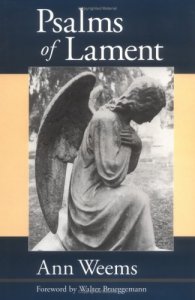
A year-and-a-half ago I read a fantastic book called Psalms of Lament by Ann Weems (see more here). I continue to come back to her modern-day lament psalms from time to time. Of course, it’s hard to top the lament psalms in the biblical book of Psalms, so really Weems and David go together. I appreciate the freshness with which Weems approaches the important practice of lament.
Weems tragically lost her son just after his 21st birthday. It is out of that sense of loss and grieving that she writes many of her lament psalms. She says:
This book is not for everyone. It is for those who weep and for those who weep with those who weep. It is for those whose souls struggle with the dailiness of faithkeeping in the midst of life’s assaults and obscenities. This book is for those who are living with scalding tears running down their cheeks.
So if you are weeping right now, or weeping with someone who is weeping… or if you feel like maybe you should be weeping but can’t, or don’t know how… here is Weems’s Lament Psalm Thirty-two (posted with publisher’s permission), which can help to give shape and voice to a heartfelt prayer of lament:
O God, explain to me
the cruelty of your world!
Make sense of those
who make no sense!
Tell me why the innocent die,
and evil people live
to kill again!
Tell me why the faithful
are shunned,
and the self-righteous
point their fingers!
Tell me why the wounded
are wounded,
and sorrow falls
on the shoulder of sorrow!
Tell me why the abused
are abused,
and the victims
victimized!
Tell me why the rains
come to the drowning,
and aftershocks
follow earthquakes.
O God, is this any way
to run a world?
O Merciful One, let us rest
between tragedies!
Speak to us
for we are your people.
Speak to us of hope
for the hopeless
and love for the unloved
and homes for the homeless
and dignity for the dying
and respect for the disdained.
Speak to us, O God,
of the Resurrected One!
Speak to us of hope,
for in spite of
the tidal wave of tears,
we remember your story
of new life!
Tell the world again,
O God of creation!
Tell us that winter will fade,
and spring will wash us new,
and the world will green again,
and we will be new creations
in the garden of our God.
Free us from these tentacles
of sorrow,
and we will fall on our faces
and worship you,
O God of goodness,
O God of a new green world!
A little more than a month ago a 27-year-old woman, Meriam Yehya Ibrahim, was sentenced to death by the Sudanese government for not recanting her Christian faith in favor of Islam. She has a just-under-two-year-old son and was eight months pregnant at the time of her arrest. (She has since given birth, in prison.)
Were the sentence to be carried out, she would have been a martyr in her death, but she is already even now a martyr in life.
Yesterday her appeal to have the sentence overturned was accepted by a higher court. She was released.
If you are inclined to join me, as I post any more about Meriam Yehya Ibrahim on Facebook and Twitter, I’ll use the hashtag #LetHerGoFree. See here.
I have my own qualifications and occasional reservations about so-called hashtag activism, but hashtag praying as activism seems a good way to go. Among all the other factors that led to Ibrahim’s being freed in the first place, I’m convinced that prayer played a major role. So let’s keep it up. And–dear God–please, let her go free!
A sermon on Romans 6:1-11, on the day of ocean baptisms.
I’ve always been a little suspicious of Before and After photos. It’s as if Before photos are bad on purpose, and After photos do everything they can to try to enhance the actual improvements that have taken place, whether the subject is a human body or a newly improved, re-stained back deck.
I just found an article about a Before and After set of photos of an Australian fitness trainer. On first glance the After photo looks like about three months worth of exercise and nutritional improvement, compared to the Before.
But, in fact, one scrolls down past the Before and After to see a note: “Check out my transformation! It took me 15 minutes.” Meaning, the Before and After photos were 15 minutes apart.
Wanna know my secret? I…. smothered on some fake tan, clipped in my hair extensions, stood up a bit taller, sucked in my guts, popped my hip, threw in a skinny arm, stood a bit wider…pulled my shoulders back…Zoomed in on the before pic, zoomed out on the after and added a filter. Cause filters make everything awesome.
It seems that actual transformation–whether it’s of our bodies or of our inner selves–is elusive. We often try to short-change the process, or make things look better than they really are. And yet it’s a burning human desire to be different, to look better, to grow, to change.
Paul’s Before and After
The apostle Paul understands that. He speaks in Romans 6 of true transformation, a fundamental shift in the selfhood of the one who believes in Jesus. There is no doctoring of Before or After photos needed, because the picture of transformation that Paul paints is the most real kind of personal change there is.
For we know that our old self was crucified with him so that the body of sin might be done away with, that we should no longer be slaves to sin—because anyone who has died has been freed from sin.
When we give ourselves to Jesus, we understand that sin does not rule over us. We are free from having to sin. We are free from the inevitability of it.
In the same way, count yourselves dead to sin but alive to God in Christ Jesus.
Even as we are being sanctified, we’re far from sinless–and the next chapter in Romans will emphasize this frustrating reality. But we are to consider ourselves dead to sin, or, we might say, that sin is dead to us, because we are “alive to God in Christ Jesus.”
This is “Before and After” for the child of God:
Before: living in a body of sin, slaves to sin, an old, listless, aimless self.
After: dead to sin, alive to God, united with Jesus in his death, and so united also with him–and other Christians–in his resurrection glory, in new life.
This true transformation, the Christian’s inward change, Paul points out, is marked by baptism:
Or don’t you know that all of us who were baptized into Christ Jesus were baptized into his death? We were therefore buried with him through baptism into death in order that, just as Christ was raised from the dead through the glory of the Father, we too may live a new life.
The old self walks to the edge of the water, wades in, is dipped under–washed in the ocean of God’s love and forgiveness–and the new self comes up, freed to live a new life in Jesus.
I will sprinkle clean water on you, and you will be clean; I will cleanse you from all your impurities and from all your idols. I will give you a new heart and put a new spirit in you; I will remove from you your heart of stone and give you a heart of flesh.
What Baptism Is
Baptism is a physical, visible, experiential sign of this inward transformation that takes place when a person says, “Yes,” to the gift of God’s grace.
In just a few moments I will ask our candidates, “Do you renounce the powers of evil and desire the freedom of new life in Christ?” They will say, “I do.” Before: we were slaves to sin, afraid to even try to cast off the “powers of evil.” Or maybe we didn’t want to. After: we have renounced those powers. We celebrate our freedom. We have new life in Christ.
Also in just a few moments, all of us, as a congregation, will say: “Out of the waters of baptism, we rise with new life, forgiven of sin, and one in Christ, members of Christ’s body.” We affirm this “Before and After” that baptism represents, and we do it in a larger, communal context. We are “one in Christ, members of Christ’s body.”
Ancient Baptismal Pool (Source: Zondervan Illustrated Bible Backgrounds Commentary)
As we’ve gone through our high school confirmation class last month and this month, we’ve been talking about baptism and confirmation as a multi-faceted commitment. On the one hand, baptismal candidates and confirmands are themselves making a public commitment to God in the presence of us, the church. And on the other hand, we promise our commitment to them as they seek to carry out their baptismal vows. Ultimately, the waters of baptism signify God’s commitment to us to continue and one day complete his work in us.
So please do support these young people who are about to be baptized, as best you are able. When they go out of state for college and then come back on breaks to worship here, ask them how they’re doing–not just in school, but in their relationship to God. Seek them out during coffee hours in future Sundays. Commit to pray for them. You might even pick one or two of the folks you see being baptized today and decide that you will pray for them by name, for the next month, six months, two years.
Identity
We began our confirmation class with a short teaching video and discussion centered around the question, “Who Am I?” How do I understand my identity as a person? We watched and discussed a short video by a teacher from Grand Rapids, Michigan named Rob Bell.
Bell talked about our tendencies to compare ourselves with others, to measure ourselves against those around us. As he talked, the camera followed a cast of actors who had t-shirts with a single word printed on the back: baker, consultant, double degree, Southern, apathetic, ashamed, listener… single words that can define how we think about ourselves, especially in relation to others.
But Bell says:
We need to be saved from all the times we haven’t been our true selves. All the times we’ve tried to be someone else.
All of the lies we’ve believed about who God made when God made us. All the times we’ve asked the wrong questions:
‘What about him? What about her? What about them?’
And we’ve missed the voice of Jesus saying, ‘You, follow me.’
To those who are about to be baptized, I want to say, this is who you are: one who is loved dearly by God, one who is saying “yes” to Jesus’ invitation to follow him. You are choosing to not miss that voice. You are saying, “Yes, I will follow.”
Your decision to be baptized means that you are affirming your identity in Jesus–as one who is “forgiven of sin, and one in Christ with the members of Christ’s body, the church.” “The old has gone, the new has come,” as Scripture says. Baptism is a physical sign of the ultimate “Before and After” transformation.
Remember Your Baptism
This Baptism Sunday is also a chance us who have already been baptized to remember our baptism. We know that we at times wander away from God, but we can never be un-baptized. We always come back to our fundamental identity as ones forgiven by God’s grace, and given new life.
So, whether your baptism was years ago or is about to happen today: remember your baptism.
Whenever you look at the ocean, may God remind you of the cleansing, washing power of his forgiveness.
May the vast waters call to mind the immensity and intensity of Christ’s love for you.
Remember who you were before you said “yes” to following Jesus, but especially remember the new life to which you are now called.
Just as Jesus Christ died, was buried, and rose again, “In the same way, Paul says, “count yourselves dead to sin but alive to God in Christ Jesus.”
Scripture quotations above are from the 1984 NIV. See my other sermons gathered here.
“Beautiful is the moment,” Archbishop Oscar Romero said, “Beautiful is the moment in which we understand that we are no more than an instrument of God; we live only as long as God wants us to live; we can only do as much as God makes us able to do….”
The book above–La Violencia del Amor, or, The Violence of Love–is available as a free download from the publisher, here (Spanish) and here (English).
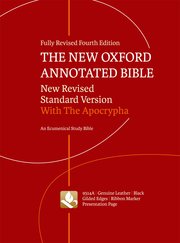
On the top of my bookshelf at home sits an old, falling-apart, heavily marked-up edition of The New Oxford Annotated Bible. So it has been with anticipation and appreciation that I’ve been able to use the The New Oxford Annotated Bible in its most current, 4th edition.
What the Annotated Bible Is
The Bible text in The New Oxford Annotated Bible is the New Revised Standard Version (NRSV). I’ve always appreciated this translation’s blend of readability and fidelity to the original languages.
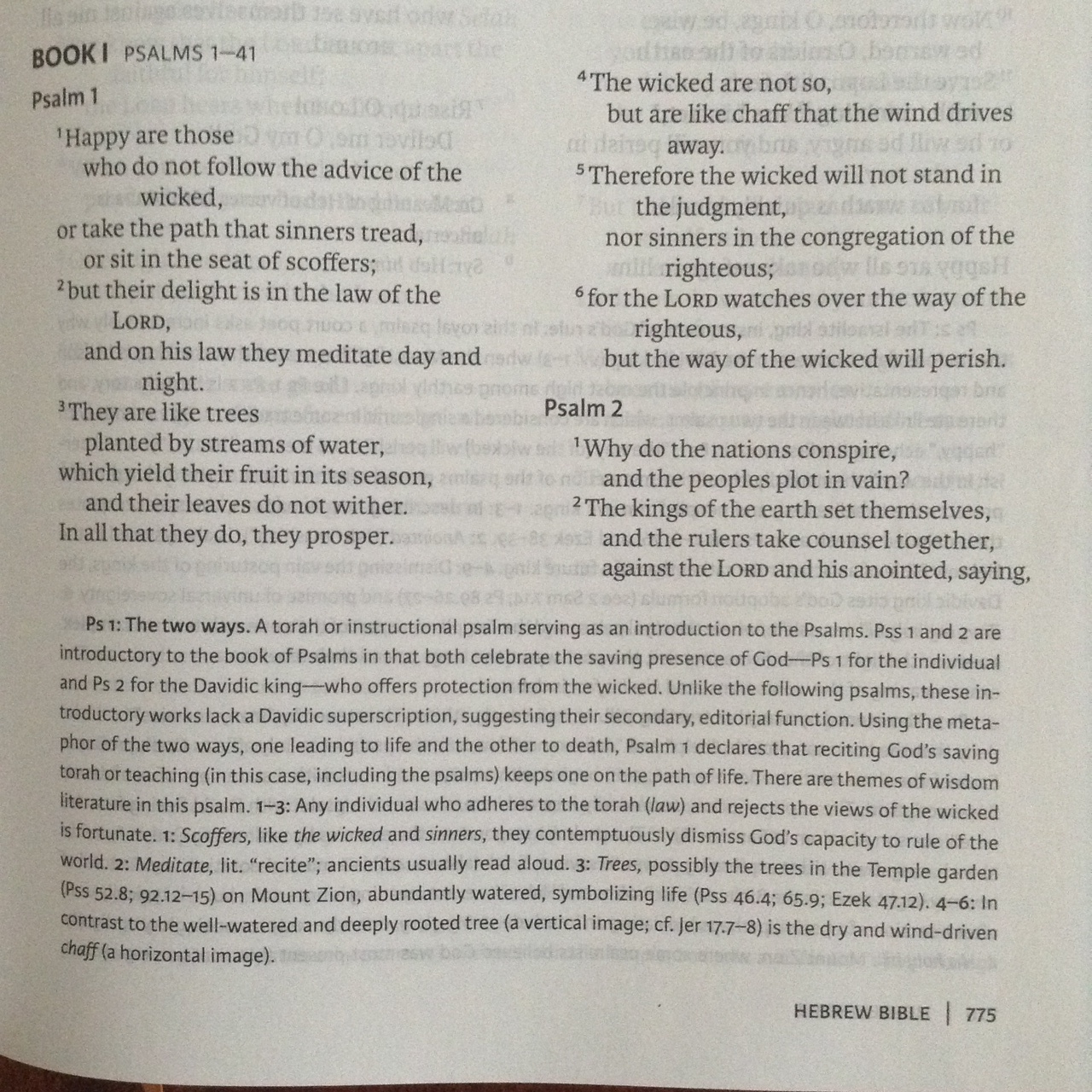
Each biblical book receives a short introduction, covering topics like authorship, date of composition, literary structure, and interpretive helps for reading. (The “guide to reading” that precedes most books is especially helpful when doing a book study or reading through a whole book of the Bible.) The biblical text itself appears in a clear, uncluttered font, with the study notes appearing at the bottom of the page. The brief but illuminating notes address each passage of the text (as a passage), and then comment more specifically on individual verses, terms and words.
Here is Psalm 1 with study notes:
Psalm 1
The title page bills this as “An Ecumenical Study Bible.” Its balance in this regard is, indeed, fair. The Editors’ Preface reads:
We recognize that no single interpretation or approach is sufficient for informed reading of these ancient texts, and have aimed at inclusivity of interpretive strategies.
The editors and contributors have succesfully met this aim. The introduction to Colossians, for example, does not make a heavy-handed assessment one way or the author as to Pauline authorship, but lays out the different views (with support) so the reader can decide. I appreciated this.
At the end of the Bible are some “General Essays,” covering topics at considerable length, such as:
The Canons of the Bible
Translation of the Bible into English
The Persian and Hellenistic Periods
The Geography of the Bible
and more. Also included are a glossary, concordance, 14 color maps, and other study helps.
“With the Apocrypha”
One thing that sets this study Bible apart from others is its inclusion of the Apocrypha. Not only is the text included, but its contributors are top in their field: John J. Collins (3 Maccabees), Lester Grabbe (Wisdom of Solomon), Amy-Jill Levine (Additions to Daniel, Tobit), and David A. deSilva (4 Maccabees), to name just a few. The introductory articles are clear and concise, yet contain the sort of information most users of this Bible will be looking for. For example, after a section on “Definitions” of terms like “Apocrypha” and “deuterocanonical,” the introduction to the Apocryphal section has “The Roman Catholic, Orthodox, and Protestant Canons of the Old Testament.” The comparison chart in that part of the introduction is especially useful, so readers can see “which religious communities accept [the Apocryphal/Deuterocanonical books] as scripture.”
In Mattathias’s speech on his deathbed in 1 Maccabees, to explore just one passage, the explanatory note for 1 Maccabees 2:49-70 simply reads:
Jacob (Gen 49), Moses (Deut 33), and Samuel (1 Sam 12) utter similar speeches; compare also the praises of famous men in Sir 44-50.
The biblical characters that Mattathias extols (Abraham, Joseph, Phinehas, Joshua, and so on) have accompanying biblical references in the study notes so readers can explore their stories further. It’s, of course, not nearly as in-depth as a commentary would be, but neither does it intend to be. It covers the basics well, and addresses most initial questions readers would have of the text.
Construction and Aesthetics
The leather-bound edition (what I am considering for review) is a well-constructed Bible. Despite its weight–to be expected of a Study Bible–it is a pleasure to hold and read. And to smell. Its gilded edges and two ribbon markers give it a classic feel. Its sewn binding and leather cover mean that it lays flat anywhere you have it open, even at Genesis 1:
Laying Flat at Genesis 1 (click to enlarge)
The pages are a bit thin, though this may be inevitable. (A delicate balance in Bible production is how thick the pages can be without weighing down an already bulky Bible). I was aware of bleed-through but not really distracted by it as I read. Note, too, the book name tabs in the image above, which help readers to quickly get to a desired spot.
Three Ways I’ve Used the Annotated Bible
There have been three primary ways in which I’ve made use of the Annotated Bible. One is for personal, devotional reading. In this context I have found the book introductions and notes to be just enough to answer my top-of-mind questions, but not so much that I was distracted from a focus on the text itself.
Second, this is the Bible I had in my hands while leading a small group Bible study last Lent on the Sermon on the Mount. Again, I found that most of our questions of the text were addressed in the notes by succinct, summary statements. And the NRSV was a good version for group reading.
Third, I’ve found the introductions and essays to be helpful in teaching and preaching preparation.
You can find the Bible here at Amazon and here at OUP’s site.
Many thanks to Oxford University Press for a copy of this beautiful Bible to review. They provided it with no expectation as to the nature of my review, except that I be honest.










 Words on the Word
