Göttingen Septuagint (Genesis): Lexus of the LXX


The Wire Season 4


Man say if you wanna shoot nails, this here the Cadillac, man.
He mean Lexus, but he ain’t know it.

–Snoop to Chris, Season 4, Episode 1, The Wire


Having recently re-watched the fourth season of the best television show in history, I need now to amend my assessment two years ago that the Göttingen Septuagint is the Cadillac of Septuagint editions. It’s the Lexus of the LXX.


The Göttingen Septuagint


Vandenhoeck & Ruprecht in Göttingen, Germany publishes the Göttingen Septuagint, more formally known as Septuaginta: Vetus Testamentum Graecum Auctoritate Academiae Scientiarum Gottingensis editum.

The series of critical texts with apparatus spans more than 20 volumes and covers some 40 biblical books (counting the minor prophets as 12), with more continuing to appear.

But, as I remarked two years ago when I confused Cadillacs and Lexuses, the Göttingen Septuagint is not for the faint of heart, or for the reader who is unwilling to put some serious work in to understanding the layout of the edition and its critical apparatuses.


The Contributions of John William Wevers


Enter John William Wevers. If Göttingen is the Lexus of LXX editions, Wevers is its chief mechanic. His Notes on the Greek texts of the Pentateuch–though provisional in nature, Wevers intimated–remain some of the best resources for carefully studying the Septuagint. And his Text Histories on those same books (now free online, thanks to the Göttingen Septuaginta-Unternehmen) guide the reader through the transmission of the Greek text in its various manuscripts.

Better yet, before his passing Wevers translated much of his own Göttingen-Pentateuch introductions from German into English. That enduring gift can be found here.


Göttingen-Genesis


Published in 1974, Wevers’s Genesis includes a 70+-page introduction, Wevers’s reconstructed Greek text of Genesis, and two critical apparatuses at the bottom of each page that highlight readings from various manuscripts.

The introduction includes these sections:

  1. The Textual Witnesses (Greek and other versions)
  2. The Text History (“Here only information necessary for the use of this edition is given”)
  3. Re: This Edition
  4. Signs and Abbreviations

A challenge to using the Genesis volume is the scarcity of material available about the Göttingen project in general. Further, the introduction is in German and the critical apparatuses contain Greek, abbreviated Greek, and abbreviated Latin. A few things come in handy:

  • Wevers’s Genesis introduction is here in English.
  • As for deciphering the apparatus and abbreviations, Wevers offers such a key in the introduction, and the print edition comes with a handy insert (in German and Latin, but not unusable to those without command of those languages)
  • Miles Van Pelt has made available his own two-page summary of sigla and abbreviations (here as PDF).
  • Seeing the need, I wrote a two-part primer (here and here, two of my most-visited posts on this blog) to reading and understanding the Göttingen Septuagint–the focus was largely on Genesis, and I draw on those posts for what follows

So equipped, the reader (whether she or he knows German or not) is ready to work through the Greek text itself.


Tour of a Page


Instead of using a text based on an actual manuscript (as BHS, based on the Leningrad Codex, does), the Göttingen Septuagint utilizes a reconstructed text based on a thorough examination of evidence from manuscripts and translations.

Because it is an editio maior and not an editio minor like Rahlfs, any page can have just a few lines of actual biblical text, with the rest being taken up by the apparatuses. Here’s a sample page from Genesis 1 (image used by permission).

Note the #s 1-4 that I’ve added to highlight the different parts of a page.


Page reproduction by permission of publisher (annotations are mine)


1. The reconstructed Greek critical text (“Der kritische Text”)

With verse references in both the margin and in the body of the text, the top portion of each page of the Göttingen Septuagint is the editorially reconstructed text of each biblical book. In the page from Genesis 1 above, you’ll notice that the text includes punctuation, accents, and breathing marks.

Regarding the critical text itself, Wevers writes in the Genesis introduction:

Since it must be presupposed that this text will be standard for a long time, the stance taken by the editor over against the critical text was intentionally conservative. In general conjectures were avoided, even though it might be expected that future recognition would possibly confirm such conjectures.


2. The Source List (“Kopfleiste”)


The Kopfleiste comes just below the text and above the apparatuses in Genesis. Wevers notes it as a list of all manuscripts and versions used, listed in the order that they appear in the apparatus on that page. A fragmentary textual witness is enclosed in parenthesis.


3. and 4. Critical Apparatuses (“Apparat I” and “Apparat II”)

The critical apparatuses are where the user of Göttingen can see other readings as they compare with the critically reconstructed text. Because the Göttingen editions are critical/eclectic texts, no single manuscript will match the text of the Göttingen Septuagint.

The first critical apparatus will be familiar in its aims to readers of BHS. Regarding the second apparatus, Wevers writes:

In view of the fact that the materials presented in the second apparatus [are] not at least in theory a collection of variants within the LXX tradition, but rather one such of readings from other traditions, especially from the “three”, which have influenced the LXX tradition, these readings are given in full.

“The three,” sometimes referred to in Greek as οι γ’, are the texts of Aquila, Symmachus and Theodotion.

In other words–there is virtually no stone unturned here in the quest to reconstruct a Greek text of Genesis.


Concluding Evaluation


Serious work in Septuagint studies uses the Göttingen text, where available, as a base. Wevers’s scholarship and care for the text is clear as one makes her or his way through the Genesis volume. It’s the starting place for studying the Greek text of Genesis.

Vandenhoeck & Ruprecht’s production of the book is stellar, too. It’s got a sewn binding and is beautifully constructed–built to last and look good on the shelf, or in your hands:


Goettingen Genesis


You can find the volume here at V & R’s site, and here at Amazon. ISD distributes the book, as well, and carries it here.


Many thanks to V & R for the review copy of this fine work, given to me with no expectation as to the content of my review. Find more V & R blog posts here.

Greek Psalms in a Year: Resources for Reading

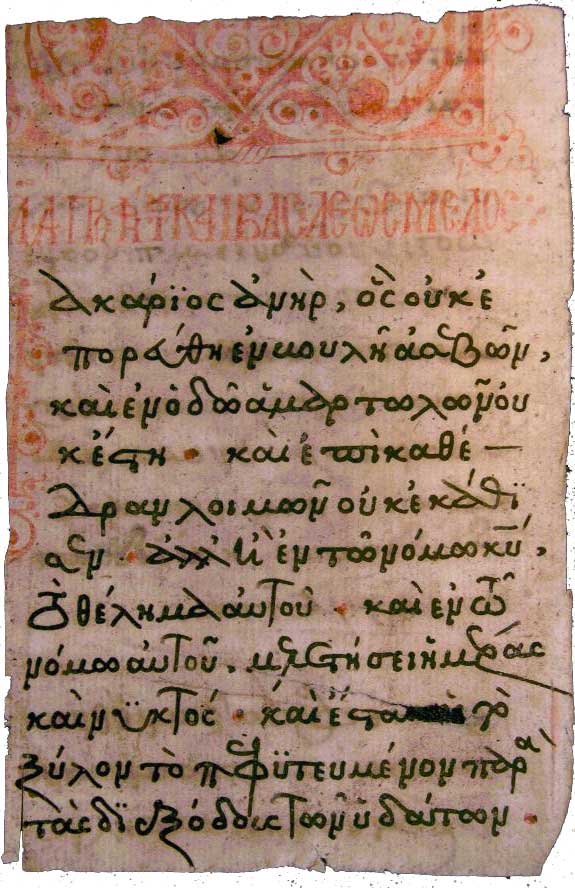
LXX Psalm 1
LXX Psalm 1

Greek Psalms in a Year starts this coming Thursday. The two primary loci of activity (at least online) are the Facebook group and now a dedicated sub-section of the Accordance Forums. (Thanks, Accordance, for hosting!)

Follow along or contribute to either place for what is going to be a challenging and rewarding year-long activity.

Here is the reading plan, compiled by Russell Beatty.

In this post, I offer a sampling of resources–electronic and in print–that could be of help in reading through the Psalms in Greek. Do you know of anything not mentioned here? Please add it in the comments. You can also contact me with any questions or comments about the endeavor.


Greek LXX Texts: Electronic


Greek LXX Texts: Print

 
  • Rahlfs
  • Göttingen
  • Oxford University Press (out of print!): The Comparative Psalter (Hebrew MT, RSV, Rahlfs LXX, NETS) (Amazon)
  • Psalter Synopse (Hebrew, LXX, two German editions) (Amazon)
 

English Translations of LXX: Electronic


English Translations of LXX: Print


Images or Transcriptions of the Greek Text


Transmission/Reception of the Greek Text

 
  • Albert Pietersma’s article: “The Present State of the Critical Text of the Greek Psalter” (PDF)
 

Monographs and Collections of Essays

 
  • A Question of Methodology: Collected Essays on the Septuagint, by Albert Pietersma (Peeters)
  • The Old Greek Psalter: Studies in Honour of Albert Pietersma (The Library of Hebrew Bible/Old Testament Studies) (Amazon)
  • Psalms 38 and 145 of the Old Greek Version, by Randall X. Gauthier (Brill)
  • Emanuel Tov, The Greek and Hebrew Bible: Collected Essays on the Septuagint (Atlanta: Society of Biblical Literature, 1999) (Amazon)
 

Sermons and Devotionals on the Psalms


Septuagint Lexicons


Vocabulary Help


  • This. An amazing resource via Daniel Semler for Greek Psalms vocab acquisition, set up both for Anki and Mental Case

Happy reading!

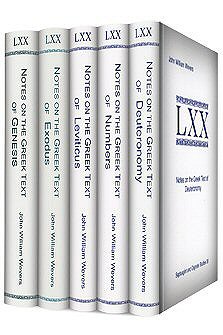
John William Wevers’s Notes on the Greek Text… Coming to Logos

Wevers Notes on Greek Text


The best (only?) complete set of books on the Greek Pentateuch is now up on Pre-Pub through Logos Bible Software: John William Wevers’s Notes on the Greek Text.

The Society of Biblical Literature’s book page has a helpful write-up of the Deuteronomy volume, which gives a sense of what this series is about:

Wevers [spent] most of his adult life studying the Septuagint, the last thirty years being devoted to the Pentateuch. The author considers the Greek text to be the first commentary on the Pentateuch ever written (in the third century B.C.E.) and not merely a collection for emendations of the Hebrew text. The work focuses on how the translator accomplished his task and on the vocabulary and syntax of the resulting text, rather than on either scholarly opinions on the text or how interpreters subsequently used the text. The Notes are intended for students who would like to use the Greek intelligently but are not specialists in Hellenistic Greek or LXX studies.

You can find the 5-volume set on pre-pub at Logos here. Wevers also wrote valuable LXX-Pentateuch text histories, which are available free online in .pdf form, detailed here.

Coming Soon: Greek Psalms in a Year

LXX Psalm 1
LXX Psalm 1

It’s funny–I was just thinking the other day about how much I missed Greek Isaiah in a Year. More than 200 of us read through the Septuagint text of Isaiah in a year, roughly five verses a day. Both the readings and the discussion were rich.

I didn’t do anything like that this past year, though the Greek Isaiah in a Year Facebook group I’d created stayed active, as folks went after it a second time.

Just this afternoon I learned that Russell Beatty, a member of the Greek Isaiah group, has started a Greek Psalms in a Year group, to launch January 1, 2015.

That group is on Facebook, and you can see the well laid out reading plan here.

I preached through some Psalms this past summer, which greatly deepened my love for that book of the Bible.

I can’t wait to get started–feel free to contact me or request to join the Facebook group if you’d like to read along with us.

Two More Greek Gems from †Rod Decker

Rod Decker on Mark
Long awaited


Before Prof. Rodney Decker passed, he finished writing his Koine Greek Grammar, with which I’m already impressed–having just begun working through the Appendixes!

One other last (and sure-to-be lasting) contribution to the world of Greek readers is his two-volume commentary on the Greek text of Mark, from Baylor University Press. It is part of the Baylor Handbook on the Greek Text, which I’ve reviewed (Luke) here.

The two-volume set came in the mail today, courtesy of Baylor. Decker’s Koine Greek Reader is the best resource of its kind. His scholarship was always careful and engaging. These Baylor books–about which I will post again in the future–look like about the first thing you’d want to have by your side when reading through Mark.

You can find the books here.

Words on the Word Cited in Brill Book on Digital Humanities

You Google yourself about every three months, too, right?

To my surprise, a few months ago I found that Words on the Word had been quoted in a Brill book about digital humanities in biblical studies. (Apparently “digital humanities” is an academic field in which this blog participates.)

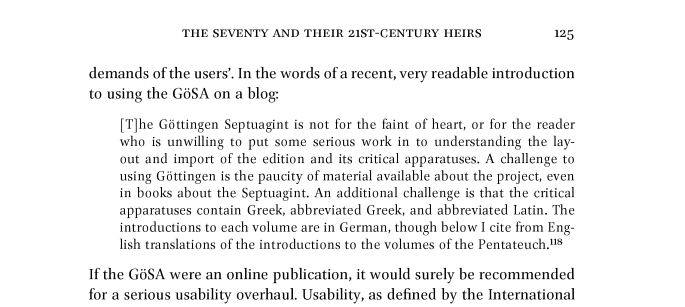
Here is one of the citations:

WotW in Brill


Brill Digital HumanitiesThe book is called Digital Humanities in Biblical, Early Jewish and Early Christian Studies, edited by Claire Clivaz, Andrew Gregory, and David Hamidović. Words on the Word makes its appearance in the chapter called “The Seventy and Their 21st-Century Heirs. The Prospects for Digital Septuagint Research.”

The footnote in the image above cites this primer I wrote on the Göttingen Septuagint; part 2 of the primer also receives mention.

Here is the publisher’s description of the book:

Ancient texts, once written by hand on parchment and papyrus, are now increasingly discoverable online in newly digitized editions, and their readers now work online as well as in traditional libraries. So what does this mean for how scholars may now engage with these texts, and for how the disciplines of biblical, Jewish and Christian studies might develop? These are the questions that contributors to this volume address. Subjects discussed include textual criticism, palaeography, philology, the nature of ancient monotheism, and how new tools and resources such as blogs, wikis, databases and digital publications may transform the ways in which contemporary scholars engage with historical sources. Contributors attest to the emergence of a conscious recognition of something new in the way that we may now study ancient writings, and the possibilities that this new awareness raises.

You can find the book at Brill here and here at Amazon. Looks fun! But, of course, now I’m biased.

New Göttingen Septuagint Volume Just Published

Septuagint 2 ChroniclesWorking with the Göttingen Septuagint is not for the faint of heart, as I have noted before–though I have offered a couple of widely read (and hopefully helpful) posts on how to read and understand LXX-G.

New Göttingen volumes are not frequent; to publish one involves a great deal of work on the part of the editor.

Just this fall, under the editing of Robert Hanhart, publisher Vandenhoeck & Ruprecht released the 2 Chronicles Göttingen volume:

Here’s a screengrab of part of a page from a Google Book preview. The volume has the familiar font and layout of (a) critically reconstructed Greek text, (b) Kopfleiste (manuscript Source List), and (c) textual apparatus:

2 Chronicles LXX


Here is the book description:

This is the first-ever critical edition of the volume Paralipomenon II and represents a major step in the continued publication of the oldest Septuagint text available.


For this critical edition of the oldest available Septuagint text, the editor consulted Greek papyri predating the Christian era (3rd/2nd century BC), minuscule scripts from the 16th century AD as well as other Latin, Coptic, Syrian, Ethiopian and Armenic secondary translations. He also included Septuagint quotes stemming from Church authors in both Greek and Latin as well as the printed editions of the Septuagint from the 16th to the 20th century. This critical edition of the Paralipomenon II represents the continuation of the publication of the critical edition of the oldest Septuagint text available.

You can find the volume here at V & R and here at Amazon.

Free 45-Page Primer on Revised NIDNTTE

Get the New International Dictionary of New Testament Theology and Exegesis


Zondervan has just released a Revised Edition of its New International Dictionary of New Testament Theology and Exegesis (NIDNTTE).

From Zondervan:

This new revision includes:

  • Vital insights on over 3,000 Greek words — every word that ought to be in a New Testament theological dictionary
  • Scholarship on the latest debates over many word meanings
  • A wealth of background on ancient Greek and Jewish literature, shedding light on the NT’s context
  • Streamlined organization makes words easier to find and cross-reference

This thorough new revision of NIDNTTE was completed over eight years. With nearly 800 concepts (covering 3,000 Greek words) you’ll benefit from it far longer.

You can order NIDNTTE here. The free 45-page primer is available here.

†Rod Decker’s Koine Greek Grammar

May Prof. Rodney Decker rest in peace. One of his final contributions (gifts) to the Greek-learning community was this exciting new grammar, which I just received in the mail from Baker Academic yesterday:


Decker Grammar


Here is the description from Baker’s site:

This in-depth yet student-friendly introduction to Koine Greek provides a full grounding in Greek grammar, while starting to build skill in the use of exegetical tools. The approach, informed by twenty-five years of classroom teaching, emphasizes reading Greek for comprehension as opposed to merely translating it. The workbook is integrated into the textbook, enabling students to encounter real examples as they learn each new concept. The book covers not only New Testament Greek but also the wider range of Bible-related Greek (LXX and other Koine texts). It introduces students to reference tools for biblical Greek, includes tips on learning, and is supplemented by robust web-based resources through Baker Academic’s Textbook eSources, offering course help for professors and study aids for students.

Looks great! After a quick flip through, what stands out most is that the vocabulary lists at the end of each chapter include frequency counts for both the New Testament and the Septuagint.

I’ll post more later–find the book here.

What I’m Reading to Keep My Greek and Hebrew Fresh

To keep my Greek and Hebrew active, right now I’m alternating between two books (and enjoying them both):


Prepositions and Theology


Murray J. Harris’s Prepositions and Theology in the Greek New Testament (Zondervan, 2012).

Without accepting a so-called “theology of prepositions,” Harris’s guide is readable and illuminating. I found his exegetical guide to Colossians and Philemon quite helpful. Here is a sample of Prepositions and Theology.


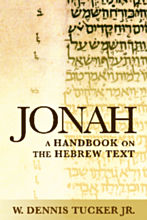
Jonah Handbook on Hebrew Text


W. Dennis Tucker Jr.’s Jonah: A Handbook on the Hebrew Text (Baylor University Press, 2006).

I like this series already. I’m halfway through Jonah and finding Tucker’s handbook a welcome companion.

I’ll post a review of each when I finish.