This Is Better Than Anything Apple Could Announce Today

2016 American Football


A second new American Football track has just released today. It’s one of the songs Mike Kinsella teased at on Instagram nearly half a year ago. It sounds almost nothing like the first song, and yet it sounds like everything you’d hope American Football could be. (You’ll have to forgive the melodrama. I’m more excited about this album than I have been for new music in years.)

Here it is:


NPR has a nice write-up of the song here.

Pre-order information is right here, and pre-orders ship October 12.


Whither American Football? October 21, That’s Whither!

2016 American Football


The funny thing about my American Football post yesterday is that I had it half written in my head before the social media new album tease yesterday. Those three Instagram samples were pretty convincing ( 1 / 2 / 3), but I confess that after a mere 20 weeks, I had started to lose faith in the second coming of American Football.

Now they’ve confirmed that a new album is coming, October 21 on Polyvinyl Records.

Here’s a piece from the press release:

The new self-titled sophomore album from the celebrated band comes seventeen years after their debut. The first single “I’ve Been So Lost For So Long” is available to hear now on SoundCloud, and on all DSPs tomorrow, August 24th.

The song–their first full, new song released since back in the day–is as beautiful as expected:


The melodic phrasing calls to mind Owen more than early American Football, but, hey, it’s the same singer, and that same singer has made a lot of Owen records since the first AF. Fair enough.

Pitchfork interviews the band here.

And, we have a track list!

1. Where Are We Now? (4:44)
2. My Instincts Are the Enemy (4:49)
3. Home Is Where the Haunt Is (3:26)
4. Born to Lose (4:54)
5. I’ve Been So Lost for So Long (4:36)
6. Give Me the Gun (3:24)
7. I Need a Drink (or Two or Three) (4:58)
8. Desire Gets in the Way (3:28)
9. Everyone Is Dressed Up (3:39)

Pre-order information is right here, and pre-orders ship October 12.


Whither American Football?

amfoo-hires


Disclaimer: I write this post with no inside information about the band American Football. Just a great enjoyment of their self-titled LP and EP and a desire to hear more music.

I’ve been checking Mike Kinsella’s Instagram page several times a week, ever since he posted three snippets of what must be new American Football music. I’ve listened to each one at least thirty times. Here they are: 1 / 2 / 3.

The new Owen album (reviewed here) made me even more eager for new American Football. It also confirmed that what we heard on those Instagram snippets was NOT Owen. At least, not the Owen that was just released. (And, who are we kidding? It didn’t sound like Owen anyway.)

Today my friend Eric—who graciously edited my many-worded Owen review—sent me links to some activity on the American Football Instagram page. Here they are: 1 / 2 / 3. (They also posted them on Twitter.)

Just to be clear (since I somehow missed this when watching the third one on my phone), there is new music here. The Twitter embed doesn’t work properly with WordPress, but click the url below to listen.

They seem to hint that an album is coming…. I haven’t been this excited about a new album since I waited and waited for OK Computer and miraculously scored an advanced CD from a used CD store five or six days before it came out.

So I’m bookmarking the American Football social media pages. I’ll post again here if (when?) a new AF album drops. In the meantime, we can all read (or re-read) this lengthy “oral history” of the band.

Logos 7: Review, Screenshots, Video

Image via Logos
Image via Logos


Bible software nerds, rejoice! Today Logos 7 comes into the world.

I’ve been using Logos (alongside Accordance and BibleWorks) since Logos 4. There hasn’t been a major interface overhaul since that version, but Logos has been steadily adding loads of features since then.

From a few weeks of beta testing, I offer here my initial impressions of Logos 7, as well as a look at its features in action.

Here’s the best of what’s new in Logos 7.


1. Interactives (Again)


The Interactives were my favorite feature in Logos 6. The addition of more Interactives makes it the part I most like about Logos 7.

Here is a screenshot of all the Interactives, which you can pull up from your library with the search: “type:interactive”.


Logos 7 Interactives


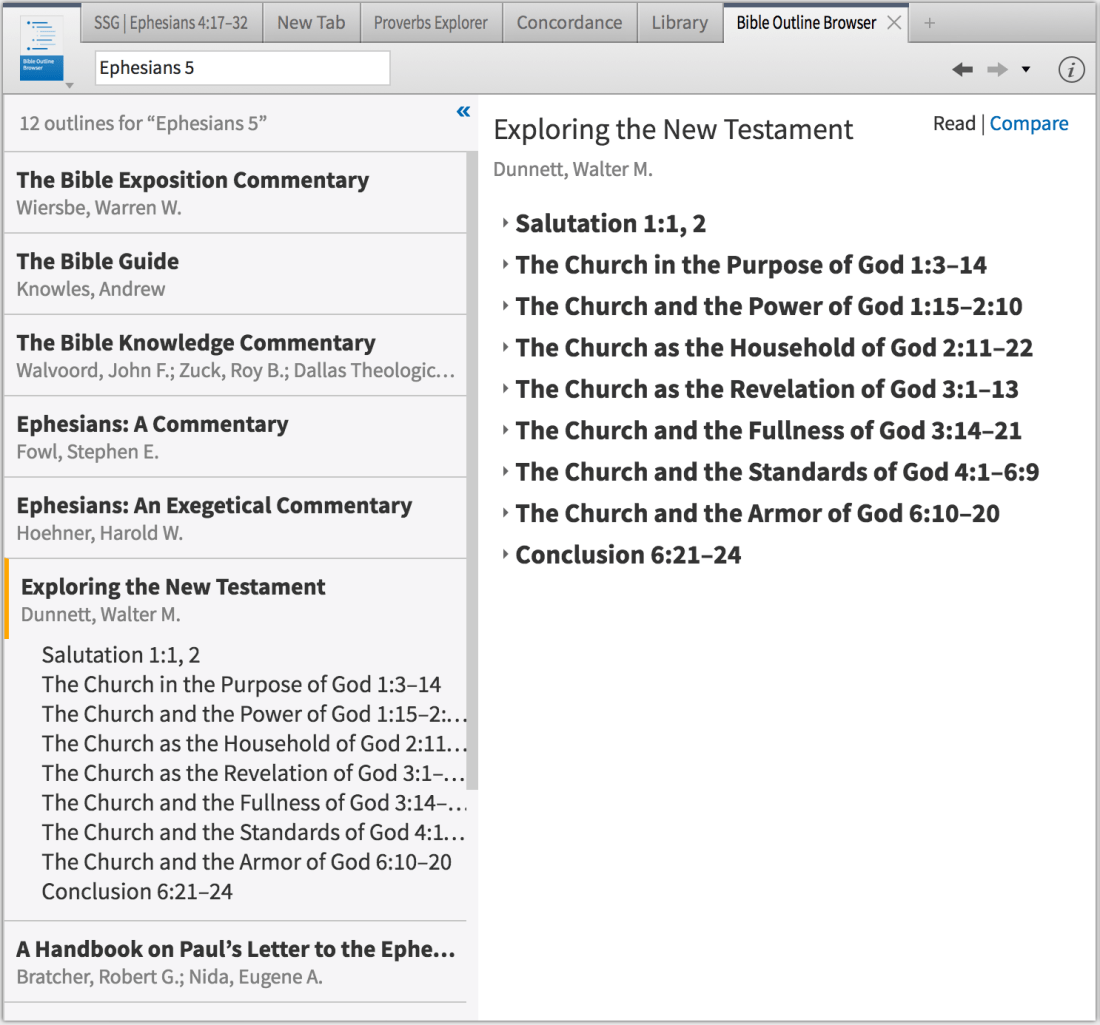
Some of those were in Logos 6, like the Bible Outline Browser, which shows you all the Bible text outlines you have in your library for the passage you’re considering.


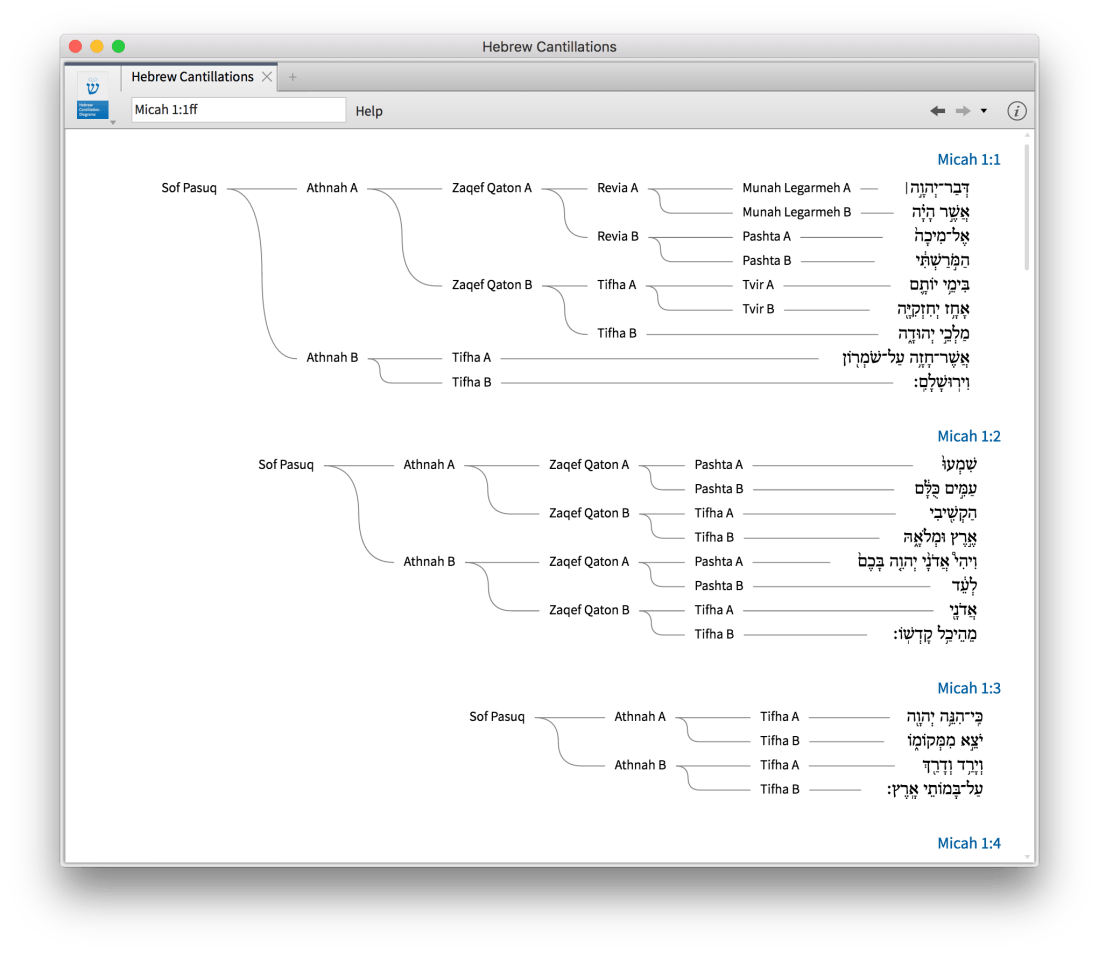
The Hebrew Cantillations Interactive in Logos 7 has seen improvement since its release in Logos 6 (it wasn’t ready for prime time initially):


Logos 7 adds the Septuagint Manuscript Explorer, which students of the Göttingen editions will especially appreciate:

We’ve cataloged information about Septuagint manuscripts, including contents, date, language, holding institute, and more. With this interactive, discover the earliest Septuagint manuscripts see how many contain the book of Psalms, and even view scanned images of many fragments, like Codex Sinaiticus.


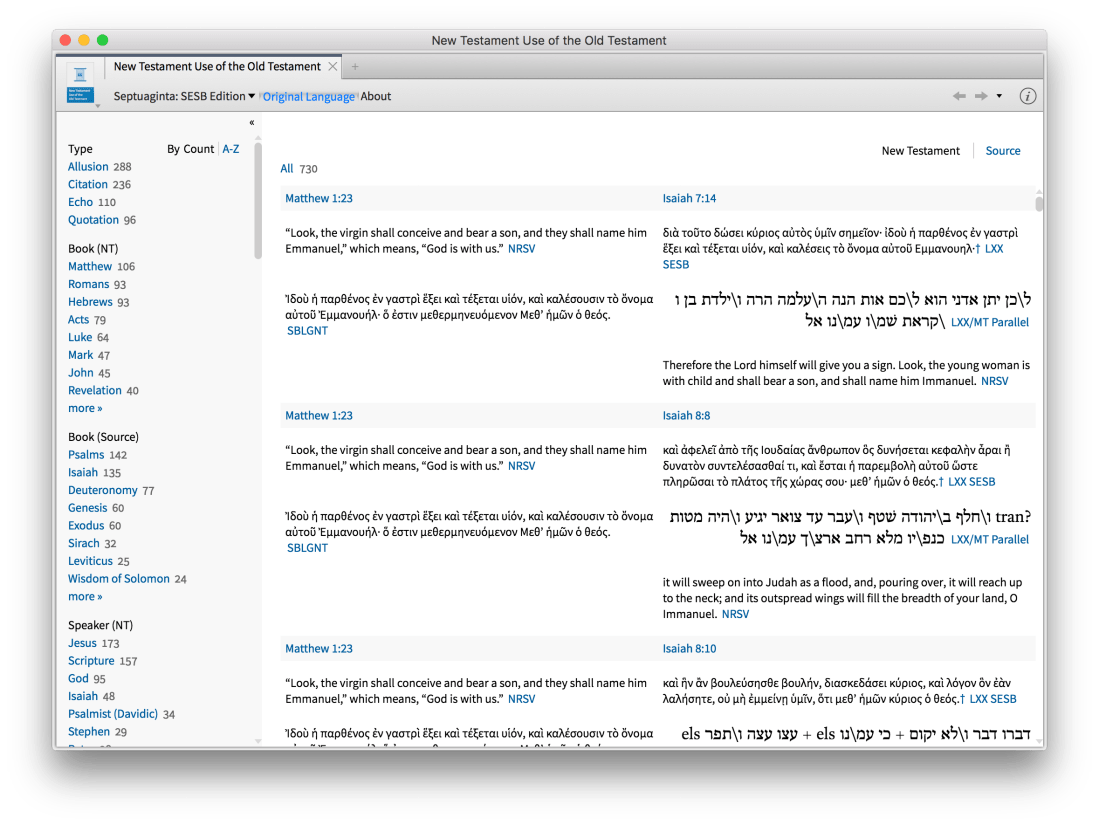
My most used Interactive at the moment is the New Testament Use of the Old Testament. I would have made great use of it when I took a seminary course by that name. There are lots of ways to get access to what OT passages the NT is using (commentaries, Bible text footnotes, words searches), but this Interactive consolidates and sorts the data in a highly convenient way.

You can sort by allusion, quotation, echo, and citation. I always thought allusion and echo were more or less the same—though the use of terminology is itself at issue in the field! At any rate, the authors of the Interactive define their terms:

• Citation: An explicit reference to scripture with a citation formula (e.g. “It is written,” or “the Lord says,” or “the prophet says”).

• Quotation: A direct reference to scripture, largely matching the verbatim wording of the source but without a quotation formula

• Allusion: An indirect but intentional reference to scripture, likely intended to invoke memory of the scripture.

• Echo: A verbal parallel evokes or recalls a scripture (or series of scriptures) to the reader, but likely without authorial intention to reproduce exact words.

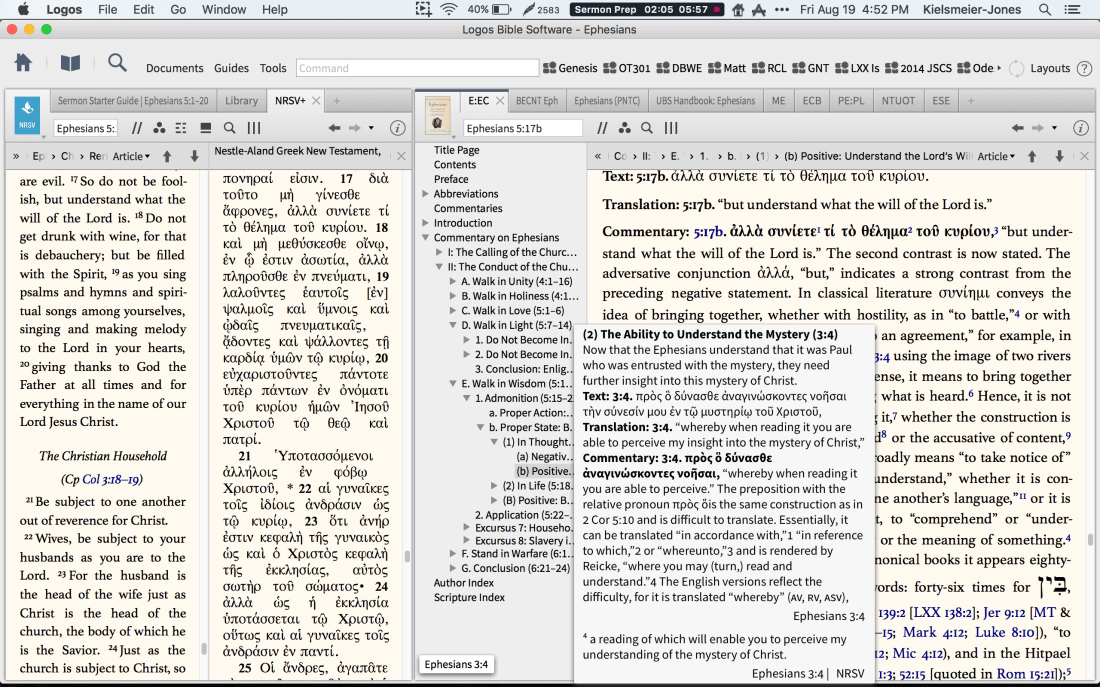
This Interactive probably deserves its own post. You can change what versions it displays, and even set it so that the English NT and OT passages are displaying alongside Greek (NT) and Greek and Hebrew (OT). (Getting this part set up was not really intuitive to me.) You can even hover over Greek and it cross-highlights the corresponding English, and vice versa:


If software programs had Pulitzers, the NT Use of the OT should win one for best feature. Here’s what it looks like, including the sidebar, which allows you to focus your study using a ton of criteria. You could easily find, for example, all the times Matthew cites or alludes to an OT passage with Jesus in mind.


2. Sermon Editor


I have worked hard to get a sermon writing workflow I really like. (Detailed article at CTPastors.com forthcoming!) So I doubt I will use the new Sermon Editor much, but it looks pretty awesome, if you want to use Logos for sermon writing. In the image below, the Sermon Starter Guide (introduced in Logos 5) is next to the Sermon Editor.


Not only does the Sermon Editor offer rich text writing and multiple Export options, if you mark your Headers, it automatically generates a Powerpoint slide show for your text. It’s also got a Handout option, which allows you to easily generate a one-pager to accompany your sermon, as well as to automatically set up a handout with blanks to fill in.

AND… if you type in a Scripture reference, the Sermon Editor automatically creates a slide with the text of that Scripture, even fitting text to multiple slides if necessary. Watch:


You can also save a step and have the slides auto-generate with just a keyboard shortcut, after typing in the reference. Amazing.


3. QuickStart Layouts


This is not a ground-breaking feature, per se, but it is a time-saving addition. Now the Layouts option in the Logos toolbar offers access to “QuickStart” saved layouts that get a user up and running for various tasks.


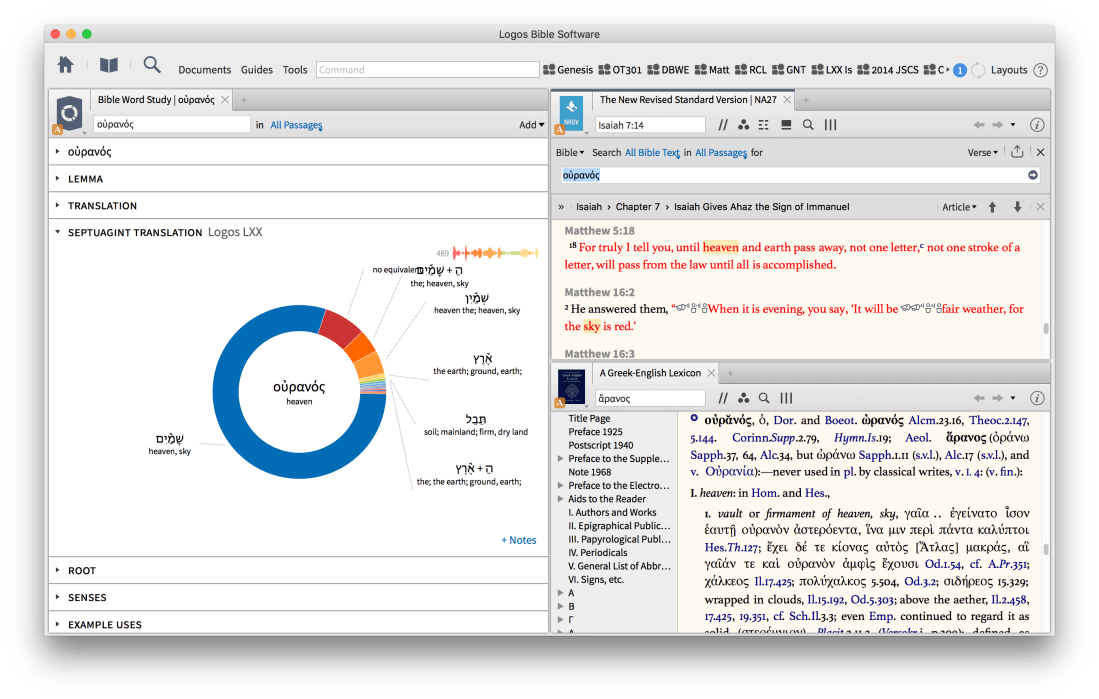
The Greek Word Study layout, for example, is nicely executed:


4. Systematic Theologies in the Passage Guide


The Passage Guide has been around a while, but Logos keeps adding to it. Logos 7 features a Systematic Theologies guide, an admittedly subjective but still helpful aggregator of theology resources in your library, keyed to the verse you’re studying. You can sort it by theology subject (Christology, pneumatology, etc.) or by denomination.


5. Everything Is (Still) Hyperlinked


The hyperlinking seems to have improved since I was last using Logos regularly when Logos 6 launched. (Only now with a recent laptop upgrade does Logos run well on my Mac.) Of course the Scripture verses are hyperlinked, but commentaries are also hyperlinked to previous sections they mention. As here:


Improvements That Weren’t


Logos 7 is cutting-edge software, impressive in its innovation and a huge time saver from a task standpoint. The designers and developers clearly created it with real users in mind.

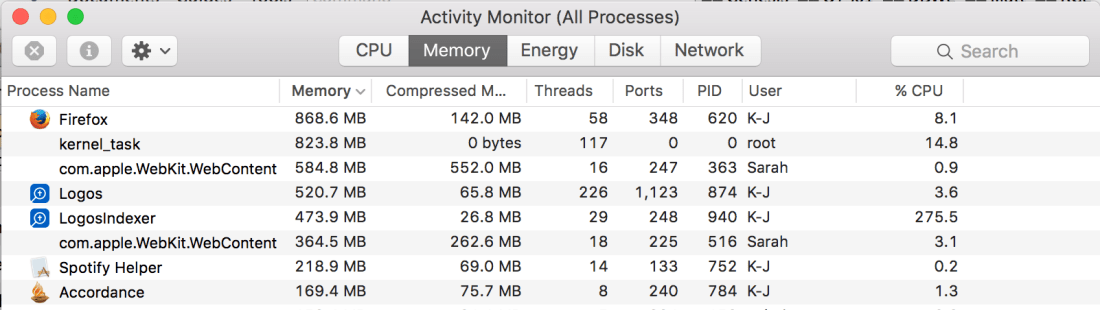
However, even on a new and higher-end Mac, Logos 7 is system resource intensive. It’s a CPU hog, a battery drain, and uses significant energy.

I can always tell if I have Logos open on my laptop because the computer is almost always warm when it is—and almost never warm with any other combination of apps open.


This has been my (and others’) enduring criticism of Logos since at least Logos 4, and I continue to fail to understand why program sluggishness is not Code Red at Faithlife HQ. My slightly educated opinion is that Faithlife (makers of Logos) is “going for more” instead of “sticking to the core” (to quote a Harvard Business Review article). Lots of spin-off apps and ideas and focus on marketing and shipping frequent feature updates have hindered development of the core product—at least where speed is concerned. Wanting to get at the info in the Passage Guide, for instance, can be an exercise in patience (and frustration):


Logos 7 is far more responsive and fast in searching on my newer Mac machine than it was on my previous MacBook (a 2008!). Though, for that matter, both Accordance and BibleWorks ran fast on the 2008—one shouldn’t have to buy a new machine to use Logos well, though I don’t think that stops some users from doing it, especially when they feel they’ve invested a lot of money in building their library.


In Conclusion


Speed and massive CPU usage and battery drainage are the Achilles’ Heel of Logos Bible software. I hope—for their sake and for the sake of their user base—that they shift their development focus back to whatever they need to do with the code to ensure a speedier user experience. The developers I’ve interacted with on the forums seem great—it appears to be an issue of larger company focus and resources.

It’s often not slow. (Though it’s always a CPU and battery drain.) For the couple of hours that I use Logos for sermon prep, I can search and open and highlight individual resources with ease. The feature set and Interactives are innovative and cut out unneeded research steps for users. The app itself is powerful, and does a good job of getting users into even larger libraries to cull the most relevant information for tasks at hand. Their accompanying iOS app is really good, too. Users should just be ready–even with the new Logos 7–to check email while they wait for a Passage Guide or Sermon Starter Guide to return results.

If you’re a happy Logos 6 or 5 user, should you upgrade? Definitely. The so-called data sets and features in Logos 7 are a significant step up. If you are on Windows or if your Mac is handling Logos fine and you want to keep using it, Logos 7 is a creative step in a good direction.

Never used Logos and trying to decide if you should get it? (Especially with other Bible software options available?) Then ask away in the comments below, and I’ll respond there.

Logos 7 launches with a 15% off discount. If you go to Words on the Word’s landing page, you get the discount, and the blog gets a small commission if it’s a first-time purchase. The landing page also includes links to more information about Logos 7.


Thanks to Logos for the chance to beta test and review. I received early access to Logos 7 as well as a package of library resources to test, for the purposes of this review. That did not, however, influence my objectivity…as I expect is clear. 🙂
Show Your Work! 10 Ways to Share Your Creativity and Get Discovered (REVIEW)

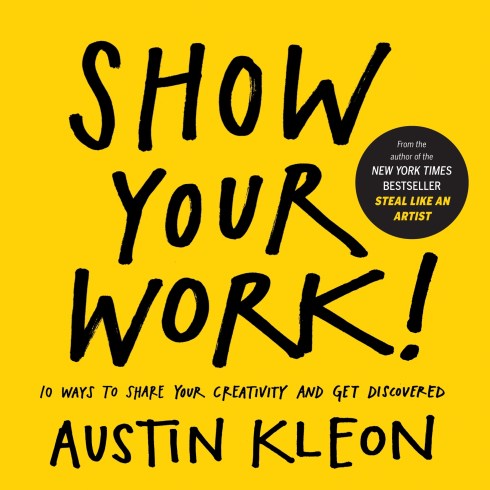
Show Your Work Cover Image


Since starting Words on the Word four years ago, I’ve spent far more of my blogging energies on writing and reviewing books and apps than on marketing what I do.

I’m fine with the focus as it’s been, but I know I could stand to explore more ways to “get discovered,” as Austin Kleon promises to address in his Show Your Work! 10 Ways to Share Your Creativity and Get Discovered.

I heard about Austin Kleon from Shawn Blanc. By telling you that, by the way, I’m following some of Kleon’s advice:

It’s always good practice to give a shout-out to the people who’ve helped you stumble onto good work and also leave a bread-crumb trail that people you’re sharing with can follow back to the sources of your inspiration.

Kleon’s got his own site which is worth checking out. Sitting down to write this review was the first time I’d been on it, and I’ve already got 15 tabs open that I’ll either read later or save to Evernote. A highlight: in his post on how to read more, suggestion #1 is “Throw your phone in the ocean.” Great idea. Not to mention this amazing wallpaper for your phone, to keep you off it.


Take It


Kleon organizes his book around 10 main suggestions:

1. You don’t have to be a genius.

2. Think process, not product.

3. Share something small every day.

4. Open up your cabinet of curiosities.

5. Tell good stories.

6. Teach what you know.

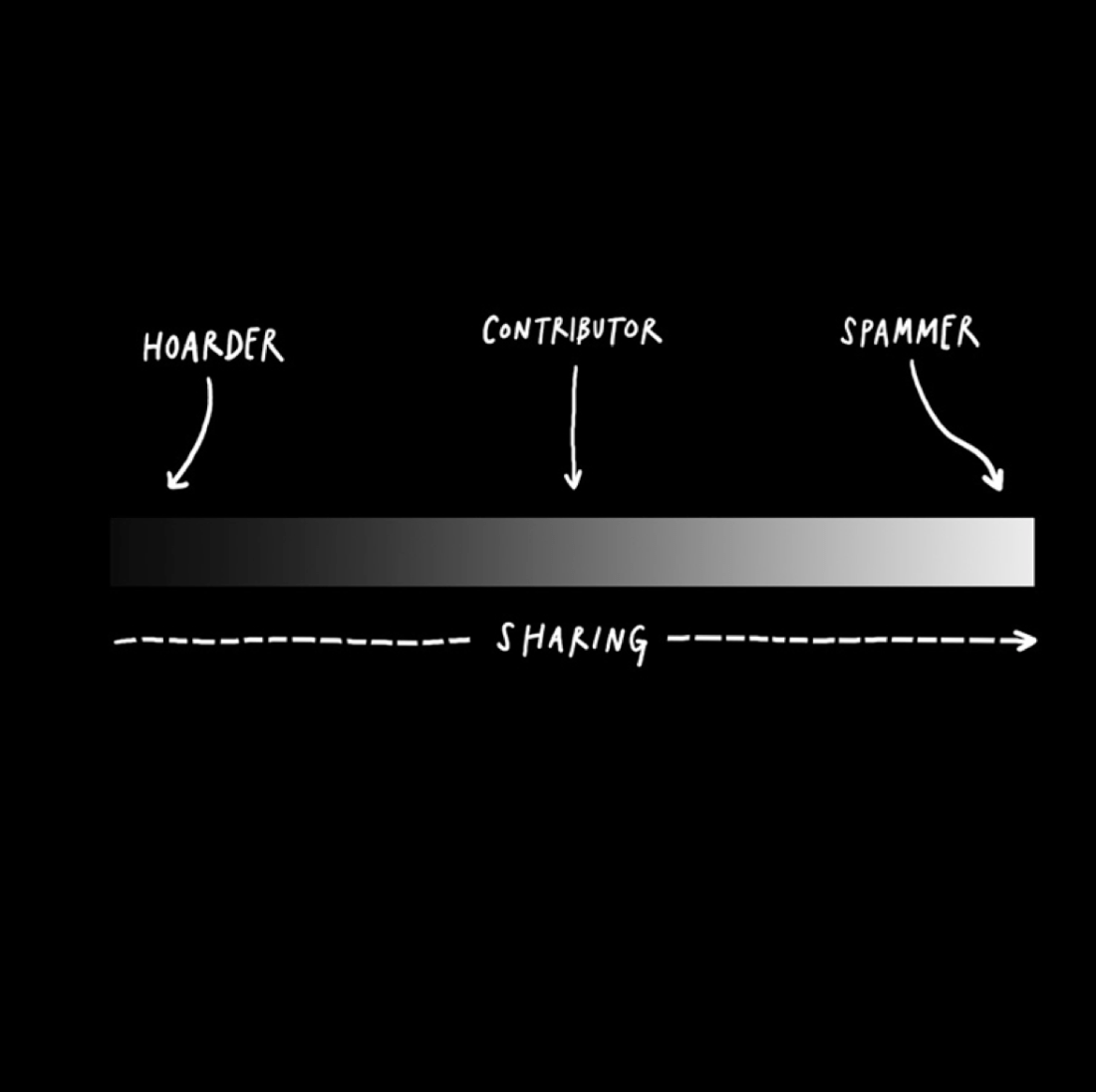
7. Don’t turn into human spam.

8. Learn to take a punch.

9. Sell out.

10. Stick around.

Chapter six, “Teach what you know,” is the shortest (barely 700 words) but best chapter.

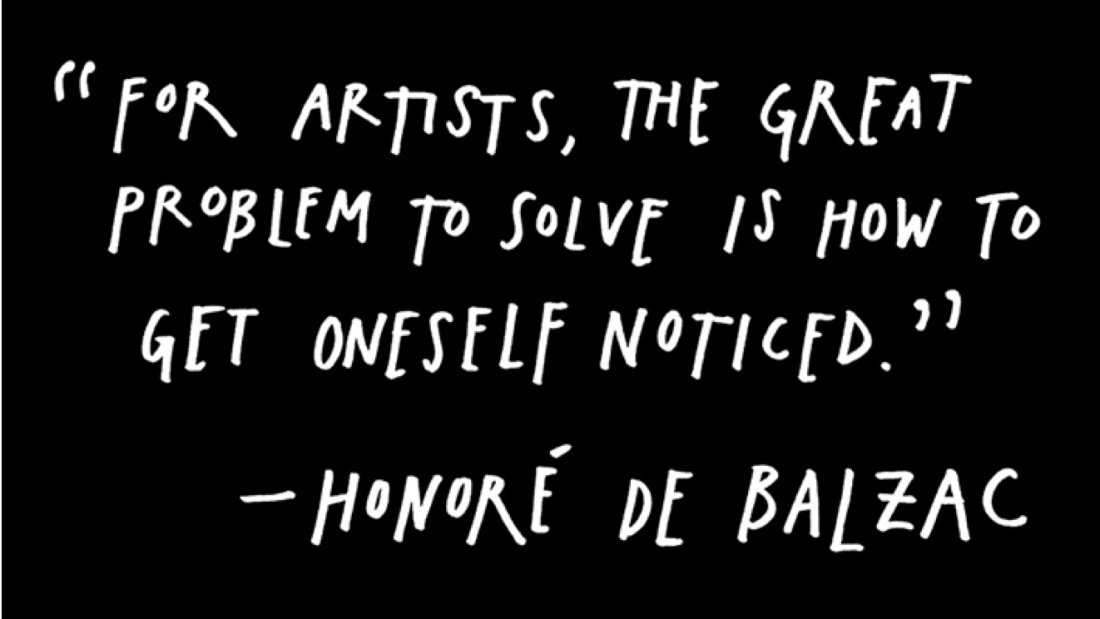
I didn’t care a whole lot for the graphics (on every other page or so), but they do make the book easier to fly through, and a few of them illustrated the points creatively. The first one is compelling:


Some others are interesting:


And there are some real gems in this book, whether they are Kleon’s or others’ words:

When Radiohead frontman Thom Yorke was asked what he thought his greatest strength was, he answered, “That I don’t know what I’m doing.” Like one of his heroes, Tom Waits, whenever Yorke feels like his songwriting is getting too comfortable or stale, he’ll pick up an instrument he doesn’t know how to play and try to write with it. This is yet another trait of amateurs— they’ll use whatever tools they can get their hands on to try to get their ideas into the world.

And:

“The stupidest possible creative act is still a creative act,” writes Clay Shirky in his book Cognitive Surplus. “On the spectrum of creative work, the difference between the mediocre and the good is vast. Mediocrity is, however, still on the spectrum; you can move from mediocre to good in increments. The real gap is between doing nothing and doing something.” Amateurs know that contributing something is better than contributing nothing.

Much of the book can be summed up by this sage advice:

The best way to get started on the path to sharing your work is to think about what you want to learn, and make a commitment to learning it in front of others.

Kleon encourages writers and artists to “become a documentarian of what you do.” That can be a “daily dispatch” (think: email newsletter) or a behind-the-scenes video on how you do what you do. Kleon says:

Once a day, after you’ve done your day’s work, go back to your documentation and find one little piece of your process that you can share.

Leave It


Kleon encourages those who quote or borrow to cite, but he falls short of a robust understanding of what plagiarism is and isn’t.

He says:

If you have a weird hybrid job, say something like, “I’m a writer who draws.” (I stole that bio from the cartoonist Saul Steinberg.)

A nice citation, but unfortunately “I’m a writer who draws” appears uncited in his book jacket bio, on his Website, on his Instagram, etc.

He shows his work on the books he reads (great idea), but then appears to copy-paste in publisher’s descriptions without citing them.

No need to lambast the guy—but I already didn’t like the title Steal Like an Artist (his first book), let alone the concept. I get it’s supposed to be a pithy way to say, “Let others influence you.” (Just like “content creation” means “writing.”) But the lack of nuance around what I consider an important issue in art creation bugged me.

Show Your Work! is more than 200 pages, but could just as well have been a series of 10 short (albeit good) blog posts. It’s got even fewer words per page than a Rob Bell book! (All due respect to Rev. Bell….)


Image via Austin Kleon


More to the point than a low word-to-page ratio is that there are plenty of pieces of advice Kleon offers that lack specifics. For example, in his section on getting a good domain name, he says:

Buy http://www.[ insert your name here].com. If your name is common, or you don’t like your name, come up with a pseudonym or an alias, and register that. Then buy some web hosting and build a website. (These things sound technical, but they’re really not— a few Google searches and some books from the library will show you the way.)

Because this is a print book, you don’t even get the benefit of a hyperlink to start you in the right direction.

But there are other parts where in even a few words Kleon fleshes out his ideas, as in the section, “Turn your flow into stock.”


Should You Get It? (Yes.)


Even with its flaws, this book was well worth the time I spent reading and marking it up. The book gave me some good, specific action steps to pursue, in the hopes of spreading the word about the work I’m doing on this blog (and elsewhere). And it’s given me months and months of sermon illustrations, inspiring quotes, and writing prompts.

For its reasonable price, the book is worth the purchase, though this might be better checked out from the library first. One way or the other, I found the book overall to be encouraging, inspiring, and motivating.

Check it out via Amazon or the publisher’s page.


Thanks to the good folks at Workman for sending the review copy.

Settling Down with Owen: Of Empty Bottles, Tourniquets, and… Hope? (King of Whys, 2016)

In 2011’s Ghost Town Mike Kinsella (Owen) sang his credo in “I Believe”:

Hallelujah! I just found Jesus
Swimming at the bottom
Of the bottle I keep crawling out of
He said, “You look familiar, but I can’t place your face”
I said, “You look like hell” and that we used to hang
At my mother’s request

On the one hand, it’s a post-Catholic-upbringing, anti-religious declaration of sorts.

Have I been saved?
Cause I feel the same:
Dirty and tired

Can I be saved?
Without having changed
Or remorse for what I don’t believe?

On the other hand, I can see an honest Christian praying those words. He prays on:

I offer up my humble soul
And my broken spirit
All those things that I can’t control
The intangible bullshit
To you, my Lord

I know he’s being sarcastic (right?), but it’s hard not to hold out hope that one of my all-time favorite artists would really mean words like that, words which sound like David or Paul, and which capture the essence of some of my own prayers.

The rest of the song seems to clarify, however:

I believe
There is no white light
Somebody’s mistaken
Or somebody lied

I believe
There’s only one truth
It resonates different
In me and you
So don’t try and sell me yours

I think that last line–“so don’t try to sell me yours”–is the song’s interpretive key. The prayers were just at his “mother’s request,” and didn’t really work if he’s still feeling “the same: dirty and tired.” The prayer to “you, my Lord” is in scare quotes.

Whatever he meant, the song, “I Believe” is one of my favorite Owen tracks out of his 9 full-length albums and handful of EPs in the last 15 years.


Owen King of Whys Cover


Five years later the first track on the just-released King of Whys is “Empty Bottle.” The song presumably refers to the Chicago concert venue with that name (“Empty Bottle / crowded goth show”). But the connection to “I Believe” is inescapable, as it borrow’s the older song’s melody from the line “Hallelujah! I just found Jesus!” I would have thought this move subconscious were it not also for the similarly of the “empty bottle” to “the bottom of the bottle” in “I Believe.”

Now Owen has found the transcendence he was looking for, it seems, in interpersonal connection:

You’ve got a lot of nerves
Will you please touch mine with yours?

This is, after all, the album of a man now married and with kids.

“Empty Bottle” is as close as an acoustic guitar will get you to headbanging. By the end of the track, the album is already set to be as lush, intricate, and ethereal as anything Owen has done.

Next is “The Desperate,” where the familiar palm-muted acoustic guitar soon gives way to some dreamy pedal steel–the first discernible mark of S. Carey’s production (Bon Iver, Sufjan Stevens). The song includes violins, piano, and poignant coming-of-age lyrics:

Somehow all of the sudden I find myself struggling
Two lives are too much and not enough
I concede this childish need for attention
is the desperate act of a disappearing man
You’d better catch him while you can

What a mess
Past and present stitched together, perilously tethered I ain’t fooling anyone (least of all me)

He continues with his signature combination of the clever and the mildly profane:

I’m calling in sick forever
and I’m calling bullshit on everyone

His next line–“This is a test and I’m failing”–seems like an antiphon to Pedro the Lion’s “If this is only a test, I hope that I’m passing.” The music is sweet and textured.

The song concludes:

You were right, Babe
I love how you know me
I know how you love me
I know how you long for this song to end

Owen is “Settled Down” now, which he explores in a track with more interlocking and arpeggiated guitars, accompanied with some sweet kick drum work. As this song concluded, on my first listen, I knew this album was among his best work. (Multiple listens through have confirmed the assessment.)

And then “Lovers Come and Go,” came on. I felt how I did the first time I listened to Owen’s 2001 self-titled debut. I don’t know if it’s the strings or the electric guitar overlays or the subtle but steady bass and drums, but it’s the kind of euphoric high that has kept me bobbing my head to emo well into my mid- to late-30s. Maybe I should have grown out of it by now, but songs like this only encourage me.

“Tourniquet” sounds at first like the kind of overly effusive, heart-on-the-sleeve, lyrical navel-gazing that got/gets me made fun of for listening to this kind of music: “This tourniquet hasn’t stopped the bleeding yet.”

But give him a chance:

If you give me this battle
I’ll pretend like there isn’t a lifetime of bitterness inside of me
An ugliness I hide from you
Give me that goddamn bottle and then leave me alone

Then there is the entrance of the horn parts. Over the song’s gorgeous layers, Owen sings:

This tourniquet hasn’t stopped the bleeding yet
I fear that I might lose a limb
Or a wife
Or whatever’s left inside

The closing words…

This tourniquet hasn’t stopped the bleeding yet
I fear that I might bleed out

…suggest that the song really is about marriage and fear of one’s self in the context of a long-term commitment. Melodramatic? Possibly. More vulnerable than many songwriters? Definitely.

Owen’s back catalogue is full of not-exactly-pro-feminist references to women. Owen is not Mark Kozelek-level misogynistic, but at least the persona of some of his songs veers towards womanizing territory. Too many to list here, but songs like “Poor Souls” (from his 2002 No Good for No One Now) have likely made listeners wonder what songwriting on the other side of marriage would be like. “Tourniquet” offers a glimpse.

Whatever else one could think about it, Owen is raw in articulating the wayward human condition, and how even marriage does not quell a wandering heart. (It might take finding Jesus to do that.) “Tourniquet” called to mind one of CCM’s most striking numbers: Amy Grant’s “Faithless Heart” of 1988, a song that caught her much flack from an unforgiving (and often disingenuous) Christian music industry. Like Grant’s confession, “Tourniquet” is a tough song to listen to but an important one.


“Burning Soul” represents a years-later take on an alcoholic father: “He wasn’t a saint, but he wasn’t a bad man.” Like his father before him, Owen sings,

Now I’ve got a burning soul
What now?
Both ends of my prayer candle are burned out

“Sleep Is a Myth,” the second-to-last track, starts out fatalistic:

Is this how you say, “Mon coeur bat la chamade?
Which pills did I take?
Were those bills ever paid?

Sleep is a myth
Believed but never witnessed by me

The spider bites are back
The eggs have finally hatched

But as the song progresses (and as the layers of vocals start to build), hope comes to the fore:

Don’t worry about the money
We’ll get by or we won’t
You look better hungry
You wear your weary eyes well
Now give me everything and then some
Bring out what’s dead and dying in your troubled head
Your lifeless body will awaken

Then the song moves into a nice, long, instrumental groove. The distorted drums and almost-shoegazing lead guitar line and choral vocals are a new sweet spot for Owen and company.

The album’s final track, “Lost,” is also its first single.

I winced at:

Stay poor and die trying
Take the drugs I didn’t take
Lay the whores I didn’t lay cause I was too afraid that I might like it

Kinsella sings to “the last of [his] feral friends.” Could the “friend” be his former self? Subtle allusions to previous Owen lyrics make it possible.

You may be wondering where all this wandering leads
You’re lost but at least you’ve nowhere to be and no one to leave you

The album closes on an odd note:

You may be wandering driveway to driveway drunk
A ghost without a house to haunt
The last of my feral friends, I know you’re lonely
but don’t waste your breath telling me that you want what I have
No one believes you

If this song is autobiographical (today’s Kinsella singing to yesterday’s Kinsella: “I see you but you can’t see me”), it’s a dour note to end on. Is he saying he really didn’t want the settled life? If he’s singing to a friend, there is the faintest hint of affirmation of the “settled down” lifestyle the artist has chosen (“you want what I have”), even while he knows “no one believes” his friend.

Musically the song never resolves to the tonic, so maybe the cliffhanger effect is on purpose.

After the strength of the first six tracks, I was hoping for something more final and summative at the end of the album, but maybe tension is how it has to end for Owen.


The horns and string and pedal steel on the album will leave you wanting that instrumentation on many Owen songs to come. His songwriting is as good as ever. And King of Whys is hands-down the best-produced Owen album to date.

Owen’s 2001 full-length record–his first–is still the benchmark against which I measure all of his albums. More than any other effort to date, King of Whys evokes the beauty of that first record. It’s a pleasure to listen to, and probably his most consistently good one since his debut. I’m already eager to hear where he’ll go next.


Purchase info: Amazon / iTunes / Polyvinyl


Thanks to the musical powers-that-be, who sent me an early download of the album so I could review it.

My Six-Year-Old’s Review of Shark Attack! (Scholastic)

Shark Attack


My six-year-old son wanted to start a blog to write book reviews, so I’m turning my blog over to him for today’s post. Below is his review of Shark Attack! (Scholastic, 2013), including a bit of Q and A between me and him. Enjoy.


I like this book.

Because it tells me about sharks. How long they can open their mouths.


What was your favorite part about this book?

When the shark does diving.

What was surprising about the book?

That sharks can hear.

How can they hear?

They sense it. “Sharks hear sounds too low for you to hear.”

Who would like this book?

Me.


Shark Attack Review


Where to find it: Amazon / Scholastic
Grade Level: 1 through 3
32 Pages, full color images

Bill Mallonee’s Slow Trauma

The 1:06 opening track, “One & the Same,” serves as a Prelude to Bill Mallonee’s most recent album–Slow Trauma–asking:

What you hold onto and what you let go of
and what you should give away
What’s gonna save you and what makes you smile?
Sometimes, they are one and the same

Then the full band kicks in with a sweet folksy rock groove in “Only Time Will Tell.” (“Where it’s all going? Only time will tell.”) And by full band, I mean: Bill Mallonee on vocals, guitars, bass, and drums. This is something like his 74th album (!), and I only learned an album or two ago that drums are his first instrument.

Before I say any more about this top-notch record, here’s Mr. Mallonee from an essay he wrote that serves as liner notes:

Death. Cessation.
A component of my interior world.
I feel like I’ve been staring it down in one form or another all of my life.
I’ve been “institutional material” once or twice.
It has certainly shaped my melancholy temperament and driven my art in noticeable ways.

I know some movements across the spectrum of human history have glorified it, romanticized it, even reveled in it…
Death. What’s to revel in?
Me? I don’t see it that way. At all.
I think it’s more like an aberration.
A blasphemy.
God, damn it. (That’s a prayer. Not an expletive.)

The third track, “Waiting for the Stone to be Rolled Away” has a great groove, too. It’s a resurrection song, written “from the parking lot of the Holy Spirit Assembly.” Mr. Mallonee takes the listener “down these sad, back streets of doubt to a new and brighter day / waiting for the stone to be rolled away.” (He does it with a killer harmony part, too.)

Slow TraumaIn this third track begins a trend that Mr. Mallonee thankfully repeats throughout the album: just when you get fully into the groove and expect the song to end, he goes another minute with some instrumental rocking out. I love this album for that. He takes his time with the songs. He comes to say what he needs to say, then lets the music do the rest of the talking, helping the listener mull it all over.

Even the album’s less remarkable songs (there are only two I would even begin to consider fast-forwarding on Listen #47) are only so because the others are so good.

“WPA/When I Get to Where They’re Taking Us,” the fifth track, has a really punchy lead guitar line that will stay with you for days. Mr. Mallonee is as gifted a guitarist as he is a songwriter.

Track six, “Ironclad,” is another highlight, closing with a melodic guitar riff you wouldn’t think possible on someone’s 70th (give or take a few) album! (How does he still do it? No idea, but I’m glad he does.)

The closing number, “That Last Hill,” is my favorite song on the album and one of his more poignant tracks in his massive catalogue:

will my highbeams flood the plain?
will the gatekeeper know my name
will there be someone to claim me for his own?

Even though that song is nearly five minutes, I could have listened to it for ten more. Throughout the album Mr. Mallonee offers beauty and a sure hand to help the listener think through difficult themes of death, life, loss, living, and giving.

The last words belong to the liner note essay:

“He Is Risen,” goes the Easter liturgy.
And you & I, the stumbling, wayward congregation of the spiritually poor, blind, sin-sick and lame respond:
“He Is Risen, Indeed!”
I’m there.

After hearing this record the listener will want to heed Mr. Mallonee’s call:

Do your part, in your corner and among your friends, to kick at the darkness and at death itself.

Slow Trauma is available here.


Thanks to Bill Mallonee for the opportunity to review this excellent record. It got me through my last handful of hour-long commutes to seminary last spring! He’s got a new record already in the works, which you can see here.

Psalm Songs: The Best New Worship Music You Might Not Have Heard Yet

I wrote about the Psalms as descriptive and prescriptive not long ago:

The writers of the Psalms give language to the whole range of emotions: from gratitude to fear, from joy to lamentation, from petition to thanksgiving, from intimate, private prayers to national, corporate prayers. In this way they are eminently descriptive of the human experience.

The Psalms also prescriptively guide the reader into various postures of prayer, so that the one praying does not only ever approach God with petitions, or only ever with complaint, and so on. The cognitive and affective come together in the Psalms in sometimes unexpected ways. Psalms of lament, for example, often begin with a loud “Why?” (stressing the affective) yet end with a determined profession of faith like, “But I will trust in you still….” In this way they stress the use of cognitive powers in prayer—external life evidence notwithstanding!

The Psalms express (descriptively) and call forth (prescriptively) a whole spectrum of human experience in relationship to God. They teach us to bring our whole selves to God in worship.

There comes a point in biblical studies when one has to say, I guess we’ll never know. That’s especially true with possible musical settings of Israel’s Psalms (careful efforts notwithstanding). So when it comes to music today for the Psalms, the Church (and before that, the synagogue) has had to make the way by walking.


*    *    *    *    *


A few months ago I received an email from Adam Wright, a church worship leader in Alabama and primary force behind The Corner Room. He introduced me to his band’s Psalm Songs, Volume 1. I’ve heard Scripture set to music in ways that were helpful and edifying, as well as ways that were… well… not. I was getting ready to reply with what I usually need to say, which is that I’m behind on existing reviews and need to take a pass on writing about this record. But then I listened and found myself spending at least a half hour at his site. Months later the record is still on regular rotation at our house and during my sermon preparation sessions and in our car.


Adam Wright (image via The Corner Room)


Each of the album’s ten tracks sets a Psalm to full-band music. Adam writes, “As the Psalms are diverse in their character and intent, so is the musical character of this collection – rock, folk, bluegrass and modern worship are genres you’ll hear on this first volume.” Not only that, the kinds of Psalms represented are wonderfully diverse. The album covers a broad range: from the Psalm of Ascent (121) to the pastoral Psalm (23) to the lament Psalm (42)–and that’s just the first three tracks!

Adam’s voice on the record is perfect. It’s smooth but not overly saccharine, strong but not abrasive, and his soaring tenor has me singing in my falsetto just to try to keep pace. He calls to mind Chris Thiele, not just in terms of vocal timbre, but also in his ability to effortlessly cover different styles of music. If Adam will forgive my mild Hoosiers obsession, I can say that he’s as good a songwriter, musician, and band leader as Jimmy Chitwood is a ball player.


Jimmy Chitwood Hoosiers
Psalm Songs: Like This Guy’s Shooting Set to Music


The musicianship on Psalm Songs is as good as it gets. The band is tight and the instrument parts all fit together well–from mandolin to guitar to fiddle to bass and drums. The multi-part harmonies so characteristic of bluegrass will have you singing along as soon as you know the song.


*    *    *    *    *


psalm songs vol 1_itunes imageThe album takes the Psalms verbatim from the English Standard Version. The ESV is not my all-time favorite translation–I will probably always take issue with the generic Hebrew or Greek word for human being translated as “man.” But that version is more fluildy poetic than I expected for the Psalms. Rare is the moment on the album when the words feel shoehorned into the music–the settings do the Psalms great justice.

Psalm 23 has been set to music so many times, one might wonder how it could be done well again. But the second track is poignant and uplifting all at once. It’s got a moving video, too:


The other two videos at this page are pretty awesome, too.

One of Adam’s driving motivations, by the way, is to help people memorize Scripture via these musical settings. I’ve found the music helpful to that end, for sure.

I could go on about how much I like this record (and my three kids are big fans, too, especially of the opening Psalm 121). But go listen for a few minutes and I suspect you’ll have the same reaction I did, that this is an album you’ll not only want to own, but will also want to get a few copies of so you can give away to others.

Check out The Corner Room’s site here. You can also get Psalm Songs on iTunes (link) and Amazon (link).


I received Psalm Songs, Volume 1 free for the purposes of review–I’ve already given away my hard copy but am happily still listening to an electronic copy.

IVP’s 5-Volume Ancient Christian Doctrine in Accordance, On Sale this Week

Ancient Christian Doctrine


This week Accordance Bible Software has put their five-volume Ancient Christian Doctrine (IVP) on sale for $129 (normally $199). Ancient Christian Doctrine is a full-blown compendium of early church commentary on the Nicene Creed. I write more about the resource here.

If you’re teaching or preaching on the Creed, this is possibly the best resource to start with. (And, of course, it’s likely available for free in print at your local theological library.)

The related Ancient Christian Commentary on Scripture (covering the entire OT and NT) is also included in the sale.

Here‘s the link to find Ancient Christian Doctrine at Accordance.


This week’s blog sponsor is MailButler, the feature set you always wished your Mac Mail had (and that I’m glad mine does). Find out more about it here or download and try it free here.