Greek Isaiah in a Year, Week 26=Isaiah 33

isaiah lxxThis week in Greek Isaiah in a Year covers/covered Isaiah 33 (which is 24 verses). Here are the readings for each day:

Mon., 5/27/13:  Isa 33:1–4

Tues., 5/28/13:  Isa 33:5–9

Wed., 5/29/13:  Isa 33:10–14

Thurs., 5/30/13:  Isa 33:15–19

Fri., 5/31/13:  Isa 33:20–24

Below is the text from R.R. Ottley’s Book of Isaiah According to the Septuagint. Ottley is also here in Logos (reviewed here) and here as a free, downloadable pdf in the public domain. The full reading plan for our group is here (pdf).

33 1 Οὐαὶ τοῖς ταλαιπωροῦσιν ὑμᾶς, ὑμᾶς δὲ οὐδεὶς ποιεῖ ταλαιπώρους, καὶ ὁ ἀθετῶν ὑμῖν οὐκ ἀθετεῖ· ἁλώσονται οἱ ἀθετοῦντες καὶ παραδοθήσονται, καὶ ὡς σὴς ἐπὶ ἱματίου οὕτως ἡττηθήσονται. 2 Κύριε, ἐλέησον ἡμᾶς, ἐπὶ σοὶ γὰρ πεποίθαμεν· ἐγενήθη τὸ σπέρμα τῶν ἀπειθούντων εἰς ἀπώλειαν, ἡ δὲ σωτηρία ἡμῶν ἐν καιρῷ θλίψεως. 3 διὰ φωνὴν τοῦ φόβου σου ἐξέστησαν λαοὶ ἀπὸ τοῦ φόβου σου καὶ διεσπάρησαν τὰ ἔθνη. 4 νῦν δὲ συναχθήσεται τὰ σκῦλα ὑμῶν ἀπὸ μικροῦ καὶ μεγάλου· ὃν τρόπον ἐάν τις συναγάγῃ ἀκρίδας, οὕτως ἐμπαίξονται ὑμῖν. 5 ἅγιος ὁ θεὸς ὁ κατοικῶν ἐν ὑψηλοῖς, ἐνεπλήσθη Σιὼν κρίσεως καὶ δικαιοσύνης. 6 ἐν νόμῳ παραδοθήσονται, ἐν θησαυροῖς ἡ σωτηρία ἡμῶν, ἐκεῖ σοφία καὶ ἐπιστήμη καὶ εὐσέβεια πρὸς τὸν κύριον· οὗτοί εἰσιν θησαυροὶ δικαιοσύνης. 7 Ἰδοὺ δὴ ἐν τῷ φόβῳ ὑμῶν αὐτοὶ φοβηθήσονται· οὓς ἐφοβεῖσθε, φοβηθήσονται ἀφʼ ὑμῶν· ἄγγελοι γὰρ ἀποσταλήσονται ἀξιοῦντες εἰρήνην, πικρῶς κλαίοντες, παρακαλοῦντες εἰρήνην. 8 ἐρημωθήσονται γὰρ αἱ τούτων ὁδοί· πέπαυται γὰρ ὁ φόβος τῶν ἐθνῶν, καὶ ἡ πρὸς τούτους διαθήκη αἴρεται, καὶ οὐ μὴ λογίσησθε αὐτοὺς ἀνθρώπους. 9 ἐπένθησεν ἡ γῆ, ᾐσχύνθη ὁ Λίβανος, ἕλη ἐγένετο ὁ Σαρών· φανερὰ ἔσται ἡ Γαλιλαία καὶ ὁ Κάρμηλος. 10 νῦν ἀναστήσομαι, λέγει Κύριος, νῦν δοξασθήσομαι, νῦν ὑψωθήσομαι. 11 νῦν ὄψεσθε, νῦν αἰσχυνθήσεσθε· ματαία ἔσται ἡ ἰσχὺς τοῦ πνεύματος ὑμῶν, πῦρ ὑμᾶς κατέδεται, 12 καὶ ἔσονται ἔθνη κατακεκαυμένα ὡς ἄκανθα ἐν ἀγρῷ ἐρριμμένη καὶ κατακεκαυμένη. 13 Ἀκούσονται οἱ πόρρωθεν ἃ ἐποίησα, γνώσονται οἱ ἐγγίζοντες τὴν ἰσχύν μου. 14 ἀπέστησαν οἱ ἐν Σιὼν ἄνομοι, λήμψεται τρόμος τοὺς ἀσεβεῖς· τίς ἀναγγελεῖ ὑμῖν ὅτι πῦρ καίεται; τίς ἀναγγελεῖ ὑμῖν τὸν τόπον τὸν αἰώνιον; 15 πορευόμενος ἐν δικαιοσύνῃ, λαλῶν εὐθεῖαν ὁδόν, μισῶν ἀνομίαν καὶ ἀδικίαν, καὶ τὰς χεῖρας ἀποσειόμενος ἀπὸ δώρων, βαρύνων τὰ ὦτα ἵνα μὴ ἀκούσῃ κρίσιν αἵματος, καμμύων τοὺς ὀφθαλμοὺς ἵνα μὴ ἴδῃ ἀδικίαν, 16 οὗτος οἰκήσει ἐν ὑψηλῷ σπηλαίῳ πέτρας ὀχυρᾶς· ἄρτος αὐτῷ δοθήσεται, καὶ τὸ ὕδωρ αὐτοῦ πιστόν. 17 βασιλέα μετὰ δόξης ὄψεσθε, καὶ οἱ ὀφθαλμοὶ ὑμῶν ὄψονται γῆν πόρρωθεν· 18 ἡ ψυχὴ ὑμῶν μελετήσει φόβον Κυρίου. ποῦ εἰσιν οἱ γραμματικοί; ποῦ εἰσιν οἱ συμβουλεύοντες; ποῦ ἐστιν ὁ ἀριθμῶν τοὺς συστρεφομένους; 19 μικρὸν καὶ μέγαν λαόν, ᾧ οὐ συνεβούλευσαν, οὐδὲ ᾔδει· βαθύφωνον, ὥστε μὴ ἀκοῦσαι· λαὸς πεφαυλισμένος, καὶ οὐκ ἔστιν τῷ ἀκούοντι σύνεσις. 20 ἰδοὺ Σιὼν ἡ πόλις, τὸ σωτήριον ἡμῶν, οἱ ὀφθαλμοί σου ὄψονται Ἰερουσαλήμ, πόλις πλουσία, σκηναὶ αἳ οὐ μὴ σεισθῶσιν, οὐδʼ οὐ μὴ κινηθῶσιν οἱ πάσσαλοι τῆς σκηνῆς αὐτῆς εἰς τὸν αἰῶνα χρόνον, οὐδὲ τὰ σχοινία αὐτῆς οὐ μὴ διαρραγῶσιν· 21 ὅτι τὸ ὄνομα Κυρίου μέγα ἐστίν. τόπος ὑμῖν ἔσται, ποταμοὶ καὶ διώρυγες πλατεῖς καὶ εὐρύχωροι· οὐ πορεύσῃ ταύτην τὴν ὁδόν, οὐδὲ πορεύσεται πλοῖον ἐλαῦνον. 22 ὁ γὰρ θεός μου μέγας ἐστίν· οὐ παρελεύσεταί με, Κύριος πατήρ, Κύριος κριτὴς ἡμῶν, Κύριος ἄρχων ἡμῶν, Κύριος βασιλεὺς ἡμῶν, Κύριος οὗτος ἡμᾶς σώσει. 23 ἐρράγησαν τὰ σχοινία σου, ὅτι οὐκ ἐνίσχυσεν· ὁ ἱστός σου ἔκλινεν, οὐ χαλάσει τὰ ἱστία, οὐκ ἀρεῖ σημεῖον, ἕως οὗ παραδοθῇ εἰς προνομήν· τοίνυν πολλοὶ χωλοὶ προνομὴν ποιήσουσιν. 24 καὶ οὐ μὴ εἴπῃ Κοπιῶ ὁ λαὸς ὁ ἐνοικῶν ἐν αὐτοῖς· ἀφέθη γὰρ αὐτοῖς ἡ ἁμαρτία.

See here for more resources and links to texts for Greek Isaiah.

Real Hebrew Bathtub Letters This Time

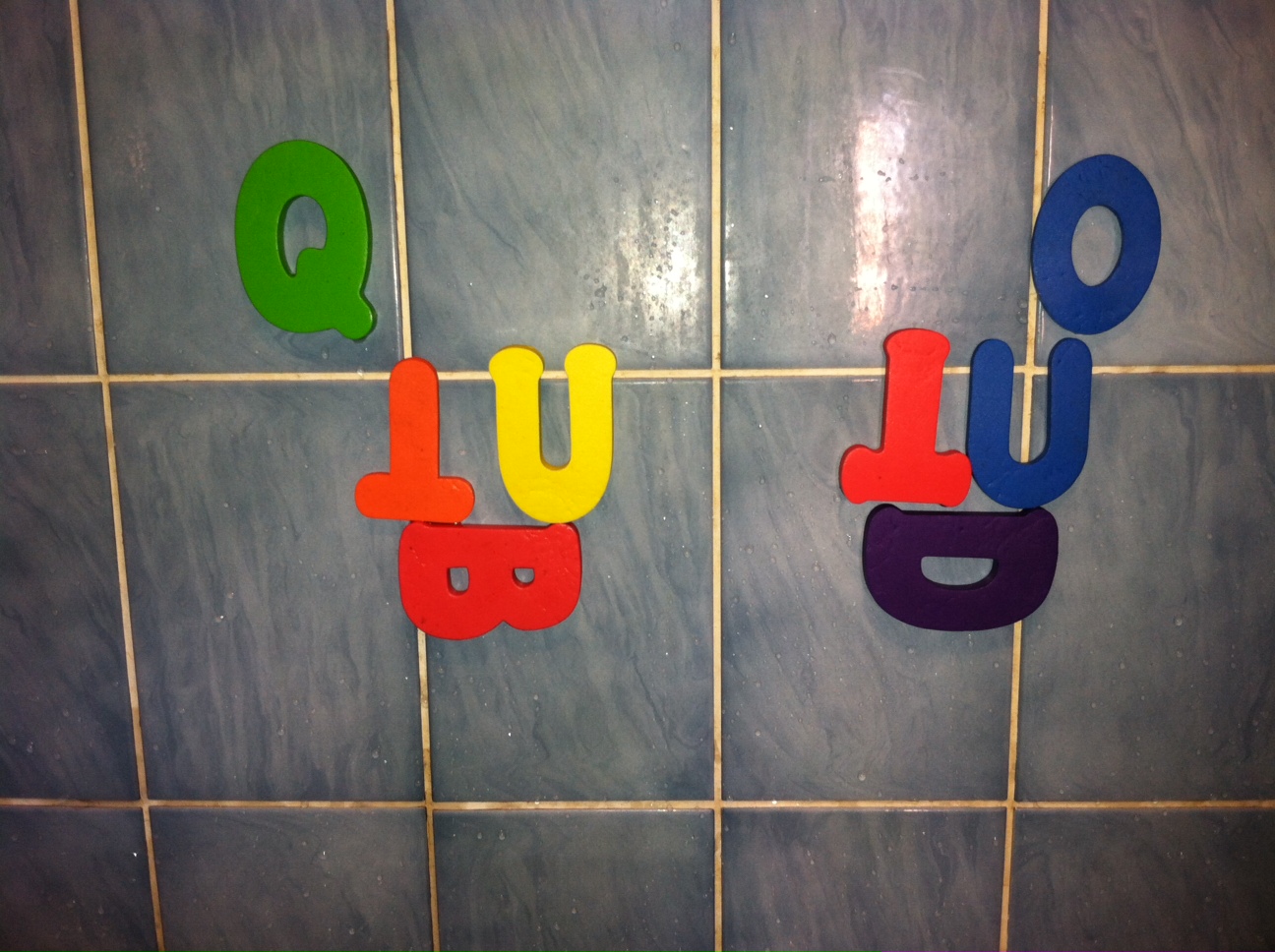
I mentioned a few weeks ago that my five-year-old son is learning Hebrew, using the materials from Sarah and David. Part of his learning process was to re-shape his English bathtub letters into Hebrew ones, as noted and pictured here. Now (thanks, Diana!) he has real ones:

Letters

And he’s pretty happy about them, too:

Son with Letters

More updates on our Hebrew learning adventures soon!

Seven Events that Shaped the New Testament World, reviewed

PrintWhat was the world–or, better, what were the worlds–in which early Christians lived?

Seven Events that Shaped the New Testament World answers that question by highlighting seven key “events” in the seven or so centuries surrounding Jesus. Here, from the table of contents, is what the book covers:

1. The Death of Alexander the Great (323 BCE)
2. The Process of Translating Hebrew Scriptures into Greek (ca. 250 BCE)
3. The Rededication of the Jerusalem Temple (164 BCE)
4. The Roman Occupation of Judea (63 BCE)
5. The Crucifixion of Jesus (ca. 30 CE)
6. The Writing of the New Testament Texts (ca. 50-ca. 130 CE)
7. The Process of “Closing” the New Testament Canon (397 CE)


Author Warren Carter uses each of the seven “as entry points, as launching pads, to talk about these significant and larger realities.” As one reviewer (whom I read before I read this book) pointed out, these events are not all “events,” per se. Events 2, 6, and 7 above are extended processes. Similarly (as the same reviewer also noted), the writing of the New Testament and the closing of its canon didn’t shape the NT world; they emerged from it.

That’s perhaps just a technicality, though. Carter seeks to be “transparently selective,” using “each event as a focal point for larger cultural dynamics and sociohistorical realities” of New Testament times.

Here is author Warren Carter introducing his book:


Carter’s analysis of how historical events shape culture–and how that should influence how we read and understand the New Testament–is incisive and engaging. Early on he writes, “Hellenistic culture did not suddenly replace all other cultures but entangled itself with local cultures to create multicultural worlds.” Given my interest in the Septuagint, I really appreciated his take on that Greek translation as “a way to negotiate a multicultural world.” He deftly explains to readers the intersection between Jewish, Greek, and Roman cultures.

Photographs, sidebars, and occasional footnotes contribute to the level of detail Carter provides. And yet his tone is conversational, and his narrative re-tellings engaging. Last summer I wrote about how I wanted to see Mark Wahlberg or Matt Damon in a film adaptation of 1 Maccabees. Carter’s narrative (ch. 3, “The Rededication of the Jerusalem Temple (164 BCE)”) is nearly as engaging as such a movie would be. In addition to telling the narrative, he has a sidebar on “identity markers” that unpacks the role played by boundaries of identity in Jewish and other religious traditions. His explanation of the difference between 1 Maccabees and 2 Maccabees was easy to follow and illuminating.

The conversational tone at times was a little too conversational for me. There is frequent reference to “the early Jesus movement,” when “early Christianity” would have sufficed. So, too, “Jesus-followers” could just have been called “Christians,” which I would have found less distracting. Of course, a biblical scholar will note that any of these terms are “problematic,” but the more conventional ones would have made for a smoother read, in my view. And I could have done without reference to early Christians as “reading with Jesus-glasses on” and statements like, “Only bad boys were crucified in Rome’s world,” not to mention the description of Alexander the Great as “a macho man, an action figure.”

I also thought that his emphasis on cultural backdrops was occasionally too strong. For example, comparing Jesus to Alexander, he writes, “In many ways, this presentation of Jesus as the man with great power who rules everything imitates and competes with the presentation of manliness that we have seen with Alexander, the world conqueror.” To speak about Jesus in terms of degrees of “manliness” is perhaps a category mistake. Carter’s mention of Philippians 2 and Jesus’ self-emptying is spot on, of course–I’m just not sure that Paul has imperial powers and the social construction of “manliness” in mind when he writes to Philippi.

Theologically conservative/evangelical readers will bristle a little bit at Carter’s statement about the New Testament that readers today “need to discern when to read against the grain” when it comes to groups that the NT seems to exclude. I don’t read Paul and the NT as “not always gracious to women,” as Carter does, and don’t think he somehow needs to be explained away in this manner. Of course, not all who read this review will agree with me either!

Those criticisms being present, Carter succeeds in the book’s aim: “The seven chapters of this book provide an orientation to some important aspects of the early Jesus movement and the New Testament. Reading it will enlighten you about the beginnings of the Christian movement and help your understanding of the New Testament.”

Though I did not agree with Carter on all his assessments, his description of seven key “events” (as well which events he chose to highlight) has enhanced my understanding of and appreciation for the context into which Jesus came and in which the church was born. As long as one reads critically (as one should always do), Carter provides a wealth of helpful information that is accessible to just about any student of the Bible.

Thanks to Baker and NetGalley for the e-galley to review. The book is on Amazon here. Its Baker product page is here. You can download a sample pdf of the book here. There is also a helpful interview with Carter here.

Greek Isaiah in a Year, Week 25=Isaiah 31:5-32:20

isaiah lxx

This week in Greek Isaiah in a Year covers Isaiah 31:5-32:20.

Here are the schedule and text for Monday through Friday, using the text from R.R. Ottley’s Book of Isaiah According to the Septuagint. Ottley is also here in Logos (reviewed here) and here as a free, downloadable pdf in the public domain. The full reading plan for our group is here (pdf).

Monday, May 20: Isa 31:5–9

5 ὡς ὄρνεα πετόμενα, οὕτως ὑπερασπιεῖ Κύριος ὑπὲρ Ἰερουσαλὴμ καὶ ἐξελεῖται καὶ περιποιήσεται καὶ σώσει. 6 ἐπιστράφητε, οἱ τὴν βαθεῖαν βουλὴν βουλευσάμενοι καὶ ἄνομον. 7 ὅτι τῇ ἡμέρᾳ ἐκείνῃ ἀπαρνηθήσονται οἱ ἄνθρωποι τὰ χειροποίητα αὐτῶν τὰ ἀργυρᾶ καὶ τὰ χρυσᾶ ἃ ἐποίησαν αἱ χεῖρες αὐτῶν. 8 καὶ πεσεῖται Ἀσσούρ· οὐ μάχαιρα ἀνδρὸς οὐδὲ μάχαιρα ἀνθρώπου καταφάγεται αὐτόν, καὶ φεύξεται οὐκ ἀπὸ προσώπου διώκοντος· οἱ δὲ νεανίσκοι ἔσονται εἰς ἥττημα, 9 πέτρᾳ γὰρ περιλημφθήσονται ὡς χάρακι καὶ ἡττηθήσονται, ὁ δὲ φεύγων ἁλώσεται. Τάδε λέγει Κύριος Μακάριος ὃς ἔχει ἐν Σιὼν σπέρμα καὶ οἰκείους ἐν Ἰερουσαλήμ.

Tuesday, May 21Isa 32:1–4

32 1 Ἰδοὺ γὰρ βασιλεὺς δίκαιος βασιλεύσει, καὶ ἄρχοντες μετὰ κρίσεως ἄρξουσιν· 2 καὶ ἔσται ὁ ἄνθρωπος κρύπτων τοὺς λόγους τούτους, καὶ κρυβήσεται ὡς ἀφʼ ὕδατος φερομένου· καὶ φανήσεται ἐν Σιὼν ὡς ποταμὸς φερόμενος ἔνδοξος ἐν γῇ διψώσῃ. 3 καὶ οὐκέτι ἔσονται πεποιθότες ἐπʼ ἀνθρώποις, ἀλλὰ τὰ ὦτα δώσουσιν ἀκούειν· 4 καὶ ἡ καρδία τῶν ἀσθενῶν προσέξει τοῦ ἀκούειν, καὶ αἱ γλῶσσαι αἱ ψελλίζουσαι ταχὺ μαθήσονται λαλεῖν εἰρήνην·

Wednesday, May 22Isa 32:5–8

5 καὶ οὐκέτι οὐ μὴ εἴπωσιν τῷ μωρῷ ἄρχειν, καὶ οὐκέτι οὐ μὴ εἴπωσιν οἱ ὑπηρέται σου Σίγα. 6 ὁ γὰρ μωρὸς μωρὰ λαλήσει, καὶ ἡ καρδία αὐτῶν μάταια νοήσει, τοῦ συντελεῖν ἄνομα καὶ λαλεῖν πρὸς Κύριον πλάνησιν, τοῦ διαφθεῖραι ψυχὰς πεινώσας, καὶ τὰς ψυχὰς τὰς διψώσας κενὰς ποιῆσαι. 7 ἡ γὰρ βουλὴ τῶν πονηρῶν ἄνομα βουλεύεται, καταφθεῖραι ταπεινοὺς ἐν λόγοις ἀδίκοις καὶ διασκεδάσαι λογισμοὺς ταπεινῶν ἐν κρίσει. 8 οἱ δὲ εὐσεβεῖς συνετὰ ἐβουλεύσαντο, καὶ αὕτη ἡ βουλὴ μενεῖ.

Thursday, May 23Isa 32:9–14

9 Γυναῖκες πλούσιαι, ἀνάστητε καὶ ἀκούσατε τῆς φωνῆς μου· θυγατέρες ἐν ἐλπίδι, ἀκούσατε τοὺς λόγους μου. 10 ἡμέρας ἐνιαυτοῦ μνείαν ποιήσασθε ἐν ὀδύνῃ μετὰ ἐλπίδος· ἀνήλωται ὁ τρυγητός, πέπαυται ὁ σπόρος καὶ οὐκέτι μὴ ἔλθῃ. 11 ἔκστητε, λυπήθητε αἱ πεποιθυῖαι, ἐκδύσασθε, γυμναὶ γένεσθε, περιζώσασθε σάκκους τὰς ὀσφύας, 12 καὶ ἐπὶ τῶν μασθῶν κόπτεσθε, περὶ ἀγροῦ ἐπιθυμήματος καὶ ἀμπέλου γενήματος. 13 ἡ γῆ τοῦ λαοῦ μου, ἄκανθα καὶ χόρτος ἀναβήσεται, καὶ ἐκ πάσης οἰκίας εὐφροσύνη ἀρθήσεται· πόλις πλουσία, 14 οἶκοι ἐγκαταλελιμμένοι, πλοῦτον πόλεως καὶ οἴκους ἐπιθυμήτους ἀφήσουσιν· καὶ ἔσονται αἱ κῶμαι σπήλαια ἕως τοῦ αἰῶνος, εὐφροσύνη ὄνων ἀγρίων, βοσκήματα ποιμένων,

Friday, May 24: 32:15–20

15 ἕως ἂν ἐπέλθῃ ἐφʼ ὑμᾶς πνεῦμα ἀφʼ ὑψηλοῦ. καὶ ἔσται ἔρημος ὁ Χερμέλ, καὶ ὁ Χερμὲλ εἰς δρυμὸν λογισθήσεται. 16 καὶ ἀναπαύσεται ἐν τῇ ἐρήμῳ κρίμα, καὶ δικαιοσύνη ἐν τῷ Καρμήλῳ κατοικήσει· 17 καὶ ἔσται τὰ ἔργα τῆς δικαιοσύνης εἰρήνη, καὶ κρατήσει ἡ δικαιοσύνη ἀνάπαυσιν, καὶ πεποιθότες ἔσονται ἕως τοῦ αἰῶνος· 18 καὶ κατοικήσει ὁ λαὸς αὐτοῦ ἐν πόλει εἰρήνης, καὶ ἐνοικήσει πεποιθώς, καὶ ἀναπαύσονται μετὰ πλούτου. 19 ἡ δὲ χάλαζα ἐὰν καταβῇ, οὐκ ἐφʼ ὑμᾶς ἥξει. καὶ ἔσονται οἱ ἐνοικοῦντες ἐν τοῖς δρυμοῖς πεποιθότες ὡς οἱ ἐν τῇ πεδινῇ. 20 μακάριοι οἱ σπείροντες ἐπὶ πᾶν ὕδωρ, οὗ βοῦς καὶ ὄνος πατεῖ.

That takes us through 32 chapters so far. See here for more resources and links to texts for Greek Isaiah.

Books for Sale: Hermeneia 38 vol. CD-ROM (Logos), $149, OBO

Hermeneia

I’m looking to sell the Hermeneia CD-ROM set (38 vols., 2006). It’s compatible with Logos/Libronix. $149 (and willing to consider offers). See here and here for details on the set.

If you want to contact me about a possible purchase, feel free to use this form, and we’ll talk. I generally do things through PayPal.

2014 UPDATE: I’ve still got the 38-volume set available to sell (unopened), if you’re interested.

UPDATE 2: It’s now sold.

NA28 Greek New Testament text in Accordance

NA28

The NA28 Greek New Testament is now available for purchase in Accordance Bible Software. The text itself is free here. The Accordance version includes the apparatus, marginalia, and other nice enhancements. Here’s a screencast that shows how you can use the NA28 in Accordance:

More about the Nestle-Aland edition is here. Its Accordance product page is here, with an Accordance blog post about it here.

Not as Literal as You Think? A Review of One Bible, Many Versions

One Bible Many Versions

“Are literal versions really literal?” So asks Dave Brunn in One Bible, Many Versions: Are All Translations Created Equal? Brunn is a missionary and educator with extensive Bible translation experience. Noting that the Bible is “virtually silent” on “the issue of translation theory,” he seeks in his book to answer questions like:

  • “How literal should a Bible translation be?”
  • “What makes a translation of the Scriptures faithful and accurate?”
  • “What is the significance of the original form and the original meaning?”

He examines versions as diverse as the Message, the New Living Translation, the New International Version, the English Standard Version, and quite a few others. He lists examples on both the word level and the sentence level to show that “every ‘literal’ version frequently sets aside its own standards of literalness and word-for-word translation,” when slavish literalism would compromise meaning in the target language. For example, the New American Standard Bible–hailed as one of the most literal English translations–takes Genesis 4:1 (Hebrew: [Adam] knew [Eve]) and translates knew as had relations with. This accurately captures the meaning of Gen. 4:1, but it is not word-for-word.

So, too, with the ESV: Mark 9:3’s “no cloth refiner on earth” becomes “no one on earth” (among many, many examples Brunn gives).

At issue here is the relationship between form and meaning. He writes:

The form includes the letters, words, phrases, sentences, paragraphs, and so on. The meaning consists of the concepts or thoughts associated with each of the forms. Both elements are essential in all communication. …[I]t could be hard to argue that one is more important than the other.

To translate, Brunn points out, is to necessarily change the form. The only way to keep the form of Hebrew or Greek is to leave the text in Hebrew or Greek. There is no such thing as “consistent formal equivalence” between “any two languages on earth.” Brunn (rightly, in my view) suggests that it is okay (even necessary) “to set aside form in order to preserve meaning,” but that one should not sacrifice meaning for the sake of preserving form. Besides, he points out, no translation (not even the most “literal” one) sacrifices meaning every time for the sake of formal, word-for-word equivalence.

Brunn drives his point home especially well by making reference to other languages. Perhaps folks argue about literalness in English translations because of English’s linguistic/familial relationship to Greek. But what about non-Indo-European languages, Brunn asks? “As long as the debate about Bible translation stays within the realm of English translation, the tendency will be to oversimplify some of the issues,” he writes. “I believe that many well-meaning Christians have unwittingly made English the ultimate standard.” His examples of translation challenges going from English to Lamogai (the language into which he worked with others to translate the New Testament) reinforce his idea that word-for-word equivalence is simply not possible across languages. (Lamogai, for example, uses gender-neutral terms to refer to siblings, whereas Greek and English do not.)

The translations that people fight over have more in common than we may first realize. Brunn calls for unity among Christians when it comes to what translations we use. “If we set any two English Bible versions side by side,” he says, “We could easily find hundreds of instances where each version has the potential of strengthening and enhancing the other.” (Indeed, there are even times when less “literal” versions like the NIV or NLT seem to stay closer to the original languages at the word level than versions like the ESV or NASB.)

Knowledge of Hebrew and Greek is not needed to profitably use One Bible, Many Versions, though Brunn does have footnotes for “readers who are already knowledgeable in translation issues.” His numerous charts clearly show the difference between form and meaning in multiple translations.

Brunn gives good guidelines for Bible readers and translators alike, as they seek to discern what translations to use and how to think about translation theoretically. Especially in the second half, the book felt a little repetitive–I didn’t think Brunn needed as many examples to make his point that literal translations don’t consistently adhere to their own standards. Though perhaps those who need more convincing will appreciate the extensive charts.

What I was most impressed by was Brunn’s obvious high regard for Scripture, together with a pastoral sense of how to navigate the so-called Bible translation debates. In addition to these, the care with which he analyzed translations and compared them to each other made it easy to follow (and agree with) him. Whether you’re interested in Bible translation or exploring the differences between various versions, One Bible, Many Versions is an engaging and informative guide.

Brunn has a Website here; the book’s site is here.

Thanks to IVP for the review copy. You can find the book on Amazon here, and its IVP product page here.

My five-year-old son reviews: The Hebrew Language

Okay, so he’s not really reviewing the Hebrew language, but he is learning it. Wanting to spend more time with my kids this summer, and seeing a voracious appetite for learning in my five-year-old son, I offered to help him learn a language. I told him I could offer Hebrew (of the biblical variety), Greek (koine/New Testament), and Spanish.

He opted for Hebrew. Thinking about demographic trends in the U.S. these next few decades, I gently pushed back: How about Spanish? No. Hebrew. He wanted to learn Hebrew. So we’ve begun.

We’ve been using materials from Sarah and David, a publishing company that specializes in Hebrew language materials for children. The materials are organized in stages, with learning the letters first, then a focus on reading, then finally speaking Hebrew. Here’s a curriculum overview in their own words:

Aleph Bet Story setThe Sarah and David curriculum was built backwards from Bar/Bat Mitzvah with the goal of addressing reading difficulties students continue to have with accuracy and fluency in the upper grades.  Beginning with The Aleph Bet Story and through to The Bar/Bat Mitzvah Book, both teachers and students have a consistent approach to use from year to year to reinforce letters, vowels and reading skills. 

Using the curriculum, schools have found that they can introduce the reading process early, teachers learn instructional cues to guide the learning and students practice skills that can be applied to any reading exercise or text. Used in religious schools across the county, the reading program has also proven to be helpful to resource room teachers, special needs and late-start students, and adult learners.

The very friendly folks at Sarah and David sent us most of the Part One materials for review (and set us up with a Web account, which you can purchase here). My five-year-old and I have had just over two weeks so far with The Aleph Bet StoryThe Aleph Bet Story Activity Book, The Aleph Bet Story WorkbookThe Sarah and David Read Hebrew Primer (from Part Two of the curriculum), and The Aleph Bet Story Audio CD.

We’ll offer a multi-part review as we continue to work our way through the materials. For now, I offer praise for the effectiveness of the learning system. As they say, the proof is in the pudding. Or in the bathtub letters, in this case. After less than a week with the materials, my five-year-old son had used bath time to make this:

shin and sin

From right to left (how you read Hebrew), that’s shin and sin, which look like this:

shin and sin print

Cool, huh? I never would have thought to do that.

My five-year-old loves these materials. Nearly every morning on his drive with me to pre-K, we listen to the CD. Nearly every night when I ask him to pick a book to read, he picks one of the Sarah and David books. And he often reads them on his own, or practices the writing and other exercises in the activity book and workbook. I don’t want to be *that dad* who makes his kids learn biblical languages before they can even read Captain Underpants, so I haven’t pushed much at all. He’s really enjoyed learning Hebrew with very little prodding from me.

This has all been really fun for us lately, and Sarah and David has made the learning process smooth and enjoyable.

Thanks to Sarah and David for the books and Web account for the purposes of review. I promised them only honesty, so they have not expected anything of our review. Expect more this summer as we continue to review the materials and learn Hebrew together.

Greek Isaiah in a Year, Week 24=Isaiah 30:8-31:4

isaiah lxx

This week in Greek Isaiah in a Year covers Isaiah 30:8-31:4.

Here is the schedule and text for Monday through Friday, using again the text from R.R. Ottley’s Book of Isaiah According to the Septuagint. Ottley is also here in Logos (reviewed here) and here as a free, downloadable pdf in the public domain. The full reading plan for our group is here (pdf).

Monday, May 13: Isa 30:8-17

νῦν οὖν καθίσας γράψον ἐπὶ πυξίου ταῦτα καὶ εἰς βιβλίον, ὅτι ἔσται εἰς ἡμέρας καιρῶν ταῦτα καὶ εἰς τὸν αἰῶνα. ὅτι λαὸς ἀπειθής ἐστιν, υἱοὶ ψευδεῖς οἳ οὐκ ἠβούλοντο ἀκούειν τὸν νόμον τοῦ θεοῦ, 10 οἱ λέγοντες τοῖς προφήταις Μὴ ἀναγγέλλετε ἡμῖν, καὶ τοῖς τὰ ὁράματα ὁρῶσιν Μὴ λαλεῖτε ἡμῖν, ἀλλὰ ἡμῖν λαλεῖτε καὶ ἀναγγέλλετε ἡμῖν ἑτέραν πλάνησιν, 11 καὶ ἀποστρέψατε ἡμᾶς ἀπὸ τῆς ὁδοῦ ταύτης· ἀφέλετε ἀφʼ ἡμῶν τὸν τρίβον τοῦτον, καὶ ἀφέλετε ἀφʼ ἡμῶν τὸ λόγιον τοῦ Ἰσραήλ. 12 διὰ τοῦτο οὕτως λέγει Κύριος ὁ ἅγιος τοῦ Ἰσραήλ Ὅτι ἠπειθήσατε τοῖς λόγοις τούτοις καὶ ἠλπίσατε ἐπὶ ψεύδει, καὶ ὅτι ἐγόγγυσας καὶ πεποιθὼς ἐγένου ἑπὶ τῷ λόγῳ τούτῳ, 13 διὰ τοῦτο ἔσται ὑμῖν ἡ ἁμαρτία αὕτη ὡς τεῖχος πίπτον παραχρῆμα πόλεως ἑαλωκυίας, ἧς παραχρῆμα πάρεστιν τὸ πτῶμα· 14 καὶ τὸ πτῶμα αὐτῆς ἔσται ὡς σύντριμμα ἀγγίου ὀστρακίνου, ἐκ κεραμίου λεπτόν, ὥστε μὴ εὑρεῖν ἐν αὐτοῖς ὄστρακον ἐν ᾧ πῦρ ἀρεῖς, καὶ ἐν ᾧ ἀποσυρεῖς ὕδωρ μικρόν. 15 οὕτως λέγει Κύριος ὁ ἅγιος Ἰσραήλ Ὅταν ἀποστραφεὶς στενάξῃς, τότε σωθήσῃ καὶ γνώσῃ ποῦ ἦσθα· ὅτε ἐπεποίθεις ἐπὶ τοῖς ματαίοις, ματαία ἡ ἰσχὺς ὑμῶν ἐγενήθη. καὶ οὐκ ἐβούλεσθε ἀκούειν, 16 ἀλλὰ εἴπατε Ἐφʼ ἵπποις φευξόμεθα· διὰ τοῦτο φεύξεσθε· καὶ εἴπατε Ἐπὶ κούφοις ἀναβάται ἐσόμεθα· διὰ τοῦτο κοῦφοι ἔσονται οἱ διώκοντες ὑμᾶς. 17 καὶ διὰ φωνὴν ἑνὸς φεύξονται χίλιοι, καὶ διὰ φωνὴν πέντε φεύξονται πολλοί, ἕως ἂν καταλειφθῆτε ὡς ἱστὸς ἐπʼ ὄρους, καὶ ὡς σημαίαν φέρων ἐπὶ βουνοῦ.

Tuesday, May 14Isa 30:18-21

18 καὶ πάλιν μενεῖ ὁ θεὸς τοῦ οἰκτειρῆσαι ὑμᾶς, καὶ διὰ τοῦτο ὑψωθήσεται τοῦ ἐλεῆσαι ὑμᾶς, διότι κριτὴς Κύριος ὁ θεὸς ἡμῶν ἐστιν· [καὶ ποῦ καταλείψετε τὴν δόξαν ὑμῶν;] μακάριοι πάντες οἱ ἐμμένοντες ἐν αὐτῷ. 19 Διότι λαὸς ἅγιος ἐν Σιὼν οἰκήσει· καὶ Ἰερουσαλὴμ κλαυθμῷ ἔκλαυσεν Ἐλέησόν με· καὶ ἐλεήσει τὴν φωνὴν τῆς κραυγῆς σου· ἡνίκα εἶδεν, ἐπήκουσέν σου. 20 καὶ δώσει Κύριος ὑμῖν ἄρτον θλίψεως καὶ ὕδωρ στενόν, καὶ οὐκέτι οὐ μὴ ἐγγίσωσίν σοι οἱ πλανῶντές σε· ὅτι οἱ ὀφθαλμοί σου ὄψονται τοὺς πλανῶντάς σε, 21 καὶ τὰ ὦτά σου ἀκούσονται τοὺς λόγους τῶν ὀπίσω σε πλανησάντων, οἱ λέγοντες Αὕτη ἡ ὁδός, πορευθῶμεν ἐν αὐτῇ εἴτε δεξιὰ εἴτε ἀριστερά.

Wednesday, May 15Isa 30:22-27

22 καὶ ἐξαρεῖς τὰ εἴδωλα τὰ περιηργυρωμένα καὶ τὰ περικεχρυσωμένα, λεπτὰ ποιήσεις, καὶ λικμήσεις ὡς ὕδωρ ἀποκαθημένης, καὶ ὡς κόπρον ὤσεις αὐτά. 23 τότε ἔσται ὁ ὑετὸς τῷ σπέρματι τῆς γῆς σου, καὶ ὁ ἄρτος τοῦ γενήματος τῆς γῆς σου ἔσται πλησμονὴ καὶ λιπαρός· καὶ βοσκηθήσεταί σου τὰ κτήνη τῇ ἡμέρᾳ ἐκείνῃ τόπον πίονα καὶ εὐρύχωρον, 24 οἱ ταῦροι ὑμῶν καὶ οἱ βόες οἱ ἐργαζόμενοι τὴν γῆν φάγονται ἄχυρα ἀναπεποιημένα ἐν κριθῇ λελικμημένα. 25 καὶ ἔσται ἐπὶ παντὸς ὄρους ὑψηλοῦ καὶ ἐπὶ παντὸς βουνοῦ μετεώρου ὕδωρ διαπορευόμενον ἐν τῇ ἡμέρᾳ ἐκείνῃ, ὅταν ἀπόλωνται πολλοί, καὶ ὅταν πέσωσιν πύργοι. 26 καὶ ἔσται τὸ φῶς τῆς σελήνης ὡς τὸ φῶς τοῦ ἡλίου, καὶ τὸ φῶς τοῦ ἡλίου ἔσται ἑπταπλάσιον, ἐν τῇ ἡμέρᾳ ὅταν ἰάσηται Κύριος τὸ σύντριμμα τοῦ λαοῦ αὐτοῦ, καὶ τὴν ὀδύνην τῆς πληγῆς σου ἰάσεται. 27 Ἰδοὺ τὸ ὄνομα Κυρίου διὰ χρόνου ἔρχεται πολλοῦ, καιόμενος ὁ θυμός· μετὰ δόξης τὸ λόγιον τῶν χειλέων αὐτοῦ, τὸ λόγιον ὀργῆς πλῆρες, καὶ ἡ ὀργὴ τοῦ θυμοῦ ὡς πῦρ ἔδεται.

Thursday, May 16Isa 30:28-33

28 καὶ τὸ πνεῦμα αὐτοῦ ὡς ὕδωρ ἐν φάραγγι σῦρον ἥξει ἕως τοῦ τραχήλου, καὶ διαιρεθήσεται τοῦ ἔθνη ταράξαι ἐπὶ πλανήσει ματαίᾳ, καὶ διώξεται αὐτοὺς πλάνησις ματαία, καὶ λήμψεται αὐτοὺς κατὰ πρόσωπον αὐτῶν. 29 μὴ διὰ παντὸς δεῖ ὑμᾶς εὐφραίνεσθαι, καὶ εἰσπορεύεσθαι εἰς τὰ ἅγιά μου διὰ παντὸς ὡσεὶ ἑορτάζοντας, καὶ ὡσεὶ εὐφραινομένους εἰσελθεῖν μετὰ αὐλοῦ εἰς τὸν οἶκον τοῦ Κυρίου πρὸς τὸν θεὸν τοῦ Ἰσραήλ; 30 καὶ ἀκουστὴν ποιήσει ὁ θεὸς τὴν δόξαν τῆς φωνῆς αὐτοῦ καὶ τὸν θυμὸν τοῦ βραχίονος αὐτοῦ δεῖξαι μετὰ θυμοῦ καὶ ὀργῆς καὶ φλογὸς κατεσθιούσης, κεραυνώσει βιαίως, καὶ ὡς ὕδωρ καὶ χάλαζα συνκαταφερομένη βίᾳ. 31 διὰ γὰρ τὴν φωνὴν Κυρίου ἡττηθήσονται οἱ Ἀσσύριοι τῇ πληγῇ, ᾗ ἂν πατάξῃ αὐτούς. 32 καὶ ἔσται αὐτῷ κυκλόθεν, ὅθεν ἦν αὐτῷ ἡ ἐλπὶς τῆς βοηθείας, ἐφʼ ᾗ αὐτὸς ἐπεποίθει· αὐτοὶ μετὰ αὐλῶν καὶ κιθάρας πολεμήσουσιν αὐτὸν ἐκ μεταβολῆς. 33 οὐ γὰρ σὺ πρὸ ἡμερῶν ἀπατηθήσῃ· μὴ καὶ <σοὶ> ἡτοιμάσθη βασιλεύειν, φάραγγα βαθεῖαν, ξύλα κείμενα, πῦρ καὶ ξύλα πολλά; ὁ θυμὸς Κυρίου ὡς φάραγξ ὑπὸ θείου καιομένη.

Friday, May 17: Isa 31:1-4

31 Οὐαὶ οἱ καταβαίνοντες εἰς Αἴγυπτον ἐπὶ βοήθειαν, οἱ ἐφʼ ἵπποις πεποιθότες καὶ ἐφʼ ἅρμασιν· ἔστιν γὰρ πολλά, καὶ ἐφʼ ἵπποις, πλῆθος σφόδρα· καὶ οὐκ ἦσαν πεποιθότες ἐπὶ τὸν ἅγιον τοῦ Ἰσραήλ, καὶ τὸν θεὸν οὐκ ἐξεζήτησαν. καὶ αὐτὸς σοφὸς ἦγεν ἐπʼ αὐτοὺς κακά, καὶ ὁ λόγος αὐτοῦ οὐ μὴ ἀθετηθῇ, καὶ ἐπαναστήσεται ἐπʼ οἴκους ἀνθρώπων πονηρῶν καὶ ἐπὶ τὴν ἐλπίδα αὐτῶν τὴν ματαίαν, Αἰγύπτιον ἄνθρωπον, καὶ οὐ θεόν, ἵππων σάρκας, καὶ οὐκ ἔστιν βοήθεια· ὁ δὲ κύριος ἐπάξει τὴν χεῖρα αὐτοῦ ἐπʼ αὐτούς, καὶ κοπιάσουσιν οἱ βοηθοῦντες, καὶ ἅμα πάντες ἀπολοῦνται. ὅτι οὕτως εἶπέν μοι Κύριος Ὃν τρόπον ἐὰν βοήσῃ λέων ἢ ὁ σκύμνος ἐπὶ τῇ θήρᾳ ᾗ ἔλαβεν, καὶ κεκράξῃ ἐπʼ αὐτῇ ἕως ἂν ἐμπλησθῇ τὰ ὄρη τῆς φωνῆς αὐτοῦ, καὶ ἡττήθησαν καὶ τὸ πλῆθος τοῦ θυμοῦ ἐπτοήθησαν, οὕτως καταβήσεται Κύριος σαβαὼθ ἐπιστρατεῦσαι ἐπὶ τὸ ὄρος τὸ Σιών, καὶ ἐπὶ τὰ ὄρη αὐτῆς.

See here for more resources and links to texts for Greek Isaiah.