
Rod Decker of NT Resources has a very helpful bibliography page of recommended resources for Greek students, broken down by 1st year, 2nd year, and 3rd year. Check it out here.

A Day in my Facebook News Feed: Google Glass vs. Knitting in the Wild

Within minutes of each other I had Facebook connections posting on Google Glass and linking to Luci Shaw’s poem “Knitting in the Wild.”
First I watched the trailer for a new Google-pioneered technology. It’s sort of like having a smartphone on your face, which is perhaps best experienced through this clip rather than described:
The technology is astounding. To be able to see where I’m supposed to drive without having to touch or click on anything? I’d benefit from that. But I got a little sad at 0:36 when I saw a special moment between father and daughter recorded by Glass. Not because I don’t value taking photos and videos of my kids (I do it a lot here and on Facebook), but because there was something about Google Glass–a physical and technological object standing between, recording, mediating–that seemed to interrupt the here-ness of that moment, the now-ness of it.
Having flight info show up in my glasses when I’m at the airport would be cool, but this feels a little too much like the apocalyptic Overbrain my friends David and Tim keep warning us about. (I.e., when all of our thoughts, actions, and moments are connected to and subsumed by one giant Cloud.)
Minutes earlier someone in my news feed had posted a link to Luci Shaw’s “Knitting in the Wild”:
The pale bits—twigs, fibers,
pine needles—sun-struck,
fall through the lazy air
as if yearning to be embodied in
my knitting, like gold flecks woven into
a ceremonial robe.Then surprise—a new marvel!
Like a parachutist, a very small beetle
lands on the greeny stitch I have just
passed from left needle to right;
the creature’s burnished carapace
mirrors precisely the loop of glowing,
silky yarn that he has chosen.When this shawl ends up
warming someone’s shoulders,
will she sense the unexpected—
this glance, this gleam,
this life spark?
I don’t know how to knit. But, amazing as Google’s new technology is, I imagine that I will pick up a pair of single-point needles long before I put on Google Glass.
Share this:

The Honest Toddler, available for pre-order

Yes, that image is the book cover of the upcoming Honest Toddler book, which you can now pre-order on Amazon. So excited to read it.
By the way, if you click on the image or link above, Amazon gives Words on the Word a small commission, so feel free to use that link if you’re going to get it anyway. Speaking of WotW, this blog’s url has dropped the wordpress.com ending and is now just abramkj.com. (Old posts automatically re-direct.)
Who is Honest Toddler? In the bio on the book’s Amazon page, we finally learn a few things about the writer behind HT:
The author was raised in the Bay Area. She started her first media company at age eighteen while attending Long Beach State University. Soon after, she launched and sold a social networking site geared toward moms and began a social media agency, working with Fortune 500 companies. She is a regular contributor to The Huffington Post, Mothering, and iVillage.com, where her satirical pieces on parenting and politics have often gone viral. In May 2012, she created Honest Toddler, a character based on her youngest child. She lives with her family outside of Montreal.
But it’s still by “Anonymous.”
Looking forward to more sage counsel from the most stress-relieving writer on parenting I’ve read.
Share this:

More than 125 youth workers at Open Boston
 More than 125 youth workers gathered at Gordon College on Saturday, February 2 for Open Boston. An initiative of The Youth Cartel, Open Boston brought together more than 20 speakers to lead sessions on topics ranging from student leadership and youth ministry innovation, to soul care and strategic relationship building. Interactive sessions enabled mutual collaboration throughout the day, evident from the event’s Twitter hashtag. An opening and closing session of worship served as bookends to the day.
Open Boston was preceded by Open Seattle and will be followed by Open Paris. The Open events are about “celebrating fresh ideas in youth ministry.”
I spoke about developing student worship leaders. Here’s the handout (PDF) I used.
Share this:

New Phoenix Single (STREAM): Entertainment

It’s been a long time since the last Phoenix record, but today they premiered their new single, Entertainment:
This follows on a tantalizing one minute clip from the new album:
I love the one minute clip; still making my mind up about the single. But I can’t wait for this record to come out in April.
Share this:

Psalms of Lament (for “Scalding Tears”)
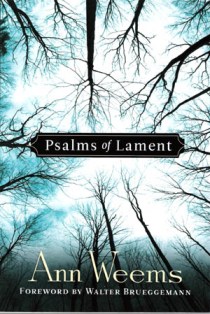
Psalms of Lament is a heartbreakingly beautiful collection of poetry. Weems alarmingly yet assuringly gets right down to business in her Preface:
This book is not for everyone. It is for those who weep and for those who weep with those who weep. It is for those whose souls struggle with the dailiness of faithkeeping in the midst of life’s assaults and obscenities. This book is for those who are living with scalding tears running down their cheeks.
Her Psalms are for those whose experiences are “painful, too painful for any of us to try fitting our souls into ten correct steps of grieving.” They come from experience: Weems unexpectedly lost her son (“the stars fell from my sky”) just after his 21st birthday.
Drawing on the great biblical lament tradition, Weems writes lament psalms of her own. David’s familiar structure of
“How can you leave me like this, God?”–>”Yet I will trust you”
is on display throughout the collection. As personal as Weems’s psalms are, like David’s and Jeremiah’s laments, they are universal and could be prayed by anyone who is lamenting.
If you read with an open heart, Weems’s laments can evoke tears at nearly every line. And it’s a profound Godward lament in which she engages: “Anger and alleluias careen around within me, sometimes colliding.” There’s no bitterness here, but neither is there a naïve attempt to placate reality (as if we could!) with boring pseudo-truths like, “Everything happens for a reason,” or, “God took her away because he needed her for his heavenly choir.” Here is Lament Psalm Twelve, one of the starker and more personal psalms, in its entirety:
O God, what am I going to do?
He’s gone–and I’m left
with an empty pit in my life.
I can’t think.
I can’t work.
I can’t eat.
I can’t talk.
I can’t see anyone.
I can’t leave my house.
Nothing makes any sense.
Nothing seems worth doing.
How could you have allowed this to happen?
I thought you protected your own!
You are the power:
Why didn’t you use it?
You are the glory,
but there was no glory in his death.
You are justice and mercy,
yet there was no justice, no mercy for him.
In his death there is no justice for me.
O God, what am I going to do?
I’m begging you to help me.
At least you could be merciful.
O God, I don’t remember a time
when you were not my God.
Turn back to me;
you promised.
Be merciful to me;
you promised.
Heal me;
you promised.
My heart is broken.
My mind is broken.
My body is broken.
Nothing works anymore.
Unless you help me
nothing will ever work again.
O Holy One, I am confident
that you will save me.
You are the one
who heals the brokenhearted
and binds their wounds.
You are the power
and the glory;
you are the justice
and mercy.
You are my God forever.
The six “I can’t” statements (“I can’t think. I can’t work. I can’t eat. I can’t talk. I can’t see anyone. I can’t leave my house.) evoke the monotony and hopelessness that the grieving one feels. Yet three times: you promised… you promised… you promised. Given the way the poem begins, the last stanza seems almost out of place. But it’s a move David made (forced himself to make) in his Psalms.
I only wonder if those who grieve will be ready to pray along to the end of each psalm with Weems, as her laments so often end with an affirmation of God’s promises. For those whose grief is acute, fresh, and numbing, such prayers may at the moment be impossible.
Yet Weems gives us language for when we need it most, for when words of any kind are impossible. A person in the throes of grief not yet be able to say, “Alleluias spin in my heart!” But she or he may want to be able to make such affirmations, if not now, then eventually. Weems offers wording for the griever to attempt that journey. In so doing she provides a pattern for lament that is true to the biblical tradition, true to life.
 Psalms of Lament is a gift to the Church and to those who grieve. Pastors, campus ministers, youth ministers, and worship leaders would all do well to have copies on hand. While Weems seems to have composed her laments with the individual in view, I’m intrigued by the possibility of reading and praying these psalms in corporate worship settings. A funeral or a Sunday after a tragedy would be particularly appropriate times. Yet if we consider, as Weems notes, the possibility of weeping with those who weep, those who pray would do well not to wait until a tragedy to employ these psalms.
Weems’s prayers floored me. I had turned to her before. As I read her again I never made it very far without choking back tears. (In my better moments, I gave up on trying to choke them back.) The tears Weems evokes, though, are not just tears of sadness, but tears of hope in the God who “will put the stars back in the sky.”
Thanks to Westminster John Knox Press for the review copy. I am confident I’ll want to pick up additional copies of Psalms of Lament for others. You can preview a good deal of the book at Google Books here.
Share this:

Greek Isaiah in a Year, Week 12=Isaiah 14:1-27
This week in Greek Isaiah in a Year covers Isaiah 14:1-27.

Here is the schedule and text for Monday through Friday, using again the text from R.R. Ottley’s Book of Isaiah According to the Septuagint. (As always, Ottley is here on Amazon, here in Logos, and here as a free, downloadable pdf in the public domain.) The full reading plan for our group is here (pdf).
Monday, February 18: Isa 14:1-6
14 1 Καὶ ἐλεήσει Κύριος τὸν Ἰακώβ, καὶ ἐκλέξεται ἔτι τὸν Ἰσραήλ, καὶ ἀναπαύσονται ἐπὶ τῆς γῆς αὐτῶν, καὶ ὁ γειώρας προστεθήσεται πρὸς αὐτούς, καὶ προστεθήσεται ἐπὶ τὸν οἶκον Ἰακώβ, 2 καὶ λήμψονται αὐτοὺς ἔθνη καὶ εἰσάξουσιν εἰς τὸν τόπον αὐτῶν, καὶ κατακληρονομήσουσιν, καὶ πληθυνθήσονται ἐπὶ τῆς γῆς τοῦ θεοῦ εἰς δούλους καὶ δούλας· καὶ ἔσονται αἰχμάλωτοι οἱ αἰχμαλωτεύσαντες αὐτούς, καὶ κυριευθήσονται οἱ κυριεύσαντες αὐτῶν.
3 Καὶ ἔσται ἐν τῇ ἡμέρᾳ ἐκείνῃ ἀναπαύσει σε ὁ θεὸς ἐκ τῆς ὀδύνης καὶ τοῦ θυμοῦ σοῦ καὶ τῆς δουλίας τῆς σκληρᾶς ἧς ἐδούλευσας αὐτοῖς. 4 καὶ λήμψῃ τὸν θρῆνον τοῦτον ἐπὶ τὸν βασιλέα Βαβυλῶνος, καὶ ἐρεῖς ἐν τῇ ἡμέρᾳ ἐκείνῃ Πῶς ἀναπέπαυται ὁ ἀπαιτῶν, καὶ ἀναπέπαυται ὁ ἐπισπουδαστής; 5 συνέτριψεν ὁ θεὸς τὸν ζυγὸν τῶν ἁμαρτωλῶν, τὸν ζυγὸν τῶν ἀρχόντων· 6 πατάξας ἔθνος θυμῷ, πληγῇ ἀνιάτῳ, παίων ἔθνος πληγὴν θυμοῦ ἣ οὐκ ἐφείσατο, ἀνεπαύσατο πεποιθώς.
Tuesday, February 19: Isa 14:7-11
7 πᾶσα ἡ γῆ βοᾷ μετʼ εὐφροσύνης, 8 καὶ τὰ ξὺλα τοῦ Λιβάνου ηὐφράνθησαν ἐπὶ σοὶ καὶ ἡ κέδρος τοῦ Λιβάνου Ἀφʼ οὗ σὺ κεκοίμησαι, οὐκ ἀνέβη ὁ κόπτων ἡμᾶς. 9 ὁ ᾅδης κάτωθεν ἐπικράνθη συναντήσας σοι· συνηγέρθησάν σοι πάντες οἱ γίγαντες οἱ ἄρξαντες τῆς γῆς, οἱ ἐγείραντες ἐκ τῶν θρόνων αὐτῶν πάντας βασιλεῖς ἐθνῶν. 10 πάντες ἀποκριθήσονται καὶ ἐροῦσίν σοι Καὶ σὺ ἑάλως ὥσπερ καὶ ἡμεῖς, ἐν ἡμῖν δὲ κατελογίσθης. 11 κατέβη δὲ εἰς ᾅδου ἡ δόξα σου, ἡ πολλὴ εὐφροσύνη σου· ὑποκάτω σου στρώσουσιν σῆψιν, καὶ τὸ κατακάλυμμά σου σκώληξ.
Wednesday, February 20: Isa 14:12-16
12 πῶς ἐξέπεσεν ἐκ τοῦ οὐρανοῦ ὁ ἑωσφόρος ὁ πρωὶ ἀνατέλλων; συνετρίβη εἰς τὴν γῆν ὁ ἀποστέλλων πρὸς πάντα τὰ ἔθνη. 13 σὺ δὲ εἶπας ἐν τῇ διανοίᾳ σου Εἰς τὸν οὐρανὸν ἀναβήσομαι, ἐπάνω τῶν ἄστρων τοῦ οὐρανοῦ θήσω τὸν θρόνον μου, καθιῶ ἐν ὄρει ὑψηλῷ ἐπὶ τὰ ὄρη τὰ ὑψηλὰ τὰ πρὸς βορρᾶν, 14 ἀναβήσομαι ἐπάνω τῶν νεφελῶν, ἔσομαι ὅμοιος τῷ ὑψίστῳ. 15 νῦν δὲ εἰς ᾅδου καταβήσῃ καὶ εἰς τὰ θεμέλια τῆς γῆς. 16 οἱ ἰδόντες σε θαυμάσουσιν ἐπὶ σοὶ καὶ ἐροῦσιν Οὗτος ὁ ἄνθρωπος ὁ παροξύνων τὴν γῆν, σείων βασιλεῖς,
Thursday, February 21: Isa 14:17-23
17 ὁ θεὶς τὴν οἰκουμένην ὅλην ἔρημον, <καὶ τὰς πόλεις καθεῖλεν,> τοὺς ἐν ἐπαγωγῇ οὐκ ἔλυσεν. 18 πάντες οἱ βασιλεῖς τῶν ἐθνῶν ἐκοιμήθησαν ἐν τιμῇ, ἕκαστος ἐν τῷ οἴκῳ αὐτοῦ. 19 σὺ δὲ ῥιφήσῃ ἐν τοῖς ὄρεσιν, ὡς νεκρὸς ἐβδελυγμένος, μετὰ πολλῶν τεθνηκότων ἐκκεκεντημένων μαχαίραις καταβαινόντων εἰς ᾅδου. ὃν τρόπον ἐν αἵματι ἱμάτιον πεφυρμένον οὐκ ἔσται καθαρόν, 20 οὕτως οὐδὲ σὺ ἔσῃ καθαρός, διότι τὴν γῆν μου ἀπώλεσας καὶ τὸν λαόν μου ἀπέκτεινας· οὐ μὴ μείνῃς εἰς τὸν αἰῶνα χρόνον, σπέρμα πονηρόν. 21 ἑτοίμασον σφαγῆναι τὰ τέκνα σου ταῖς ἁμαρτίαις τοῦ πατρός σου, ἵνα μὴ ἀναστῶσιν καὶ τὴν γῆν κληρονομήσωσιν καὶ ἐμπλήσωσιν τὴν γῆν πολέμων. 22 καὶ ἐπαναστήσομαι αὐτοῖς, λέγει Κύριος σαβαώθ, καὶ ἀπολῶ αὐτῶν ὄνομα καὶ κατάλειμμα καὶ σπέρμα· τάδε λέγει Κύριος. 23 καὶ θήσω τὴν Βαβυλωνίαν ἔρημον, ὥστε κατοικεῖν ἐχίνους, καὶ ἔσται εἰς οὐδέν· καὶ θήσω αὐτὴν πηλοῦ <βάραθρον> εἰς ἀπώλειαν.
Friday, February 22: Isa 14:24-27
24 Τάδε λέγει Κύριος σαβαώθ Ὃν τρόπον εἴρηκα οὕτως ἔσται, καὶ ὃν τρόπον βεβούλευμαι οὕτως μενεῖ, 25 τοῦ ἀπολέσαι τοὺς Ἀσσυρίους ἀπὸ τῆς γῆς τῆς ἐμῆς καὶ ἀπὸ τῶν ὀρέων μου· καὶ ἔσονται ἐς καταπάτημα, καὶ ἀφαιρεθήσεται ἀπʼ αὐτῶν ὁ ζυγὸς αὐτῶν, καὶ τὸ κῦδος αὐτῶν ἀπὸ τῶν ὤμων ἀφαιρεθήσεται. 26 αὕτη ἡ βουλὴ ἣν βεβούλευται Κύριος ἐπὶ τὴν οἰκουμένην ὅλην, καὶ οὕτη ἡ χεὶρ ἡ ὑψηλὴ ἐπὶ πάντα τὰ ἔθνη τῆς οἰκουμένης. 27 ἃ γὰρ ὁ θεὸς ὁ ἅγιος βεβούλευται τίς διασκεδάσει; καὶ τὴν χεῖρα τὴν ὑψηλὴν τίς ἀποστρέψει;
See here for more resources and links to texts for Greek Isaiah.
And here are the Week 12 readings above, but in pdf form.
Share this:

A New Friday Night Family Tradition…

…is homemade pizza and a movie. The kids love it, and so do we parents.
So far we’ve watched: Toy Story, Finding Nemo, Mr. Rogers (Season 1!), and Wall-E. And the pizza is delicious.
Last week our Friday night “movie” was a friend’s fireplace and a blizzard, a nice substitution.
It’s a good way to wrap up a week.
Share this:

Derrida, Caputo, and David Walk Into a Psalm

Wash away all my iniquity and cleanse me from my sin. Psalm 51:2
The heading of Psalm 51 gives its setting: “When the prophet Nathan came to [David] after David had committed adultery with Bathsheba.” The Hebrew text is more explicit in its description of David’s adulterous act in the Psalm heading. David had had sex with another man’s wife—and then had him killed in battle.
The French philosopher Jacques Derrida could have found himself at home in this Psalm. Derrida might point out that for David to follow up his sins with a plea for God to “wash away all [his] iniquity” is to ask the impossible. (For Derrida, as John Caputo puts it, the impossible is “something that exceeds the horizon of foreseeability and expectation.”)
In this sense David asks for the impossible. The affair with Bathsheba was sordid enough, but he also called Bathsheba’s husband, Uriah, back from battle to sleep with her in the hopes that no one would know David made her pregnant. When this plan failed, David oversaw military orders that sent Uriah to an unjust death. How audacious is David to ask for forgiveness from these sins that so “displeased the Lord” (2 Samuel 11:27)? Doesn’t David make an impossible request?
Caputo, in a somewhat Christianizing read of Derrida, writes, “[H]ope is truly hope when it has been pushed up against the impossible and everything looks hopeless.” All must have looked hopeless to David, who wrote, “My sin is always before me” (51:3). Yet he held out hope in God, praying, “Restore to me the joy of your salvation and grant me a willing spirit, to sustain me” (51:12).
With God the impossible is possible. We can be forgiven for even the unspeakable sins of our past. Some Psalms later David writes, “Praise the Lord, my soul… who forgives all your sins and heals all your diseases” (103:3).
Don’t we often feel “pushed up against the impossible”? Don’t we sometimes look at our sins, only to see that “everything looks hopeless”? And yet, “As far as the east is from the west, so far has he removed our transgressions from us” (103:12).
God exceeds the foreseeable. He transcends our expectations. He does not visit upon us the punishment that our sins deserve. David’s impossible request for forgiveness is possible, because God is the God of the impossible.
The above is a reflection I wrote for the Gordon College Lenten Devotional, “The Hope Before Us.” You can access a pdf of the whole devotional here.
Share this:

Greek Isaiah in a Year, Week 11=Isaiah 13
This week in Greek Isaiah in a Year covers Isaiah 13 in its entirety.
Here is the schedule and text for Monday through Friday, using again the text from R.R. Ottley’s Book of Isaiah According to the Septuagint. (As always, Ottley is here on Amazon, here in Logos, and here as a free, downloadable pdf in the public domain.) The full reading plan for our group is here (pdf).
Monday, February 11: Isa 13:1-4
1 Ὅρασις ἣν εἶδεν Ἠσαίας υἱὸς Ἀμὼς κατὰ Βαβυλῶνος. 2 Ἐπʼ ὄρους πεδινοῦ ἄρατε σημεῖον, ὑψώσατε τὴν φωνὴν ἑαυτοῖς, μὴ φοβεῖσθε· παρακαλεῖτε τῇ <χειρι> · ἀνοίξατε, οἱ ἄρχοντες· 3 ἐγὼ συντάσσω, καὶ ἐγώ, αὐτούς· ἡγιασμένοι εἰσίν, καὶ ἐγὼ ἄγω αὐτούς· γίγαντες ἔρχονται πληρῶσαι τὸν θυμόν μου χαίροντες ἅμα καὶ ὑβρίζοντες. 4 φωνὴ ἐθνῶν πολλῶν ἐπὶ τῶν ὀρέων, ὁμοία ἐθνῶν πολλῶν, φωνὴ βασιλέων καὶ ἐθνῶν συνηγμένων. Κύριος σαβαὼθ ἐντέταλται ἔθνει ὁπλομάχῳ
Tuesday, February 12: Isa 13:5-8
5 ἔρχεσθαι ἐκ γῆς πόρρωθεν ἀπʼ ἄκρου θεμελίου τοῦ οὐρανοῦ, Κύριος καὶ οἱ ὁπλομάχοι αὐτοῦ, τοῦ καταφθεῖραι τὴν οἰκουμένην ὅλην. 6 ὀλολύζετε· ἐγγὺς γὰρ ἡ ἡμέρα Κυρίου, καὶ συντριβὴ παρὰ τοῦ θεοῦ ἥξει. 7 διὰ τοῦτο <πᾶσα χεὶρ> ἐκλυθήσεται, καὶ πᾶσα ψυχὴ ἀνθρώπου δειλιάσει· 8 καὶ ταραχθήσονται οἱ πρέσβεις, καὶ ὠδῖνες αὐτοὺς ἕξουσιν ὡς γυναικὸς τικτούσης· καὶ συμφοράσουσιν ἕτερος πρὸς τὸν ἕτερον καὶ ἐκστήσονται, καὶ τὸ πρόσωπον αὐτῶν ὡς φλὸξ μεταβαλοῦσιν.
Wednesday, February 13: Isa 13:9-13
9 Ἰδοὺ γὰρ ἡ ἡμέρα Κυρίου ἀνίατος ἔρχεται θυμοῦ καὶ ὀργῆς, θεῖναι τὴν οἰκουμένην ἔρημον καὶ τοὺς ἁμαρτωλοὺς ἀπολέσαι ἐξ αὐτῆς. 10 οἱ γὰρ ἀστέρες τοῦ οὐρανοῦ καὶ ὁ Ὠρίων καὶ πᾶς ὁ κόσμος τοῦ οὐρανοῦ τὸ φῶς οὐ δώσουσιν, καὶ σκοτισθήσεται τοῦ ἡλίου ἀνατέλλοντος, καὶ ἡ σελήνη οὐ δώσει τὸ φῶς αὐτῆς. 11 καὶ ἐντελοῦμαι τῇ οἰκουμένῃ ὅλῃ κακά, καὶ τοῖς ἀσεβέσι τὰς ἁμαρτίας αὐτῶν· καὶ ἀπολῶ ὕβριν ἀνόμων, καὶ ὕβριν ὑπερηφάνων ταπεινώσω. 12 καὶ ἔσονται οἱ καταλελιμμένοι ἔντιμοι μᾶλλον ἢ τὸ χρυσίον τὸ ἄπυρον, καὶ ὁ ἄνθρωπος μᾶλλον ἔντιμος ἔσται ἢ ὁ λίθος ὁ ἐκ Σουφείρ. 13 ὁ γὰρ οὐρανὸς θυμωθήσεται, καὶ ἡ γῆ σεισθήσεται ἐκ τῶν θεμελίων αὐτῆς, διὰ θυμὸν ὀργῆς Κυρίου σαβαώθ, τῇ ἡμέρᾳ ᾗ ἂν ἐπέλθῃ ὁ θυμὸς αὐτοῦ.
Thursday, February 14: Isa 13:14-18
14 καὶ ἔσονται οἱ καταλελιμμένοι ὡς δορκάδιον φεῦγον καὶ ὡς πρόβατον πλανώμενον, καὶ οὐκ ἔσται ὁ συνάγων, ὥστε ἄνθρωπον εἰς τὸν λαὸν αὐτοῦ ἀποστραφῆναι, καὶ ἄνθρωπον εἰς τὴν χώραν αὐτοῦ διῶξαι. 15 ὃς γὰρ ἐὰν ἁλῷ ἡττηθήσεται, καὶ ὅσοι συνηγμένοι εἰσὶν μαχαίρᾳ πεσοῦνται. 16 καὶ τὰ τέκνα αὐτῶν ἐνώπιον αὐτῶν ῥάξουσιν, καὶ τὰς οἰκίας αὐτῶν προνομεύσουσιν, καὶ τὰς γυναῖκας αὐτῶν ἕξουσιν.17 ἰδοὺ ἐπεγείρω ὑμῖν τοὺς Μήδους, οἳ οὐ λογίζονται ἀργύριον οὐδὲ χρυσίου χρείαν ἔχουσιν. 18 τοξεύματα νεανίσκων συντρίψουσιν, καὶ τὰ τέκνα ὑμῶν οὐ μὴ ἐλεήσουσιν, οὐδὲ ἐπὶ τοῖς τέκνοις σου φείσονται οἱ ὀφθαλμοὶ αὐτῶν.
Friday, February 15: Isa 13:19-22
19 καὶ ἔσται Βαβυλών, ἣ καλεῖται ἔνδοξος ὑπὸ βασιλέως Χαλδαίων, ὃν τρόπον κατέστρεψεν ὁ θεὸς Σόδομα καὶ Γόμορρα. 20 οὐ κατοικηθήσεται εἰς τὸν αἰῶνα χρόνον, οὐδὲ μὴ εἰσέλθωσιν εἰς αὐτὴν διὰ πολλῶν γενεῶν, οὐδὲ μὴ διέλθωσιν αὐτὴν Ἄραβες, οὐδὲ ποιμένες οὐ μὴ ἀναπαύσωνται ἐν αὐτῇ. 21 καὶ ἀναπαύσονται ἐκεῖ θηρία, καὶ πλησθήσονται οἰκίαι ἤχου· καὶ ἀναπαύσονται ἐκεῖ σειρῆνες, καὶ δαιμόνια ἐκεῖ ὀρχήσονται, 22 καὶ ὀνοκένταυροι ἐκεῖ κατοικήσουσιν, καὶ νοσσοποιήσουσιν ἐχῖνοι ἐν τοῖς οἴκοις αὐτῶν. ταχὺ ἔρχεται καὶ οὐ χρονιεῖ.
See here for more resources and links to texts for Greek Isaiah.
And here are the Week 11 readings above, but in pdf form.
 Words on the Word