Greek Isaiah in a Year, Week 7=Isaiah 8

Detail from The Nativity with the Prophets Isaiah and Ezekiel, by Duccio di Buoninsegna

Last week in Greek Isaiah in a Year saw a lively discussion around Isaiah 7:14.

This week our reading includes Isaiah 8:14, which Paul and Peter cite together with Isaiah 28:16. About this passage Jobes and Silva write:

Both Paul and Peter–perhaps reflecting an early Christian tradition–link two passages in Isaiah, namely, 8:14 with 28:16, presumably because the word λίθος occurs in those two passages (see Romans 9:33 and 1 Peter 2:6-7). But there is more. LXX Isaiah 8:14 begins with the clause καὶ ἐὰν ἐπʼ αὐτῷ πεποιθὼς ᾖς (“and if you put your confidence in him”), for which no corresponding text is found in the Hebrew. The translator evidently took his cue from the last clause of verse 17 (καὶ πεποιθὼς ἔσομαι ἐπʼ αὐτῷ=וקויתי־לו) and used it to give a surprising interpretation of verse 14. In addition, he provided a closer link between 8:14 and 28:16 by adding the words ἐπʼ αὐτῷ to the latter passage. It is clear that the Greek translator’s own reflection on the message of Isaiah had a signficant impact on early Christian theology.

Last week, week 6, we read chapter 7 start to finish. In this week 7 we do the same with chapter 8. Friday is an anomaly in the reading plan–just one verse that day. Note, too, that 8:23 is actually 9:1 in the Göttingen and Ottley editions, but marked as 8:23 in the Hebrew Masoretic text, as well as Rahlfs.

Here is the schedule and text for Monday through Friday, using again the text from R.R. Ottley’s Book of Isaiah According to the Septuagint. (As always, Ottley is here on Amazon, here in Logos, and here as a free, downloadable pdf in the public domain.) The full reading plan for our group is here (pdf).

Monday, January 14: Isa 8:1–5

8 Καὶ εἶπεν Κύριος πρὸς μέ Λάβε σεαυτῷ τόμον χάρτου καινοῦ μεγάλου, καὶ γράψον εἰς αὐτὸν γραφίδι ἀνθρώπου τοῦ ὀξέως προνομὴν ποιῆσαι σκύλων· πάρεστιν γάρ· καὶ μάρτυράς μοι ποίησον πιστοὺς ἀνθρώπους, τὸν Οὐρίαν καὶ τὸν Ζαχαρίαν υἱὸν Βαραχίου. καὶ προσῆλθεν πρὸς τὴν προφῆτιν, καὶ ἐν γαστρὶ ἔλαβεν καὶ ἔτεκεν υἱόν. καὶ εἶπεν Κύριός μοι Κάλεσον τὸ ὄνομα αὐτοῦ Ταχέως σκύλευσον, ὀξέως προνόμευσον. διότι πρὶν ἢ γνῶναι τὸ παιδίον καλεῖν πατέρα ἢ μητέρα, λήμψεται δύναμιν Δαμασκοῦ καὶ τὰ σκῦλα Σαμαρείας ἔναντι βασιλέως Ἀσσυρίων.

Καὶ προσέθετο Κύριος λαλῆσαί μοι ἔτι

Tuesday, January 15: Isa 8:6–10

Διὰ τὸ μὴ βούλεσθαι τὸν λαὸν τοῦτον τὸ ὕδωρ τοῦ Σιλωὰμ τὸ πορευόμενον ἡσυχῇ, ἀλλὰ βούλεσθαι ἔχειν τὸν Ῥαασσὼν καὶ τὸν υἱὸν Ῥομελίου βασιλέα ἐφʼ ὑμῶν, διὰ τοῦτο ἰδοὺ ἀνάγει Κύριος ἐφʼ ὑμᾶς τὸ ὕδωρ τοῦ ποταμοῦ τὸ ἰσχυρὸν καὶ τὸ πολύ, τὸν βασιλέα τῶν Ἀσσυρίων καὶ τὴν δόξαν αὐτοῦ· καὶ ἀναβήσεται ἐπὶ πᾶσαν φάραγγα ὑμῶν, καὶ περιπατήσει ἐπὶ πᾶν τεῖχος ὑμῶν, καὶ ἀφελεῖ ἀπὸ τῆς Ἰουδαίας ἄνθρωπον ὃς δυνήσεται κεφαλὴν ἆραι εἰ δυνατὸν συντελέσαι τι· καὶ ἔσται ἡ παρεμβολὴ αὐτοῦ τὰ πλάτη τῆς χώρας σου. μεθʼ ἡμῶν ὁ θεός. γνῶτε ἔθνη καὶ ἡττᾶσθε, ἐπακούσετε ἕως ἐσχάτου τῆς γῆς, ἰσχυκότες ἡττᾶσθε· ἐὰν γὰρ πάλιν ἰσχύσητε, πάλιν ἡττηθήσεσθε. 10 καὶ ἣν ἂν βουλεύσησθε βουλὴν διασκεδάσει Κύριος, καὶ τὸν λόγον ὃν ἐὰν λαλήσητε οὐ μὴ ἐμμείνῃ ὑμῖν, ὅτι μεθʼ ἡμῶν Κύριος ὁ θεός.

Wednesday, January 16: Isa 8:11–16

11 οὕτως λέγει Κύριος ὁ θεός Τῇ ἰσχυρᾷ χειρὶ ἀπειθοῦσιν τῇ πορείᾳ τῆς ὁδοῦ τοῦ λαοῦ τούτου, λέγοντες 12 Μή ποτε εἴπητε σκληρόν· πᾶν γὰρ ὃ ἂν εἴπῃ ὁ λαὸς οὗτος σκληρόν ἐστιν· τὸν δὲ φόβον αὐτοῦ οὐ μὴ φοβηθῆτε οὐδʼ οὐ μὴ ταραχθῆτε· 13 Κύριον αὐτὸν ἁγιάσατε, καὶ αὐτὸς ἔσται σου φόβος. 14 καὶ ἐὰν ἐπʼ αὐτῷ πεποιθὼς ᾖς, ἔσται σοι εἰς ἁγίασμα, καὶ οὐχ ὡς λίθου προσκόμματι συναντήσεσθε αὐτῷ, οὐδὲ ὡς πέτρας πτώματι. ὁ δὲ οἶκος Ἰακὼβ ἐν παγίδι, καὶ ἐν κοιλάσματι ἐγκαθήμενοι ἐν Ἰερουσαλήμ· 15 διὰ τοῦτο ἀδυνατήσουσιν ἐν αὐτοῖς πολλοί, καὶ πεσοῦνται καὶ συντριβήσονται, καὶ ἐγγιοῦσιν καὶ ἁλώσονται ἄνθρωποι ἐν ἀσφαλείᾳ ὄντες. 16 Τότε φανεροὶ ἔσονται οἱ σφραγιζόμενοι τὸν νόμον τοῦ μαθεῖν.

Thursday, January 17: Isa  8:17–22

17 καὶ ἐρεῖ Μενῶ τὸν θεὸν τὸν ἀποστρέψαντα τὸ πρόσωπον αὐτοῦ ἀπὸ τοῦ οἴκου Ἰακώβ, καὶ πεποιθὼς ἔσομαι ἐπʼ αὐτῷ. 18 ἰδοὺ ἐγὼ καὶ τὰ παιδία ἅ μοι ἔδωκεν ὁ θεός. καὶ ἔσται εἰς σημεῖα καὶ τέρατα ἐν τῷ Ἰσραὴλ παρὰ Κυρίου σαβαώθ, ὃς κατοικεῖ ἐν τῷ ὄρει Σιών. 19 καὶ ἐὰν εἴπωσιν πρὸς ὑμᾶς Ζητήσατε τοὺς ἀπὸ τῆς κοιλίας φωνοῦντας καὶ τοὺς ἐγγαστριμύθους, τοὺς κενολογοῦντας οἳ ἀπὸ τῆς κοιλίας φωνοῦσιν, οὐκ ἔθνος πρὸς θεὸν αὐτοῦ; τί ἐκζητῶσιν περὶ τῶν ζώντων τοὺς νεκρούς; 20 νόμον γὰρ εἰς βοήθειαν ἔδωκεν, ἵνα εἴπωσιν οὐχ ὡς τὸ ῥῆμα τοῦτο, περὶ οὗ οὐκ ἔστιν δῶρα δοῦναι περὶ αὐτοῦ. 21 καὶ ἥξει ἐφʼ ὑμᾶς σκληρὰ λιμός, καὶ ἔσται ὡς ἂν πεινάσητε, λυπηθήσεσθε καὶ κακῶς ἐρεῖτε τὸν ἄρχοντα καὶ τὰ πάτρια, καὶ ἀναβλέψονται εἰς τὸν οὐρανὸν ἄνω, 22 καὶ εἰς τὴν γῆν κάτω ἐμβλέψονται· καὶ ἰδοὺ θλῖψις καὶ στενοχωρία καὶ σκότος, ἀπορία στενὴ καὶ σκότος ὥστε μὴ βλέπειν, καὶ οὐκ ἀπορηθήσεται ὁ ἐν στενοχωρίᾳ ἕως καιροῦ.

Friday, January 18: Isa 8:23 MT=9:1 LXX

9 (23) 1 Τοῦτο πρῶτον ποίει, ταχὺ ποίει, χώρα Ζαβουλων, ἡ γῆ Νεφθαλιμ ὁδὸν θαλάσσης καὶ οἱ λοιποὶ οἱ τὴν παραλίαν κατοικοῦντες καὶ πέραν τοῦ Ιορδάνου, Γαλιλαία τῶν ἐθνῶν, τὰ μέρη τῆς Ιουδαίας.

See here for more resources and links to texts for Greek Isaiah. Here are previous weeks’ readings: Week 1 / Week 2 / Week 3 / Week 4 / Week 5 / Week 6

And here are the Week 7 readings above, but in pdf form.

How to Read and Understand the Göttingen Septuagint: A Short Primer, part 2 (Apparatus)

The one who is serious about getting at the earliest attainable text of the Hebrew Bible will eventually find herself or himself face-to-face with a page like this:

Genesis 1 in Göttingen LXX
Genesis 1 in the Göttingen Septuagint

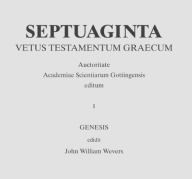
The Göttingen Septuagint is the largest scholarly edition of the Greek translation of the Hebrew Bible. Its full title is Septuaginta: Vetus Testamentum Graecum Auctoritate Academiae Scientiarum Gottingensis editum. Vandenhoeck & Ruprecht in Göttingen, 

Septuaginta.band 1

Germany publishes the series, which includes more than 20 volumes covering some 40 biblical books (counting the minor prophets as 12). Various editors are working toward the publication of additional volumes.

But if good coffee, fine wine, or well-aged cheese requires work on the part of the one taking it in, the Göttingen LXX makes its own demands of the reader who would use it. The critical apparatuses on each page have Greek, abbreviated Greek, abbreviated Latin, and other potentially unfamiliar sigla. The introductions in each volume are in German.

How to read and understand the Göttingen Septuagint, then? To begin, here is the sample page from above:

Genesis 1 in Göttingen LXX_key
Genesis 1:4-9, reprinted with publisher’s permission

There are four main parts to the page, marked in the image above by the numbers 1 through 4.

  1. The reconstructed Greek critical text (“Der kritische Text”)
  2. The Source List (“Kopfleiste”) (note: not every Göttingen volume has this)
  3. The First Critical Apparatus (“Apparat I”)
  4. The Second Critical Apparatus (“Apparat II”)

In part 1 of my primer, I covered numbers 1 and 2 above. To summarize a bit:

1. With verse references in both the margin and in the body of the text, the top portion of each page of the Göttingen Septuagint is the editorially reconstructed text of each biblical book.

2. The Kopfleiste comes just below the text and above the apparatuses. Wevers notes it as a list of all manuscripts and versions used, listed in the order that they appear in the apparatus on that page. A fragmentary textual witness is enclosed in parenthesis.

Next are the two critical apparatuses. In his introduction to Genesis (conveniently translated into English here, from which I quote), editor John William Wevers speaks of the critically reconstructed text as an “approximation of the original” and “hopefully the best which could be reconstructed.” I previously noted:

[Göttingen] editors have viewed and listed the readings of many manuscripts and versions. The critical apparatuses are where they list those readings, so the user of Göttingen can see other readings as they compare with the critically reconstructed text. (Because the Göttingen editions are critical/eclectic texts, no single manuscript will match the text of the Göttingen Septuagint.)

The International Organization for Septuagint and Cognate Studies (IOSCS) notes (from here):

The Göttingen Septuagint features two apparatuses (as does the Larger Cambridge Septuagint), the first for LXX/OG textual evidence proper and the second for so-called hexaplaric evidence, i.e. “rival” translations/revisions of the translated LXX/OG (such as circulated under the labels “Theodotion,” “Aquila,” and “Symmachus”), preserved largely through the influence of Origen’s Hexapla. For LXX/OG research the importance of both apparatuses is second only to the critical text itself.

The challenge, of course, is that to make sense of the apparatuses and their abbreviations.

3. The First Critical Apparatus (“Apparat I”)

The “textual evidence proper” consists of any readings that the editor deems as variant to the reconstructed text. The editors follow a consistent order in the witnesses they cite. (There is minor variation, volume to volume.) In Genesis Wevers writes:

The witnesses for a variant are always arranged in a set order: a) the uncial texts in alphabetic order; b) the papyri in numerical order; c) the witnesses of the O‘ mss [AKJ: the “hexaplaric group”]; d) the witnesses of the C‘’ mss [AKJ: the “Catena group”]; e) the remaining text families (comp Section B I above) in alphabetical order; f) the rest of the Greek evidence in the following order: N.T. witnesses, Ios [AKJ: Josephus], Phil [AKJ: Philo], followed by the rest of the Greek writers in alpha­betic order; g) La (or the sub-groups, for ex. LaI Las, etc.) [AKJ: Old Latin versions], followed by the other versions in alphabetic order; h) citations of the Latin Fathers, introduced by the sign Lat (these witnesses always stand in opposition to La or a sub-group of La); i) other witnesses or commentaries.

To look at an example of the first critical apparatus, Deuteronomy 6:5 in the Göttingen edition reads:

καὶ ἀγαπήσεις κύριον τὸν θεόν σου ἐξ ὅλης τῆς διανοίας σου καὶ ἐξ ὅλης τῆς ψυχῆς σου καὶ ἐξ ὅλης τῆς δυνάμεώς σου.

(And you shall love the Lord your God with all your mind and with all your soul and with all your strength.)

The apparatus for that verse, in part, has:

om καί  Arab Sa17 | αγαπησης 30; αγαπη σε 527 | κύριον τόν] bis scr 120* | om σου  Tht Dtap | ἐξ 1°—διανοίας] εν ολη τη καρδια Matth 22:37 |

With each unit broken up by line here, the apparatus gives this information about its manuscripts:

  • Arab and Sa17 omit (om) the first () use of καί
  • 30 has αγαπησης; 527 has αγαπη σε
  • 120* has κύριον τόν written (scr) twice (bis)
  • Tht Dtap omits (om) the first () use of σου
  • From the first use () of ἐξ through () the word διανοίας, Matthew 22:37 has rather (]) εν ολη τη καρδια

One has to go to the introduction for information about the manuscripts “Arab” (Arabic version), ” Sa17” (from the Sahidic version), “30” and “527” (minuscule manuscripts), “120*” (also a minuscule manuscript, where the asterisk * refers to “the original reading of a ms,” as opposed to a “correction”), and “Tht Dtap” (Tht=Theodoretus (“Cyrensis=Cyrrhensis”); Dt=his Quaestiones in Deuteronomium; ap refers, Wevers notes, “to readings (variants) in the apparatus of editions”).

Miles Van Pelt has produced a concise two-page summary of sigla and abbreviations. I offer appreciation and gratitude to Miles that I can link to that pdf here. That offers further instruction as to deciphering the apparatuses (both the first and second) in the Göttingen volumes. The introductions to given volumes contain the signs/symbols and abbreviations (“Zeichen und Abkürzungen”), as well.

Boromir had it right:

One Does Not Simply One Does not SimplyOne Does Not Simply

So I’ll write about the Second Critical Apparatus (“Apparat II”) in a future post. Until then….

Thanks to Brian Davidson of LXXI for his helpful suggestions on an earlier draft of this post and the part 1 that preceded it. He is not to be blamed for the inclusion of Boromir in this post.

Greek Isaiah in a Year, Week 6=Isaiah 7:1-25

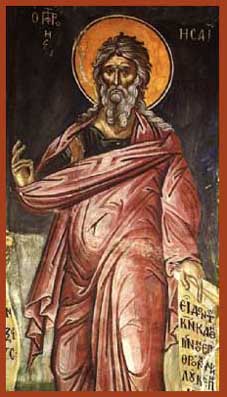
isaiah

This week in Greek Isaiah in a Year we get to the famous and sometimes contested Isaiah 7:14. Here it is in Ottley’s Greek text, including his English translation:

διὰ τοῦτο δώσει Κύριος αὐτὸς ὑμῖν σημεῖον· ἰδοὺ ἡ παρθένος ἐν γαστρὶ ἕξει καὶ τέξεται υἱόν, καὶ καλέσεις τὸ ὄνομα αὐτοῦ Ἐμμανουήλ·

Therefore the Lord himself shall give you a sign; Behold, the virgin shall be with child, and shall bring forth a son, and thou shalt call his name Immanuel.

Last week I hosted the Biblical Studies Carnival for December 2012. Here’s an excerpt of posts I linked to from December about Isaiah 7:14. There were even more than what I highlighted:

December saw a plethora of posts about παρθένος/עלמה in Isaiah 7:14, and Matthew’s use of that verse. Here is T.M. Law, saying that Greek Isaiah’s use of παρθένος for עלמה is not without precedent in the LXX (“The Greek translator of Isaiah used a perfectly acceptable rendering for עלמה.”). Here’s the Jesus Creed on the virgin birth. Krista Dalton notes, “[T]he author of Matthew is not saying that Isaiah was envisioning the birth of Jesus.” Kevin Brown of Diglotting posts here about it. And, looking at hermeneutics more generally, Brian LePort suggested three paradigms to use in studying the virgin birth.

So for this Week 6 of Greek Isaiah in a Year, we cover one chapter in its entirety, chapter 7. I’m looking forward to what I’m sure will be lively discussion on Wednesday at our Facebook group. Below is the schedule and text for Monday through Friday, using again the text from R.R. Ottley’s Book of Isaiah According to the Septuagint. (As always, Ottley is here on Amazon, here in Logos, and here as a free, downloadable pdf in the public domain.) The full reading plan for our group is here (pdf).

Monday, January 7: Isa 7:1-4

7 Καὶ ἐγένετο ἐν ταῖς ἡμέραις Ἀχὰζ τοῦ Ἰωαθὰμ τοῦ υἱοῦ Ὀζίου βασιλέως Ἰούδα ἀνέβη Ῥαασσὼν βασιλεὺς Ἀρὰμ καὶ Φάκεε υἱὸς Ῥομελίου βασιλεὺς Ἰσραὴλ ἐπὶ Ἰερουσαλὴμ πολεμῆσαι αὐτήν, καὶ οὐκ ἠδυνήθησαν πολιορκῆσαι αὐτήν. καὶ ἀνηγγέλη εἰς τὸν οἶκον Δαυεὶδ λέγοντες Συνεφώνησεν Ἀρὰμ πρὸς τὸν Ἐφράιμ· καὶ ἐξέστη ἡ ψυχὴ αὐτοῦ καὶ ἡ ψυχὴ τοῦ λαοῦ αὐτοῦ, ὅταν ὃν τρόπον ἐν δρυμῷ ξύλον ὑπὸ πνεύματος σαλευθῇ. Καὶ εἶπεν Κύριος πρὸς Ἠσαίαν Ἔξελθε εἰς συνάντησιν Ἀχὰζ σὺ καὶ ὁ καταλειφθεὶς Ἰασσοὺβ ὁ <υἱός> σου πρὸς τὴν κολυμβήθραν τῆς ἄνω ὁδοῦ τοῦ ἀγροῦ τοῦ γναφέως. καὶ ἐρεῖς αὐτῷ Φύλαξαι τοῦ ἡσυχάσαι καὶ μὴ φοβοῦ, μηδὲ ἡ ψυχή σου ἀσθενείτω ἀπὸ τῶν δύο ξύλων τῶν δαλῶν τῶν καπνιζομένων τούτων· ὅταν γὰρ ὀργὴ τοῦ θυμοῦ μου γένηται, πάλιν ἰάσομαι.

Tuesday, January 8: Isa 7:5-9

καὶ ὁ υἱὸς τοῦ Ἀρὰμ καὶ ὁ υἱὸς τοῦ Ῥομελίου, ὅτι ἐβουλεύσαντο βουλὴν πονηρὰν περὶ σοῦ, λέγοντες Ἀναβησόμεθα εἰς τὴν Ἰουδαίαν, καὶ συλλαλήσαντες αὐτοῖς ἀποστρέψωμεν αὐτοὺς πρὸς ἡμᾶς, καὶ βασιλεύσομεν αὐτοῖς τὸν υἱὸν Ταβεήλ· τάδε λέγει Κύριος σαβαώθ Οὐ μὴ ἐμμείνῃ ἡ βουλὴ αὕτη οὐδὲ ἔσται. ἀλλʼ ἡ κεφαλὴ Ἀρὰμ Δαμασκός, καὶ ἡ κεφαλὴ Δαμασκοῦ Ῥασείν· ἀλλʼ ἔτι ἑξήκοντα καὶ πέντε ἐτῶν ἐκλείψει ἡ βασιλεία Ἐφράιμ ἀπὸ λαοῦ. καὶ ἡ κεφαλὴ Ἐφράιμ Σομορών, καὶ ἡ κεφαλὴ Σομορὼν υἱὸς τοῦ Ῥομελίου· καὶ ἐὰν μὴ πιστεύσητε, οὐδὲ μὴ συνῆτε.

Wednesday, January 9: Isa 7:10-14

10 Καὶ προσέθετο Κύριος λαλῆσαι τῷ Ἀχὰζ λέγων 11 Αἴτησαι σεαυτῷ σημεῖον παρὰ Κυρίου θεοῦ σου εἰς βάθος ἢ εἰς ὕψος. 12 καὶ εἶπεν Ἀχάζ Οὐ μὴ αἰτήσω, οὐδʼ οὐ μὴ πειράσω Κύριον. 13 καὶ εἶπεν Ἀκούσατε δή, οἶκος Δαυείδ· μὴ μικρὸν ὑμῖν ἀγῶνα παρέχειν ἀνθρώποις, καὶ πῶς Κυρίῳ παρέχετε ἀγῶνα; 14 διὰ τοῦτο δώσει Κύριος αὐτὸς ὑμῖν σημεῖον· ἰδοὺ ἡ παρθένος ἐν γαστρὶ ἕξει καὶ τέξεται υἱόν, καὶ καλέσεις τὸ ὄνομα αὐτοῦ Ἐμμανουήλ·

Thursday, January 10: Isa 7:15-19

15 βούτυρον καὶ μέλι φάγεται· πρὶν ἢ γνῶναι αὐτὸν προελέσθαι πονηρά, ἐκλέξεται τὸ ἀγαθόν· 16 διότι πρὶν ἢ γνῶναι τὸν παιδίον ἀγαθὸν ἢ κακόν, ἀπειθεῖ πονηρίᾳ τοῦ ἐκλέξασθαι τὸ ἀγαθόν, καὶ καταλειφθήσεται ἡ γῆ ἣν σὺ φοβῇ ἀπὸ προσώπου αὐτῶν. 17 ἀλλὰ ἐπάξει ὁ θεὸς ἐπὶ σὲ καὶ ἐπὶ τὸν λαόν σου καὶ ἐπὶ τὸν οἶκον τοῦ πατρός σου ἡμέρας αἳ οὔπω ἥκασιν ἀφʼ ἧς ἡμέρας ἀφεῖλεν Ἐφράιμ ἀπὸ Ἰούδα, τὸν βασιλέα τῶν Ἀσσυρίων. 18 Καὶ ἔσται ἐν τῇ ἡμέρᾳ ἐκείνῃ συριεῖ Κύριος μυίαις, ὃ κυριεύει μέρους ποταμοῦ Αἰγύπτου, καὶ τῇ μελίσσῃ ἥ ἐστιν ἐν χώρᾳ Ἀσσυρίων· 19 καὶ ἐλεύσονται πάντες καὶ ἀναπαύσονται ἐν ταῖς φάραγξιν τῆς χώρας καὶ ἐν ταῖς τρώγλαις τῶν πετρῶν καὶ εἰς τὰ σπήλαια καὶ ἐπὶ πᾶσαν ῥαγάδα καὶ ἐν παντὶ ξύλῳ.

Friday, January 11: Isa 7:20-25

20 ἐν τῇ ἡμέρᾳ ἐκείνῃ ξυρήσει Κύριος τῷ ξυρῷ τῷ μεγάλῳ καὶ μεμεθυσμένῳ ὅ ἐστιν πέραν τοῦ ποταμοῦ βασιλέως Ἀσσυρίων, τὴν κεφαλήν, καὶ τὰς τρίχας τῶν ποδῶν, καὶ τὸν πώγωνα ἀφελεῖ. 21 καὶ ἔσται ἐν τῇ ἡμέρᾳ ἐκείνῃ θρέψει ἄνθρωπος δάμαλιν βοῶν καὶ δύο πρόβατα· 22 καὶ ἔσται ἀπὸ τοῦ πλεῖστον ποιεῖν γάλα, βούτυρον καὶ μέλι φάγεται πᾶς ὁ καταλειφθεὶς ἐπὶ τῆς γῆς. 23 καὶ ἔσται ἐν τῇ ἡμέρᾳ ἐκείνῃ πᾶς τόπος οὗ ἐὰν ὦσιν χίλιαι ἄμπελοι χιλίων σίκλων, εἰς χέρσον ἔσονται καὶ ἄκανθαν· 24 μετὰ βέλους καὶ τοξεύματος εἰσελεύσονται ἐκεῖ, ὅτι χέρσος καὶ ἄκανθα ἔσται πᾶσα ἡ γῆ· 25 καὶ πᾶν ὄρος ἀροτριώμενον ἀροτριαθήσεται· καὶ οὐ μὴ ἐπέλθῃ ἐκεῖ φόβος· ἔσται γὰρ ἀπὸ τῆς χέρσου καὶ ἀκάνθης εἰς βόσκημα προβάτου καὶ εἰς καταπάτημα βοός.

See here for more resources and links to texts for Greek Isaiah. Here are previous weeks’ readings: Week 1 / Week 2 / Week 3 / Week 4 / Week 5

And here are the Week 6 readings above, but in pdf form.

Review of Beale’s Handbook at The Blog of the Twelve

I’ve just recently learned about The Blog of the Twelve. Based on what I’ve seen so far, it’s recommended reading, especially for folks with an interest in the Minor Prophets.

There is a good book review from that blog of G.K. Beale’s Handbook on the New Testament Use of the Old Testament. (That book was a text for one of my classes this semester.) An excerpt:

The usefulness of this book can hardly be stated for those seeking to rightly handle the Scripture, whether student, pastor, or laity. Beale’s clear writing style, in addition to the uncharacteristic conciseness of the book, makes the method accessible to a wide audience. Furthermore, Beale, while emphasizing the indispensable value of learning the biblical languages, formats the book in such a way that those not familiar with Hebrew and Greek are able to profit just as well from the work.

Read the whole thing here.

Greek Isaiah in a Year, Week 5=Isaiah 5:17-6:13

Isaiah Scroll

We are now in Week 5 of Greek Isaiah in a Year. Below is the schedule and text for Monday through Friday, using the text from R.R. Ottley’s Book of Isaiah According to the Septuagint. (Ottley is here on Amazon, here in Logos, and here as a free, downloadable pdf, since it’s public domain.) The full reading plan for our group is here (pdf).

Monday, December 31: Isa 5:17-21

17 καὶ βοσκηθήσονται οἱ διηρπασμένοι ὡς ταῦροι, καὶ τὰς ἐρήμους τῶν ἀπειλημμένων ἄρνες φάγονται.
18 Οὐαὶ οἱ ἐπισπώμενοι τὰς ἁμαρτίας ὡς σχοινίῳ μακρῷ, καὶ ὡς ζυγοῦ ἱμάντι δαμάλεως τὰς ἀνομίας, 19 οἱ λέγοντες Τὸ τάχος ἐγγισάτω ἃ ποιήσει, ἵνα ἴδωμεν, καὶ ἔλθοι ἡ βουλὴ τοῦ ἁγίου <Ἰσραήλ>, ἵνα γνῶμεν. 20 Οὐαὶ οἱ λέγοντες τὸ πονηρὸν καλὸν καὶ τὸ καλὸν πονηρόν, οἱ τιθέντες τὸ σκότος φῶς καὶ τὸ φῶς σκότος, οἱ τιθέντες τὸ πικρὸν γλυκὺ καὶ τὸ γλυκὺ πικρὸν. 21 Οὐαὶ οἱ συνετοὶ ἐν ἑαυτοῖς καὶ ἐνώπιον ἑαυτῶν ἐπιστήμονες.

Tuesday, January 1: Isa 5:22–26

22 Οὐαὶ οἱ ἰσχύοντες ὑμῶν οἱ τὸν οἶνον πίνοντες καὶ οἱ δυνάσται οἱ κεραννύντες τὸ σίκερα, 23 οἱ δικαιοῦντες τὸν ἀσεβῆ ἕνεκεν δώρων καὶ τὸ δίκαιον τοῦ δικαίου αἴροντες. 24 διὰ τοῦτο ὃν τρόπον καυθήσεται καλάμη ὑπὸ ἄνθρακος πυρός, καὶ συγκαυθήσεται ὑπὸ φλογὸς ἀνειμένης, ἡ ῥίζα αὐτῶν ὡς χνοῦς ἔσται, καὶ τὸ ἄνθος αὐτῶν ὡς κονιορτὸς ἀναβήσεται· οὐ γὰρ ἠθέλησαν τὸν νόμον Κυρίου σαβαώθ, ἀλλὰ τὸ λόγιον τοῦ <ἁγίου> Ἰσραὴλ παρώξυναν. 25 καὶ ἐθυμώθη ὀργῇ Κύριος σαβαὼθ εἰς τὸν λαὸν αὐτοῦ, καὶ ἐπέβαλεν τὴν χεῖρα αὐτοῦ ἐπʼ αὐτοὺς καὶ ἐπάταξεν αὐτούς· καὶ παρωξύνθη τὰ ὄρη, καὶ ἐγενήθη τὰ θνησιμαῖα αὐτῶν ὡς κοπρία ἐν μέσῳ ὁδοῦ. ἐν πᾶσι τούτοις οὐκ ἀπεστράφη ὁ θυμός, ἀλλʼ ἔτι ἡ χεὶρ ὑψηλή. 26 τοιγαροῦν ἀρεῖ σύσσημον ἐν τοῖς ἔθνεσιν τοῖς μακρὰν καὶ συριεῖ αὐτοῖς ἀπʼ ἄκρου τῆς γῆς, καὶ ἰδοὺ ταχὺ κούφως ἔρχονται.

Wednesday, January 2: Isa 5:27–30

27 οὐ <πεινάσουσιν οὐδὲ> κοπιάσουσιν οὐδὲ νυστάξουσιν οὐδε κοιμηθήσονται, οὐδʼ οὐ μὴ λύσουσιν τὰς ζώνας αὐτῶν ἀπὸ τῆς ὀσφύος αὐτῶν, οὐδὲ μὴ ῥαγῶσιν οἱ ἱμάντες τῶν ὑποδημάτων αὐτῶν· 28 ὧν τὰ βέλη ὀξεῖά ἐστιν καὶ τὰ τόξα αὐτῶν ἐντεταμένα. οἱ πόδες τῶν ἵππων αὐτῶν ὡς στερεὰ πέτρα· ἐλογίσθησαν οἱ τροχοὶ τῶν ἁρμάτων αὐτῶν ὡς καταιγίς. 29 ὁρμῶσιν ὡς λέοντες, καὶ παρεστήκασιν ὡς σκύμνος λέοντος· καὶ ἐπιλήμψεται, καὶ βοήσεται ὡς θηρίον, καὶ ἐκβαλεῖ, καὶ οὐκ ἔσται ὁ ῥυόμενος. 30 καὶ βοήσεται διʼ αὐτοὺς ἐν τῇ ἡμέρᾳ ἐκείνῃ ὡς φωνὴ θαλάσσης κυμαινούσης· καὶ ἐμβλέψονται εἰς τὴν γῆν, καὶ ἰδοὺ σκότος σκληρὸν ἐν τῇ ἀπορίᾳ αὐτῶν.

Thursday, January 3: Isa 6:1–7

6 1 Καὶ ἐγένετο τοῦ ἐνιαυτοῦ οὗ ἀπέθανεν Ὀζίας ὁ βασιλεὺς ἴδον τὸν κύριον καθήμενον ἐπὶ θρόνου ὑψηλοῦ καὶ ἐπηρμένου, καὶ πλήρης ὁ οἶκος τῆς δόξης αὐτοῦ. 2 καὶ σεραφεὶν ἱστήκεισαν κύκλῳ αὐτοῦ, ἓξ πτέρυγες τῷ ἑνί, καὶ ἓξ πτέρυγες τῷ ἑνί· καὶ ταῖς μὲν δυσὶν κατεκάλυπτον τὸ πρόσωπον, καὶ ταῖς δυσὶν κατεκάλυπτον τοὺς πόδας, καὶ ταῖς δυσὶν ἐπέταντο. 3 καὶ ἐκέκραγον ἕτερος πρὸς τὸν ἕτερον καὶ ἔλεγον Ἅγιος ἅγιος ἅγιος Κύριος σαβαώθ, πλήρης πᾶσα ἡ γῆ τῆς δόξης αὐτοῦ. 4 καὶ ἐπήρθη τὸ ὑπέρθυρον ἀπὸ τῆς φωνῆς ἧς ἐκέκραγον, καὶ ὁ οἶκος ἐπλήσθη καπνοῦ. 5 καὶ εἶπα Ὦ τάλας ἐγώ, ὅτι κατανένυγμαι, ὅτι ἄνθρωπος ὢν καὶ ἀκάθαρτα χείλη ἔχων ἐν μέσῳ λαοῦ ἀκάθαρτα χείλη ἔχοντος ἐγὼ οἰκῶ, καὶ τὸν βασιλέα Κύριον σαβαὼθ εἶδον τοῖς ὀφθαλμοῖς μου. 6 καὶ ἀπεστάλη πρὸς μὲ ἓν τῶν σεραφείμ, καὶ ἐν τῇ χειρὶ εἶχεν ἄνθρακα πυρὸς ὃν τῇ λαβίδι ἔλαβεν ἀπὸ τοῦ θυσιαστηρίου, 7 καὶ ἥψατο τοῦ στόματός μου καὶ εἶπεν Ἰδοὺ ἥψατο τοῦτο τῶν χειλέων σου, καὶ ἀφελεῖ τὰς ἀνομίας σου, καὶ τὰς ἁμαρτίας σου περικαθαριεῖ.

Friday, January 4: Isa 6:8–13

8 καὶ ἤκουσα τῆς φωνῆς Κυρίου λέγοντος Τίνα ἀποστείλω, καὶ τίς πορεύσεται πρὸς τὸν λαὸν τοῦτον; καὶ εἶπα Ἰδού εἰμι ἐγώ· ἀπόστειλόν με. 9 καὶ εἶπεν Πορεύθητι καὶ εἰπὸν τῷ λαῷ τούτῳ Ἀκοῇ ἀκούσετε καὶ οὐ μὴ συνῆτε, καὶ βλέποντες βλέψετε καὶ οὐ μὴ ἴδητε. 10 ἐπαχύνθη γὰρ ἡ καρδία τοῦ λαοῦ τούτου, καὶ τοῖς ὠσὶν αὐτῶν βαρέως ἤκουσαν, καὶ τοὺς ὀφθαλμοὺς αὐτῶν ἐκάμμυσαν, μή ποτε ἴδωσιν τοῖς ὀφθαλμοῖς καὶ τοῖς ὠσὶν ἀκούσωσιν, καὶ τῇ καρδίᾳ συνῶσιν καὶ ἐπιστρέψωσιν, καὶ ἰάσομαι αὐτούς. 11 καὶ εἶπα Ἕως πότε, Κύριε; καὶ εἶπεν Ἕως ἂν ἐρημωθῶσιν πόλεις παρὰ τὸ μὴ κατοικεῖσθαι, καὶ οἶκοι παρὰ τὸ μὴ εἶναι ἀνθρώπους, καὶ ἡ γῆ καταλειφθήσεται ἔρημος. 12 καὶ μετὰ ταῦτα μακρυνεῖ ὁ θεὸς τοὺς ἀνθρώπους, καὶ οἱ καταλειφθέντες πληθυνθήσονται ἐπὶ τῆς γῆς, 13 καὶ ἔτι ἐπʼ αὐτῆς ἐστιν τὸ ἐπιδέκατον, καὶ πάλιν ἔσται εἰς προνομήν, ὡς τερέβινθος καὶ ὡς βάλανος ὅταν ἐκσπασθῇ ἀπὸ τῆς θήκης αὐτῆς.

Happy New Year, and happy reading!

See here for more resources and links to texts for Greek Isaiah. Here are previous weeks’ readings: Week 1 / Week 2 / Week 3 / Week 4.

UPDATE: Here are the Week 5 readings above, but in pdf form.

Keep ’em coming back with the December Biblical Studies Carnival

We're here; we blog about the bible; get used to us.
We’re here; we blog about the Bible; get used to it.

Charles Spurgeon is reported to have said, “If you have to give a carnival to get people to come to church, then you will have to keep giving carnivals to keep them coming back.”

And so we who blog in the fields of academic biblical studies and theology keep giving carnivals.

So let Words on the Word be among the first to wish you and yours a Happy New Year! Let’s welcome the year ahead with a recap of what went on in the so-called biblioblogosphere in December 2012.

Newtown, Connecticut, December 14

On December 14 there was the horrible news of a shooter who killed 26 other people at an elementary school in Newtown, CT, 20 of them young children. Peter Enns shared some thoughts from an unsettled state. Jim West wrote about it quite a bit and excoriated the NRA.

Shannon Hicks/Newtown Bee, via Associated Press

Nick Norelli rightly called the tragedy senseless. Robert Cargill weighed in on “The guns Adam Lanza used….” James Pate wondered whether the shooter had been loved in his life. Julie Clawson of onehandclapping mourns in the darkness on Advent 3. And Brian LePort–after posting his own reflections–provided a roundup of posts on the shooting. Lord, have mercy.

Year-End Lists, Learnings and New Year’s Resolutions

2012 to 2013Scot McKnight lists the “Jesus Creed Books of the Year” here. Near Emmaus has the “Top Ten Books I Read This Year (2012).” Joel “1.21 JiggaWatts of Mark but not Q” Watts offered his books of the year. Nathan Smoyer shared 24 lessons learned in 2012. And here is Phil Long of Reading Acts with the 10 books in biblical studies he found most useful this past year. T.M. Law gives us “Tops for Twelve in Jewish and Christian History,” after “tops” lists on Bible and the HB/OT/LXX. Here is Robert Cornwall’s book list for 2012. Here is Nick Norelli’s book review list spanning this last year. Mark Roberts offers a Psalm and a prayer for the new year. Cliff at Theological Musings posts about books to read in 2013.

Joel lists the top five events in biblioblogging in 2012, while Rod at Political Jesus adds to the list.

While these next two weren’t year-end lists, per se, The Jesus Blog offers recommendations for five books to read on the historical Jesus, while Nijay Gupta suggests “five new interesting books on Jesus and the Gospels.”

NA28 Reviews

na28

The reviews of the new Nestle-Aland Greek New Testament started rolling in. First note: it’s online for free. No apparatus, but the text is all here.

Reviewers in December included: Dan Wallace, Jim West (some nice pictures here, review here), Rick Brannan (here and here). Here is Chris Keith on Jude 5. And BLT (Bible * Literature * Translation) analyzes The Rhetoric of NA28©. Consider BLT’s post a meta-review of sorts.

Hebrew Bible/OT and the Dead Sea Scrolls

Brian Davidson at LXXI uses BibleWorks 9 to do a complex morphological search on a word in Genesis 10:19. A new blog, This Does What Now?, started in December, with a first entry on information structure in Jonah 1. John Cook discusses valency and verb theory in Biblical Hebrew.

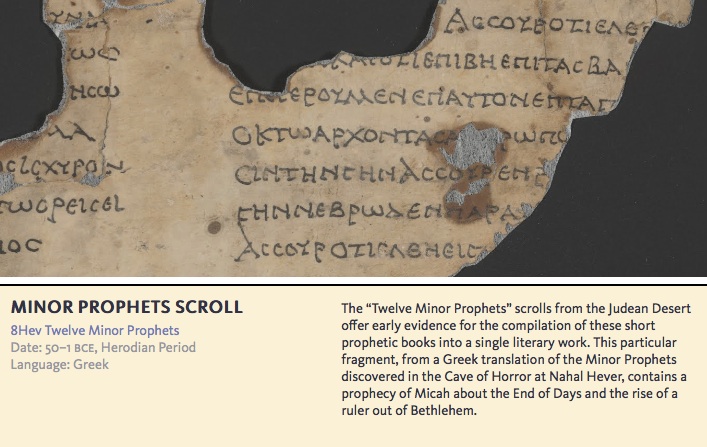
The Leon Levy Dead Sea Scrolls Digital Library puts the DSS “finally at your fingertips.” As here:

8Hev DSS

A note in the about section of the site reads:

With the generous lead support of the Leon Levy Foundation and additional generous support of the Arcadia Fund, the Israel Antiquities Authority and Google joined forces to develop the most advanced imaging and web technologies to bring to the web hundreds of Dead Sea Scrolls images as well as specially developed supporting resources in a user-friendly platform intended for the public, students and scholars alike.

A number of bloggers wrote about this, not a few of whom Jim McGrath links to.

That wasn’t all that went online in December. Evangelical Textual Criticism notes quite a few other manuscripts that are now online. (As proven by the fact that every word of that last phrase is its own hyperlink.) Charles Halton of awilum.com highlights the availability of A. Leo Oppenheim’s Ancient Mesopotamia as a free pdf. Readers of this carnival may also like to take some time with ASOR’s weekly archaeology roundups in December, here, here, and here.

Septuagint

December saw a plethora of posts about παρθένος/עלמה in Isaiah 7:14, and Matthew’s use of that verse. Here is T.M. Law, saying that Greek Isaiah’s use of παρθένος for עלמה is not without precedent in the LXX (“The Greek translator of Isaiah used a perfectly acceptable rendering for עלמה.”). Here’s the Jesus Creed on the virgin birth. Krista Dalton notes, “[T]he author of Matthew is not saying that Isaiah was envisioning the birth of Jesus.” Kevin Brown of Diglotting posts here about it. And, looking at hermeneutics more generally, Brian LePort suggested three paradigms to use in studying the virgin birth.

IsaiahSpeaking of Greek Isaiah… more than 150 of us are reading through Greek Isaiah in a Year. And writing about it, too. Suzanne at BLT covered appetite and desire, synonymous phrases (particularly at issue when comparing Isaiah 2 and Micah 4), and μητροπολις πιστη σιων as “the mother city of Zion.” Bob MacDonald posted on Isaiah 3 and 6. Brian LePort posted notes from Isaiah 1:1-25, 1:26-2:21, 2:22-3:21, and 3:22-5:16.

J.K. Gayle at The WOMBman’s Bible (“An Outsider’s Perspective on the Hebrew Males’ Hellene Book”) posted reflections from Greek Isaiah not 1, not 2, not 3, not 4, not 5, not 6, but 7 times in December. Set aside some time and read them all.

Codex Sinaiticus dropped in price to just under $200 at CBD this month–a facsimile edition, that is. Theophrastus of BLT notes it here. He will later lament (which I, too, lament) that Oxford University Press no longer prints their wonderful Comparative Psalter. And while we’re on those Ψαλμοὶ, did their Greek translator(s) have Aristotle and Greek rhetoric in mind?

Read the Fathers posted a nice introduction to the Septuagint. (Go here for more info about taking part in that reading group.)

New Testament and Greek

Greek spelling: YOU'RE DOING IT WRONG
Greek spelling: YOU’RE DOING IT WRONG

Rod Decker wrote about understanding Greek and how to teach it. (Hint, via Decker: you can’t skip first year Greek.) Daniel Street suggested a Greek Students’ Liberation Movement when it comes to pedagogy.

Anthony Le Donne is taking on the Wikipedia entry on “Historical Jesus” (best biblioblog comment of the month: here). James Tabor asked how December 25 got to be the day we observe Jesus’ birthday (with more thoughts here). Mark Goodacre produced a Christmas NT Pod in which he “explores the differences between the Birth Narratives in Matt. 1-2 and Luke 1-2 and asks how this can be the case if Luke is familiar with Matthew.” The Sacred Page produced a podcast on “the first Christmas.” For a fresh translation of Luke 1:34-38 (with the Greek reproduced beneath the English), see “She spoke yet-Miriam did.” Daniel Street even gave us some Christmas songs in Greek!

Brian Davidson connects the salt verse of Matthew 5:13 to the rest of the beatitudes.

Theological Musings reviewed Charts on the Book of Hebrews, as well as Donald Hagner’s New Testament introduction.

James Tabor points out a common question readers of Paul come to: “Who is a Jew?” (However one answers the question, “Who Said Jews Aren’t Interested in Biblical Theology?” asks Joseph Kelly. And James G. Crossley notes some cautions here.) Readers of Paul also ask (and argue) about the “faith of Christ.” Kait Dugan relates pistis Christou to discipleship. Steven E. Runge’s NT Discourse blog featured an extended note on “exceptional exceptive clauses,” with Galatians 2:16 in view.

Theology

rublev icon

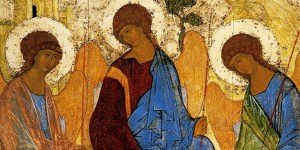
Anglican minister Rach Marszalek calls for nuance in discussions on the Trinity, as well as an appreciation of “the perichoretic beauty” of the Same. Read her “Eternal functional subordination and ontological equality?” here. While we’re on Anglicans, Brian LePort asks whether he needs a Bishop?

Gaudete Theology offers a feminist reading of “the bride of Christ” language. (“The image of the Bride of Christ needn’t be viewed only through the patriarchal perception of woman’s nature as inherently passive, docile, compliant, and receptive.”) Alice C. Linsley at Just Genesis would, I think, agree that the image and office of priest should also not be viewed through a patriarchal lens. She says, “Luther Was Wrong About the Priesthood.”

Rod at Political Jesus reviewed The Color of Christ: The Son of God and the Saga of Race in America. Larry Hurtado looks at Andrew Chester’s assessment of high Christology scholarship of late.

James Pate encourages inter-religious dialogue even for conservative Christians. He also writes about what Jonathan Edwards has to do with the historical-critical method (engaging this method may have felt inter-religious to Edwards). Jim McGrath engages the question (regarding a book with this title): Do Jews, Christians, and Muslims Worship the Same God?

Remnant of Giants suggests that it’s “time to put away the decaffeinated biblical criticism.”

December brought news of the Queen James Bible. Jim McGrath looks to get beyond it. BLT invites dialogue as to whether or not that Bible’s editors have achieved their aims.

And, finally, may I offer thanks to Amanda at Cheesewearing Theology for this excellent December 2012 theology roundup? She covers yet more territory in theology than I have already covered here. If you’re disappointed that this carnival is about over, spend time reading the posts she collects.

Ευχαριστω/תודה/Thank you

carnival 2

Thanks for coming, and keep coming back! I blog regularly, so feel free to follow/subscribe by going back up to the right sidebar of the blog.

Phil Long at Reading Acts is looking for volunteers for future carnivals. Let’s “keep giving carnivals”! Please check out his post and see what you think.

I don’t necessarily agree with the content of all these posts I’ve linked to, but I do find them worth a click and read. Enjoy, and Happy New Year!

Greek Isaiah in a Year, Week 4=Isaiah 3:22-5:16

Prophet IsaiahThere’s something that has seemed appropriate about beginning to read through Isaiah during Advent. At a pace of roughly five verses each weekday, I’ve been reading through Greek Isaiah in a Year with a sizeable group of folks on Facebook.

Tomorrow (Monday) is the start week 4. Below is the schedule and text for Monday through Friday, using the text from R.R. Ottley’s Book of Isaiah According to the Septuagint. (Ottley is here on Amazon, here in Logos, and here as a free, downloadable pdf, since it’s public domain.) The full reading plan for our group is here (pdf).

Also, this last week I reviewed Ottley’s work in Logos. You can read more about that here. And now, the readings. At the end of this post I’m including a link to a pdf of the schedule and text for the week, as well, at the request of one of the group members.

Monday, December 24: Isaiah 3:22-4:1

22 καὶ τὰ ἐπιβλήματα τὰ κατὰ τὴν οἰκίαν καὶ τὰ διαφανῆ Λακωνικά, 23 καὶ τὰ βύσσινα καὶ τὰ ὑακίνθινα καὶ τὰ κόκκινα, καὶ τὴν βύσσον, σὺν χρυσίῳ καὶ ὑακίνθῳ συνκαθυφασμένα, καὶ θέριστρα κατάκλιτα. 24 καὶ ἔσται ἀντὶ ὀσμῆς ἡδείας, κονιορτός, καὶ ἀντὶ ζώνης σχοινίῳ ζώσῃ, καὶ ἀντὶ τοῦ κόσμου τῆς κεφαλῆς τοῦ χρυσίου φαλάκρωμα ἕξεις διὰ τὰ ἔργα σου, καὶ ἀντὶ τοῦ χιτῶνος τοῦ μεσοπορφύρου περιζώσῃ σάκκον. 25 καὶ ὁ υἱός σου ὁ κάλλιστος ὃν ἀγαπᾷς μαχαίρᾳ πεσεῖται, καὶ οἱ ἰσχύοντες ὑμῶν μαχαίρᾳ πεσοῦνται καὶ ταπεινωθήσονται· 26 καὶ πενθήσουσιν αἱ θῆκαι τοῦ κόσμου ὑμῶν, καὶ καταλειφθήσῃ μόνη καὶ εἰς τὴν γῆν ἐδαφισθήσῃ.

4 καὶ ἐπιλήμψονται ἑπτὰ γυναῖκες ἀνθρώπου ἑνὸς λέγουσαι Τὸν ἄρτον ἡμῶν φαγόμεθα, καὶ τὰ ἱμάτια ἡμῶν περιβαλούμεθα· πλὴν τὸ ὄνομα τὸ σὸν κεκλήσθω ἐφʼ ἡμᾶς, ἄφελε τὸν ὀνειδισμὸν ἡμῶν.

Tuesday, December 25: Isaiah 4:2-6

Τῇ δὲ ἡμέρᾳ ἐκείνῃ λάμψει ὁ θεὸς ἑν βουλῇ μετὰ δόξης ἐπὶ τῆς γῆς, τοῦ ὑψῶσαι καὶ δοξάσαι τὸ καταλειφθὲν τοῦ Ἰσραήλ· καὶ ἔσται τὸ ὑπολειφθὲν ἐν Σιὼν καὶ τὸ καταλειφθὲν ἐν Ἰερουσαλήμ, ἅγιοι κληθήσονται πάντες οἱ γραφέντες εἰς ζωὴν ἐν Ἰερουσαλήμ. ὅτι ἐκπλυνεῖ Κύριος τὸν ῥύπον τῶν υἱῶν καὶ τῶν θυγατέρων Σιών, καὶ τὸ αἷμα ἐκκαθαριεῖ ἐκ μέσου αὐτῶν ἐν πνεύματι κρίσεως. καὶ ἥξει, καὶ ἔσται πᾶς τόπος τοῦ ὄρους Σιὼν καὶ πάντα τὰ περικύκλῳ αὐτῆς σκιάσει νεφέλη ἡμέρας, καὶ ὡς καπνοῦ καὶ ὡς φωτὸς πυρὸς καιομένου νυκτός· πάσῃ τῇ δόξῃ Κυρίου σκεπασθήσεται· καὶ ἔσται εἰς σκιὰν ἀπὸ καύματος, καὶ ἐν σκέπῃ καὶ ἐν ἀποκρύφῳ σκληρότητος καὶ ὑετοῦ.

Wednesday, December 26: Isaiah 5:1-7

5 ᾌσω δὴ τῷ ἠγαπημένῳ ᾆσμα τοῦ ἀγαπητοῦ τῷ ἀμπελῶνί μου. ἀμπελὼν ἐγενήθη τῷ ἠγαπημένῳ ἐν κέρατι ἐν τόπῳ πίονι. καὶ φραγμὸν περιέθηκα καὶ ἐχαράκωσα, καὶ ἐφύτευσα ἄμπελον σωρήχ, καὶ ᾠκοδόμησα πύργον ἐν μέσῳ αὐτοῦ, καὶ προλήνιον ὤρυξα ἐν αὐτῷ· καὶ ἔμεινα τοῦ ποιῆσαι σταφυλήν, ἐποίησεν δὲ ἀκάνθας. καὶ νῦν, ἄνθρωπος τοῦ Ἰούδα καὶ οἱ ἐνοικοῦντες ἐν Ἰερουσαλήμ, κρίνατε ἐν ἐμοὶ καὶ ἀνὰ μέσον τοῦ ἀμπελῶνός μου. τί ποιήσω ἔτι τῷ ἀμπελῶνί μου, καὶ οὐκ ἐποίησα αὐτῷ; διότι ἔμεινα τοῦ ποιῆσαι σταφυλήν, ἐποίησεν δὲ ἀκάνθας. νῦν δὲ ἀναγγελῶ ὑμῖν τί ποιήσω τῷ ἀμπελῶνί μου. ἀφελῶ τὸν φραγμὸν αὐτοῦ καὶ ἔσται εἰς διαρπαγήν, καὶ καθελῶ τὸν τοῖχον αὐτοῦ καὶ ἔσται εἰς <καταπάτημα>. καὶ ἀνήσω τὸν ἀμπελῶνά μου, καὶ οὐ μὴ τμηθῇ οὐδὲ μὴ σκαφῇ, καὶ ἀναβήσεται εἰς αὐτὸν ὡς εἰς χέρσον ἄκανθα. καὶ ταῖς νεφέλαις ἐντελοῦμαι τοῦ μὴ βρέξαι εἰς αὐτὸν ὑετόν. ὁ γὰρ ἀμπελὼν Κυρίου σαβαὼθ οἶκος τοῦ Ἰσραήλ ἐστιν, καὶ ἄνθρωπος τοῦ Ἰούδα νεόφυτον ἠγαπημένον· ἔμεινα τοῦ ποιῆσαι κρίσιν, ἐποίησεν δὲ ἀνομίαν, καὶ οὐ δικαιοσύνην ἀλλὰ κραυγήν.

Thursday, December 27: Isaiah 5:8-11

Οὐαὶ οἱ συνάπτοντες οἰκίαν πρὸς οἰκίαν, καὶ ἀγρὸν πρὸς ἀγρὸν ἐγγίζοντες, ἵνα τοῦ πλησίον ἀφέλωνταί τι· μὴ οἰκήσετε μόνοι ἐπὶ τῆς γῆς; ἠκούσθη γὰρ εἰς τὰ ὦτα Κυρίου σαβαὼθ ταῦτα· ἐὰν γὰρ γένωνται οἰκίαι πολλαί, εἰς ἔρημον ἔσονται· μεγάλαι καὶ καλαί, καὶ οὐκ ἔσονται οἱ ἐνοικοῦντες. 10 οὗ γὰρ ἐργῶνται δέκα ζεύγη βοῶν, ποιήσει κεράμιον ἕν, καὶ ὁ σπείρων ἀρτάβας ἓξ ποιήσει μέτρα τρία. 11 Οὐαὶ οἱ ἐγειρόμενοι τὸ πρωὶ καὶ τὸ σίκερα διώκοντες, οἱ μένοντες τὸ ὀψέ· ὁ γὰρ οἶνος αὐτοὺς συγκαύσει.

Friday, December 28: Isaiah 5:12-16

12 μετὰ γὰρ κιθάρας καὶ ψαλτηρίου καὶ τυμπάνων καὶ αὐλῶν τὸν οἶνον πίνουσιν, τὰ δὲ ἔργα Κυρίου οὐκ ἐμβλέπουσιν, καὶ τὰ ἔργα τῶν χειρῶν αὐτοῦ οὐ κατανοοῦσιν. 13 τοίνυν αἰχμάλωτος ὁ λαός μου ἐγενήθη διὰ τὸ μὴ εἰδέναι αὐτοὺς τὸν κύριον, καὶ πλῆθος ἐγενήθη νεκρῶν διὰ λιμὸν καὶ δίψαν ὕδατος. 14 καὶ ἐπλάτυνεν ὁ ᾅδης τὴν ψυχὴν αὐτοῦ καὶ διήνοιξεν τὸ στόμα αὐτοῦ τοῦ μὴ διαλιπεῖν, καὶ καταβήσονται οἱ ἔνδοξοι καὶ οἱ μεγάλοι καὶ οἱ πλούσιοι καὶ οἱ λοιμοὶ αὐτῆς. 15 καὶ ταπεινωθήσεται ἄνθρωπος, καὶ ἀτιμασθήσεται ἀνήρ, καὶ οἱ ὀφθαλμοὶ οἱ μετέωροι ταπεινωθήσονται· 16 καὶ ὑψωθήσεται Κύριος σαβαὼθ ἐν κρίματι, καὶ ὁ θεὸς ὁ ἅγιος δοξασθήσεται ἐν δικαιοσύνῃ.

Here are the week’s readings as a pdf.

See here for more resources and links to texts for Greek Isaiah. Here are previous weeks’ readings: Week 1 / Week 2 / Week 3.

A short 3.5-page intro to the Septuagint by Emanuel Tov

Emanuel Tov is J. L. Magnes Professor of Bible at Hebrew University in Jerusalem. Among many other publications, his Textual Criticism of the Hebrew Bible contains a wealth of information for the student of the Septuagint and Hebrew Bible.

On his site there are lots of pdf articles you can read for free. One particularly helpful one is this very short introduction (3.5 pages) to the Septuagint. It covers the name of the Septuagint, its nature and content, date, origin, background, and more.

Works of Richard R. Ottley (3 vols.) in Logos Bible Software

Ottley Isaiah cover

I’ve been using R.R. Ottley’s Book of Isaiah According to the Septuagint as I participate in Greek Isaiah in Year.

The two-volume work is available in print through Wipf & Stock here on Amazon. Or you can download the whole thing here for free as a .pdf, since it’s in the public domain. This will be sufficient for many folks who want to check out this work.

Logos Bible Software also has an edition of Ottley’s work (here), a three-volume Works of Richard R. Ottley. In addition to Book of Isaiah According to the Septuagint, the Logos bundle includes his Handbook to the Septuagint. That work is also free and in the public domain (get it here).

For the kind of close reading I’ve been doing with the Greek Isaiah group, having these texts integrated with the rest of Logos has been quite convenient and a big time-saver.

Volume 1 of Ottley’s Isaiah work has:

  • Introduction
    • Early History of the Septuagint
    • Text of the LXX in Isaiah
    • Methods of Rendering
    • Differences between the LXX and the Hebrew
  • List of Manuscripts containing Isaiah in Greek
  • Parallel Translations

The introduction briefly addresses issues of dating, as well as the various editions of the Greek (the Hexapla, etc.). The “Text of the LXX in Isaiah” section treats in more detail the Greek manuscripts, as well as later translations like the Syro-Hexaplar and Old Latin, which were made from the Greek. Ottley notes that Codex Vaticanus (B) “falls below its usual standard” and is “a worse representative of the LXX than usual,” being “inferior to other extant manuscripts.” Throughout these two volumes, then, he pursues “the question of securing the best available text.”

“Methods of Rendering” in the Introduction compares Septuagint Greek to New Testament Greek (finding “in it much resemblance”), yet Ottley also notes that Septuagint translators saught to keep “various Semitic idioms, and a dim reflection of Semitic arrangement and style.” These are not especially earth-shattering insights for the student of the Septuagint today, but Ottley does provide a helpful tour of the Greek grammar of Isaiah in introductory fashion. He also relates the Greek to the Hebrew it translated:

[The LXX translators] seem to have selected the aorist as the best equivalent for the Hebrew perfect, and the future for the Hebrew imperfect, and used them, when the context did not absolutely forbid, to represent rather than to translate these forms.

As far as differences between the Greek and the Hebrew, Ottley notes omissions, additions (scholars now, I believe, prefer to speak of “minuses” and “pluses,” since “omissions”/”additions” can prejudice the discussion), paraphrases, differences in syntax, and more. He includes a lengthy list of references in illustration of each kind of difference.

The rest of volume 1 is taken up with Ottley’s “Parallel Translations,” where he presents his English translations of the Hebrew and of the Greek side-by-side on different pages. Each page includes several translation footnotes.

Here is where the Logos edition becomes especially handy. Using the Text Comparison tool, I can easily see how Ottley’s English translation of the Greek compares with his English translation of the Hebrew, to get a feel for how the two underlying texts differ:

Ottley English translation comparison

Even with a free .pdf of the work available in the public domain, being able to use Logos’s tools to interact with the text makes it worth having.

Volume 2, then, contains Ottley’s own presentation of Greek Isaiah, with Codex Alexandrinus (A) as “the basis for the Greek text here printed.” As with the Göttingen edition of the Septuagint, Ottley has a critical apparatus at the bottom of the page that notes variants. His is not quite as exhaustive as Göttingen, but neither does it lack detail. In the print edition, following the Greek text are some nearly 300 pages of notes on Greek Isaiah.

And in Logos, one can view all of Ottley’s work on Isaiah at once, together with the Hebrew text and various lexicons (not included with this module). For reading Ottley’s Greek text of Isaiah, I have the Greek scrolling with the critical apparatus and the notes and translation, so that I can simultaneously see all that Ottley has about a given verse. As here:

Ottley in Logos

Note: in the image above I actually have the Göttingen text open, with Ottley right behind it in another tab. For reading through Isaiah, I like to still have a morphologically tagged text going; Ottley is not so tagged. But you can sync everything together so that you barely notice that.

It’s not impossible, of course, to flip back and forth between the pages of a print version, or to scroll back and forth through a free .pdf. But Ottley’s Book of Isaiah According to the Septuagint integrates seamlessly with the rest of Logos. And when reading his Handbook to the Septuagint, any verses or abbreviations are hyperlinked so that you can mouse over them as you read and pop-ups will display with the relevant information.

This three-volume set in Logos is very well done, and easily does things that neither a print copy nor a .pdf can do. Being able to see all of Ottley’s work on a single verse at a glance–as well as compare it with other LXX texts using the Text Comparison tool–is the true highlight of this resource.

The three volume Works of Richard R. Ottley in Logos can be found here. My thanks to Logos for the review copy, provided for the purposes of this review but not with any expectation as to its content. Ottley in Logos has also been a great help to me as the group administrator of Greek Isaiah in a Year.

Greek Isaiah in a Year, Week 3=Isaiah 2:16-3:21

isaiah lxx

We’re through two weeks of Greek Isaiah in a Year. The Facebook group continues to grow–now 175 readers. Anyone can still join. And some are reading apart from the Facebook group, too.

Tomorrow (Monday) begins week 3. Below is the schedule and text for Monday through Friday, using the text from R.R. Ottley’s Book of Isaiah According to the Septuagint. (Ottley is here on Amazon, here in Logos, and here as a free, downloadable pdf, since it’s public domain.) The full reading plan is here (pdf).

Monday, December 17: Isaiah 2:16-21

16 καὶ ἐπὶ πᾶν πλοῖον θαλάσσης, καὶ ἐπὶ πᾶσαν θέαν πλοίων κάλλους· 17 καὶ ταπεινωθήσεται πᾶς ἄνθρωπος, καὶ πεσεῖται ὕψος ἀνθρώπων, καὶ ὑψωθήσεται Κύριος μόνος ἐν τῇ ἡμέρᾳ ἐκείνῃ. 18 καὶ τὰ χειροποίητα πάντα κατακρύψουσιν, 19 εἰσενέγκαντες εἰς τὰ σπήλαια καὶ εἰς τὰς σχισμὰς τῶν πετρῶν καὶ εἰς τὰς τρώγλας τῆς γῆς, ἀπὸ προσώπου τοῦ φόβου Κυρίου καὶ ἀπὸ τῆς δόξης τῆς ἰσχύος αὐτοῦ, ὅταν ἀναστῇ θραῦσαι τὴν γῆν. 20 τῇ ἡμέρᾳ ἐκείνῃ ἐκβαλεῖ ἄνθρωπος τὰ βδελύγματα αὐτοῦ τὰ ἀργυρᾶ καὶ τὰ χρυσᾶ, ἃ ἐποίησεν προσκυνεῖν, τοῖς ματαίοις καὶ ταῖς νυκτερίσιν, 21 τοῦ εἰσελθεῖν εἰς τὰς τρώγλας τῆς στερεᾶς πέτρας καὶ εἰς τὰς σχισμὰς τῶν πετρῶν, ἀπὸ προσώπου τοῦ φόβου Κυρίου καὶ ἀπὸ τῆς δόξης τῆς ἰσχύος αὐτοῦ, ὅταν ἀναστῇ θραῦσαι τὴν γῆν.

Tuesday, December 18: Isaiah 3:1-5

3 Ἰδοὺ δὴ ὁ δεσπότης Κύριος σαβαὼθ ἀφελεῖ ἀπὸ τῆς Ἰουδαίας καὶ ἀπὸ Ἰερουσαλὴμ ἰσχύοντα καὶ ἰσχύουσαν, ἰσχὺν ἄρτου καὶ ἰσχὺν ὕδατος, γίγαντα καὶ ἰσχύοντα καὶ ἄνθρωπον πολεμιστὴν καὶ δικαστὴν καὶ προφήτην καὶ στοχαστὴν καὶ πρεσβύτερον καὶ πεντηκόνταρχον καὶ θαυμαστὸν σύμβουλον καὶ σοφὸν ἀρχιτέκτονα καὶ συνετὸν ἀκροατήν· καὶ ἐπιστήσω νεανίσκους ἄρχοντας αὐτῶν, καὶ ἐμπαῖκται κυριεύσουσιν αὐτῶν. καὶ συμπεσεῖται ὁ λαός, ἄνθρωπος πρὸς ἄνθρωπον, καὶ ἄνθρωπος πρὸς τὸν πλησίον αὐτοῦ· προσκόψει τὸ παιδίον πρὸς τὸν πρεσβύτην, ὁ ἄτιμος πρὸς τὸν ἔντιμον.

Wednesday, December 19: Isaiah 3:6-10

ὅτι ἐπιλήμψεται ἄνθρωπος τοῦ ἀδελφοῦ αὐτοῦ ἢ τοῦ οἰκείου τοῦ πατρὸς αὐτοῦ λέγων Ἱμάτιον ἔχεις, ἀρχηγὸς ἡμῶν γενοῦ, καὶ τὸ βρῶμα τὸ ἐμὸν ὑπὸ σὲ ἔστω. καὶ ἀποκριθεὶς ἐρεῖ ἐν τῇ ἡμέρᾳ ἑκείνῃ Οὐκ ἕσομαί σου ἀρχηγός· οὐ γὰρ ἔστιν ἐν τῷ οἴκῳ μου ἄρτος οὐδὲ ἱμάτιον· οὐκ ἔσομαι ἀρχηγὸς τοῦ λαοῦ τούτου. ὅτι ἀνεῖται Ἰερουσαλὴμ καὶ ἡ Ἰουδαία συμπέπτωκεν, καὶ αἱ γλῶσσαι αὐτῶν μετὰ ἀνομίας, τὰ πρὸς Κύριον ἀπειθοῦντες· διότι νῦν ἐταπεινῶθη ἡ δόξα αὐτῶν, καὶ ἡ αἰσχύνη τοῦ προσώπου αὐτῶν ἀντέστη αὐτοῖς· τὴν δὲ ἁμαρτίαν αὐτῶν ὡς Σοδόμων ἀνήγγειλαν καὶ ἐνεφάνισαν. οὐαὶ τῇ ψυχῇ αὐτῶν, ὅτι βεβούλευνται βουλὴν πονηρὰν καθʼ ἑαυτῶν, 10 εἴπαντες Δήσωμεν τὸν δίκαιον, ὅτι δύσχρηστος ἡμῖν ἐστιν· τοίνυν τὰ γενήματα τῶν ἔργων αὐτῶν φάγονται.

Thursday, December 20: Isaiah 3:11-16

11 οὐαὶ τῷ ἀνόμῳ· πονηρὰ κατὰ τὰ ἔργα τῶν χειρῶν αὐτοῦ συμβήσεται αὐτῷ. 12 λαός μου, οἱ πράκτορες ὑμῶν καλαμῶνται ὑμᾶς, καὶ οἱ ἀπαιτοῦντες κυριεύουσιν ὑμῶν. λαός μου, οἱ μακαρίζοντες ὑμᾶς πλανῶσιν ὑμᾶς καὶ τὴν τρίβον τῶν ποδῶν ὑμῶν ταράσσουσιν. 13 ἀλλὰ νῦν καταστήσεται εἰς κρίσιν Κύριος, καὶ στήσει εἰς κρίσιν τὸν λαὸν αὐτοῦ· 14 αὐτὸς Κύριος εἰς κρίσιν ἥξει μετὰ τῶν πρεσβυτέρων τοῦ λαοῦ καὶ μετὰ τῶν ἀρχόντων αὐτοῦ. ὑμεῖς δὲ τί ἐνεπυρίσατε τὸν ἀμπελῶνά μου, καὶ ἡ ἁρπαγὴ τοῦ πτωχοῦ ἐν τοῖς οἴκοις ὑμῶν; 15 τί ὑμεῖς ἀδικεῖτε τὸν λαόν μου, καὶ τὸ πρόσωπον τῶν πτωχῶν καταισχύνετε;

16 Τάδε λέγει Κύριος Ἀνθʼ ὧν ὑψώθησαν αἱ θυγατέρες Σιών, καὶ ἐπορεύθησαν ὑψηλῷ τραχήλῳ καὶ νεύμασιν ὀφθαλμῶν, καὶ τῇ πορείᾳ τῶν ποδῶν ἅμα σύρουσαι τοὺς χιτῶνας καὶ τοῖς ποσὶν ἅμα παίζουσαι,

Friday, December 21: Isaiah 3:17-21

17 καὶ ταπεινώσει ὁ θεὸς ἀρχούσας θυγατέρας Σιών. καὶ Κύριος ἀποκαλύψει τὸ σχῆμα αὐτῶν 18 ἐν τῇ ἡμέρᾳ ἐκείνῃ· καὶ ἀφελεῖ Κύριος τὴν δόξαν τοῦ ἱματισμοῦ αὐτῶν, καὶ τοὺς κόσμους αὐτῶν καὶ τὰ ἐμπλόκια καὶ τοὺς κοσύμβους καὶ τοὺς μηνίσκους, 19 καὶ τὸ κάθεμα καὶ τὸν κόσμον τοῦ προσώπου αὐτῶν, 20 καὶ τὴν σύνθεσιν τοῦ κόσμου τῆς δόξης αὐτῶν, καὶ τοὺς χλιδῶνας καὶ τὰ ψέλια καὶ τὸ ἐμπλόκιον καὶ τὰ περιδέξια καὶ τοὺς δακτυλίους καὶ τὰ ἐνώτια, 21 καὶ τὰ περιπόρφυρα καὶ τὰ μεσοπόρφυρα,

…with the conclusion to the sentence coming on the following Monday.

See here for more resources and links to texts for Greek Isaiah. Readings from week 1 are here, from week 2 are here.