The Best Case You Can Get for Your iPad Mini

My favorite iPad mini case has been replaced with another one from the same company.

INVELLOP now has a slightly heavier-duty leatherette case for iPad mini that works with both the first-generation and the retina mini model.

Usually when I review gear I list pros and cons. INVELLOP’s new case, however, has really only one slight drawback, which I note below.

I find the case to be just about the perfect combination of protection and slimness.

This is what it looks like, in a few views:

In viewing mode
In viewing mode
Front of case, closed
INVELLOP 3
Back of case, closed
INVELLOP 4
Inside of the case

Here’s why I haven’t put any other case on my iPad since getting this one:

  • The cutouts (headphone jack, volume control, camera lens) are perfectly sized
  • The case covers both front and back of the iPad; it’s all one piece
  • Though I still sometimes take the case off for extended periods of reading or watching, it’s really easy to hold the iPad in one hand with the case folded back
  • I actually have dropped the iPad a couple times (on the carpet, thankfully) since getting this case… and it’s been fine (phew!)
  • After a few months of use, there is just the slightest bit of wear on the case, but it’s holding up very nicely
  • Closing the screen flap puts the device to sleep; opening it wakes it–this functions perfectly
  • At the time of this post, you can get the case for about $20 at Amazon (affiliate link to help fund ye ole blog)
  • The inside of the screen cover has microfiber, which has not scratched the screen at all
  • The screen cover is in thirds so that you can put your iPad upright (in landscape mode) in two different positions (for viewing or typing)
  • There are magnets that keep the front cover secured in place when you fold it back

The only minor critique I have is that it’s slightly heavier (by a couple ounces, maybe) than the previous iteration of this case. But that’s a small price to pay for the greater protection and classier feel. Two thumbs up. This feels like everything you’d want an iPad mini case to be.

Thanks to INVELLOP for the review sample. The case reviewed above can be found at Amazon hereYou can find my other gear reviews here.

Scrivener is 50% Off in the App Store Right Now

Scrivener Logo

Scrivener is 50% off at the Mac App Store right now. Not sure how long this sale will last, but it’s now $22.99, which is well worth the value Scrivener looks to provide, especially to writers. I posted about writing a paper with Scrivener here. The link to the sale in the App Store is here. (HT: Brian Renshaw for pointing it out!)

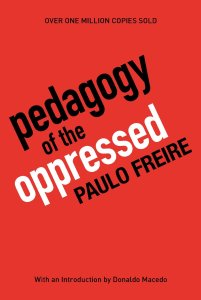
A Poem I Wrote in Spanish After Reading Paulo Freire

Pedagogy of the Oppressed

Some 12 years ago I wrote the following poem-prayer after reading Paulo Freire’s Pedagogy of the Oppressed and some of his other writing on the church. I found it again the other day so am posting it here:

Hasta que haya la paz, no descansaré.
Hasta que las guerras cesen, no abandonaré la lucha.
Hasta que la justicia reine, seguiré leyendo, predicando, y gritando.
Hasta que haya una verdadera liberación humana, no dormiré.
Que vengas, Jesucristo. Que venga tu voluntad y tu reino,
como en el cielo, así también en la tierra.


Zondervan Theology Collection (Logos Software) Giveaway

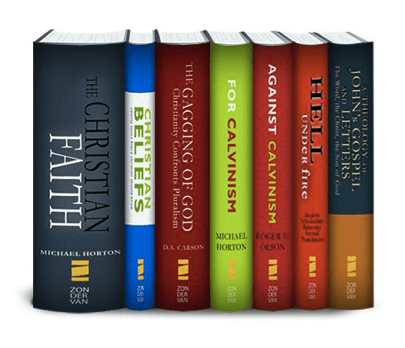
Logos Zondervan TheologyWant to enter for a chance to get some free theology books? These ones won’t even take up shelf space. I’m joining with a few other bloggers and Logos Bible Software for a giveaway of Logos’s Zondervan Theology Collection.

What’s Up for Grabs

The collection can be found here. It includes these books:

How to Enter the Giveaway

Logos will choose the winner at random on August 1, with the collection sent to that person’s Logos account. If you don’t have a Logos account, you can register for free here. An iOS app for Logos (and other mobile apps can be found here, also free.

To enter, log in below using either your email address or Facebook account, and the Punchtab widget walks you through the rest. You can choose which methods of entry to use. Each prompted action is its own entry.

Logos has this disclaimer: By entering this giveaway you consent to being signed up to Logos’ “Product Reviews” email list.  (This just means you’d get emails with Logos-related content written by bloggers such as yours truly.)

UPDATE: WordPress doesn’t want to show the Punchtab widget for some reason. For now you can enter here.

Writing My First Paper Using Scrivener

During my first few minutes using Scrivener 2, I kept thinking the most apt comparison was “word processor on steroids.” But that’s not quite accurate. For one, there are no negative side effects here—save for the commitment the user will have to put in to learn a flexible, layered, and impressive program. And Scrivener is about as far from a word processor as LeBron James is now from Miami.

How Quickly Could I Get Started? (In About 40 Minutes)

I had a paper due this weekend for a grad school class I’m taking. I wanted to use Scrivener to write it, since I thought it would simplify the process. Yes, Scrivener processes words, but it’s really a program for writing project management. Its product page says:

Enter Scrivener: a word processor and project management tool that stays with you from that first, unformed idea all the way through to the final draft. Outline and structure your ideas, take notes, view research alongside your writing and compose the constituent pieces of your text in isolation or in context. Scrivener won’t tell you how to write—it just makes all the tools you have scattered around your desk available in one application, leaving you free to focus on the words.

Scrivener is fast and easy to install. When you open it for the first time, you see an interactive tutorial you can work through:

Scrivener_Getting StartedBut it says it will take “couple of hours if you go through it thoroughly,” and I needed to get started sooner than that on the paper. (I’ll go through the whole tutorial as soon as I can; it’s really well done.)

There are also tutorial videos here. A lot of them. I’ll admit to being somewhat overwhelmed at first. Scrivener is, after all, the kind of program you need to spend at least a little time to learn how to use, even if you’re already relatively computer-savvy. But it promises to be time well spent.

As an experiment, I decided to watch the ten-minute overview (the first video at the link above, “An Introduction to Scrivener”) to see if it was enough to get me “up and running as quickly as possible,” as the video description suggested. I had never used Scrivener before this month.

Sure enough—10 minutes later (plus another 30 minutes or so searching the forums, help files, and user manual) I was up and running, using Scrivener for the first time to complete a grad school writing assignment.

Writing a Paper More Efficiently

The paper I was writing requires multiple sections and is a topic I’d written about before. I also had some readings to integrate into the paper. And, of course, I wanted to keep the syllabus and specific requirements in front of me as I wrote.

So, after opening a preset template based on the Chicago Manual of Style, I got my project ready. Here’s what it looks like in Scrivener. To you Scrivener power users: this is a pretty basic setup, and I’m still learning what all I can do. To you who are not familiar with Scrivener: I’ll note below what each of the portions of the screenshot is. (Click on image to enlarge.)

Scrivener Paper LayoutThe leftmost column is the Binder. This looks a bit like a Mac’s Finder folders. Here is where I laid out my paper. The preset template took care of the “Title Page” and “Works Cited” formatting; I just had to fill them in. I outlined the “Main Content.” Underneath that is “Research,” a set of .pdfs and other files I dragged in. Instead of switching between Preview, Word, and multiple windows in multiple programs, I could access everything I needed from the “Binder,” once I put it there. This meant that once I took a few minutes to set up the project, I only needed this one app open to complete the writing assignment, start to finish.

The “Ideas” section in the Binder, by the way, allows you to do a virtual version of creating notecards, for later rearrangement and integration into the paper.

Scrivener LogoThe middle panes (the largest ones) comprise the Editor, which is where I wrote the paper. One really cool thing about this is you can have it all be one big pane, or you can open two panes at once. In the above screenshot, I’m writing my paper in the top editor pane and accessing a previous writing for reference in the bottom pane.

At right is the Inspector. This is versatile and can be used to select one of six different sub-panes. In the view above I have open a short synopsis of the section I’m writing (here I copied from the assignment so I knew what I was supposed to be writing), as well as some general Project Notes I wanted to keep before me for each section of the paper.

After I had written the paper, I selected Compile from the File menu, and Scrivener gave me a myriad of easy-to-navigate options for how I wanted to export my paper into a word processor for final formatting. I exported it to Word and only had to do a very few tweaks to have my paper come out properly formatted–including the footnotes.

More to Follow

Literature & Latte kindly supplied me with a license of Scrivener for the purposes of review. There is much, much more to the program than what I have outlined above, and I’ll write more later. I came to Scrivener this week just wondering if I could learn its basics fast enough to use it right away to write a paper, and in a way that would save me time compared to my normal workflow. This was very much the case when I had finished. I only wish I had known about the program much sooner in my graduate studies!

Want to check it out? (I recommend it.) Here you can download a free trial, for Mac or Windows. (It’s a generous trial period, too.) You can read more about Scrivener’s features here.

LeBron: Back Home to Cleveland

Lebron to Cleveland

LeBron James is going back to Cleveland. He says:

Before anyone ever cared where I would play basketball, I was a kid from Northeast Ohio. It’s where I walked. It’s where I ran. It’s where I cried. It’s where I bled. It holds a special place in my heart. People there have seen me grow up. I sometimes feel like I’m their son. Their passion can be overwhelming. But it drives me. I want to give them hope when I can. I want to inspire them when I can. My relationship with Northeast Ohio is bigger than basketball. I didn’t realize that four years ago. I do now.

Whether you care much for him or not, it’s a beautifully written article, touching on themes of home, family, forgiveness, and making change in your community. Read the whole thing here.

Change Your “Pas5w0rd,” Change Your Life

Psalms of Summer

This summer we’re going to delve more deeply into the Psalms. “The Psalms of Summer,” I’m calling the preaching series. (Or, as a pastor friend of mine called it, the Psalms of Psummer.)

We’ll find ourselves here in these poems and see our heart’s desires expressed in the Psalms. Some days we’ll walk out of church with new prayers to pray: prayers we’ve been longing to pray and have already been feeling, but maybe couldn’t put words to.

We’ll seek, too, to be shaped and formed by these prayers.

Psalm 1 as Preface, and Picking a Password

Psalm 1 is, as one early church theologian called it, the “foundation” of the house. It sets up the whole book of 150 Psalms. You could almost even think of it as a sort of “Psalm 0.”

The ones who are blessed, this Psalm says, the ones with the richest, most God-filled lives, the ones who flourish, are the ones who meditate on God’s word. Over and over.

Blessed are those… who delight in the law of the LORD and meditate on his law day and night.

I found myself this week being redirected to an article on NBC’s Today Website, because I had to click on the link that said, “How a password changed one man’s life for the better.”

And how can you not click on that, you know?

Mauricio Estrella had just gone through a painful divorce and was depressed. He says:

One day I walk into the office, and my computer screen showed me the following message:

“Your password has expired. Click ‘Change password’ to change your password.”

His work required a change of password every 30 days. He writes:

I was furious that morning. A sizzling hot Tuesday, it was 9:40 a.m and I was late to work. I was still wearing my bike helmet and had forgotten to eat breakfast. I needed to get things done before a 10 a.m. meeting and changing passwords was going to be a huge waste of time.

As the input field with the pulsating cursor was waiting for me to type a password — something I’d use many times during every day — I remembered a tip I heard from my former boss.

And I decided: I’m gonna use a password to change my life.

He reasoned like this–he has to type in his password several times a day–when his screen saver came up or his lock screen kicked in when he was away from his desk for extended periods of time.

So, freshly wounded from the divorce, he set a password: “Forgive her.”

Except he had to have at least one capital letter, one lowercase letter, one symbol, and one number, so it was “Forgive@h3r.”

Every day for a month he wrote, “Forgive her.” And Estrella said:

That simple action changed the way I looked at my ex wife. That constant reminder that I should forgive her led me to accept the way things happened at the end of my marriage, and embrace a new way of dealing with the depression that I was drowning into.

A month later, his password expired, so his new password–reflecting a new mantra he wanted to take on–became: Quit@smoking4ever.

It was a great article–a little self-help-y for my tastes, and it is true that we find ourselves in way too many situations that we can’t just positive think our way out of. But Mauricio Estrella knew what the writer of Psalm 1 knew–what we meditate on has the power to transform us. 

Two Ways

Here is one way of outlining Psalm 1:

What are the two ways? (Ps. 1:1-2)

What are they like? (Ps. 1:3-4)

What do they lead to? (Ps. 1:5-6)

This Psalm tells us, especially, that what we meditate on has the power to transform us.

What are the two ways? (Ps. 1:1-2)

Ps 1:1    Blessed are those
who do not walk in step with the wicked
or stand in the way that sinners take
or sit in the company of mockers,

2 but who delight in the law of the LORD
and meditate on his law day and night.

Or, get this–I’d never read Psalm 1 in this translation until this week:

Happy the man
who did not walk by the counsel of the impious,
and in the way of sinners did not stand,
and on the seat of pestiferous people did not sit down.

(Stay away from the pestiferous ones!)

Walk… stand…sit. There’s a progression into wickedness here. At first you might be walking on by, just taking a look at–thinking about–going down a road you shouldn’t. If you slow down enough to stand there and look at the way of the wicked–that’s worse… when you stop to sit in the chair of those pestiferous people, well, then… you’re done for. Because what we meditate on has the power to transform us. And the ones that we spend time with also have the power to transform us, for better or for worse.

These are the two ways: the way of the wicked, the way of the righteous.

Righteous ones “delight in the law of the LORD and meditate on [it] day and night.”

Remove@clothingm1ldew?

Later Psalms will echo this. In Psalm 119, verse 97, it says, “Oh, how I love your law! I meditate on it all day long.” Then in verse 103, the Psalmist writes, “How sweet are your words to my taste, sweeter than honey to my mouth!”

I suspect that this idea of loving the law of God can sound a bit strange to us. We all see the value in laws and rules and regulations, sure, but to love somebody’s laws more than the summer season’s first ice cream?

We hear the word “law” and might think about some of the detailed instructions given in, say, Leviticus, regarding physical hygiene and ritual purity, such as Leviticus 14, which is about cleansing from infectious skin diseases and what to do when you notice mildew on your clothes.

So your new computer password becomes: Remove@clothingm1ldew.

Or we hear the word “law” and think of it as opposed to “grace.”  They were living under “law”; we are living under “grace.”

So what’s the Psalmist talking about?

He’s talking about his equivalent to our Bible. The Torah–the first five books: Genesis, Exodus, Leviticus, Numbers, Deuteronomy. This is “the Law”–it’s “God’s Word.” And not just the laws part of God’s law–but the revelation of God that it brings, the story that it tells of a compassionate God who is, in fact, slow to anger and eager to show compassion on all he has made.

In meditating on God’s law–God’s very words–the Psalmist is meditating on God: his guidance, instructions, blessings, love, character.

And I think Psalm 1 is self-referential, too–those who meditate on these Psalms will be blessed, will experience the favor of God.

What are they like? (Ps. 1:3-4)

3 [The righteous] are like a tree planted by streams of water,
which yields its fruit in season
and whose leaf does not wither—
whatever they do prospers.

4
Not so the wicked!
They are like chaff
that the wind blows away.

Those who meditate on God’s word are rooted, strong, nourished, bearers of good and visible fruit to all who walk by them. The wicked–in this case those who ignore God’s truth and go their own way–they are the chaff that has fallen to the floor. The grain is kept and preserved, the chaff just blows away. No roots, no fruit, no nothing.

What do they lead to? (Ps. 1:5-6)

5 Therefore the wicked will not stand in the judgment,
nor sinners in the assembly of the righteous.

6 For the LORD watches over the way of the righteous,
but the way of the wicked will be destroyed.

Then in verses 5 and 6 there is what one interpreter calls a “parting of the ways.” God watches over them. What we meditate on has the power to transform us, so the righteous one now is a rooted and well-watered tree, bearing fruit like it should. She or he receives God’s blessing, God’s preservation.

The wicked one has been transformed by the bad company he keeps, so he just floats away with the next wind, on his way to judgment.

It’s God who does the planting and watering and blessing here, but it’s the righteous person who has done his or her part to meditate on God’s word. And that meditation has caused a transformation.

Scripture Memory

Over the last month or so I’ve gotten back into Scripture memory. I have these little cards I bring in my pocket with verses on them. The pocket is a great place for them because I might reach for my phone to check for messages, and I’ll feel the little packet of cards instead. This is a prompt for me to either pull a card out and learn a verse, or if I already know it, to try to say it and pray it.

There are many ways to meditate on God’s Word. We’re going to try one particular way this summer, and that is Scripture memory….

[AKJ note: Here we looked at some Scripture memory cards I made up for Psalm 1:1-2, as a way to put into practice what this Psalm preaches. Make your own, using this document, if you want!]

The above is adapted from the sermon I preached last Sunday. Scripture quotations are from the TNIV. See my other sermons gathered here.

Counseling the Culturally Diverse

Counseling the Culturally Diverse

This week I’m beginning a course on multicultural counseling. I can’t wait to jump in.

One of the textbooks we’re using is Counseling the Culturally Diverse: Theory and Practice, 6th Edition (Wiley, 2013), by Derald Wing Sue and David Sue. Here’s a bit of the description from the book’s product page:

Filled with numerous examples, authentic vignettes, and practical case studies, Counseling the Culturally Diverse, Sixth Edition remains the best source of real-world multicultural counseling preparation for students and an influential guide for professionals.

The first chapter (which is as much as I’ve read so far) begins with the personal (and professional) journeys of two readers of the book, as well as the author’s own such reflections. From the reflection questions on the very first page, readers of this sixth edition get the sense that they, too, are in for a challenging and invigorating journey. The first reflection question is:

In what ways do our personal reactions to topics of race, gender, sexual orientation, and oppression have to do with counseling diverse clients?

Then there is:

Who are you as a racial/cultural being? How often have you thought about yourself as a man/woman, White individual/person of color, or straight/gay?

The underlying assumption behind the question is that those in so-called majority statuses in each of the above categories will not have thought as much about such identities as those in minority statuses have. Indeed, this not having to think about it characterizes what folks refer to as white privilege, male privilege, and so on.

Self-understanding around issues of culture, the book suggests, is essential to the development and effectiveness of a counselor/therapist.

Finally, the author says,

[The book’s] goals are to enlighten you about how counseling and psychotherapy may represent cultural oppression and to provide a vision of change that is rooted in social justice.

I hope to have a chance to report more about the book in the future. (And if any of you reading this post has read Counseling the Culturally Diverse, I’d love to hear your thoughts in the comments, or via this contact form.)

The book is here at Wiley and here on Amazon (affiliate link). In both places it’s available in print or electronically. Via Wiley, you can look at the full Table of Contents here (pdf) and read the first chapter in full here (pdf).

Review of Wiley’s Organic Chemistry (11th Edition)

This past school year my wife took a full-year Organic Chemistry class. For her textbook she used Organic Chemistry (11th edition) by T.W. Graham Solomons, Craig B. Fryhle, and Scott A. Snyder (Wiley, 2014). With gratitude to Wiley for the review copy, what follows is her assessment of the textbook.


The Approach of the Textbook


9781118133576.pdfOrganic Chemistry is divided into 25 chapters, covering the standard terrain like “Aldehydes and Ketones” (chapter 16), “Alcohols and Ethers” (chapter 11), and “Carboxylic Acids and Their Derivatives” (chapter 17).

It hits the core basics in the beginning and then goes through all the essential mechanisms. There’s even a chapter on NMR (chapter 9: “Nuclear Magnetic Resonance and Mass Spectometry”), in which the reader learns, among other things, about the chemistry behind an MRI.

The book’s product page says:

A central theme of the authors’ approach to organic chemistry is to emphasize the relationship between structure and reactivity. To accomplish this, the text is organized in a way that combines the most useful features of a functional group approach with one largely based on reaction mechanisms. Emphasizing mechanisms and their common aspects as often as possible, this book shows students what organic chemistry is, how it works, and what it does in living systems and the physical world around us.


Chapter-by-Chapter


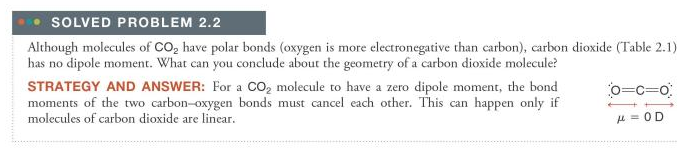
Each chapter has explanations of concepts with Practice Problems and Solved Problems scattered throughout the reading. (Solved Problems essentially model what you are supposed to be doing in the Practice Problems.) At the end of each chapter, there is a summary of the chapter and more Problems, the answers to which are in the accompanying solutions manual and study guide, sold separately. (The textbook includes just an eight-page “Answers to Selected Problems” appendix.) The full solutions manual is essential for making your way through this textbook.

Solved Problem
Example of a Solved Problem

“A Mechanism for the Reaction” boxes appear throughout the book (beginning in chapter 3). These show

step-by-step details about how reactions take place so that students have the tools to understand rather than memorize organic reactions.

These boxes helped me really understand the mechanisms and do a lot better at solving the problems. The Table of Contents includes a listing of all the places they appear.

There is also a “Concept Map” at the end of a number of chapters, which shows how the concepts are connected and relate to each other. I found this to be an excellent study tool and aid to solidifying what I had read in the chapter. This is part of the “Summary and Review Tools” that the authors include in an attempt to “accommodate diverse learning styles.”

Organic Chem_Summary and Review Tools
End-of-Chapter Summary Section, Chapter 6 (Ionic Reactions)


New in the 11th Edition


In this 11th edition there is the addition of a section called “Why Do These Topics Matter?” This feature seeks to “show the rich relevance of what students have learned to applications that have direct bearing on our lives and wellbeing.” For example, in chapter 10, the authors note:

[T]here is a natural molecule that combines radical chemistry and molecular shape in a way that can cause cell death. Chemists have used this knowledge to fashion a few anticancer drugs.

Personally, I was so focused on the class itself that I found myself skipping over a lot of these. They’re well-done, though, and others may appreciate their inclusion. Students can, after all, have a hard time connecting organic chemistry to the “real world,” and it’s easy to get stuck in the details (“Its melting point changed!”) with little awareness of the concepts’ larger import. So I see why they took this approach; I think it’s a smart one.


What I Found Helpful


In a nutshell, here is what I found most useful about the book:

  • The graphics and drawings of molecules are conceptually clear and a good aid to learning.
  • The chapter on infrared spectroscopy is a good one–this is potentially itself a whole additional course.
  • The writing is straightforward and clear. As I read the book, I could tell it is a revision of a revision of a revision….
  • Organic Chemistry prepared me very well for taking the American Chemical Society standard exam.
  • It helped reinforce the lectures in the class.


Minor Points of Critique


The pictures at the beginnings of the chapters feel a little out of place. For example, chapter 10 (“Radical Reactions”) begins with a picture of a bowl of blueberries. Granted, this is present because blueberries are an example of an antioxidant, to be covered in that chapter, but some of these images don’t feel aesthetically consistent with the rest of what’s in the book. The graphics and overall design and layout are consistent and well-executed; it’s just that the photos (including the cover photograph) feel a bit off, compared with the rest of the book’s design. All told, however, this is a minor critique.

The binding appears to be glued (not sewn), which is unfortunate for a book of this magnitude. I didn’t carry it around that much (at over 1,000 pages, it’s heavy–to be expected), but it’s still in good shape after a year of use at home. There is an e-book option for those who are willing to be at as screen more often.
 

Concluding Evaluation

 
Organic Chemistry is a very solid teaching of the core concepts and mechanisms of organic chemistry. To professors who are considering a course text, this one is a worthy choice. To students who are considering (or have been assigned) this text, a book like this requires diligence to get through, but it will serve you well!
 
Find Organic Chemistry at Amazon here (affiliate link) and at Wiley’s site here.

Mother Teresa: Some Difficult Words

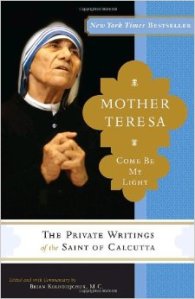
Mother TeresaThese are good but difficult words from Mother Teresa. They were noted today on Plough, the Website where I mentioned finding the free Oscar Romero book. I’ve just subscribed to Plough Quarterly and am already enjoying the content of the site greatly.

Today I came across this arresting, powerful, and difficult quote from Mother Teresa:

God cannot fill what is full. He can fill only emptiness – deep poverty – and your “yes” [to Jesus] is the beginning of being or becoming empty. It is not how much we really “have” to give – but how empty we are – so that we can receive fully in our life and let him live his life in us. In you today, he wants to relive his complete submission to his father – allow him to do so. Take away your eyes from yourself and rejoice that you have nothing.