From the Publishers Who Brought Us The Sacred Bridge: In the Master’s Steps

In the Master's StepsFar and away, The Sacred Bridge is the best Bible atlas–and one of the most impressive books–I’ve ever used. Now Carta is beginning to publish bite-sized adaptations from that massive and beautiful work. In the Master’s Steps: The Gospels in the Land is Volume 1 of The Carta New Testament Atlas, to be released in four total volumes. In the Master’s Steps is “partially excerpted” from The Sacred Bridge (TSB). (EDIT/UPDATE: Volume 2 will not be an excerpt from TSB–it’s a new work.)

The hope of the book, author R. Steven Notley writes, “is that a better understanding of the physical setting and events that framed the life of Jesus can assist us to hear more clearly the message he proclaimed.” Or, as St. Jerome puts it (quoted in this book):

Five gospels record the life of Jesus. Four you will find in books and the one you will find in the land they call Holy. Read the fifth gospel and the world of the four will open to you.

Those of us who have not yet had occasion to travel to Israel will have to settle for books such as Notley’s. However, as one makes her or his way through Notley’s careful writing, the vivid images, and the flawlessly rendered maps–one realizes there is no settling with this book. It’s the next best thing until such a day as one can make it to the Holy Land.

This book does not differ very much from its corresponding TSB sections, though this one is intended for a wider, more popular audience. Owners of TSB do not need to buy this volume, which does, however, carry with it the advantage of being portable, affordable, and concisely addressing the life of Jesus. If you don’t have TSB and are interested in geography and the New Testament, definitely pick up this work.

A few highlights in review:

Like all Carta books I’ve put my hands on, this one is of high quality. It’s paperback, but the thick, semi-glossy paper helps the full-color images really pop, and is perfect for making marginal notes in pencil.

As with The Sacred Bridge there is an index of place names, but not an index of Scripture references. Notley includes plenty of references, especially at the multiple points where he seeks to explain what could be, in fact, a harmony of apparently divergent gospel accounts when it comes to certain geographical details. Or if no harmonization is possible, Notley at least offers side-by-side comparisons.

The content of In the Master’s Steps is culled from chapter 22 of The Sacred Bridge, which, as it turns out, is the chapter I chose to profile most in-depth in my TSB review. Rather than repeat myself here, I simply refer you to my section 4 (“Case Study: The Sacred Bridge on The Holy Gospels”) here. Most, if not all, of what I say about the content there would apply to this book under review.

Here are the chapters of In the Master’s Steps:

  1. The Birth of Jesus and the Flight into Egypt
  2. The Ministry of John and the Baptism of Jesus
  3. The Travels of Jesus
  4. The Sea of Galilee: Development of an Early Christian Toponym
  5. The First-century Environs of the Sea of Galilee
  6. The Last Days of Jesus
  7. Jesus and the Myth of an Essene Quarter in Jerusalem
  8. The Arrest and Death of Jesus
  9. From the Empty Tomb to the Road to Emmaus

Okay, I will quote this one helpful paragraph that leads off chapter 5 of In The Master’s Steps:

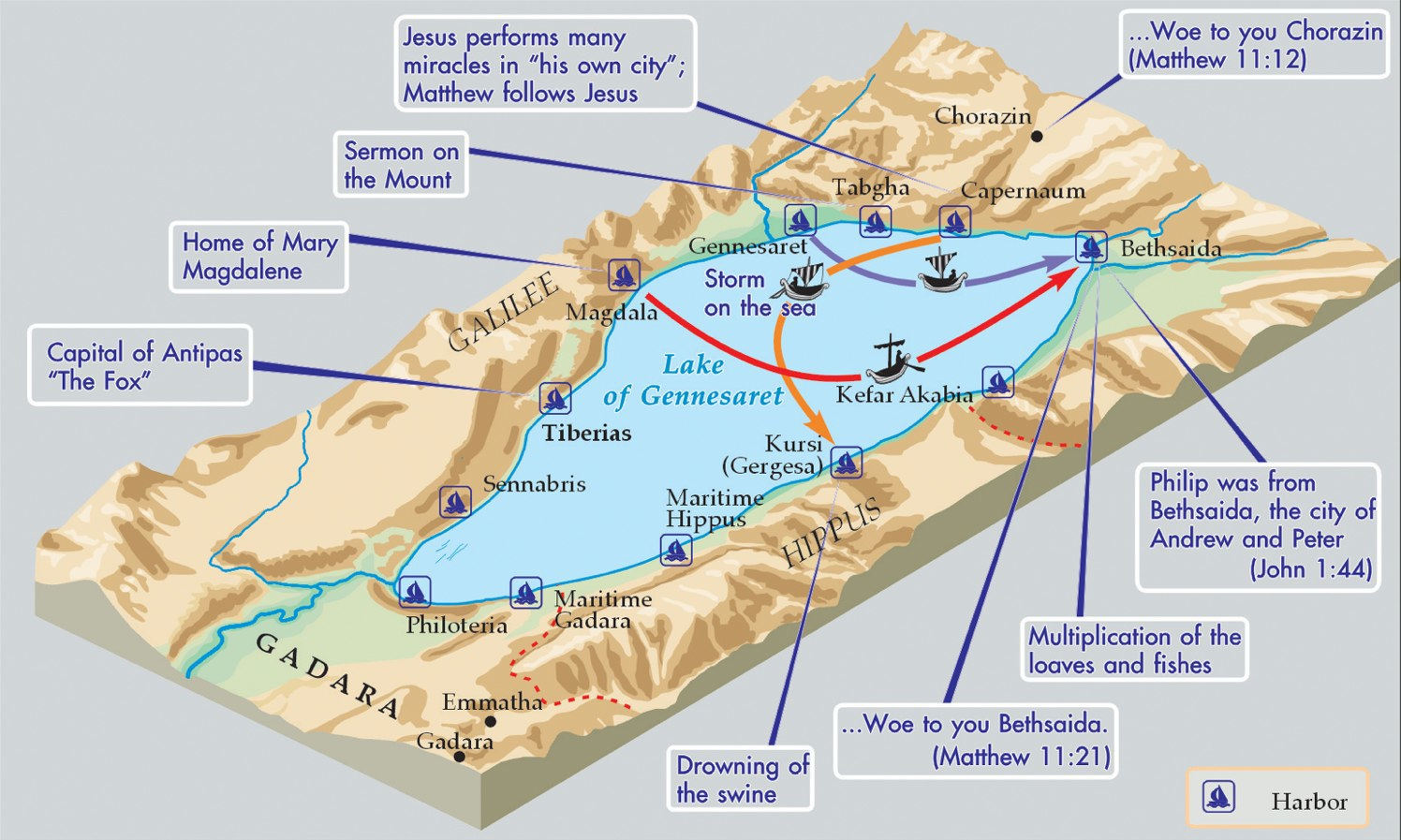
Events recorded in the ministry of Jesus outside of Jerusalem are primarily located in the region around the Sea of Galilee, specifically in the north and northwest area of the lake. The Gospels are an important historical witness for Jewish settlement in this region. Scholarship seldom notes that for many of these settlements, their first mention in the literary witnesses is in the New Testament. After a confrontation in the synagogue in Nazareth, his boyhood home, Jesus relocated to Capernaum on the Sea of Galilee (Mt 4:13; Mk 1:21; Lk 4:31). This village would become the center of his ministry in the region. We now turn our attention to settlements around the Sea of Galilee that find mention in the New Testament.

Here is a sample of the graphics and maps to be enjoyed (click on each image to enlarge):
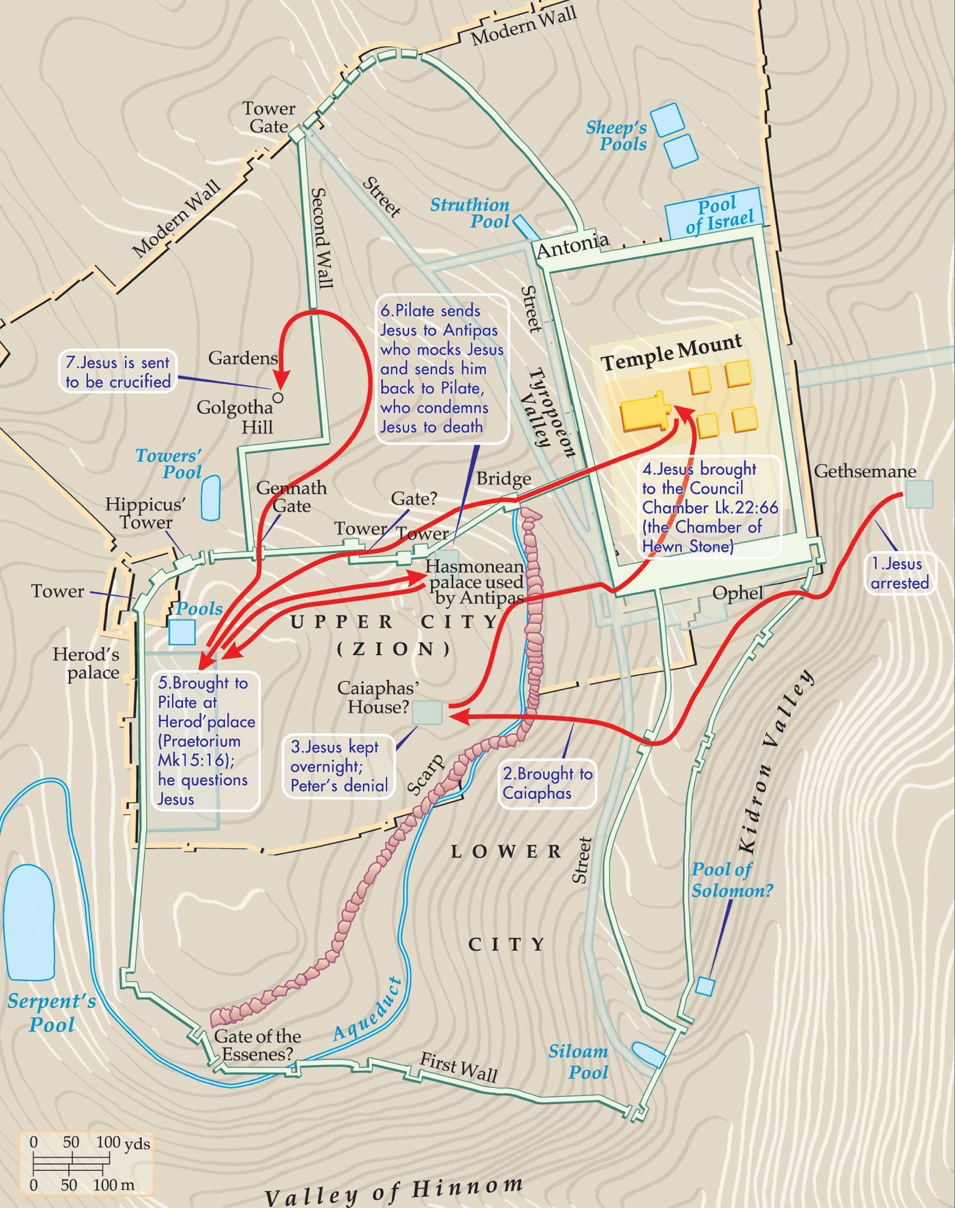
 

Last Days of Jesus
Carta Caption: The arrest, interrogation and execution of Jesus


Around the Lake of Gennesaret (Sea of Galilee) (Carta's caption)
Around the Sea of Galilee (Carta’s caption)


To book’s hope, to revisit it again, “is that a better understanding of the physical setting and events that framed the life of Jesus can assist us to hear more clearly the message he proclaimed.” Reading through In the Master’s Steps will certainly offer such an understanding for the teacher, student, reader, or person of faith who picks up the book. The connections between geography and theological applications are not often made explicit here, but the reader will have more than enough historical background and imagery to begin to make those associations for herself or himself.


Many thanks to the good folks at Carta for sending the book. They didn’t ask for a review, so I write this of my own volition! I think they are one of the finest publishers in the business today. Check out their site here, and go here to see their works via Hendrickson, their U.S. distributor.

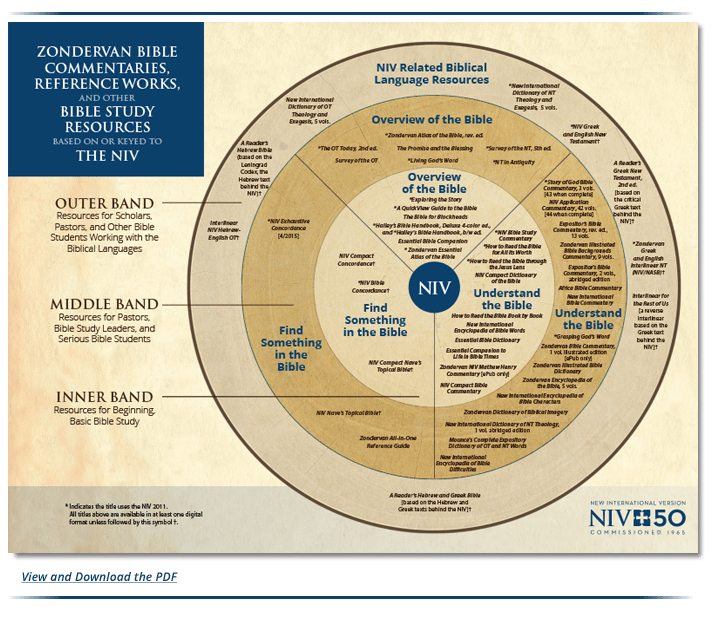
The NIV’s 50th Anniversary

NIV Wheel Graphic


Whether it was for summer camp or Bible quizzing, I grew up memorizing the (1984) New International Version. And, yes, I’m still quite fond of the unfortunately discontinued TNIV. Now Zondervan no longer publishes the 1984 NIV, nor the TNIV–instead, the 2011 update to the NIV is the current version.

You might not realize that the NIV is 50 years old this year. Here’s a recent press release:

In 1965, the Committee on Bible Translation took on the most massive translation project of modern times: to prepare a contemporary English translation of the Bible from the best available original manuscripts. Since its release in 1978, the NIV has become the world’s most read and most trusted modern-English Bible translation with over 450 million copies distributed worldwide. Upon the 1978 release of the NIV, readers were ecstatic that they could finally understand the Word of God in contemporary language.

This anniversary got onto my radar screen when I came across the new NIV 50th anniversary app. What I didn’t know till the other day is that the NIV Study Bible is the best-selling study Bible in the last 30 years.

Here’s a video with some recognizable names discussing the work of the Committee on Bible Translation, who produced the NIV:


You can read more about the NIV here.


Disclosure of Material Connection: A Zondervan rep approached me with an invitation/encouragement to post about the NIV, and offered to send an NIV Study Bible. I plan to post about that in due course, too, once I receive it. While I do appreciate the 2011 NIV over the 1984 NIV in a number of ways, said “Material Connection” has not diminished the place in my heart that the TNIV will always have.

This is Why I’m Behind on my 2015 Bible-in-a-Year Reading Plan

JPS Torah ExodusThe reason I’m so far behind on my Bible in a Year reading plan is that I’ve been reading Genesis, Exodus, and Leviticus via the JPS Torah Commentary volumes. No, I’m not reading the Hebrew alongside the English–it’s just that the introductions, essays, and verse-by-verse notes are so gripping and elucidating, that I am moving more slowly through the Torah than my plan dictates. (I’m still on track for Bible in Two Years–maybe.)

With the exception of a few chapters, my recent reading of Exodus was all from Nahum Sarna’s volume, which, like other JPS Torah volumes, has all of the following:

  • the full Hebrew text of Exodus, with vowel points and cantillation marks,
  • an English translation (the Jewish Publication Society’s New JPS translation)
  • commentary that addresses the text and its background at the section-by-section, phrase-by-phrase, and word-by-word level
  • an introduction and excursuses
  • sewn binding and beautiful construction

Sarna begins with just a 5-page (!) introduction. Leviticus in the same series, by contrast, has a 30-page introduction. Sarna discusses the book’s title, the division of Torah readings, the book’s setting and events, and it’s “contents and character.” Broadly speaking, Sarna divides Exodus like this:

  1. Exodus 1:1-15:21–oppression and liberation
  2. Exodus 15:22-18:27–toward Sinai
  3. Exodus 19-40–at Sinai

He notes that Exodus’s “influence is due to the special orientation and perspective of Exodus. It is a document of faith, not a dispassionate, secular report of the freeing of an oppressed people.” (Again–I love this guy’s writing style.)

Sarna blends what I experienced as a faith-filled and a critical approach to understanding Scripture. He understands God in the book as “the sole actor, the only initiator of events.” In addition to verse-by-verse and phrase-by-phrase commentary (sometimes down to the word level), Sarna sets up each chapter with a short introduction, which is always good and always useful.

The glossary, which takes up almost as many pages as the introduction, gives a really helpful orientation to readers like me, who keep needing reminders on the distinctions between Talmud and Targum, Mishnah and Mekhilta, Rambam and Ramban.

Sarna’s Exodus commentary does not initially seem to be as thorough as his Genesis volume. (Here there are six as opposed to 30 excursuses at the back of the commentary.) On the other hand that short introduction allows the reader to get into the text right away with Sarna, who makes up for the initial brevity of his work along the way. In the end I found that the comments really did seem to be just the right amount of detail for the kind of reading I was doing of the text–Sarna had addressed nearly all my questions by the time I made it through Exodus 40.

And Sarna’s comments are delivered beautifully. On Israel’s response of faith to the LORD’s “wondrous power” in Exodus 14:31, Sarna writes:

“Faith” in the Hebrew Bible is not belief in a doctrine or subscription to a creed. Rather, it refers to trust and loyalty that finds expression in obedience and commitment.

The commentary on the following chapter of Exodus 15–the one with the “Song at the Sea”–is one of the most moving, incisive, and compelling commentary sections I’ve ever read… and why I’m so far behind on that reading plan!

By way of critique, I only offer two things: (1) a few places could have benefited from more exegetical or grammatical-historical detail and (2) having Sarna’s detailed outline of Exodus all in one place–beyond what’s in the Table of Contents and section headings throughout the book–would have enhanced the introduction. His passage divisions are clear enough throughout the book, but I found myself wanting a summary sketch of Exodus all in one place for quick reference.

When I preach or teach on Exodus (or when I just want to remember what I sensed God speaking to me when reading through Exodus this spring), I will reach first for this exceptional volume.

If you want to look more in-depth with me at the body of the commentary, I interacted a bit with Sarna’s take on the 10 plagues here.


Many thanks to the folks at University of Nebraska Press/Jewish Publication Society for sending me the copy of the Exodus commentary for review. The book’s JPS product page is here; you can order it through Nebraska Press here. Find it on Amazon here.

Prefer an electronic edition? Accordance has the JPS Torah Commentary here.

Big-Time Deals on NIV Application Commentaries (NIVAC) in Accordance, Logos, and Olive Tree

NIVAC Accordance sale


Zondervan’s NIV Application Commentary series is on mega-sale, with each of the ebooks selling at $7.99 in Accordance, Logos, and Olive Tree.

I really liked Psalms vol. 1 in this series. The Genesis, Luke, and Galatians volumes were stand-by commentaries when I preached through those books, too.

Here is where you can find more details on the sale, which Zondervan rarely offers in any other e-format than Kindle:

Accordance // Logos // Olive Tree

The Best Bible Atlas Ever, Cheaper Than It’s Ever Been

Front Cover


The best Bible atlas ever, Carta’s Sacred Bridge, is now cheaper than it’s ever been, thanks to a new distribution partnership between Carta Jerusalem and Hendrickson Publishers.

You can find it, for under $90, here at Hendrickson’s site. The accompanying younger sibling volume, Carta’s New Century Handbook and Atlas of the Bible, is $37.

HT: Brian Davidson.

Book Notice: The T&T Clark Companion to the Septuagint


I8 months ago I learned about the T & T Clark Companion to the Septuagint. It has now been released as an ebook in pdf form, available here, with the hard copy to be published very soon. You can pre-order through Bloomsbury here or through Amazon here.

The Companion is unique in Septuagint studies in that it offers a “handy summary of features for each of the Septuagint books” of the Bible. Here’s part of the publisher’s description of the book:

This Companion provides a cutting-edge survey of scholarly opinion on the Septuagint text of each biblical book. It covers the characteristics of each Septuagint book, its translation features, origins, text-critical problems and history. As such it provides a comprehensive companion to the Septuagint, featuring contributions from experts in the field.

And here’s a snippet from Genesis, via the Google Book preview:


LXX Companion Genesis

I’m looking forward to checking it out–it looks like it will be a welcome contribution for those of us who want to learn more about the Septuagint.

A Seven-Syllable, Emphatic Word of Praise

One thing that continually impresses me about Greek is its preponderance of multisyllabic words.

Much of this has to do with how its verbs are conjugated. The four-syllable verb μεγαλυνω, for example, when inflected in Psalm 19:8 (Psalm 20:7 in English Bibles), becomes a majestic seven-syllable ending to an already beautiful verse:

ουτοι εν αρμασιν και ουτοι εν ιπποις,
ημεις δε εν ονοματι κυριου θεου ημων μεγαλυνθησομεθα.

Here is an English translation:

These ones take pride in chariots, and these ones in horses,
But as for us, we will find glory in the name of the Lord!

Though I’m a week behind on the reading plan, little gems like this make reading the Greek Psalms in a Year well worth the effort.

The JPS Bible Commentary on Exodus: Sarna Does it Again

JPS Torah ExodusI’ve come to Nahum Sarna’s JPS Torah Commentary on Exodus with high expectations. His Genesis volume in that series is one of the best commentaries I’ve read (on any book of the Bible).

So far, after spending long periods of my last Sabbath with the book, it’s lived up to expectations.

While I work on a review of the full volume, here are a couple compelling sections of Sarna’s commentary on the 10 plagues:

The present narrative is a sophisticated and symmetric literary structure with a pattern of three groups each comprising three plagues. The climactic tenth plague possesses a character all its own. The first two afflictions in each triad are forewarned; the last always strikes suddenly, unannounced. Furthermore, in the case of the first, fourth, and seventh plagues Pharaoh is informed in the morning and Moses is told to “station” himself before the king, whereas in the second of each series Moses is told to “come in before Pharaoh,” that is, to confront him in the palace. Finally, in the first triad of plagues it is always Aaron who is the effective agent; in the third, it is always Moses.

Having this literary outline in mind made me really appreciate the narrative artistry of Exodus in a way I might have otherwise missed.

Not only does Sarna offer expert literary analysis, his writing itself is lucid and reads more like a compelling novel than what you might expect from a technical commentary. That Chaim Potok is the literary editor of the JPS Torah Commentary does not hurt, either! It shows.

Sarna strikes an interesting balance between (a) reading the plagues as God’s using natural events and (b) reading the plagues as purely supernatural. Regardless of how the reader understands the text in this regard, Sarna highlights the theological import of the plagues:

The controlling purpose behind this literary architecture is to emphasize the idea that the nine plagues are not random vicissitudes of nature; although they are natural disasters, they are the deliberate and purposeful acts of divine will–their intent being retributive, coercive, and educative. As God’s judgments on Egypt for the enslavement of the Israelites, they are meant to crush Pharaoh’s resistance to their liberation. They are to demonstrate to Egypt the impotence of its gods and, by contrast, the incomparability of YHVH, God of Israel, as the one supreme sovereign God of Creation, who uses the phenomena of the natural order for His own purposes.

Plague by plague Sarna returns to this theme and draws it out.

I’m 12 chapters in (out of 40) and am appreciating Sarna’s wisdom on Exodus as much as his excellent work on Genesis. More to follow.


Many thanks to the folks at University of Nebraska Press/Jewish Publication Society for sending me the copy of the Exodus commentary for review. The book’s JPS product page is here; you can order it through Nebraska Press here. Find it on Amazon here.

Prefer an electronic edition? Accordance has the JPS Torah Commentary here.

Debate: The Lifeblood of Judaism, a “Holy Act”

Phenomenology of SpiritEver since reading Hegel’s Phenomenology of Spirit in my undergrad days, I’ve often considered the world through the lens of Hegel’s dialectic. Plus, I always thought (and still think, if my sermon yesterday is an indication) it sounded really cool to talk about the “Hegelian dialectic” at work in the world. Yes, a little pretentious, too.

Dialecticophile that I am, I resonate with Rabbi Barry L. Schwartz’s idea that in Judaism, debate (thesis/antithesis) is “more than a valued intellectual exercise…. it is a holy act.”

What a refreshing outlook for anyone who grew up in religious settings that discouraged asking questions!

Schwartz’s Judaism’s Great Debates: Timeless Controversies from Abraham to Herzl (Jewish Publication Society, 2012) considers 10 debates in Judaism. He splits the book into three sections: Biblical Judaism, Rabbinic Judaism, and Modern Judaism. The 10 debates he considers are far-ranging: theological, ethical, legal, spiritual, and sociopolitical.

Here’s the publisher’s description of the book:

Ever since Abraham’s famous argument with God, Judaism has been full of debate. Moses and Korah, David and Nathan, Hillel and Shammai, the Vilna Gaon and the Ba’al Shem Tov, Spinoza and the Amsterdam Rabbis . . . the list goes on. Jews debate justice, authority, inclusion, spirituality, resistance, evolution, Zionism, and more. No wonder that Judaism cherishes the expression machloket l’shem shamayim, “an argument for the sake of heaven.”

Judaism's Great DebatesEach of the 10 debates comes to a head with a question that Schwartz considers. For example, the conflict between David and Nathan in chapter 4 considers the question, “Does Might Make Right? The Debate over Accountability and Morality.”

Schwartz helps the debates come alive by blending direct quotes from the Hebrew Bible or other primary source (in italics) with his own “added dialogue” (in regular print). As reluctant as a Bible-lover like myself might be to see words added to a biblical story, Schwartz does this with great reverence and care, in a way that really draws out the characters.

David, in Schwartz’s rendition of Nathan’s calling him out in 2 Samuel 11-12, for example, says, “What are you talking about? I am the king!”

That same chapter refers to prophets as those who “speak truth to power.” Schwartz puts it well:

The prophets were equal-opportunity gadflies; they clashed with kings and countrymen alike.

Issues for modern-day Judaism are included here, too–whether full inclusion of women (as in the Reform movement) or whether holiness is individually ascribed or somehow taken on by osmosis as member of a community. Each debate includes coverage of its original context (“the basic historical backdrop”), content (with emphasis on primary sources), and continuity (“how they echo throughout Jewish history”).

Judaism’s Great Debates would be great for a class or small group setting. Its reflection and discussion questions on p. 99 and following are thought-provoking and much better-written than most discussion questions at the back of a short book like this. (Any Palestinian Jews or Christians reading this book will probably be put off by what come across as pointed questions like, “Are civilians who aid terrorists innocent and deserving of noncombatant immunity?” and, “Should Israel negotiate with sworn terrorist organizations?”)

One other drawback (and the drawbacks are few) is the appearance of typos and some errant punctuation marks every few pages or so. This does not detract, though, from the overall high quality of the writing.

Anyone who wants to know more about Judaism–or anyone with a religious background of any type–will appreciate Schwartz’s boldness, even if it’s alarming:

Abraham’s bold challenge of God for the sake of justice was the first Jewish debate. Generations would look back at the founder of the Jewish people and follow his example. If Abraham argued, so should we. If Abraham had the courage to challenge God, so should we. If Abraham stood up for justice, so should we.

I would love to hear Rabbi Schwartz treat how we hold that reality in tension with the story of Job, whom God does not seem to appreciate being challenged by. That would be an interesting debate to have!

Here‘s an excerpt from the book. I found myself making a lot of pencil notes in the margins, which is a good sign of a book’s ability to engage its readers! It’s a book well worth reading and thinking through.

Thanks to the Jewish Publication Society for the review copy of the book! You can find Judaism’s Great Debates here at the publisher’s page or here at Amazon. See also my book note on the JPS Torah Commentary volume on Genesis, and my review of the JPS Commentary on Jonah.

Greek Psalms: Some Standout Verses So Far


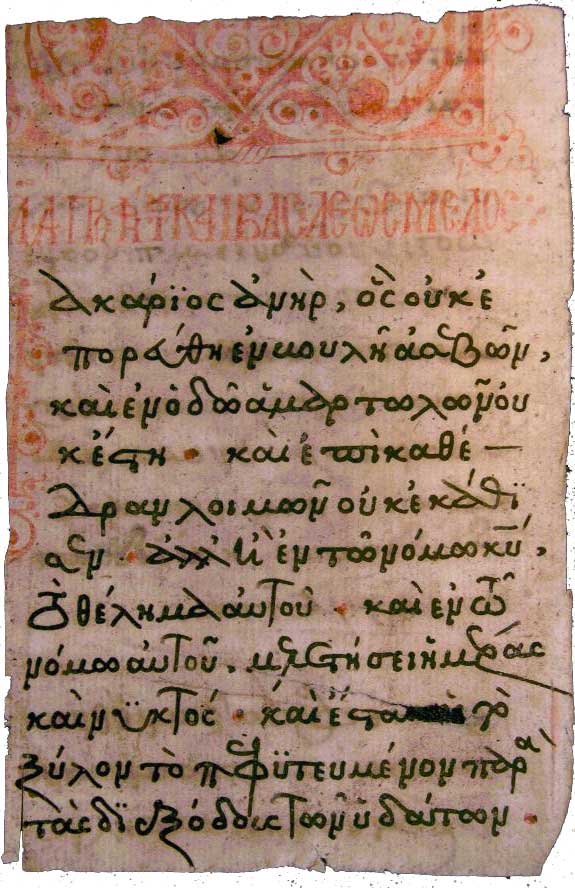
LXX Psalm 1
 LXX Psalm 1

Greek Psalms in a Year is almost through its first month. Here are some verses that have really stuck with me, both in the Greek and with the NETS (New English Translation of the Septuagint) translation. All references below are according to the Septuagint versification:

Psalm 3:4

συ δε, κυριε, αντιλημπτωρ μου ει, 

δοξα μου και υψων την κεφαλην μου.


But you, O Lord, you are my supporter,

my glory, and one who lifts up my head.


Psalm 9:10-12

και εγενετο κυριος καταφυγη τω πενητι, 

βοηθος εν ευκαιριαις εν θλιψει· 

και ελπισατωσαν επι σε οι γινωσκοντες το ονομα σου, 

οτι ουκ εγκατελιπες τους εκζητουντας σε, κυριε. 

ψαλατε τω κυριω τω κατοικουντι εν Σιων, 

αναγγειλατε εν τοις εθνεσιν τα επιτηδευματα αυτου,


And the Lord became a refuge for the needy,

a helper at opportune times in affliction. 

And let those who know your name hope in you,

because you did not forsake those who seek you, O Lord. 

Make music to the Lord, who resides in Sion.

Declare his practices among the nations,


Psalm 9:19

οτι ουκ εις τελος επιλησθησεται ο πτωχος, 

η υπομονη των πενητων ουκ απολειται εις τον αιωνα.


Because the poor shall not be completely forgotten,

the endurance of the needy shall not perish forever.


There are others, too, but Psalm 9 especially—with its focus on God’s compassion for the poor—struck me as important… and convicting.