You order now through CBD or Amazon… OR… if you want it at 50% off, you can go to Hendrickson’s booth at the upcoming ETS (booth 222) and SBL/AAR (booth 718) conferences, and find it in its two different bindings, priced at $29.97 (from $59.95 retail) and $39.97 (from $79.95).
Working with the Göttingen Septuagint is not for the faint of heart, as I have noted before–though I have offered a couple of widely read (and hopefully helpful) posts on how to read and understand LXX-G.
New Göttingen volumes are not frequent; to publish one involves a great deal of work on the part of the editor.
Just this fall, under the editing of Robert Hanhart, publisher Vandenhoeck & Ruprecht released the 2 Chronicles Göttingen volume:
Here’s a screengrab of part of a page from a Google Book preview. The volume has the familiar font and layout of (a) critically reconstructed Greek text, (b) Kopfleiste (manuscript Source List), and (c) textual apparatus:
This is the first-ever critical edition of the volume Paralipomenon II and represents a major step in the continued publication of the oldest Septuagint text available.
For this critical edition of the oldest available Septuagint text, the editor consulted Greek papyri predating the Christian era (3rd/2nd century BC), minuscule scripts from the 16th century AD as well as other Latin, Coptic, Syrian, Ethiopian and Armenic secondary translations. He also included Septuagint quotes stemming from Church authors in both Greek and Latin as well as the printed editions of the Septuagint from the 16th to the 20th century. This critical edition of the Paralipomenon II represents the continuation of the publication of the critical edition of the oldest Septuagint text available.
You can find the volume here at V & R and here at Amazon.
Is The Sacred Bridgethe best Bible atlas ever? To be fair, people consult atlases for different purposes. But for the one–academic or otherwise–who wants to dig deeply into the historical geography of the biblical world, what’s the best resource available?
I believe the reviewer should evaluate a work according to its merits in relation to the aims of the work. It would not be fair, for example, to criticize a popular commentary for not being technical enough, nor to criticize a work explicitly focusing on the Greek text of a biblical book for not including enough historical background.
So it is perhaps a bit odd that I come to a review of The Sacred Bridge: Carta’s Atlas of the Biblical World (hereafter, TSB) with the question: Is it the best Bible atlas ever? It does not explicitly claim it is, nor self-consciously attempt to be. However, some copy by its publisher, Carta Jerusalem, does read, in part:
The Sacred Bridge will be the Bible Atlas of Record and Standard Work for the coming decades. Exhaustive in scope and rich in detail, with its comprehensive documentation of the Near Eastern Background to Biblical History, this latest Bible Atlas from Carta is one more stepping stone on the way to the study and understanding of the Holy Scriptures.
TSB‘s reputation precedes it. Readers of this blog know that I’m a daily user of Accordance Bible Software. It was from the Accordance User Forums that I first learned about The Sacred Bridge. Almost every mention hailed it as the best, most comprehensive Bible atlas there is. So, naturally, I was eager to test that claim for myself.
In this post I review Carta’s impressive atlas. SPOILER ALERT: The answer to my “Is it the best?” question is… yes.
Such a monumental work deserves an attentive and thorough review, which I offer here as best I can. This will not be a short review, but my aim is for anyone reading it to be able to decide whether to add TSB to their own personal arsenal of resources for reading and study. The review will follow this outline:
Orientation to Orienteering with TSB: What are the ways one can (begin to) use the atlas? I suggest four.
TSB‘s Construction, Layout, and Text: How is the presentation and typesetting in the atlas?
Maps, Images, and Tables: Are the images of high quality? Are they easy to read?
Case Study: The Sacred Bridge on The Holy Gospels: I interact more closely with an individual chapter, Chapter 22: “Historical Geography of the Gospels.”
The Younger Sibling of TSB: Here I point out and briefly comment on Carta’sNew Century Handbook and Atlas of the Bible, which is essentially a condensation of (or, set of selections from) The Sacred Bridge.
A Few Points of Critique: Though this atlas would be difficult to make much better, I offer a few minor suggestions.
Excursus: My Seven-Year-Old Son Loved It: This is true–I have a picture to prove it.
1. Orientation to Orienteering with TSB
A. The Jump-Right-In Method
One way to begin using The Sacred Bridge is to do what I did when I first received it: open it up and start flipping through it.
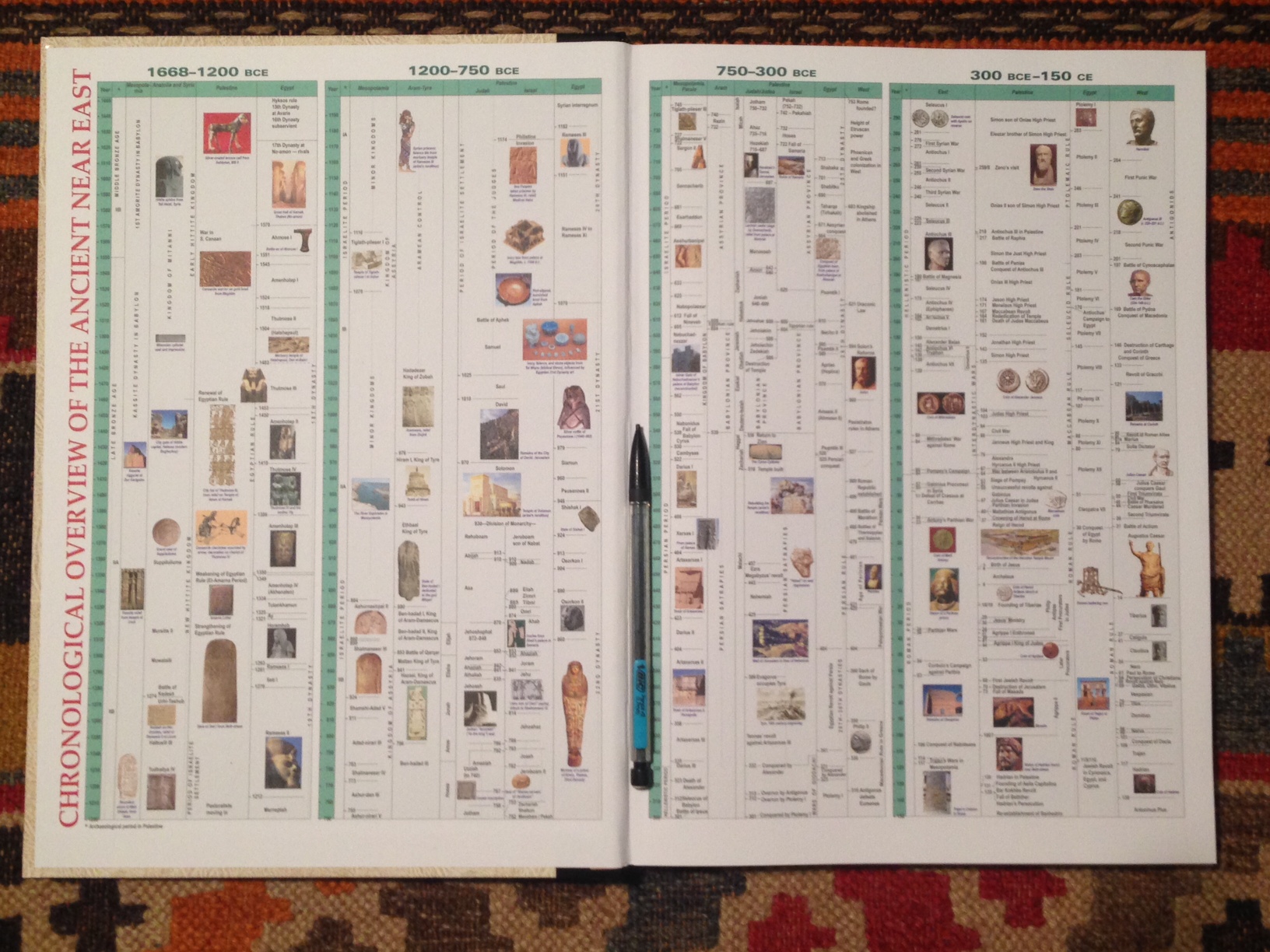
This impressive, detailed timeline greets the reader inside the front and back covers (“Chronological Overview of the Ancient Near East”):
You probably won’t be able to see much detail in the image above, but it’s legible when you’ve got it in front of you.
The Table of Contents are worth perusing, available from Carta here (PDF) or from Eisenbrauns (the North American distributor of TSB) by clicking through from the product page. One immediately notices that the atlas covers from the fourth millennium BCE through the Bar Kochba Revolt (132-135 CE).
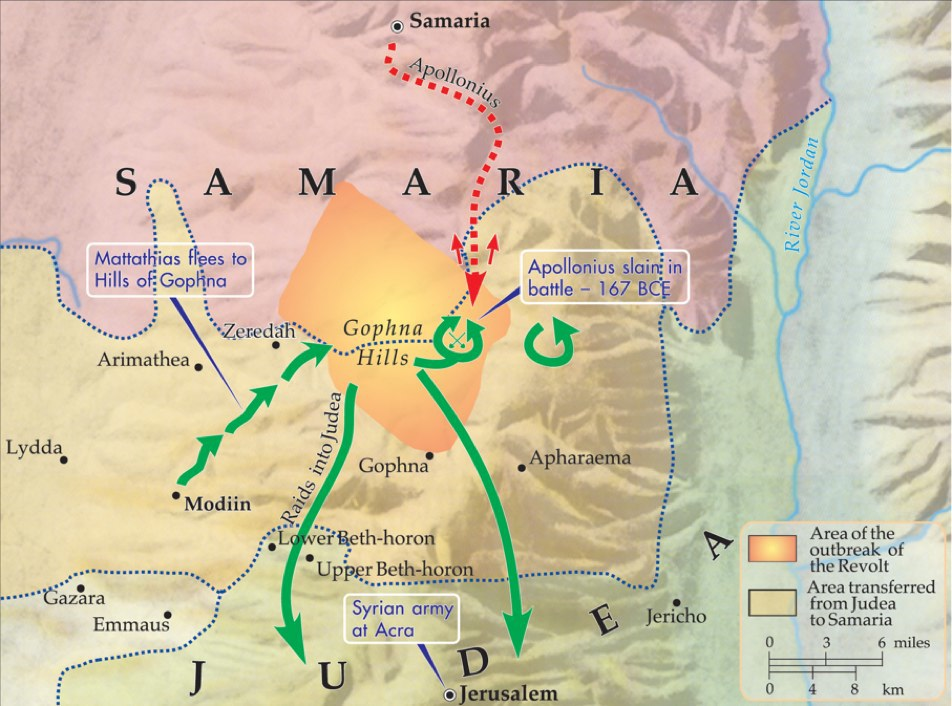
Given my interest in Septuagint studies and Maccabees, I opened right away to Chapter 18: “The Hasmonean Struggle for Independence (167-142 BCE).” It begins:
The response to Antiochus IV’s Hellenizing campaign was quick and forceful. The writings of Josephus and 1 Maccabees recount that Mattathias son of John, a priest and leader in the village of Modiin (el-Midya; Eus. Onom. 132:16; Notley and Safrai 2005:126 n. 703) near Lydda, was one of the first offered an opportunity to submit to the king’s edict (Ant. 12:265–271).
There is also this map, “The beginnings of the Hasmonean revolt, 167 BCE”:
And then, with the battle map in view, “The Early Battles” walks the reader through the battles mentioned in 1 Maccabees 3 and 4 (Gophna, Beth-horon, Emmaus, and Beth-zur), after which subsequent sections follow the Maccabean campaigns of 1 Macc. 5 and following. This particular chapter in TSB reads like a detailed and page-turning military history:
Jonathan’s political position was tenuous. His allies were dead, and the figure he had earlier opposed was now seated on the throne in Antioch. The high priest moved to take advantage of the political diversions in Syria and attacked the Citadel in Jerusalem. Perhaps, he assumed that Demetrius II would follow his father’s pledge to empty the bastion of the Seleucid garrison and turn it over to the high priest (1 Macc 10:32)—an offer his benefactor Alexander never matched. It seems that the son of Demetrius likewise thought it better to maintain a military presence in the Citadel and demanded the Hasmonean cease his hostilities.
B. The Read-the-Introductory-Material Method
Chapter 1, “Dimensions and Disciplines,” informs the reader what kind of book The Sacred Bridge is:
This is not meant to be a textbook in geography, not even biblical geography. It is an attempt to view the geographical setting through the eyes of the ancient inhabitants. It concentrates on the terms and places that have enjoyed their attention; it seeks to define them in terms of their ancient understanding.
In pursuit of this aim, the atlas draws on “every available documentary source, Egyptian, Akkadian, Moabite, Phoenician, Greek, Latin, Arabic, etc., that may provide geographical details and perspective.” Though the first chapter is dense and technical, it alerts the reader to the various kinds of sciences (ecology, hydrology, and so on) that constitute physical geography, as well as covers disciplines like historical philology and “grammatical analysis of ancient Semitic toponyms” (!).
Then, true to the goal of describing places “in terms of their ancient understanding,” the second chapter is short, readable, and informative, titled, “The Ancient World View.” It focuses especially on the economy and commerce of the ancient world.
Chapter 3, “The Land Bridge,” describes the Levant, demarcating just what land the “Sacred Bridge” refers to: “the eastern Mediterranean littoral (with somewhat more emphasis on the southern part).” The phrase “Sacred Bridge,” funnily enough, is only used in the title of this book.
C. The Is-This-Place-Name-from-This-Bible-Verse-Here? Method
Numbers 33:49 reads:
They camped by the Jordan from Beth-jeshimoth as far as Abel-shittim in the plains of Moab.
Where is Abel-shittim? I can look it up in the index to see the pages on which it occurs.
On page 124 I read, in part:
Abel-shittim is the same as Shittim (Num 25:1); its location was east of the Jordan and north of the Dead Sea.
Then follows a description of its two proposed sites. I find full-color maps with Abel-shittim clearly marked on pages 123, 125, and 137.
Elsewhere TSB notes Abel-shittim as one of a group of “names derived from some local plant or fruit.”
Remarkably, the index lists page numbers not just where a place name occurs in the text, but also where it occurs in a map. Mizpah and Memshath, for example, are both listed as occurring on page 239, but one cannot find them in the text. Rather, they are in the map. I was impressed to see the index keyed to both text and images.
D. The Get-It-in-Accordance Method
You can do a lot of helpful specific searches of TSB in Accordance. For example, when TSB cites Eusebius’s Onomasticon (a 4th century atlas), it has Onom. in parentheses as a citation. By selecting the search field of “Content” in Accordance and typing in “Onom”, I can find every time TSB cites the Onomasticon. Searching “Onomasticon” using the same field shows me all the times that it is mentioned by name in the body of the text. Then searching “Onom <OR> Onomasticon” (without the quotation marks) shows me results for both of the above searches. Very cool! Also praiseworthy is the fact that TSB cites Eusebius both in its original Greek and in English translation. TSB is, indeed, a rich atlas. Accordance makes searching it fast, useful, and–dare I say–fun.
There is perhaps one advantage to the print edition over the Accordance edition: the index mentioned above is not included as such in Accordance, and searches for place names in Accordance do not return results for where the place occurs within an image. However, this small loss is outweighed by the versatility and quickness (and multiple ways) with which one can navigate TSB in Accordance.
2. TSB‘s Construction, Layout, and Text
TSB emphasizes “the ancient written sources.” The authors write in their foreword:
In each case we attempted to interpret every ancient passage firsthand, from the native language. Anything less than this fails to meet the high standards of original research.
Though the authors’ frequent citation of and interaction with original languages are themselves impressive (Greek and Hebrew are only the beginning), just as impressive are the typographical requirements that such a standard implies. The original language fonts are color-coded for easy viewing, sized well, crisp, and highly readable. There is also, of course, the challenge of setting images, maps, and figures alongside copious text. If there were an Academy Award for typesetting, The Sacred Bridge would be a runaway Oscar winner. Any given page would make it in to the Typesetting Hall of Fame on the first ballot. Sound hyperbolic? Check this out (open in a new tab, then click to zoom in):
The layout and construction of the book (which has sewn binding, of course) are a work of impressive mastery.
TSB is not only the best Bible atlas there is, it’s also one of the most beautiful and impressive books I’ve opened. (Its dimensions are 9.25′ x 13′, or 24 x 33 cm. If future generations judge our generation by content and presentation of The Sacred Bridge, we will be deemed to have been an exceptional one.
If there’s anything to critique about the text and layout, it’s that there’s a lot of material on each three-columned page. But with such clean, readable fonts (that really only feel a bit small in each Excursus section), reading TSB for long periods of time is just fine.
As to this second edition’s having been “Emended & Enhanced,” some of the differences in the new edition are noted here at Todd Bolen’s fine blog.
3. Maps, Images, and Tables
The maps and images are of high quality and easy to read. They work well together with the text to help the reader understand, visualize, and situate ancient places in their historical and geographical contexts.
There is even Excursus 6.1 (“The Topographical List of Thutmose III”), a multi-page, 119-item table, including hieroglyphics. It looks great in print, and Accordance presents it nicely, too.
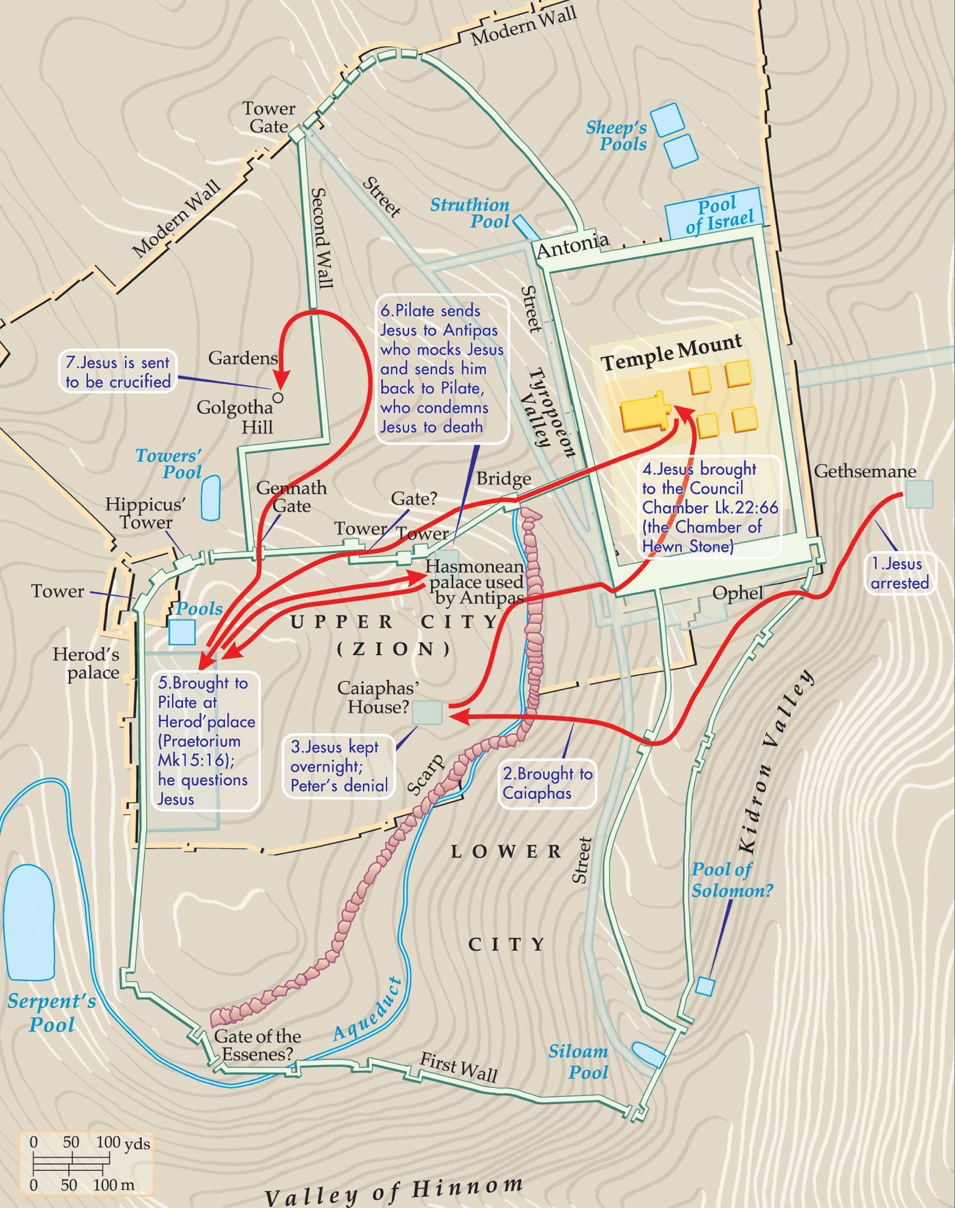
You can both read on and look above in this post to see some of the maps of TSB. Carta has deserved its reputation as a producer of excellent, detailed maps. Not only the place names but also the travel routes and event annotations kept me spending quite a few minutes at a time with any individual map, fully engaged and fascinated by its content.
This one is a current favorite:
TSB Caption: The arrest, interrogation and execution of Jesus
4. Case Study: The Sacred Bridge on The Holy Gospels
The thoroughness of The Sacred Bridge is evident throughout the atlas. In chapter 22, “Historical Geography of the Gospels,” R. Steven Notley looks at “significant events that may benefit from a historical and geographical reading of the text.” He points out: “In many instances the location and nature of the recorded sites have been lost in time.” But “modern archaeology together with a careful reading of the ancient witnesses” (especially Josephus in this chapter) give him a basis from which to elucidate the assumed geographical setting of the Gospel writers.
Here are the sections of the chapter on the Gospels:
The Birth of Jesus and the Flight into Egypt
The Geographical Setting for the Ministry of John and the Baptism of Jesus
From Nazareth to Capernaum
The Sea of Galilee: Development of an Early Christian Toponym
The First-century Environs of the Sea of Galilee
Literary and Geographical Contours of “The Great Omission”
The Last Days of Jesus
From the Empty Tomb to the Road to Emmaus
Excursus 22.1: Jesus and the Myth of an Essene Quarter in Jerusalem
This single chapter is some 30,000 words.
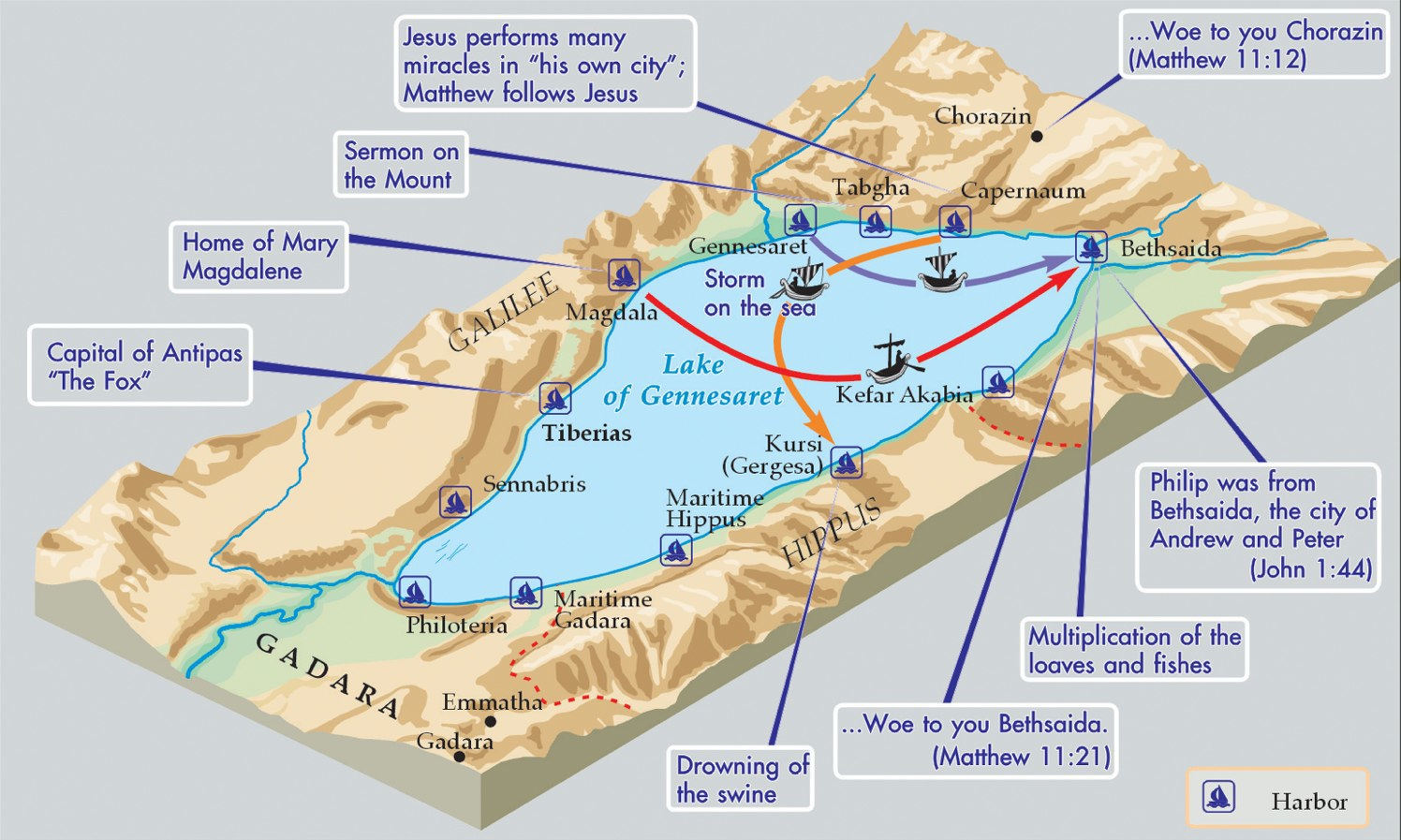
The most immediately useful part of the chapter was the 3-D map of the Lake of Gennesaret, also known as the Sea of Galilee. The map is followed in the text by descriptions of Tiberias, Capernaum, and the now elusive-to-locate Bethsaida. Here is the map, which you can click or open in a new tab/window to enlarge:
Around the Lake of Gennesaret (Sea of Galilee) (Carta’s caption)
And then there is the section, “The Sea of Galilee: Development of an Early Christian Toponym.” For as familiar as “the Sea of Galilee” is to the Christian lexicon, that place name only occurs, Notley rightly points out, in these verses: Matthew 4:18, 15:29; Mark 1:16, 3:7, 7:31; John 6:1. He convincingly notes:
The uncommon nature of this toponym is indicated in the Fourth Gospel by the Evangelist’s need to further define it with an additional genitive more familiar to his readers: “After this Jesus went to the other side of the Sea of Galilee [which is the Sea] of Tiberias” (Jn 6:1).
What then follows is an analysis of the references of Josephus, Pliny, and Maccabees to this lake. Notley’s command of Hebrew, Greek, Latin, and Aramaic help him to unpack for the reader, among other things, why this lake is called a “sea” (haven’t you always wondered?):
We are still left with the unusual application of the term θαλασσα by Matthew, Mark and John to the Lake of Gennesar, and the related question of the origins for the Christian toponym η θαλασσα της Γαλιλαιας (Mt 4:18, 15:29; Mk 1:16, 7:31; Jn 6:1). The name ים כנרת (Sea of Chinnereth) for the lake occurs three times in the Hebrew Scriptures (Num 34:11; Josh 12:3, 13:27) and is rendered by the Septuagint θαλασσα Χενερεθ (or Χεναρα).
But Notley is not convinced that Matthew, Mark, and John drew inspiration just from the Septuagint’s rendering of the Hebrew ים as θαλασσα.
Instead, the genesis for the Christian toponym may be indicated by Matthew’s scriptural citation immediately prior to his first use of the Sea of Galilee.
This uniquely “Christian toponym” of “the Sea of Galilee” has to do with how Matthew appropriated Isaiah 9:1:
Isaiah’s intentions notwithstanding, Matthew took advantage of the Septuagint’s rendering of the common noun גָּלִיל to read Galilee. Further, the Evangelist collapsed three widely divergent points of geographical reference to a single topos—the region around Capernaum that served as the locus for Jesus’ ministry.
And:
Drawing upon the Septuagintal vocabulary of Isaiah 9:1 (Θαλασσα and Γαλιλαια), the early Church created a new toponym that provided an elliptical allusion to Isaiah’s prophecy and underscored the biblical significance of the locus of Jesus’ ministry. If our observation is correct, we can now understand how the term Θαλασσα —which in the Septuagint’s translation of Isaiah initially spoke of the Mediterranean Sea—was transferred to another body of water, namely the Lake of Gennesar.
I appreciated Notley’s tentativeness in his conclusion (“If our observation is correct”). If the reader does not agree, she or he will still find Notley’s reasoning and detailed exposition compelling, even if a re-reading or two of his argument might be warranted. (And this is just one section of one chapter of The Sacred Bridge! The book is truly a gold mine.)
That’s not even to mention “The Last Days of Jesus,” a section in this same chapter that compellingly describes Jesus’ final journey to Jerusalem, culminating in his arrest and crucifixion. It is from this section that the graphic in my section 3 above comes.
5. The Younger Sibling of TSB
The Sacred Bridge is dense, technical, and not cheap. It’s worth its price ($120 retail, a little less at Amazon), but what about another way of accessing much of the same information and maps? TSB has a younger sibling, Carta’sNew Century Handbook and Atlas of the Bible (CNCHBAB).
CNCHBAB is less concerned than The Sacred Bridge is with “citing all available historical sources in their original languages.” The absence of such citations in “in their original script” is a main way in which the smaller Handbook differs from TSB.
Carta’s New Century Handbook and Atlas of the Bible is shorter, too. It omits almost all of the Excursuses of TSB, as well as omits a few whole chapters. The publisher describes it as “a select rather than a condensed version.” In “Historical Geography of the Gospels,” for example, TSB‘s detailed and technical (yet fascinating) section, “The Search for Bethsaida,” is left out altogether.
CNCHBAB is more accessible and cheaper (by about half) than The Sacred Bridge. There are entire sections in the Handbook and Atlas that appear verbatim as in The Sacred Bridge. This is good in terms of getting at the content of the latter, though not all potentially unfamiliar terminology has been explained or eliminated in the Handbook and Atlas:
The final phase of Herod’s palace in Jericho was the largest and most ornate. Concrete walls were faced with Roman-style plastering, opus reticulatum and opus quadratum, perhaps indicating the direct involvement of Roman builders and architects in the construction.
All the same, an advanced undergraduate course in religion or biblical studies could–with the guidance of the professor, as needed–make quite good use of Carta’s New Century Handbook and Atlas of the Bible for a textbook. For that matter, a seminary course could use it well, though any sort of doctoral studies–especially in archaeology or biblical geography–would call for use of the full Sacred Bridge.
6. A Few Points of Critique
My primary point of critique in using the print edition is that there is no Scripture reference index. It seems to me that one of the ways a person would come to the atlas is with a biblical verse or passage in mind, and want to find right away what TSB has on a passage under consideration. TSB in Accordance obviates the need for such an index, since one can use the Scripture search field to search the atlas by reference.
And this lack is not insurmountable in the print edition, as one can turn to the index to find any place names of interest in a particular passage. Besides, TSB covers so much primary literature, and deliberately seeks to address “every available documentary source,” such that to be true to its aim, a Scripture index would have to also be accompanied by other primary source indices. Given how many sources TSB cites, I understand the omission.
But, as noted in 1.C above, the index in TSB is well-produced, even without a Scripture index per se.
It would be unfair to fault an atlas with an academic audience for frequent use of technical terminology, so I point it out not as a critique, necessarily, but the reader should be advised of the need to know (or look up) words such as: steppe, opus reticulatum, legerdemain, sartorial, toparchy, etc. The occasional sentence, jargon aside, is lengthy and potentially difficult to follow on first read. But the overall style is readable and engaging.
7. EXCURSUS: My Seven-Year-Old Son Loved It
Bonus: TSB made for a good 20 minutes of bedtime reading with my seven-year-old son, shortly after I first received the atlas. (We’ve returned to it since then, too.) He knows the Hebrew alphabet and a little bit of Hebrew, and his Jewish friend at school had told him all about the Maccabees, so he loved looking and reading through the atlas with me! “Cool!” and “Wow!” were his most oft-used descriptors. Here he is:
Is TSB the Best Bible Atlas ever? Yes, without question. Is it worth the price? Yes, certainly.
When it comes to biblical cartography and historical geography, it doesn’t get any better, more thorough, or more interesting than The Sacred Bridge.
Here is TSB‘s product page for more information. You can also find the atlas here through Eisenbrauns, its North American distributor. Accordance has it available electronically, as well.
TSB‘s younger sibling, Carta’sNew Century Handbook and Atlas of the Bible, is here (Amazon), here (Carta), here (Eisenbrauns), or here (Accordance).
Many, many thanks to the fine folks at Carta and Eisenbrauns who set me up with a copy of TSB to review, both in print and Accordance. The publisher at Carta is one of the nicest and most interesting people with whom I’ve corresponded since starting Words on the Word more than two years ago.
This fall I’m preaching through Genesis. Two Jewish commentaries have been exceedingly helpful and illuminating as I prepare each week. Yesterday I praised Nahum M. Sarna’s Genesis (JPS Torah Commentary). Here I highlight another commentary I’ve thoroughly enjoyed reading.
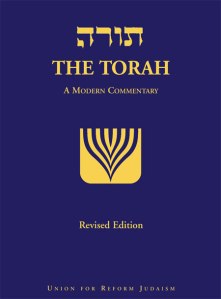
2. The Torah: A Modern Commentary
Like the JPS Torah Commentary, the Modern Commentary includes the Hebrew text (with pointed vowels and cantillation marks) and English translation. Most of the Torah is in the new Jewish Publication Society (JPS) translation (with updates for gender-sensitivity), but the English translation of Genesis is the work of the late Rabbi Chaim Stern.
Most noticeable in Stern’s translation is his use of “the Eternal” to translate the tetragrammaton (YHVH). The Preface to the Revised Edition explains:
The root meaning of the divine name in Hebrew is “to be,” and the name “Eternal” renders that name according to its meaning rather than its sound. That is, it conveys the overtones that an ancient Israelite would have heard when encountering YHVH as a name.
Between introductions, verse-by-verse Commentary, Essays, and Gleanings (insights from rabbinic commentaries and modern-day interpreters), there’s a wealth of useful information here.
For example, last Sunday I began to wonder whether the story of Babel (Genesis 11:1-9) was, among other things, an anti-empire polemic. Moving through the “Gleanings” in the Modern Commentary, I found the following early sources:
As the tower grew in height it took one year to get bricks from the base to the upper stories. Thus, bricks became more precious than human life. When a brick slipped and fell the people wept, but when a worker fell and died no one paid attention.
MIDRASH
And:
They drove forth multitudes of both men and women to make bricks; among whom, a woman making bricks was not allowed to be released in the hour of childbirth, but brought forth while she was making bricks, and carried her child in her apron, and continued to make bricks.
BARUCH
The commentary nicely blends cultural background, sensitivity to the history of Jewish interpretation, and application-ready insights, as here in the comment on Genesis 12:1-9:
For while Abram’s story must be read as the biography of an individual, he (and this applies to the other patriarchs as well) is more than an individual. The Torah sees the patriarch as the archetype who represents his descendants and their fate.
This fall I’m preaching through Genesis. Two Jewish commentaries have been exceedingly helpful and illuminating as I prepare each week. In a short series of two brief posts, I highlight each.
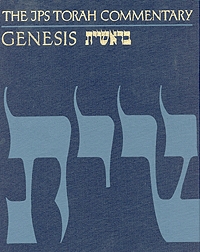
1. The JPS Torah Commentary: Genesis
I’m a sucker for beautifully constructed books, and this is one. Nahum M. Sarna’s Genesis has the full Hebrew text of Genesis (with vowel points and cantillation marks), an English translation (the Jewish Publication Society’s New JPS translation), incisive commentary, and 30 Excursuses at the back of the book.
Already at Genesis 1:2 I found the commentary quoteworthy enough to cite it in a sermon. It notes that the Hebrew term create is used only of God:
It signifies that the product is absolutely novel and unexampled, depends solely on God for its coming into existence, and is beyond the human capacity to reproduce.
There’s this gem on Cain and Abel, where Cain’s sacrifice points to “a recurrent theme in the Bible–namely, the corruption of religion.” Sarna tersely (yet effectively) comments:
An act of piety can degenerate into bloodshed.
And in Genesis 6, where the reader struggles to understand how a loving God could all but eradicate his creation, the introductory essay to “Noah and the Flood” reads:
The moral pollution is so great that the limits of divine tolerance have been breached. The world must be purged of its corruption.
He goes on:
The totality of the evil in which the world has engulfed itself makes the totality of the catastrophe inevitable.
Every passage of the commentary I read is like this–the perfect blend of lexical analysis and devotional implication. Sarna makes good use of ancient Jewish sources, so the reader gets the sense that she or he is really being exposed to thousands of years of Jewish interpretation.
This has often been the first commentary to which I turn after reading the text.
You can find it here at the publisher’s page or here at Amazon. I waited a long time to purchase this volume, since it’s not cheap. This summer I found it on ebay, and have been grateful to own it since!
Next post, I’ll highlight the second of two Jewish commentaries on Genesis that I’ve been enjoying–The Torah: A Modern Commentary. UPDATE 10/16/14: See that review (part 2) here.
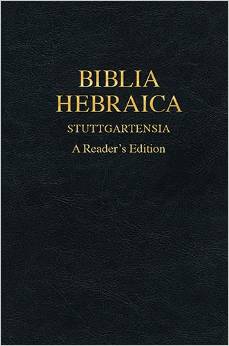
A helpful language reference tool for students, pastors, and scholars. The BHS Reader’s Edition is for those who have a basic understanding of Biblical Hebrew and desire to read and study the Hebrew Bible. With this book alone (and a year’s study of Hebrew), students are able to read the Hebrew Bible in its entirety.
Zondervan already has such a Bible, which is the first Hebrew Bible from which I ever read (cue strings). But BHS Reader’s Edition has vocabulary helps for even more words, as well as verb parsings.
Here are the main features, in the words of the publisher:
Complete text of the Biblia Hebraica Stuttgartensia, checked against the Leningrad Codex
All words that occur fewer than 70 times are parsed and contextually defined in the apparatus
Glossary listing of all other words
Improved layout of poetic text
All weak verb forms are parsed
High quality paper does not bleed through
UPDATE: One of the authors (not Moses, though) notes that it includes full Hebrew paradigms, too. Looks like it will really be a one-stop shop for Hebrew Bible reading!
You can pre-order now through CBD or Amazon (affiliate link that helps support Words on the Word).
Before the mid-50 degree winds blow Psalms of Summer too far back into my homiletical consciousness, I want to highlight two Psalms commentaries I used every week this summer.
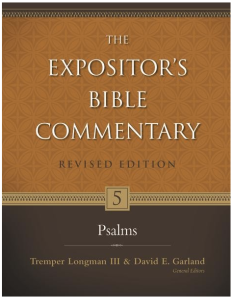
They are Willem A. VanGemeren’s Psalms (Expositor’s Bible Commentary, Revised edition) and Gerald H. Wilson’s Psalms Volume 1 (NIV Application Commentary), both from Zondervan.
1. Revised EBC
In the EBC set’s previous edition, Psalms was only available in a larger volume that also contained Proverbs, Ecclesiastes, and Song of Solomon. Now, with some expansions and revisions, it is its own 1,000-page volume.
VanGemeren’s introduction is detailed, offering the kind of thorough but not verbose overview anyone reading or preaching on the Psalms would want. Among other issues, he writes about Psalm types, the formation of the Psalter, theology in the Psalms, and literary/poetic devices–in addition to parallelism, he lists and describes 16 devices.
The typical pattern is for each Psalm to begin with an Overview (covering its themes, structure, authorship, and so on). Then follow “Commentary” and “Notes” for each passage. The Commentary section is verse-by-verse exposition; the Notes include more detailed technical insights, especially delving into the Hebrew text. 22 “Reflections” throughout the commentary offer additional explanation of important themes.
To take just one look inside the commentary, Psalm 13:5-6 in the NIV (1984) reads:
But I trust in your unfailing love;
my heart rejoices in your salvation.
I will sing to the LORD,
for he has been good to me.
Of these verses VanGemeren says:
Though he has experienced deep despair, the psalmist does not give up. His feet did not slip. He held on to the promise of God’s covenant love: “your unfailing love” (hesed). He is not overwhelmed by his troubles, but in his depression he says, “But I trust.” The emphatic “But I” (v.5) is a surprising response from the heart of a depressed person. Because life may be so bitter for some, it is only by God’s grace that the heart of faith may groan, “but I.”
2. NIVAC
As with the Revised EBC volume, the introduction to Psalms Volume 1 in the NIV Application Commentary series (NIVAC) covers good ground: authorship, historical use of Psalms (in temple worship, as well as the move “from public performance to private piety”), poetic conventions, Hebrew poetry specifically (parallelism, use of refrains, acrostics), Psalm headings, and types of Psalms.
Wilson–after an informative historical survey of attempts to categorize Psalms–highlights three “main” Psalm types: Praise, Lament, and Thanksgiving. He also notes other types, like royal Psalms and wisdom Psalms. The introduction spans more than 60 pages and (thankfully) exceeds what one might expect to find in an “application commentary.”
The NIVAC series has as its primary goal “to help you with the difficult but vital task of bringing an ancient message into a modern context.” It employs three sections for each Psalm to (quite successfully) accomplish the aim:
Original Meaning: “the meaning of the biblical text in its original context.”
Bridging Contexts: “to help you discern what is timeless in the timely pages of the Bible–and what is not,” i.e., what applies only particularly to a context and not universally.
Contemporary Significance: the application section, including suggestions for the preacher or teacher or reader of the passage.
The text of each Psalm is printed in full before its commentary, which I appreciated. This first volume covers Psalms 1-72 (Books I and II of the Psalter). The author is as adept in the text’s Original Meaning as he is in Bridging Contexts or discussing its Contemporary Significance. Wilson won’t write your sermon for you, but he gives the preacher or teacher plenty to chew on, both for herself and for her congregation. Especially illuminating in the application section is Wilson’s Christological read of many Psalms.
Here are just two examples of the kind of edifying insights that fill Wilson’s NIVAC volume:
1. He notes the walk…stand…sit progression of Psalm 1, and does so with a nice turn of phrase:
The order of these verbs may indicate a gradual descent into evil, in which one first walks alongside, then stops, and ultimately takes up permanent residence in the company of the wicked.
2. When Sons of Korah in Psalm 46 call the congregation to a counterintuitive praise session, they do so in the midst not just of some tragic events befalling God’s people—it’s the complete disintegration of all of life that is the dominant metaphor in these verses. Wilson says that when the Psalm speaks of mountains falling into the sea, this “amounts to a moment of uncreation.”
Praying with Many, Many Others
Wilson puts it well:
Thus, whenever you read the psalms, when you sing them or pray them, you are praying, singing, and reading alongside a huge crowd of faithful witnesses throughout the ages. The words you speak have been spoken thousands–even millions–of times before: in Hebrew, Greek, Latin, English, and a myriad of other languages. As you read or sing or pray, off to your right stand Moses and Miriam, in front of you David and Solomon kneel down, to your left are Jesus, Peter and Paul, Priscilla and Aquila, while from behind come the voices of Jerome, St. Augustine, Theresa of Avila, Luther, Calvin, and more–so many more!
Thanks to Zondervan for review copies of each of the above, given to me with no expectation as to the content or trajectory of my review. Find the Revised EBC volume here (Amazon) or here (Zondervan). The NIVAC Psalms volume is here (Amazon) or here (Zondervan).
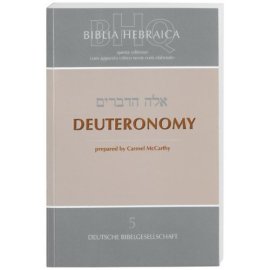
The Biblia Hebraica Quinta (BHQ) will supercede the current scholarly edition of the Hebrew Bible, the Biblia Hebraica Stuttgartensia (BHS).
I reviewed the BHS module in Accordance Bible Software here, and posted at length about the BHQ here, if you want a primer. Short version: Emanuel Tov says it is “much richer in data, more mature, judicious and cautious than its predecessors. It heralds a very important step forward in the BH series,” though he notes that its notations are “more complex” and “less user-friendly for the non-expert.”
Here is BHQ on Amazon; here it is at Hendrickson Publishers’ site.
Hendrickson sent out an update today with the BHQ publishing schedule as it currently stands. Most volumes are “in preparation,” but the schedule (available here) notes that Ezekiel (ed. by Johan Lust) is coming in 2016 and Numbers (ed. by Martin Rösel) is coming in 2017.
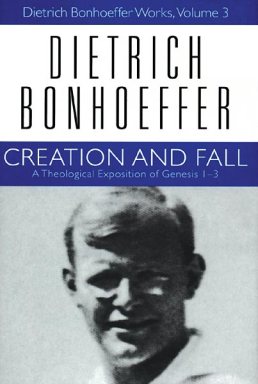
You may have read Bonhoeffer on the Sermon on the Mount, but did you know that he has a compelling and inspiring set of published lectures of Genesis 1-3, too?
for whom the terms “God spoke” and “it became so” are identical.
In Creation and Fall this idea reaches fuller expression:
That God creates by speaking means that in God the thought, the name, and the work are in their created reality one. What we must understand, therefore, is that the word does not have ‘effects’; instead, God’s word is already the work. What in us breaks hopelessly asunder–the word of command and what takes place–is for God indissolubly one. With God the imperative is the indicative.
This month Logos Bible Software offers Creation and Fall for free. I haven’t read the whole thing, but what I have read has helped even familiar chapters of Scripture come alive in new ways. Highly recommended.
You can find Creation and Fall for Logos here. As part of the same promotion, Logos is also offering Bonhoeffer’s Fiction from Tegel Prisonfor $0.99.
If you’re not already set up with Logos, feel free to message me here, and I’ll tell you how to do it.
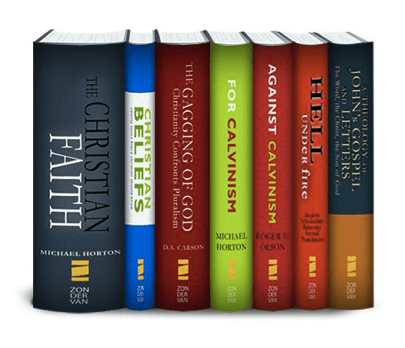
Want to enter for a chance to get some free theology books? These ones won’t even take up shelf space. I’m joining with a few other bloggers and Logos Bible Software for a giveaway of Logos’s Zondervan Theology Collection.
What’s Up for Grabs
The collection can be found here. It includes these books:
(It probably goes without saying that by posting about this collection, I don’t necessarily endorse or agree with the theologies of each of these authors.)
How to Enter the Giveaway
Logos will choose the winner at random on August 1, with the collection sent to that person’s Logos account. If you don’t have a Logos account, you can register for free here. An iOS app for Logos (and other mobile apps can be found here, also free.
To enter, log in below using either your email address or Facebook account, and the Punchtab widget walks you through the rest. You can choose which methods of entry to use. Each prompted action is its own entry.
Logos has this disclaimer: By entering this giveaway you consent to being signed up to Logos’ “Product Reviews” email list. (This just means you’d get emails with Logos-related content written by bloggers such as yours truly.)
UPDATE: WordPress doesn’t want to show the Punchtab widget for some reason. For now you can enter here.










 As with the Revised EBC volume, the introduction to Psalms Volume 1 in the NIV Application Commentary series (NIVAC) covers good ground: authorship, historical use of Psalms (in temple worship, as well as the move “from public performance to private piety”), poetic conventions, Hebrew poetry specifically (parallelism, use of refrains, acrostics), Psalm headings, and types of Psalms.



 Words on the Word