Sure, there’s a chance that over-reliance on a monetized chore chart can have negative effects on children. But we parents also want to teach our kids about the importance of work, responsibility, and the basics of financial management.
There’s still not an iPhone app for making you a better parent. In fact, probably less time on apps in general makes better parents. However, a number of us moms and dads already spend time each day managing tasks, finances, and other activities on a phone… so why not a chore chart?
Those are my sweet kids (names blurred out–you see their names on the app).
They’ve got their own corner of the app where we track their stars (earned or docked for behavior) and money (allowance, and stars converted to money).
The app has a bunch of pre-set chores you can select to track for each kid–at a frequency of your choosing.
(The spotting by the time is not from the app–that’s where the child’s name goes)
And you can add your own. (We added, “Make the bus on time”–everyone gets a star when that happens!)
You can set how many stars equate to a monetary amount, and then have the app make the transfer for you. We were paying our kids 10 cents a star, but we were doling out a lot of money! So we changed it to 5 cents a star.
You can also set up different accounts for each child. We have one for Church, one for Savings, and one for Spending. The Totals screen shows you all that, as well as Stars and Time (one of the few features I haven’t used in the app):
iAllowance is a really a great (and fun) app. It syncs via Dropbox or iCloud with an iPad. As a universal app, if you buy it, you can use it (and sync it) on any iOS device.
The kids love it, too. It’s been an effective motivator, and really fun for them to tap their stars at the end of the day–or tap on “Bad Behavior” and see a frowny face. 😦
Any time you tap next to a chore (which you can do in the Day view or Week view) you get an accompanying sound effect, too. And the allowance deposits happen automatically, in the amounts and to the accounts that you specify.
The app runs smoothly, and the developer is one of the most responsive (if not the most responsive) developers I’ve ever been in touch with.
I can’t say whether a incentive-based program will work for you and–if it will–whether you should run it from a mobile device. But I can say that both the overall setup of stars and allowance, as well as this particular app, have really helped perk up some listening ears around here!
Now… I’ve got to go give myself a star for posting another Apptastic Tuesday review, Blizzard 2015 notwithstanding.
Thanks to the developer of iAllowance for giving me a download for the review. Check out the app’s site here. You can find the full (paid) version here, and try the free version here.
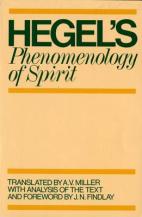
Ever since reading Hegel’s Phenomenology of Spirit in my undergrad days, I’ve often considered the world through the lens of Hegel’s dialectic. Plus, I always thought (and still think, if my sermon yesterday is an indication) it sounded really cool to talk about the “Hegelian dialectic” at work in the world. Yes, a little pretentious, too.
Dialecticophile that I am, I resonate with Rabbi Barry L. Schwartz’s idea that in Judaism, debate (thesis/antithesis) is “more than a valued intellectual exercise…. it is a holy act.”
What a refreshing outlook for anyone who grew up in religious settings that discouraged asking questions!
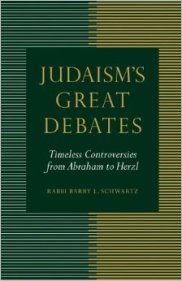
Schwartz’s Judaism’s Great Debates: Timeless Controversies from Abraham to Herzl (Jewish Publication Society, 2012) considers 10 debates in Judaism. He splits the book into three sections: Biblical Judaism, Rabbinic Judaism, and Modern Judaism. The 10 debates he considers are far-ranging: theological, ethical, legal, spiritual, and sociopolitical.
Here’s the publisher’s description of the book:
Ever since Abraham’s famous argument with God, Judaism has been full of debate. Moses and Korah, David and Nathan, Hillel and Shammai, the Vilna Gaon and the Ba’al Shem Tov, Spinoza and the Amsterdam Rabbis . . . the list goes on. Jews debate justice, authority, inclusion, spirituality, resistance, evolution, Zionism, and more. No wonder that Judaism cherishes the expression machloket l’shem shamayim, “an argument for the sake of heaven.”
Each of the 10 debates comes to a head with a question that Schwartz considers. For example, the conflict between David and Nathan in chapter 4 considers the question, “Does Might Make Right? The Debate over Accountability and Morality.”
Schwartz helps the debates come alive by blending direct quotes from the Hebrew Bible or other primary source (in italics) with his own “added dialogue” (in regular print). As reluctant as a Bible-lover like myself might be to see words added to a biblical story, Schwartz does this with great reverence and care, in a way that really draws out the characters.
David, in Schwartz’s rendition of Nathan’s calling him out in 2 Samuel 11-12, for example, says, “What are you talking about? I am the king!”
That same chapter refers to prophets as those who “speak truth to power.” Schwartz puts it well:
The prophets were equal-opportunity gadflies; they clashed with kings and countrymen alike.
Issues for modern-day Judaism are included here, too–whether full inclusion of women (as in the Reform movement) or whether holiness is individually ascribed or somehow taken on by osmosis as member of a community. Each debate includes coverage of its original context (“the basic historical backdrop”), content (with emphasis on primary sources), and continuity (“how they echo throughout Jewish history”).
Judaism’s Great Debates would be great for a class or small group setting. Its reflection and discussion questions on p. 99 and following are thought-provoking and much better-written than most discussion questions at the back of a short book like this. (Any Palestinian Jews or Christians reading this book will probably be put off by what come across as pointed questions like, “Are civilians who aid terrorists innocent and deserving of noncombatant immunity?” and, “Should Israel negotiate with sworn terrorist organizations?”)
One other drawback (and the drawbacks are few) is the appearance of typos and some errant punctuation marks every few pages or so. This does not detract, though, from the overall high quality of the writing.
Anyone who wants to know more about Judaism–or anyone with a religious background of any type–will appreciate Schwartz’s boldness, even if it’s alarming:
Abraham’s bold challenge of God for the sake of justice was the first Jewish debate. Generations would look back at the founder of the Jewish people and follow his example. If Abraham argued, so should we. If Abraham had the courage to challenge God, so should we. If Abraham stood up for justice, so should we.
I would love to hear Rabbi Schwartz treat how we hold that reality in tension with the story of Job, whom God does not seem to appreciate being challenged by. That would be an interesting debate to have!
Here‘s an excerpt from the book. I found myself making a lot of pencil notes in the margins, which is a good sign of a book’s ability to engage its readers! It’s a book well worth reading and thinking through.
Thanks to the Jewish Publication Society for the review copy of the book! You can find Judaism’s Great Debates here at the publisher’s page or here at Amazon. See also my book note on the JPS Torah Commentary volume on Genesis, and my review of the JPS Commentary on Jonah.
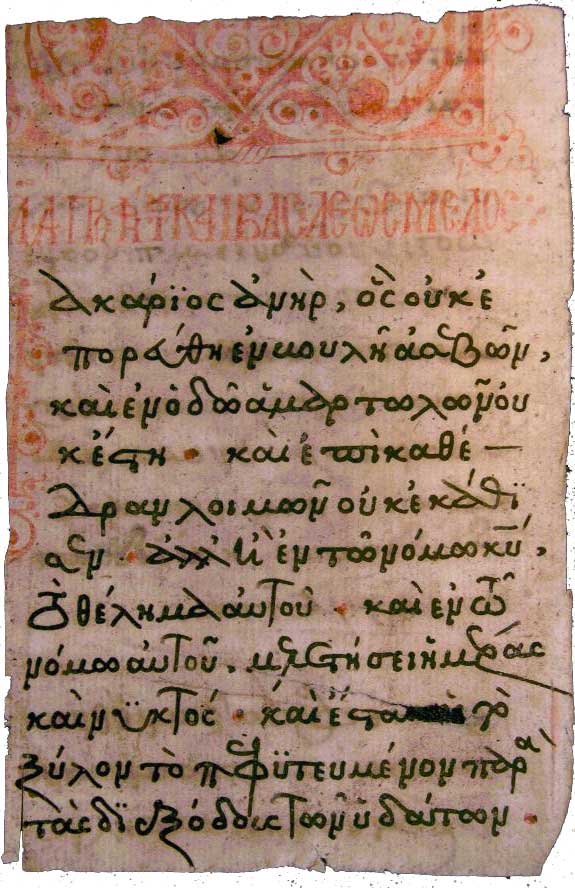
Greek Psalms in a Year is almost through its first month. Here are some verses that have really stuck with me, both in the Greek and with the NETS (New English Translation of the Septuagint) translation. All references below are according to the Septuagint versification:
Psalm 3:4
συ δε, κυριε, αντιλημπτωρ μου ει,
δοξα μου και υψων την κεφαλην μου.
But you, O Lord, you are my supporter,
my glory, and one who lifts up my head.
Psalm 9:10-12
και εγενετο κυριος καταφυγη τω πενητι,
βοηθος εν ευκαιριαις εν θλιψει·
και ελπισατωσαν επι σε οι γινωσκοντες το ονομα σου,
οτι ουκ εγκατελιπες τους εκζητουντας σε, κυριε.
ψαλατε τω κυριω τω κατοικουντι εν Σιων,
αναγγειλατε εν τοις εθνεσιν τα επιτηδευματα αυτου,
And the Lord became a refuge for the needy,
a helper at opportune times in affliction.
And let those who know your name hope in you,
because you did not forsake those who seek you, O Lord.
Make music to the Lord, who resides in Sion.
Declare his practices among the nations,
Psalm 9:19
οτι ουκ εις τελος επιλησθησεται ο πτωχος,
η υπομονη των πενητων ουκ απολειται εις τον αιωνα.
Because the poor shall not be completely forgotten,
the endurance of the needy shall not perish forever.
There are others, too, but Psalm 9 especially—with its focus on God’s compassion for the poor—struck me as important… and convicting.
Nahum Sarna’s JPS Torah Commentary on Genesis is easily one of the best three commentaries I’ve read on any book of the Bible. I’d put it up there with R.T. France’s Mark commentary, a technical and detailed commentary of which I read every word–France is that good, and so is Sarna.
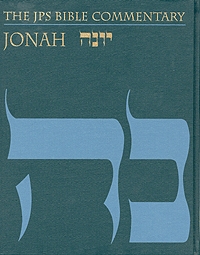
So as I geared up to preach on Jonah during Advent (see some of the results of that unlikely pairing here), I wanted the JPS Bible Commentary in hand. It’s by Uriel Simon, professor emeritus at Bar Ilan University in Israel, where he also directed the school’s Institute for the History of Jewish Research. Dr. Simon aims for a similar approach to the one that made me appreciate Sarna’s Genesis commentary so much. In the Preface Simon writes:
The present commentary has been written under the sign of a dual commitment: academic rigor, which aims at uncovering the original meaning of the Book of Jonah; and a Jewish commitment to Scripture as the taproot of our national existence and wellspring of our religious life.
The commentary is not very long. The Preface and thorough Introduction make up 38 pages. The commentary itself has 46 pages, followed by a four-page bibliography. Each page in the commentary includes the Hebrew text, an author-modified version of the New JPS translation, and Simon’s comment on passages, verses, and individual words and phrases.
Simon’s Introduction to Jonah
The Introduction begins with a treatment of the book’s theme(s), as well as its history of interpretation. Simon realizes that he “stands on the shoulders of his predecessors,” and gives the reader a nice lay of the land of Jewish/rabinnical exegesis up to the current day. (You can read a good summary version of Simon’s treatments of potential themes in Jonah here.)
I disagree with Simon’s dismissal of “Universalism versus Particularism” as a possible uniting theme for Jonah. He does not think Jonah symbolizes Israel, “and Nineveh does not symbolize the gentile world.” Of course, it is my being a Christian (as Simon would expect) that contributes to this read, but neither did I think Simon’s case against the gentiles as anything more than just “supporting characters” was compelling. I don’t think Jonah has to symbolize Israel–and the book doesn’t even have to be an indictment against God’s chosen–for the text to still have “panhumanist connotations” of the extension of God’s mercy to all people (even vile oppressors of the innocent!).
I do find the author compelling, though, when he speaks of the “Compassion: Justice versus Mercy” motif as one that is “compatible with the entire narrative from beginning to end and encompasses most of its elements.” Simon explains:
Jonah foresaw both the submission of the evildoers of Nineveh, terrified by their impending destruction, and the acceptance of their repentance by the merciful God; but he was totally wrong to believe that he would be allowed to escape to Tarshish. Subsequent surprises undermine his pretense to knowledge‑-the fish that saves him from death but imprisons him in its belly until he gives up his flight and begins to pray; and the plant that saves him from his distress but vanishes as suddenly as it appeared, so that he can feel the pain of loss and open his heart to understand the Creator’s love for His creatures. Only when the proponent of strict justice realizes his own humanity can he understand the fundamental dependence of mortals on human and divine mercy.
The Introduction also treats Jonah’s place in the canon, its literary genre and features, structure (it’s got “seven scenes”), style, links to other biblical books, vocabulary, date of writing, textual history (there is an “excellent state of preservation of the text”), and a section on the unity of the book and its prayer/psalm in Jonah 2. I’m not totally opposed (in theory) to Simon’s idea that the prayer of that chapter was a later addition, but its absence of “confession and an appeal for forgiveness” don’t have to make it an interpolation–it could just point more to the character of Jonah, in all its complexities and with all his foibles.
Regarding the historicity of Jonah and the large fish (which is “really external to the [meaning of the] story” itself), Simon has a great insight:
The repentance of the Ninevites, from a psychological standpoint, is less plausible than the physical possibility of the miracles that happened to Jonah. There is nothing like it anywhere else in the Bible. What is more, their repentance, unlike miracles, cannot be ascribed to divine intervention, because it is emphatically described as a human action (3:10).
The Commentary Proper
The questions that arise as one reads the text (reprinted in the commentary in Hebrew and English) so often seem to be the ones that Simon answers. Regarding “Nineveh, that great city” in Jonah 1:2, Simon gives historical background, but only insofar as it serves Jonah’s literary purposes:
Nineveh’s size is mentioned, not to emphasize the difficulty of the task, but to highlight its importance–as is the size of the city, so is the magnitude of its wickedness….
The reader, in other words, will find just about anything needed to profitably make her or his way through Jonah.
Like Sarna does for Genesis, Simon goes in depth with Hebrew word meanings in a way that even a non-Hebrew reader will (usually) be able to understand. For example, when the king of Nineveh calls that city to repentance in Jonah 3:7, Simon comments:
In the hif’il (causative), z-‘-q generally means “call to an assembly, muster” (e.g., Judg 4:10; 2 Sam 20:5). Here, though, it means to “proclaim or spread a message”…. The narrator probably selected this verb to reinforce the formal linkage with what took place on the ship–in view of the danger of foundering the sailors cried out to their gods (1:5), while the king of Nineveh had the criers (cf. Dan 3:4) cry out the message of repentance for his subjects to hear.
Simon highlights little nuances readers might miss: the “great fish” of Jonah 2:1 echoes the “great city” (1:2), “great wind” (1:4), and the sailors’ “great fear” (1:10). Everything in Jonah is big–and therefore important–it seems.
There’s more in this well-written and carefully-prepared commentary that deserves further engagement, but this review is already long enough. Don’t be fooled by the commentary’s low page count–its stated 52 pages do not include the nearly 40-page introduction. That may still feel short for a commentary on four chapters of Scripture, but it’s as substantive as most readers will need. If you’re working your way through Jonah, Simon’s JPS commentary is one of three or four you should make sure to use.
Many thanks to the folks at University of Nebraska Press/Jewish Publication Society for sending me the copy of the Jonah commentary for review. The book’s JPS product page is here; you can order it through Nebraska Press here. Find it on Amazon here.
Last week on AppTastic Tuesday: Rules! This week: Captio.
The goal of Captio is a simple one: to very quickly pull up a screen into which you can type text or stick a photograph, and then email it to yourself.
It works in iPhone in both portrait and landscape mode. Here’s the New Note screen, which lets you (a) enter text, (b) select a photo from your phone, or (c) take a new photo:
You might quickly pull up Captio to jot down a reminder or bit of information you want to access later. Then you tap Send, and your text or image is sent to your email address.
You can adjust some settings–for example, have a prefix of “Captio” or “Remember” or anything else in the subject of the email that Captio sends:
And, what is best, you can send it to any email address. This is especially helpful if you have a to-do system (like Evernote or OmniFocus) that allows you to email items directly into those apps.
This is where I’ve found Captio most useful. It can take Evernote and (especially) OmniFocus a few seconds to load and sync–Captio, by contrast, gives you a text entry screen as soon as you tap it.
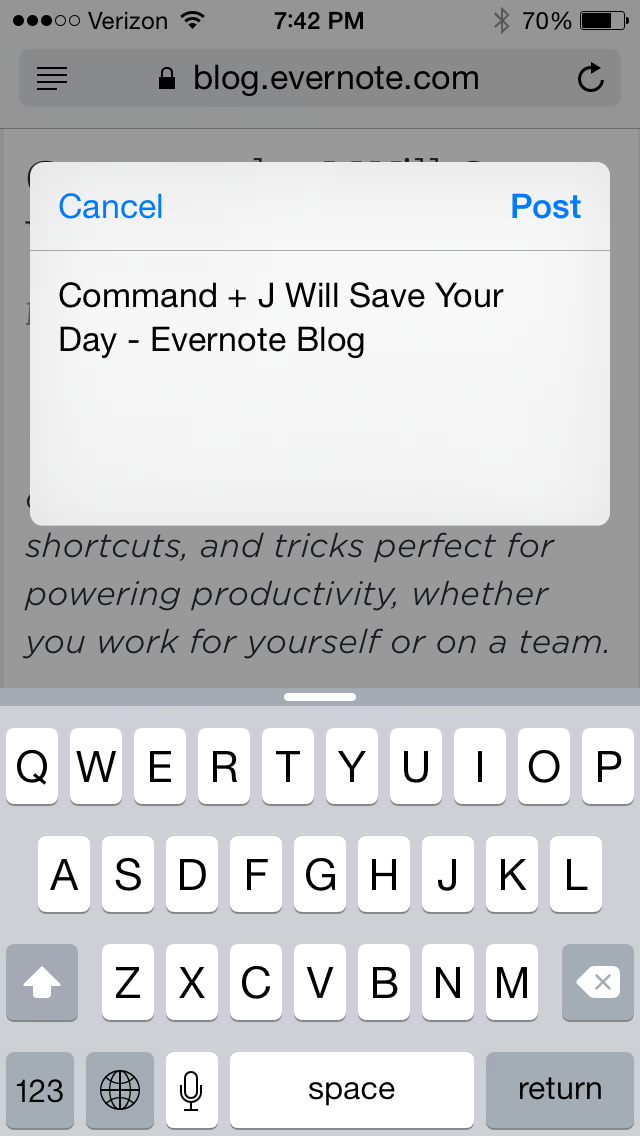
Captio is also available within other apps via the Share Extensions:
I’ve not personally seen a need to use the Share Extension–it works great, but if I’m saving a Web article to read later, I’ll just use the Evernote Share Extension anyway. Or the OmniFocus Share Extension to create a task from a photo. But for folks who primarily rely on email to keep reminders (not a good idea, but a widespread practice), Captio can help from just about anywhere on your phone or iPad.
Captio also stores all the notes you send, right on your device, so you can use it with or without Internet/data connections.
And, though all the shots above are from an iPhone, Captio is a universal app. So for $1.99 (at the time of this post), you can use it on both iPhone and iPad.
Thanks to the makers of Captio for giving me a download for the review. Check out the app’s site here.
The prophet Isaiah spoke of the path from darkness to light:
Seek justice, encouraged the oppressed…if you spend yourselves in behalf of the hungry and satisfy the needs of the oppressed, then your light will rise in the darkness, and your night will become like the noonday.
Today is Martin Luther King, Jr., Day, a national holiday commemorating the great preacher and one of the leaders of the civil rights movement of the 1950s and 60s. Were he still living, Dr. King would have been 86 this weekend.
In a world where any black person on a bus was expected to give up his or her seat to any white person who asked, a world where peaceful civil rights protestors suffered unprovoked police brutality, and a world where blacks were often prevented from basic rights like voting simply because they were black, Martin Luther King, Jr., knew what it was to suffer injustice.
And he knew that his particular experience of injustice had universal implications. In his 1963 “Letter from a Birmingham Jail” he famously wrote, “Injustice anywhere is a threat to justice everywhere.” In response to his fellow clergyman who called for him to slow down, he said that when we say “wait” to righting the wrongs around us, “wait” often turns into “never.” “Justice too long delayed,” he wrote, “is justice denied.”
One thing I want to do more of in 2015 is to stop saying “wait” in my own efforts to speak up and act in response to injustice—whether it’s racial injustice, poverty, homelessness, sexism, violence, or systemic oppression. I’m spending some time prayerfully discerning what this will look like. I am challenged by Isaiah’s call to “seek justice” and “encourage the oppressed,” an essential part of every Christian’s vocation.
I and we need to hear Isaiah’s urgent call and King’s impassioned words just as much today as their first hearers did.
May we open ourselves to God and listen to how he leads us to act on the words of the prophet.
The above is adapted from a short letter I sent to my congregation.
Having recently re-watched the fourth season of the best television show in history, I need now to amend my assessment two years ago that the Göttingen Septuagint is the Cadillac of Septuagint editions. It’s the Lexus of the LXX.
The Göttingen Septuagint
Vandenhoeck & Ruprecht in Göttingen, Germany publishes the Göttingen Septuagint, more formally known as Septuaginta: Vetus Testamentum Graecum Auctoritate Academiae Scientiarum Gottingensis editum.
The series of critical texts with apparatus spans more than 20 volumes and covers some 40 biblical books (counting the minor prophets as 12), with more continuing to appear.
But, as I remarked two years ago when I confused Cadillacs and Lexuses, the Göttingen Septuagint is not for the faint of heart, or for the reader who is unwilling to put some serious work in to understanding the layout of the edition and its critical apparatuses.
The Contributions of John William Wevers
Enter John William Wevers. If Göttingen is the Lexus of LXX editions, Wevers is its chief mechanic. His Notes on the Greek texts of the Pentateuch–though provisional in nature, Wevers intimated–remain some of the best resources for carefully studying the Septuagint. And his Text Histories on those same books (now free online, thanks to the Göttingen Septuaginta-Unternehmen) guide the reader through the transmission of the Greek text in its various manuscripts.
Better yet, before his passing Wevers translated much of his own Göttingen-Pentateuch introductions from German into English. That enduring gift can be found here.
Göttingen-Genesis
Published in 1974, Wevers’s Genesis includes a 70+-page introduction, Wevers’s reconstructed Greek text of Genesis, and two critical apparatuses at the bottom of each page that highlight readings from various manuscripts.
The introduction includes these sections:
The Textual Witnesses (Greek and other versions)
The Text History (“Here only information necessary for the use of this edition is given”)
Re: This Edition
Signs and Abbreviations
A challenge to using the Genesis volume is the scarcity of material available about the Göttingen project in general. Further, the introduction is in German and the critical apparatuses contain Greek, abbreviated Greek, and abbreviated Latin. A few things come in handy:
As for deciphering the apparatus and abbreviations, Wevers offers such a key in the introduction, and the print edition comes with a handy insert (in German and Latin, but not unusable to those without command of those languages)
Miles Van Pelt has made available his own two-page summary of sigla and abbreviations (here as PDF).
Seeing the need, I wrote a two-part primer (here and here, two of my most-visited posts on this blog) to reading and understanding the Göttingen Septuagint–the focus was largely on Genesis, and I draw on those posts for what follows
So equipped, the reader (whether she or he knows German or not) is ready to work through the Greek text itself.
Tour of a Page
Instead of using a text based on an actual manuscript (as BHS, based on the Leningrad Codex, does), the Göttingen Septuagint utilizes a reconstructed text based on a thorough examination of evidence from manuscripts and translations.
Because it is an editio maior and not an editio minor like Rahlfs, any page can have just a few lines of actual biblical text, with the rest being taken up by the apparatuses. Here’s a sample page from Genesis 1 (image used by permission).
Note the #s 1-4 that I’ve added to highlight the different parts of a page.
Page reproduction by permission of publisher (annotations are mine)
1. The reconstructed Greek critical text (“Der kritische Text”)
With verse references in both the margin and in the body of the text, the top portion of each page of the Göttingen Septuagint is the editorially reconstructed text of each biblical book. In the page from Genesis 1 above, you’ll notice that the text includes punctuation, accents, and breathing marks.
Regarding the critical text itself, Wevers writes in the Genesis introduction:
Since it must be presupposed that this text will be standard for a long time, the stance taken by the editor over against the critical text was intentionally conservative. In general conjectures were avoided, even though it might be expected that future recognition would possibly confirm such conjectures.
2. The Source List (“Kopfleiste”)
The Kopfleiste comes just below the text and above the apparatuses in Genesis. Wevers notes it as a list of all manuscripts and versions used, listed in the order that they appear in the apparatus on that page. A fragmentary textual witness is enclosed in parenthesis.
3. and 4. Critical Apparatuses (“Apparat I” and “Apparat II”)
The critical apparatuses are where the user of Göttingen can see other readings as they compare with the critically reconstructed text. Because the Göttingen editions are critical/eclectic texts, no single manuscript will match the text of the Göttingen Septuagint.
The first critical apparatus will be familiar in its aims to readers of BHS. Regarding the second apparatus, Wevers writes:
In view of the fact that the materials presented in the second apparatus [are] not at least in theory a collection of variants within the LXX tradition, but rather one such of readings from other traditions, especially from the “three”, which have influenced the LXX tradition, these readings are given in full.
“The three,” sometimes referred to in Greek as οι γ’, are the texts of Aquila, Symmachus and Theodotion.
In other words–there is virtually no stone unturned here in the quest to reconstruct a Greek text of Genesis.
Concluding Evaluation
Serious work in Septuagint studies uses the Göttingen text, where available, as a base. Wevers’s scholarship and care for the text is clear as one makes her or his way through the Genesis volume. It’s the starting place for studying the Greek text of Genesis.
Vandenhoeck & Ruprecht’s production of the book is stellar, too. It’s got a sewn binding and is beautifully constructed–built to last and look good on the shelf, or in your hands:
You can find the volume here at V & R’s site, and here at Amazon. ISD distributes the book, as well, and carries it here.
Many thanks to V & R for the review copy of this fine work, given to me with no expectation as to the content of my review. Find more V & R blog posts here.
[SPOILER ALERT: I talk about events from Season 5 of The Wire below.]
In The Wire, Lester Freamon says, “All the pieces matter,” which is the best and most succinct summary line of the whole show.
Series 5 ends with McNulty looking over Baltimore (the whole) and then pans to a closing montage of all the players (the individual pieces) before going back to city skyline (the whole) again.
Appropriate as McNulty has basically been the city’s puppeteer in Season 5.
Anyone who’s seen the show all the way through gets that it’s about the pieces-and-whole dialectic, and about understanding the city as a complex, unified system, linked together by interconnected sub-systems.
What two characters best understand this? It seems McNulty (who is the character privileged enough to close the show with the long, longing look at the city) and Freamon (who loves seeing how pieces fit together–his bulletin board is evidence of this).
What just hit me, though, is that Freamon’s interest in tiny dollhouse pieces that then fit together into whole unified sets is a sort of microcosm of his interest in how networks and systems (like drug rings) have individual pieces that all fit together. Even in his hobby the writers portray him (intentionally?) as someone who has an interest in “all the pieces”–in this case, miniatures. He is a “systems guy,” through and through.
And, his working at a “pawn shop” could be an echo of or allusion to the “pawns” on the chessboard that D’Angelo uses to describe how the pieces each play their part in the game. Different meanings of “pawn,” but still could be related.
My conclusion? McNulty, though he’s a “gaping [jerk],” maybe sees the system better than anyone else. And Freamon, just as he does with dollhouse miniatures, is able to navigate it more deftly than anyone else.
In that sense, though they both end up very much outside the system (i.e., no longer police), the pro-systems thinking show casts them as its ultimate heroes.
Today begins what will be a mainstay of Words on the Word in 2015: AppTastic Tuesdays. First up: the iOS app Rules!
Rules! is part zone-out tapping, part memory-training app. The gameplay itself is fast-paced, fun, easy, and aesthetically pleasing. Watch this short trailer to get caught up:
The actual tapping of icons is easy–the game is quite touch-responsive and fast. And the rules are clear enough:
When you complete what rule 1 calls for, you move up to rule 2. Having completed rule 2 on the screen, you then apply rule 1 to the remaining icons. There are 100 levels of rules, though I have barely made it past 15.
When the game introduces a new rule, you get a screen like this:
But then after completing rule 13, it tells you simply, “Now follow rule 12,” “Now follow rule 11,” “Now follow rule 9,” and so on.
So it’s more than about the gameplay itself–you’ve got to memorize the rules as you go; you’ve got to know them by number.
This makes it a less-than-ideal zone-out game. Threes is by no means boring but mindless enough that you can come home to it at the end of a long day. Rules! is not so. It demands more of your mind.
You will probably find yourself, as I did, using some mnemonic device to remember 8-10 rules at once, so you can perform the appropriate actions on the screen in front of you.
There are three game modes: Beginner, Expert, Timeless (i.e., no countdown clock). The scoring rewards you for speed and accuracy:
The need to memorize a host of rules in order to do well caused me to lose interest more quickly with Rules! than I have with other iOS games.
But Rules! especially excels in two areas: (1) its accompanying music is pretty, well-written, and good for focusing, and (2) its layout and design is gorgeous. Even the fail screen looks good:
So, for $1.99 in the App Store, if you’re up for a mental challenge with good music and beautiful design, check it out and see if you can–as one player on Twitter recently did–get through all 100 levels.
Thanks to the makers of Rules! for giving me a download for the review. Check out the app’s site here.























 Words on the Word