One thing that continually impresses me about Greek is its preponderance of multisyllabic words.
Much of this has to do with how its verbs are conjugated. The four-syllable verb μεγαλυνω, for example, when inflected in Psalm 19:8 (Psalm 20:7 in English Bibles), becomes a majestic seven-syllable ending to an already beautiful verse:
ουτοι εν αρμασιν και ουτοι εν ιπποις,
ημεις δε εν ονοματι κυριου θεου ημων μεγαλυνθησομεθα.
Here is an English translation:
These ones take pride in chariots, and these ones in horses,
But as for us, we will find glory in the name of the Lord!
Though I’m a week behind on the reading plan, little gems like this make reading the Greek Psalms in a Year well worth the effort.
Today they’ve announced that there is a free demo version of Accordance 11 available. I can’t recommend their software highly enough. See my full review of Accordance 11 if you want to learn more, or just go here to check out the free demo and see what you think.
This post has gone too far in trying to convince people to override their objections to spend more:
2. I already have enough books.
Even if you think you’ll never read through everything in your library, adding more books will make it more powerful and increase the value of the books you already own.
In other words, “If you buy more books to search, you’ll have more books to search.”
Dear friends at Logos, do we not already succumb enough to an insufficiency mentality in the world? I don’t have enough. I need to have more. My Bible study and teaching prep is good, but if I just had that one more commentary series, life would be awesome!
I’m as guilty of this mentality as anyone (probably more so)–and I want to fight it. Bible software marketing copy that taps into the culturally-rooted materialism that Christians are supposed to stand against? Not okay.
One other “reason” gave me pause:
4. I can’t afford a new base package.
If a base package isn’t in your budget right now, you have a couple of options.
You can take advantage of interest-free payment plans and spread out the cost over up to 24 months. That means you only pay a fraction up front, pay for the rest over time, and start using your new software right away.
Let me help with the rewrite:
If a base package isn’t in your budget right now, you have one option: don’t buy one right now.
“Our mission is to serve the church,” you say. How does enabling and even encouraging churchgoers and pastors to take on new debt serve the church?
I think it’s time for some serious evaluation of the sort of marketing mantras that (however unintentionally) undermine Kingdom values of sufficiency and wise financial stewardship and promote instead the harmful values of incessant accumulation and overspending.
Saying, “What I have is enough,” and curbing credit-card-style overspending are actually two excellent reasons not to upgrade to Logos 6.
UPDATE: The “6 Reasons” email I received from Logos had no author’s name on it. I didn’t see an author’s name on the blog version of the post, either, until just before this post was about to go live. I direct my critique, though, to Logos as a whole, since the individual post is emblematic of Logos’s marketing approach in general.
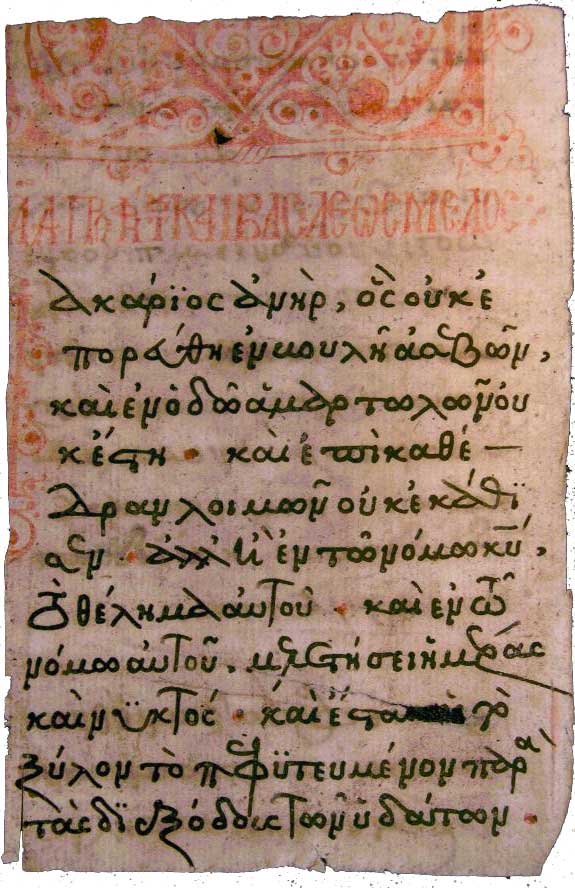
Greek Psalms in a Year is almost through its first month. Here are some verses that have really stuck with me, both in the Greek and with the NETS (New English Translation of the Septuagint) translation. All references below are according to the Septuagint versification:
Psalm 3:4
συ δε, κυριε, αντιλημπτωρ μου ει,
δοξα μου και υψων την κεφαλην μου.
But you, O Lord, you are my supporter,
my glory, and one who lifts up my head.
Psalm 9:10-12
και εγενετο κυριος καταφυγη τω πενητι,
βοηθος εν ευκαιριαις εν θλιψει·
και ελπισατωσαν επι σε οι γινωσκοντες το ονομα σου,
οτι ουκ εγκατελιπες τους εκζητουντας σε, κυριε.
ψαλατε τω κυριω τω κατοικουντι εν Σιων,
αναγγειλατε εν τοις εθνεσιν τα επιτηδευματα αυτου,
And the Lord became a refuge for the needy,
a helper at opportune times in affliction.
And let those who know your name hope in you,
because you did not forsake those who seek you, O Lord.
Make music to the Lord, who resides in Sion.
Declare his practices among the nations,
Psalm 9:19
οτι ουκ εις τελος επιλησθησεται ο πτωχος,
η υπομονη των πενητων ουκ απολειται εις τον αιωνα.
Because the poor shall not be completely forgotten,
the endurance of the needy shall not perish forever.
There are others, too, but Psalm 9 especially—with its focus on God’s compassion for the poor—struck me as important… and convicting.
The prophet Isaiah spoke of the path from darkness to light:
Seek justice, encouraged the oppressed…if you spend yourselves in behalf of the hungry and satisfy the needs of the oppressed, then your light will rise in the darkness, and your night will become like the noonday.
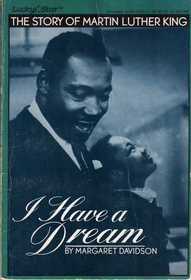
Today is Martin Luther King, Jr., Day, a national holiday commemorating the great preacher and one of the leaders of the civil rights movement of the 1950s and 60s. Were he still living, Dr. King would have been 86 this weekend.
In a world where any black person on a bus was expected to give up his or her seat to any white person who asked, a world where peaceful civil rights protestors suffered unprovoked police brutality, and a world where blacks were often prevented from basic rights like voting simply because they were black, Martin Luther King, Jr., knew what it was to suffer injustice.
And he knew that his particular experience of injustice had universal implications. In his 1963 “Letter from a Birmingham Jail” he famously wrote, “Injustice anywhere is a threat to justice everywhere.” In response to his fellow clergyman who called for him to slow down, he said that when we say “wait” to righting the wrongs around us, “wait” often turns into “never.” “Justice too long delayed,” he wrote, “is justice denied.”
One thing I want to do more of in 2015 is to stop saying “wait” in my own efforts to speak up and act in response to injustice—whether it’s racial injustice, poverty, homelessness, sexism, violence, or systemic oppression. I’m spending some time prayerfully discerning what this will look like. I am challenged by Isaiah’s call to “seek justice” and “encourage the oppressed,” an essential part of every Christian’s vocation.
I and we need to hear Isaiah’s urgent call and King’s impassioned words just as much today as their first hearers did.
May we open ourselves to God and listen to how he leads us to act on the words of the prophet.
The above is adapted from a short letter I sent to my congregation.
Having recently re-watched the fourth season of the best television show in history, I need now to amend my assessment two years ago that the Göttingen Septuagint is the Cadillac of Septuagint editions. It’s the Lexus of the LXX.
The Göttingen Septuagint
Vandenhoeck & Ruprecht in Göttingen, Germany publishes the Göttingen Septuagint, more formally known as Septuaginta: Vetus Testamentum Graecum Auctoritate Academiae Scientiarum Gottingensis editum.
The series of critical texts with apparatus spans more than 20 volumes and covers some 40 biblical books (counting the minor prophets as 12), with more continuing to appear.
But, as I remarked two years ago when I confused Cadillacs and Lexuses, the Göttingen Septuagint is not for the faint of heart, or for the reader who is unwilling to put some serious work in to understanding the layout of the edition and its critical apparatuses.
The Contributions of John William Wevers
Enter John William Wevers. If Göttingen is the Lexus of LXX editions, Wevers is its chief mechanic. His Notes on the Greek texts of the Pentateuch–though provisional in nature, Wevers intimated–remain some of the best resources for carefully studying the Septuagint. And his Text Histories on those same books (now free online, thanks to the Göttingen Septuaginta-Unternehmen) guide the reader through the transmission of the Greek text in its various manuscripts.
Better yet, before his passing Wevers translated much of his own Göttingen-Pentateuch introductions from German into English. That enduring gift can be found here.
Göttingen-Genesis
Published in 1974, Wevers’s Genesis includes a 70+-page introduction, Wevers’s reconstructed Greek text of Genesis, and two critical apparatuses at the bottom of each page that highlight readings from various manuscripts.
The introduction includes these sections:
The Textual Witnesses (Greek and other versions)
The Text History (“Here only information necessary for the use of this edition is given”)
Re: This Edition
Signs and Abbreviations
A challenge to using the Genesis volume is the scarcity of material available about the Göttingen project in general. Further, the introduction is in German and the critical apparatuses contain Greek, abbreviated Greek, and abbreviated Latin. A few things come in handy:
As for deciphering the apparatus and abbreviations, Wevers offers such a key in the introduction, and the print edition comes with a handy insert (in German and Latin, but not unusable to those without command of those languages)
Miles Van Pelt has made available his own two-page summary of sigla and abbreviations (here as PDF).
Seeing the need, I wrote a two-part primer (here and here, two of my most-visited posts on this blog) to reading and understanding the Göttingen Septuagint–the focus was largely on Genesis, and I draw on those posts for what follows
So equipped, the reader (whether she or he knows German or not) is ready to work through the Greek text itself.
Tour of a Page
Instead of using a text based on an actual manuscript (as BHS, based on the Leningrad Codex, does), the Göttingen Septuagint utilizes a reconstructed text based on a thorough examination of evidence from manuscripts and translations.
Because it is an editio maior and not an editio minor like Rahlfs, any page can have just a few lines of actual biblical text, with the rest being taken up by the apparatuses. Here’s a sample page from Genesis 1 (image used by permission).
Note the #s 1-4 that I’ve added to highlight the different parts of a page.
Page reproduction by permission of publisher (annotations are mine)
1. The reconstructed Greek critical text (“Der kritische Text”)
With verse references in both the margin and in the body of the text, the top portion of each page of the Göttingen Septuagint is the editorially reconstructed text of each biblical book. In the page from Genesis 1 above, you’ll notice that the text includes punctuation, accents, and breathing marks.
Regarding the critical text itself, Wevers writes in the Genesis introduction:
Since it must be presupposed that this text will be standard for a long time, the stance taken by the editor over against the critical text was intentionally conservative. In general conjectures were avoided, even though it might be expected that future recognition would possibly confirm such conjectures.
2. The Source List (“Kopfleiste”)
The Kopfleiste comes just below the text and above the apparatuses in Genesis. Wevers notes it as a list of all manuscripts and versions used, listed in the order that they appear in the apparatus on that page. A fragmentary textual witness is enclosed in parenthesis.
3. and 4. Critical Apparatuses (“Apparat I” and “Apparat II”)
The critical apparatuses are where the user of Göttingen can see other readings as they compare with the critically reconstructed text. Because the Göttingen editions are critical/eclectic texts, no single manuscript will match the text of the Göttingen Septuagint.
The first critical apparatus will be familiar in its aims to readers of BHS. Regarding the second apparatus, Wevers writes:
In view of the fact that the materials presented in the second apparatus [are] not at least in theory a collection of variants within the LXX tradition, but rather one such of readings from other traditions, especially from the “three”, which have influenced the LXX tradition, these readings are given in full.
“The three,” sometimes referred to in Greek as οι γ’, are the texts of Aquila, Symmachus and Theodotion.
In other words–there is virtually no stone unturned here in the quest to reconstruct a Greek text of Genesis.
Concluding Evaluation
Serious work in Septuagint studies uses the Göttingen text, where available, as a base. Wevers’s scholarship and care for the text is clear as one makes her or his way through the Genesis volume. It’s the starting place for studying the Greek text of Genesis.
Vandenhoeck & Ruprecht’s production of the book is stellar, too. It’s got a sewn binding and is beautifully constructed–built to last and look good on the shelf, or in your hands:
You can find the volume here at V & R’s site, and here at Amazon. ISD distributes the book, as well, and carries it here.
Many thanks to V & R for the review copy of this fine work, given to me with no expectation as to the content of my review. Find more V & R blog posts here.
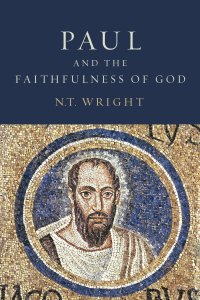
Accordance Bible Software has recently released a bunch of N.T. Wright resources, including his newly published and massive Paul and the Faithfulness of God. There are two bundles Accordance offers (here and here), and both are on sale this week.
I’ll be posting an extended book note on Wright’s new two-volume work before too long. Consider it a 2015 New Year’s resolution.
In the meantime, I commend to you Accordance 11, which I suspect will be a nice way to access and utilize Wright’s work.
In this post, I offer a sampling of resources–electronic and in print–that could be of help in reading through the Psalms in Greek. Do you know of anything not mentioned here? Please add it in the comments. You can also contact me with any questions or comments about the endeavor.
Last week Accordance released two new IVP “black dictionaries.” Both cover the Old Testament. There is Wisdom, Poetry & Writings and Prophets.
Here’s a screen grab from the Accordance page–they’re on sale through midnight EST tonight, and still reasonably priced after that.
Prophets (click image below for product page):
Wisdom, Poetry & Writings (click image below for product page):
These IVP dictionaries are really good. I usually use whatever volume I own when preparing sermons.
And Accordance 11 (just released this fall) is a nice way to use these dictionaries. You can try especially sophisticated searches with them in Accordance, like this one.
If you’ve used either of these dictionaries, I’d love to hear your thoughts in the comments. So far, I’ve really appreciated everything else from this series.
Now you can get 15% off any base package in Logos 6 through Words on the Word. If you order a base package through this Logos landing page, Logos feeds a percentage back to me, which I’d use for resources supporting the work of Words on the Word. (Current project I’m excited about: Greek Psalms in a Year.)
Check it out here, or just use the promo code ABRAMKJ6 when you checkout with a base package in your Logos cart. My review of Logos 6 is here.







 Words on the Word
